

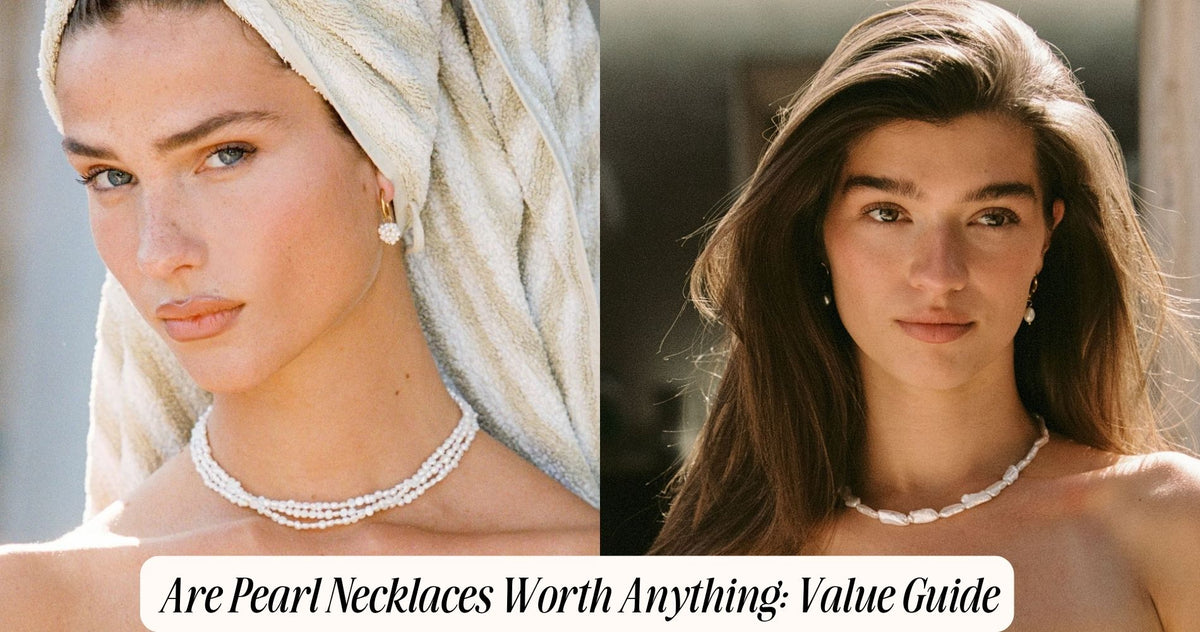
Are Pearl Necklaces Worth Anything: Value Guide
A single loose pearl and a full pearl necklace are valued in meaningfully different ways. While an individual pearl is assessed on its own luster, shape, and size, a strand introduces an entirely additional layer of considerations tied specifically to how the pearls work together as a unified piece, along with practical factors like the clasp and the string holding everything in place. If you are wondering are pearl necklaces worth anything, particularly one you inherited or found without documentation, understanding these strand-specific value factors matters just as much as evaluating the individual pearls themselves.
In this guide, we will walk through what makes a pearl necklace valuable beyond its individual pearls, covering matching quality, clasp condition, stringing, and length. If you are looking to add a genuinely well made strand to your own collection, our Freshwater Pearls Jewelry collection offers pieces worth exploring.
Why Strands Require Different Value Considerations Than Loose Pearls
A jeweler assessing a single pearl focuses entirely on that pearl's own characteristics. A necklace, by contrast, asks a different question: how well do dozens of individual pearls work together as a cohesive whole, and how sound is the physical construction holding them in that arrangement. Two necklaces made from pearls of similar individual quality can have meaningfully different values depending on how well matched those pearls are and how well the strand itself has been constructed and maintained.

Matching Quality Across the Strand
Matching refers to how consistent the individual pearls in a necklace are with one another across every major quality factor, and it is one of the most significant value drivers specific to strands rather than individual pearls.
Consistency in Size
A well matched strand shows minimal variation in pearl diameter from one end to the other, or, in a graduated strand, a smooth, even progression in size rather than abrupt jumps. Noticeable size inconsistency, where some pearls are visibly larger or smaller than their neighbors without an intentional graduated design, generally lowers a strand's overall value.
Consistency in Color and Overtone
Pearls can vary subtly in body color and overtone even within the same general type, and a high value strand shows minimal color drift from pearl to pearl. A strand where individual pearls range noticeably from creamy white to yellowish or pink toned, without an intentional design reason, is typically valued lower than one with even, consistent coloring throughout.
Consistency in Luster
Because luster affects how reflective and bright each pearl appears, uneven luster across a strand, where some pearls glow brightly while others look comparatively dull, detracts from the overall visual impact and lowers the necklace's assessed value even if some individual pearls within the strand are quite high quality on their own.
Consistency in Shape
A strand composed entirely of well matched round or near round pearls generally commands a higher value than one mixing round pearls with noticeably off round or irregular shapes, unless the piece is intentionally designed as a baroque style strand, where irregular shape is the desired aesthetic rather than a flaw.
The Clasp: An Often Overlooked Value Factor
The clasp on a pearl necklace is frequently overlooked when people assess value, but it can meaningfully affect both the piece's worth and its overall condition assessment.
Clasp Material
A clasp crafted from solid gold or platinum, sometimes featuring a small diamond or other gemstone accent, adds genuine material value beyond the pearls themselves. A base metal or gold plated clasp, by contrast, contributes comparatively little to overall value and may itself show signs of wear or tarnish that affect the piece's overall presentation.
Clasp Condition and Function
Beyond material, a clasp's physical condition matters. A secure, properly functioning clasp indicates a well maintained piece, while a loose, bent, or difficult to operate clasp suggests either age related wear or lower quality original construction. Since a compromised clasp directly affects whether a necklace can be worn safely, this factor is considered part of the overall condition assessment separate from the pearls themselves.
Clasp Style as a Dating Clue
For inherited or vintage pieces, the specific clasp style can sometimes help estimate a necklace's approximate age, since clasp designs have evolved over different jewelry eras. This can be useful supporting information when trying to understand a piece's history, even though it does not directly determine value on its own.

Stringing and Restringing Considerations
How a pearl necklace is strung, and whether it needs restringing, represents another factor specific to necklaces that simply does not apply to loose or individually set pearls.
Traditional Silk Stringing With Knots
Most quality pearl necklaces are strung on silk thread with a small knot tied between each individual pearl. This traditional method serves two purposes: it prevents pearls from rubbing directly against one another, which could cause surface damage over time, and it ensures that if the strand ever breaks, only a limited number of pearls scatter rather than the entire necklace coming completely undone at once.
Signs a Strand Needs Restringing
Visible gaps or looseness between the knots, a stretched or slightly sagging overall appearance, or any visible fraying of the thread itself all indicate that a strand needs restringing. A necklace requiring restringing is not necessarily less valuable in terms of its pearls, but this maintenance need should be factored into any overall assessment, since restringing represents a real cost that a buyer would need to account for.
Restringing as a Value Preserving Investment
For a necklace with genuinely valuable pearls, investing in professional restringing before selling or having the piece formally appraised often makes sense, since a fresh, properly restrung strand presents better and avoids any question of whether deferred maintenance is masking a more significant underlying issue with the pearls themselves.
How Strand Length Affects Value
Beyond matching and construction, the overall length of a pearl necklace plays a straightforward but significant role in its value, primarily because longer strands require more individual pearls.
More Pearls Means More Cost
A rope length strand extending 36 inches or longer contains substantially more individual pearls than a shorter choker or princess length necklace, and since each pearl carries its own individual value, longer strands are generally worth more than shorter ones made from pearls of otherwise similar quality.
Length and Matching Difficulty
Longer strands also present a greater matching challenge, since assembling dozens of well matched pearls consistent in size, color, and luster becomes progressively more difficult as the required quantity increases. This added difficulty can contribute to a higher per pearl value in exceptionally long, well matched strands compared to shorter pieces requiring fewer pearls to complete.
Common Length Categories and Their Typical Value Position
Choker length strands, sitting close to the neck, typically require the fewest pearls and represent the most accessible entry point. Princess length, the most common everyday length, requires moderately more pearls. Matinee and opera length strands require progressively more pearls still, generally placing them at a higher value point assuming consistent pearl quality throughout.

Bringing These Factors Together for an Overall Assessment
When evaluating whether a specific pearl necklace is worth anything meaningful, consider matching quality first, since this affects the visual and market appeal of the entire piece as a unit. Then assess the clasp for both material value and functional condition. Check the stringing for any signs it needs restringing, factoring this into your overall impression of the piece's maintenance history. Finally, factor in the necklace's length, recognizing that longer, well matched strands generally carry more inherent value simply due to the greater number of quality pearls required to complete them.
When Professional Evaluation Still Makes Sense
While these strand-specific factors help you form a more informed impression on your own, a formal appraisal remains the most reliable way to establish documented value, particularly for inherited pieces or anything you are considering selling or insuring. A professional appraiser will assess both the individual pearl quality and these necklace-specific construction factors together to arrive at a complete valuation.

Final Thoughts
So, are pearl necklaces worth anything beyond the sum of their individual pearls? Absolutely, and often the strand-specific factors, matching quality, clasp material and condition, stringing integrity, and overall length, meaningfully shape that value just as much as the pearls themselves. Understanding these considerations gives you a much more complete picture than assessing pearl quality alone, particularly for a piece you are trying to understand, maintain, or eventually pass along.
Frequently Asked Questions
-
Does a mismatched pearl necklace have no value? No, but noticeable inconsistency in size, color, or luster across the strand typically lowers value compared to a well matched piece of similar individual pearl quality.
-
Is it worth restringing a pearl necklace before selling it? Often yes, since a properly restrung strand presents better and reassures a buyer that no maintenance issues are being overlooked.
-
Does a longer pearl necklace always mean more value? Generally yes, assuming consistent quality throughout, since longer strands require more individual pearls and present a greater matching challenge.
-
Can the clasp really affect a pearl necklace's overall value? Yes, a solid gold or gemstone accented clasp adds genuine material value, while its condition also factors into the overall assessment of the piece.









Leave a comment
This site is protected by hCaptcha and the hCaptcha Privacy Policy and Terms of Service apply.