

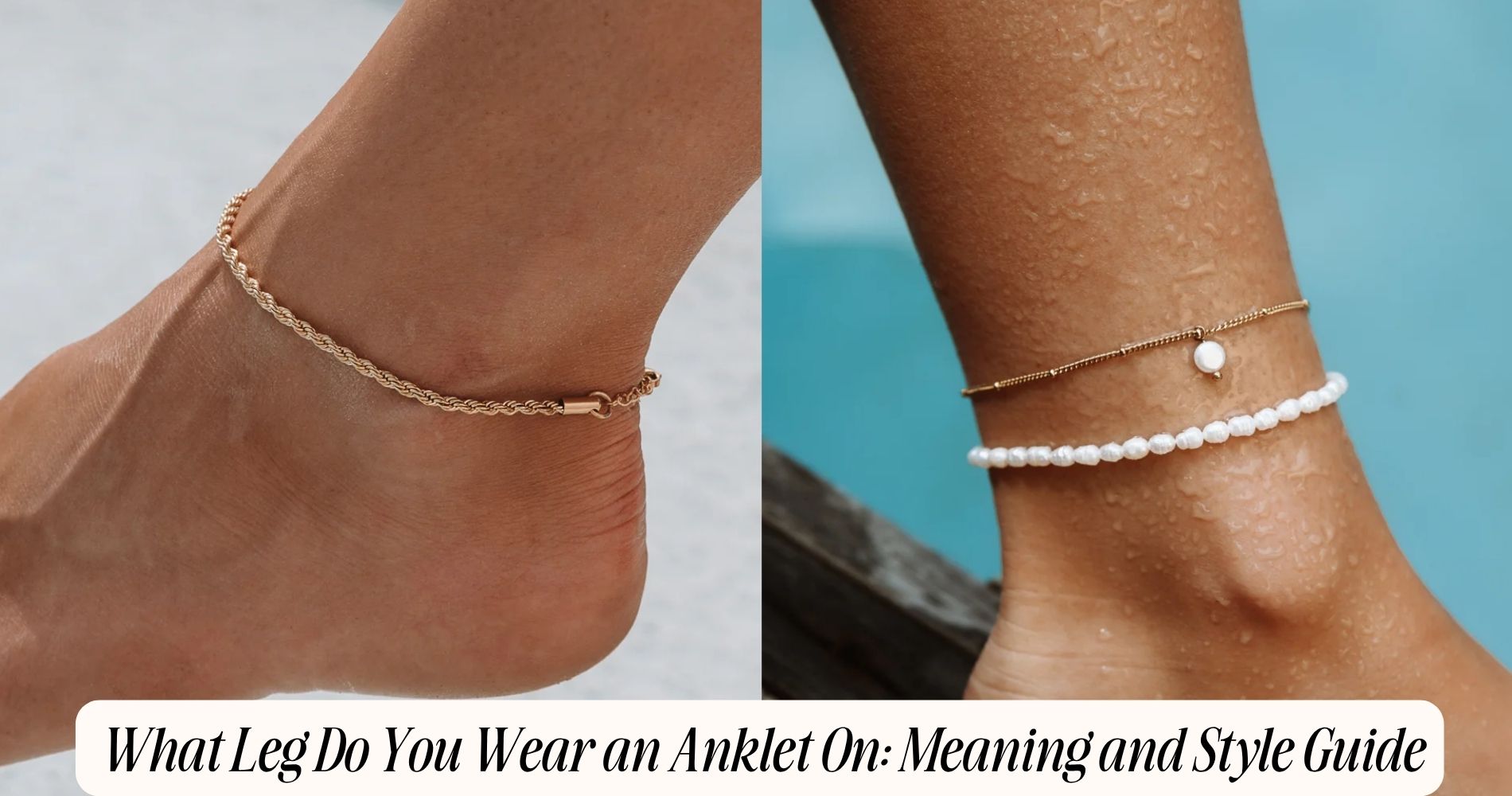
What Leg Do You Wear an Anklet On: Meaning and Style Guide
The question of which leg to wear an anklet on is more interesting than it first appears. There is no universal rule, but there are meaningful considerations around cultural context, outfit styling, footwear pairing, and the visual relationship between the anklet and the leg it sits on. Knowing what leg do you wear an anklet on for your specific context, whether that is a beach day, a cultural tradition, or a carefully considered outfit, gives you the confidence to make an intentional choice. Waterproof Anklets built for active coastal wear look right on either leg when worn with intention. This guide covers what different traditions say about leg choice, how outfit type and footwear affect the decision, and the practical styling principles that make an anklet look considered rather than accidental.
Does It Actually Matter Which Leg?
For most contemporary Western wearers, the leg an anklet sits on is a personal choice driven by aesthetics and comfort rather than a fixed cultural requirement. There is no mainstream fashion rule that assigns specific meaning to the left or right ankle in everyday styling contexts.
That said, two situations give the choice more weight: specific cultural or spiritual traditions that do assign meaning to ankle placement, and intentional styling decisions where the anklet's interaction with footwear, hemline, and leg length produces visibly different results on each side.
Understanding both gives you the full picture without overstating a set of rules that most wearers simply do not apply. The most important factors in how an anklet looks are fit, material, and styling context rather than which leg it occupies.

Cultural Meanings Associated With Each Leg
In some traditions, the leg on which an anklet is worn carries specific meaning. These associations vary significantly by culture and are worth knowing if they are relevant to your context.
South Asian tradition: In Indian tradition, anklets (payal or pajeb) are traditionally worn on both ankles as part of bridal and ceremonial jewelry. When worn on a single ankle in more casual contexts, regional traditions vary: some associate the right ankle with auspiciousness and outward expression, while others do not assign fixed meaning to side placement. The sound of anklets during movement is itself significant in Indian tradition, carrying associations with the wearer's presence and grace.
Western folk associations: In some Western communities, particularly in the United States from the mid-twentieth century onward, informal associations developed between ankle placement and relationship status or personal availability. Right ankle anklets were associated with being in a committed relationship in some circles, while left ankle anklets carried different associations in others. These meanings were never formally established and are not widely recognized or applied today. Most contemporary wearers are entirely unaware of them.
Contemporary global wearing: Across most contemporary fashion contexts, anklets on either ankle carry no fixed symbolic meaning. The choice is aesthetic and personal rather than communicative.
If you are wearing an anklet within a specific cultural tradition that assigns meaning to placement, that context guides the choice. For everyday fashion and beach wear, the decision is yours entirely.
How Outfit Type Affects Which Leg Works Best
The outfit you are wearing creates visual framing conditions for an anklet that differ between legs depending on where the visual weight of the outfit falls.
Asymmetric hemlines: Skirts, dresses, and wrap styles with asymmetric hemlines that sit higher on one side than the other naturally draw the eye to the exposed ankle on the higher side. Placing the anklet on that ankle aligns the jewelry with the direction the outfit is already creating. Placing it on the lower-hemline side hides it partially and creates an unintentional asymmetry where the visible one lacks jewelry while the hidden one carries it.
Side-slit trousers and skirts: A side slit creates a framing window on one specific side. An anklet on the slit side is visible through movement and sits as a deliberate reveal. An anklet on the opposite side is only visible when standing still with the slit closed. Choose the slit side for an anklet that participates in the outfit's movement and visual story.
Symmetrical hemlines: With symmetrical hemlines, both ankles have equal visibility and the styling choice becomes genuinely personal. In this context, the footwear interaction becomes the primary deciding factor.
Wide leg and palazzo trousers: These styles cover the ankle during wear and make the anklet visible primarily when seated or when the leg moves. For this reason, wide-leg trousers are not the most practical outfit context for a visible anklet. If you want to wear one, the choice of leg matters less because both are equally covered.
How Footwear Affects Which Leg to Choose
Footwear is the most practically relevant factor in anklet leg choice for most wearers because the shoe's design either showcases or competes with the anklet at the ankle level.
Ankle strap sandals: An ankle strap occupies the same visual territory as an anklet. Wearing both on the same ankle creates visual competition between two elements in the same space. Placing the anklet on the opposite ankle from the strap gives each element its own space and reads as deliberate coordination rather than crowding. If both shoes have ankle straps, consider whether removing the anklet for that outfit is the cleaner choice, or whether a very fine chain anklet can sit alongside a strap without competing.
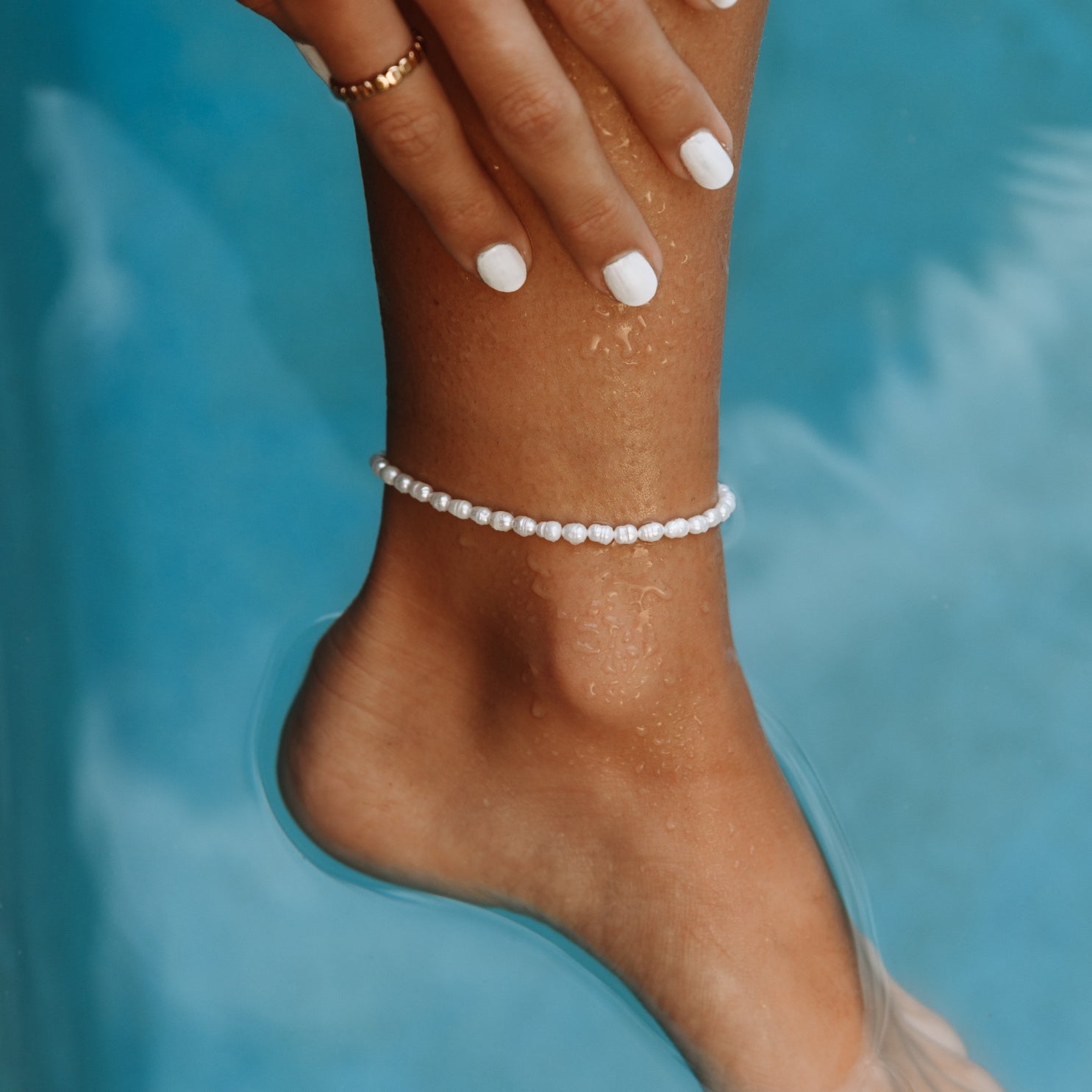
Flat sandals and slides without straps: These open styles are the most anklet-friendly footwear because they expose the entire ankle and foot without adding competing visual elements. Either ankle works equally well and the choice becomes purely aesthetic. Many wearers default to the non-dominant foot side as a counterpoint to watch and bracelet placement on the wrist.
Sneakers and trainers: Anklets worn with sneakers sit above the shoe collar and are only visible when the leg is extended. A fine chain anklet in this context reads as a subtle personal detail rather than a styling statement. Either leg works, though the leg that faces outward during a natural walking stance is slightly more visible.
Heeled sandals and mules: Heels change the visual geometry of the ankle and lower leg. A heel elongates the line from ankle to toe, and an anklet at ankle level interacts with that elongated line differently than on a flat foot. A fine chain anklet worn on the inner ankle of a heeled sandal appears elegant and intentional. A chunkier anklet on the outer ankle can interrupt the heel's visual line.
Bare feet: At the beach or by the pool, bare feet make the anklet the primary foot jewelry element without any shoe interaction. Either leg works equally well, and the choice often comes down to which ankle photographs better from your natural standing position or which side you prefer to highlight during outdoor activity.
Styling an Anklet on Each Leg: Practical Principles
Three practical principles help make the leg choice look intentional rather than accidental regardless of which side you choose.
Follow the dominant visual element. If one side of your outfit already draws the eye (an asymmetric hemline, a side slit, a single ankle strap on one shoe), placing the anklet on that side creates visual cohesion. The eye is already there. The anklet participates in an existing visual moment rather than creating a competing one on the other side.
Avoid doubling up at the same level. If one ankle already has visual weight from a shoe strap, a visible tattoo, or other jewelry, placing the anklet on the other leg creates balance rather than overcrowding. The distribution of visual interest across both sides of the body produces a more composed overall appearance than stacking it all on one side.
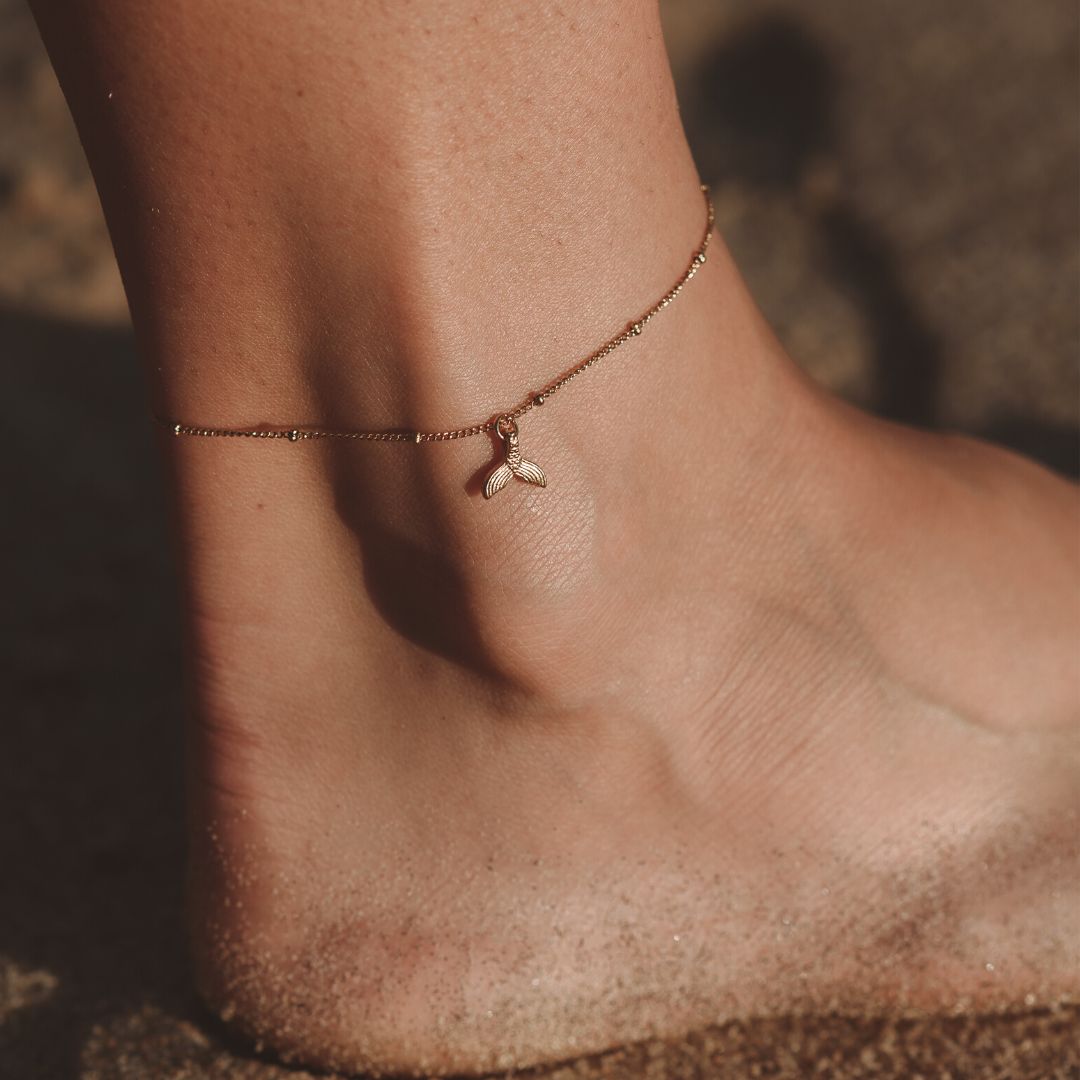
Consider the activity context. For beach days, surf sessions, ocean swimming, and active outdoor time, the practical consideration is which ankle creates less interference with movement. A very fine chain anklet on either ankle handles ocean swimming without catching. A heavier charm anklet is better positioned on the non-dominant foot to minimize interference with kick movement during swimming.
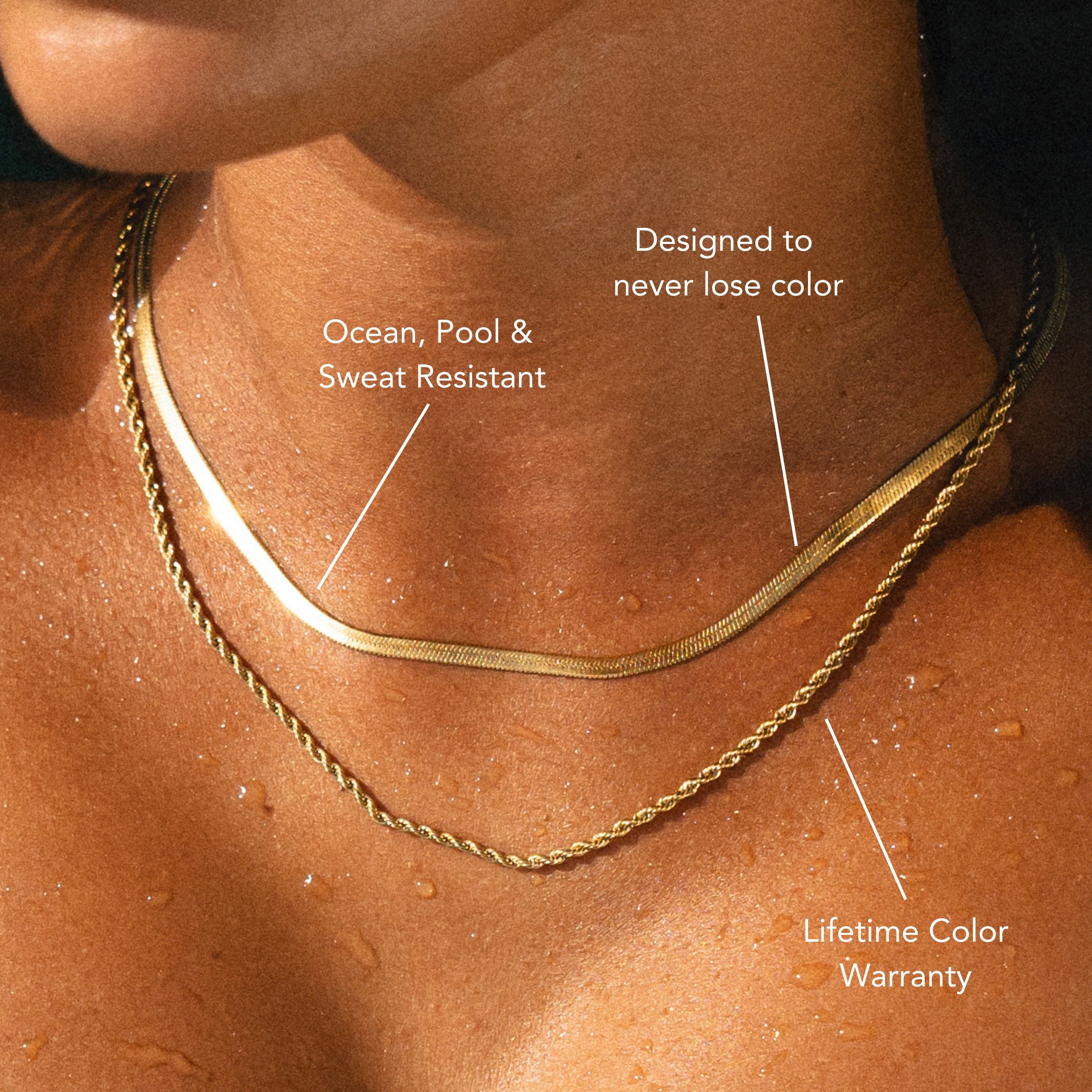
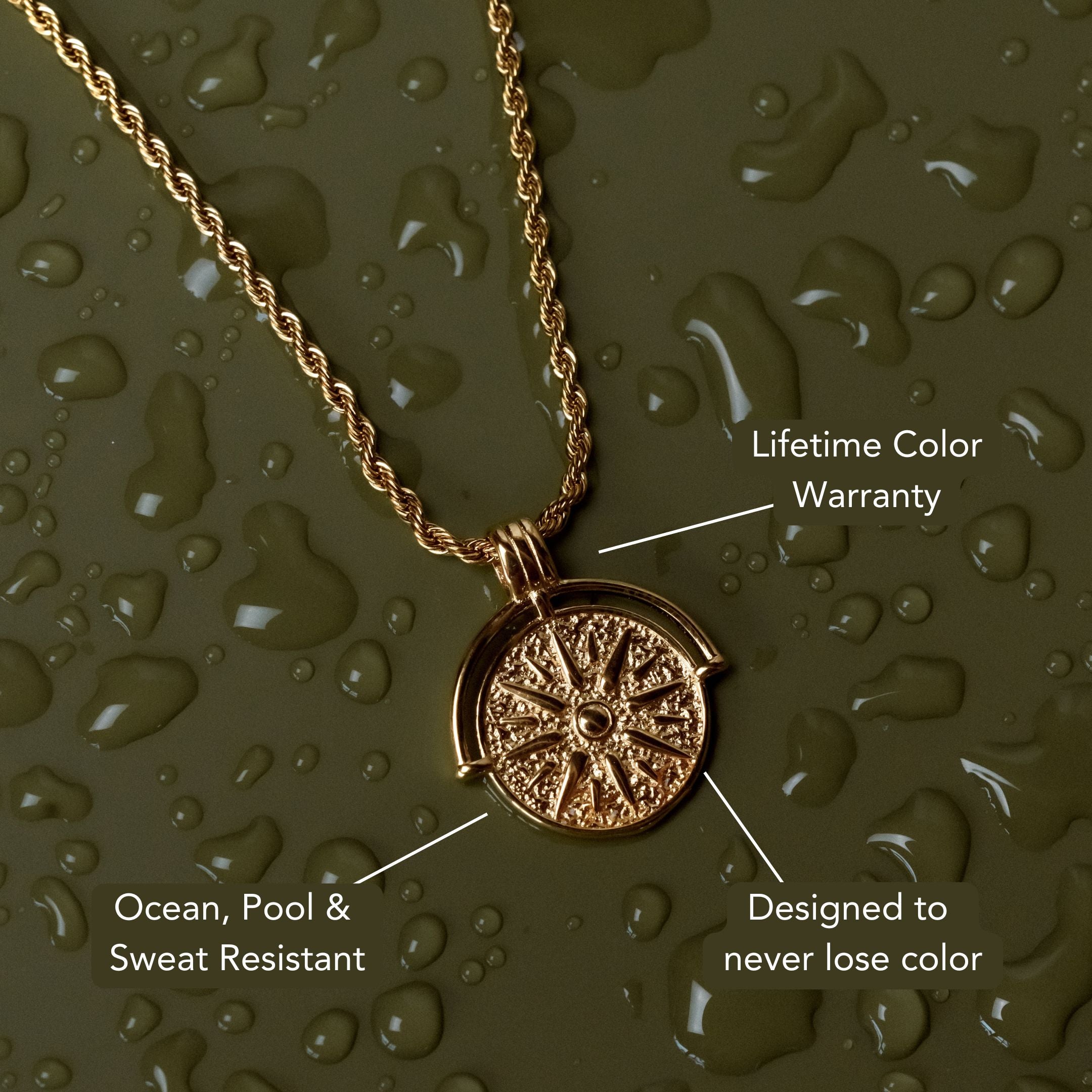
For continuous active wear through salt water, sunscreen, and daily beach conditions, the anklet material matters as much as the styling choice. PVD-coated stainless steel anklets maintain their finish through those conditions on either ankle, and their hypoallergenic construction means the skin contact surface stays clean regardless of which leg encounters the most sun and salt. ATOLEA's waterproof anklet range is built for exactly that use, with a lifetime color warranty on every piece.
Wearing Anklets on Both Legs
Wearing matching or complementary anklets on both ankles simultaneously is a styling choice with a long history in South Asian and coastal traditions and a strong presence in contemporary beach and festival aesthetics.
For matched anklets on both legs, the visual effect is symmetrical and deliberate. It reads as a considered jewelry choice rather than a single casual piece. Keeping the anklet style consistent (same chain weight, same finish, same size) produces a cleaner matched look. Using two different but complementary styles, a fine chain on one ankle and a slightly chunkier chain on the other, creates intentional asymmetry that reads as collected.
For stacking multiple anklets on one leg while leaving the other bare, the concentration of visual interest on one side creates a focal point. This works well when the outfit already directs attention to one side through a hemline or slit.

Frequently Asked Questions
Is there a correct leg to wear an anklet on?
No universal rule applies in contemporary fashion. Cultural traditions in some South Asian contexts assign meaning to ankle placement, but for everyday Western fashion and beach wear, the choice is entirely personal. The practical decision is driven by which side the outfit frames best, how the footwear interacts with the anklet, and personal preference.
What does wearing an anklet on the left leg mean?
In contemporary fashion, wearing an anklet on the left leg carries no widely recognized fixed meaning. Informal associations existed in some American communities in the mid-twentieth century but are not commonly known or applied today. Most contemporary wearers choose the left or right ankle based on comfort and outfit styling rather than symbolic intention.
Can you wear an anklet on both legs?
Yes. Wearing anklets on both ankles is a widely practiced styling choice with roots in South Asian tradition and coastal and festival aesthetics. Matched anklets on both legs read as deliberate and considered. Two complementary but different styles create intentional variety. The choice to wear on one or both legs is entirely personal.
What anklet styles look best for beach wear?
Fine chain anklets in flat or cable construction sit closest to the skin and create the least interference with ocean swimming and sand. Minimal or no charms reduce catching during movement. For active surf and swim sessions, a snug-fitting fine chain on either ankle in a waterproof material is the most practical choice. PVD-coated stainless steel anklets handle salt water, chlorine, and sunscreen without tarnishing or corroding.
How should an anklet fit on the leg?
An anklet should sit just above the ankle bone with enough room to slide one finger underneath comfortably. This allows free movement without the piece sliding down toward the foot during walking or swimming. For active outdoor wear, a fit at the snugger end of comfortable prevents the anklet from shifting during movement without restricting circulation.
Conclusion
What leg do you wear an anklet on is ultimately a styling question rather than a rules question for most contemporary wearers. Cultural traditions provide context where they are relevant. Outfit asymmetry, footwear interaction, and activity context provide the practical framework for most everyday and beach styling decisions. Following the dominant visual element in your outfit, avoiding crowding at one ankle level, and choosing the side that photographs and sits most naturally in your typical standing position are the principles that make the choice look intentional regardless of which leg carries the piece.











コメントを書く
このサイトはhCaptchaによって保護されており、hCaptchaプライバシーポリシーおよび利用規約が適用されます。