

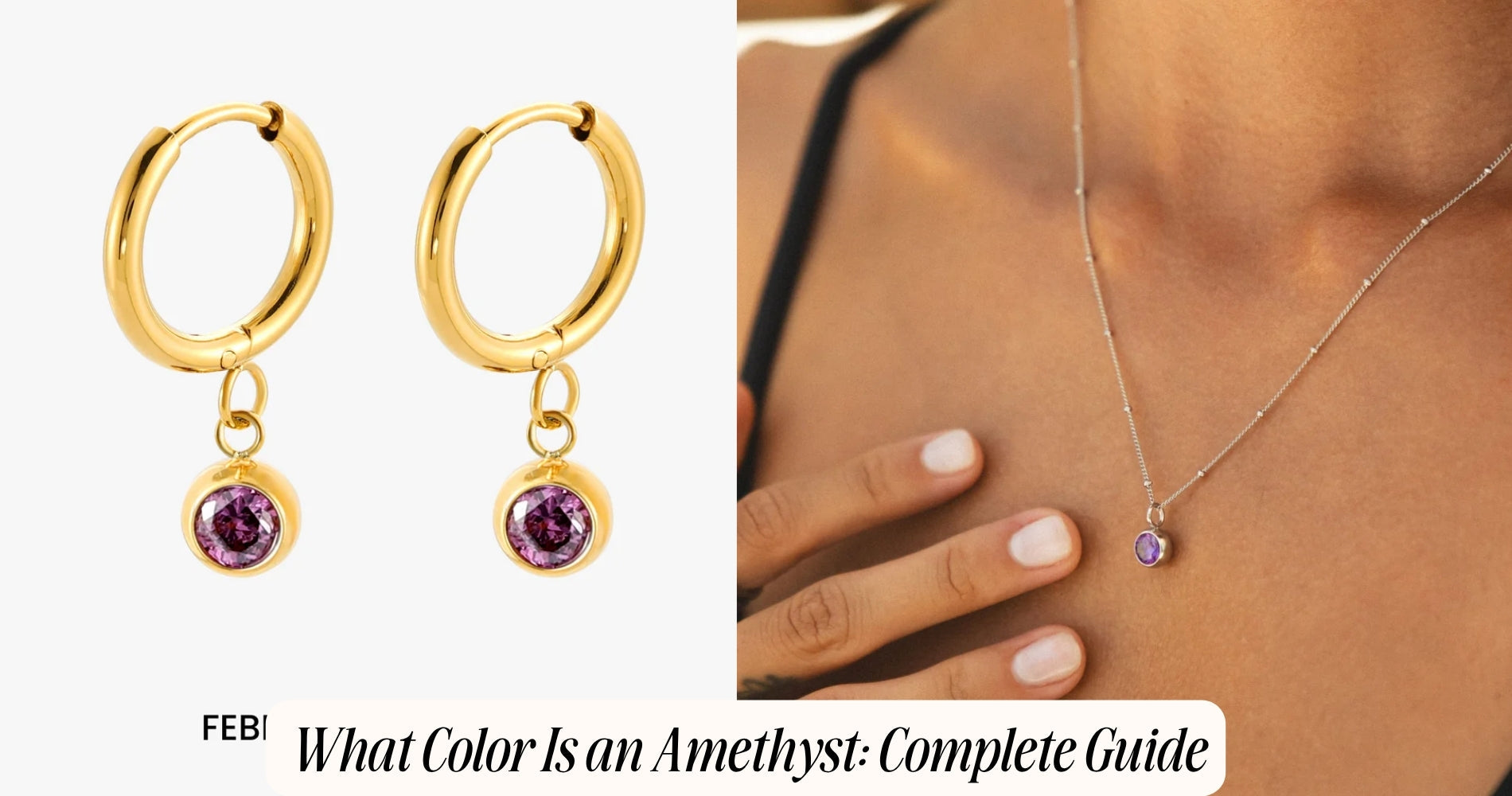
What Color Is an Amethyst: Complete Guide
Amethyst is a purple stone, but that single word covers a range so wide that two amethysts placed side by side can look like entirely different gemstones. Understanding what color is a amethyst in full requires knowing the complete color spectrum the stone produces, what causes the variation, which shades are considered most desirable, and how color interacts with light and setting to change how the stone reads in different contexts. The Stone Collection includes amethyst in wearable everyday pieces. This guide covers the full amethyst color range, the science behind the color, the quality grading system for amethyst color, and how to choose the right shade for the jewelry piece you have in mind.
What Causes Amethyst's Purple Color
Amethyst is a variety of quartz, chemically silicon dioxide, which in its pure form is colorless. The purple color comes from two factors working together: the presence of iron impurities within the crystal structure, and exposure to natural radiation during the stone's formation.
Iron atoms substitute for silicon atoms at specific points within the quartz crystal lattice. When those iron-containing sites are exposed to natural gamma radiation from surrounding rocks during the stone's geological formation, the iron ions are oxidized to a specific valence state that absorbs yellow light from the visible spectrum and transmits purple. The specific shade of purple that results depends on the concentration of iron impurities, the intensity of radiation exposure, the temperature conditions during formation, and the presence of other trace elements.

This is why amethyst from different geographic sources looks visually different even when both are classified as genuine amethyst. Brazilian amethyst from Minas Gerais tends toward lighter, often lavender-tinged purple with good transparency. Uruguayan amethyst typically shows deeper, more saturated color with a slightly reddish secondary hue. Siberian amethyst, now rare and primarily used to describe a quality grade rather than a specific geographic origin, shows the deepest, most vivid purple with a distinctive blue-red secondary flash.
The Full Amethyst Color Range
Pale lilac and lavender: The lightest amethyst shades appear almost translucent, with a delicate wash of violet that reads more pink-purple than a saturated purple in certain lighting. These stones have low iron concentration or reduced radiation exposure during formation. They are sometimes called "Rose de France" amethyst in the trade. While less traditionally valued than deeper shades, pale amethysts have their own aesthetic: they read delicately elegant rather than bold, suit fair skin tones with cool undertones particularly well, and pair with rose gold settings in a way that deeper amethysts do not.
Medium purple: Mid-range amethyst shows a clear, recognizable purple that most people picture when they think of the stone. It has visible saturation without reaching the density of the deepest grades, and it maintains strong transparency that allows light to move through the stone effectively. This range is widely available, produces attractive faceted jewelry stones, and is the most common quality in accessible jewelry price points.

Deep purple: Well-saturated amethyst with rich, full color and minimal overtone variation sits at the upper end of the quality range for most commercial production. Stones in this category show strong, vivid purple under most lighting conditions without becoming so dark that they appear nearly opaque in the center. They are the most visually compelling shade for traditional jewelry applications and command prices that reflect their comparative rarity within amethyst production.
Siberian quality (deep with blue-red secondary flash): The most prized amethyst quality grade shows a deep, fully saturated purple with a secondary flash of blue and red visible under direct light. This combination produces the richest visual complexity of any amethyst shade and is the standard against which all other amethyst is measured. True Siberian-origin material is essentially exhausted; the term now describes the color quality regardless of source. African deposits, particularly from Zambia, currently produce the most consistent Siberian-quality color.
Green amethyst (prasiolite): A separate but related stone, prasiolite is amethyst that has been heated to alter its iron valence state, shifting the color from purple to a pale olive or sage green. It is sometimes called green amethyst in the jewelry market though gemologically it is a different material. Prasiolite occurs very rarely in nature; most commercial green amethyst is heat-treated material from Brazilian deposits.
What Color Is a Amethyst: Quality Grading by Color
Amethyst color quality is assessed through the same dimensions used for all colored gemstones: hue, tone, and saturation.
Hue refers to the primary color family and any secondary hues present. Pure purple amethyst with no visible secondary colors is the baseline. Amethyst with a red-blue secondary flash is considered more desirable. Amethyst with a brown or gray secondary hue is considered lower quality because those tones flatten the stone's visual depth.
Tone describes the lightness or darkness of the color on a scale from very light to very dark. The ideal tone for amethyst sits in the medium to medium-dark range, roughly 65% to 80% on a 0 to 100 tone scale. Stones too light appear washed out. Stones too dark appear opaque at the center and lose their transparency, which reduces the light performance that makes a faceted stone attractive.
Saturation measures the intensity or richness of the color. High saturation produces vivid, deeply colored stones. Low saturation produces pale, grayish, or brownish tones. For amethyst, strong saturation at a medium-dark tone is the combination that produces the most visually compelling stones.

| Color Grade | Description | Value Tier |
|---|---|---|
| AAA (Siberian quality) | Deep purple, strong blue-red secondary flash, medium-dark tone | Highest |
| AA | Rich purple, good saturation, minor secondary hue | High |
| A | Medium purple, acceptable saturation, transparent | Mid |
| B | Light to medium purple, lower saturation | Lower |
| Rose de France | Pale lavender to pink-purple, delicate and transparent | Accessible specialty |
How Lighting Affects Amethyst Color
Amethyst color shifts noticeably between different lighting environments, and understanding this helps you evaluate a stone accurately before purchasing.
Under daylight or daylight-equivalent LED lighting, amethyst shows its truest purple color. Saturation is visible and the blue-red secondary flash in high-grade stones is most apparent. This is the best lighting environment for evaluating amethyst quality.
Under incandescent or warm artificial light, amethyst typically appears slightly warmer and more reddish-purple. The blue component of the secondary flash becomes less visible and the red component becomes more prominent. Lower-grade amethyst with a brownish secondary hue looks better under warm incandescent light than in daylight, which is why jewelry store lighting is often calibrated to warm tones.
Under ultraviolet light, some amethysts show a weak reddish or purplish fluorescence. This has no impact on the stone's value but is sometimes used as one indicator in gemological identification.
The practical implication for buyers is to evaluate amethyst in daylight or daylight-equivalent lighting whenever possible. A stone that looks vibrant only under the warm jewelry store lights may appear duller or grayer once worn outside in natural light.

Frequently Asked Questions
What is the typical color of an amethyst?
Amethyst ranges from pale lavender to deep violet-purple, with the most valued quality showing a rich, deeply saturated purple with a blue-red secondary flash. The most commonly encountered amethyst in commercial jewelry sits in the medium purple range with good transparency. Pale Rose de France amethyst and deep Siberian-quality amethyst both represent the outer edges of the spectrum.
Can amethyst be any color other than purple?
Natural amethyst is always purple, ranging from very pale lavender to deep violet. What is sometimes marketed as "green amethyst" is prasiolite, a separate material produced by heat-treating amethyst to shift its color from purple to pale olive green. Citrine, the yellow variety of quartz, is related to amethyst mineralogically but is a distinct stone. Ametrine is a bicolor quartz that shows both amethyst purple and citrine yellow in the same crystal.
What makes some amethysts darker than others?
The depth of purple in an amethyst depends on the concentration of iron impurities within the quartz crystal and the intensity of natural radiation exposure during formation. Higher iron concentration and greater radiation exposure produce deeper, more saturated purple. Geographic source plays a significant role: Uruguayan and Zambian deposits tend toward deeper color than most Brazilian deposits, though the full range appears at multiple sources.
Is darker amethyst more valuable?
Up to a point, yes. The most valuable amethyst shade is a deeply saturated purple at medium-dark tone with a blue-red secondary flash, sometimes called Siberian quality. However, amethyst that is too dark loses transparency and appears nearly opaque at the center, which reduces its light performance and value. The ideal is rich, vivid color at a tone that still allows light to move through the stone. Stones that are extremely dark, uniformly purple without flash, or that show brown or gray secondary hues are less valuable than well-saturated medium-dark stones with good transparency.
Does amethyst change color over time?
Natural amethyst can fade with prolonged exposure to intense direct sunlight. The iron valence state responsible for the purple color can shift with sustained UV exposure, causing the color to pale. This is a gradual process and not a concern for normal jewelry wear. Storing amethyst jewelry away from direct sunlight and avoiding prolonged sun exposure preserves the color long-term.
Choosing Amethyst by Color
What color is a amethyst spans from pale translucent lavender through medium purple to deep violet with blue-red flash, with the deeply saturated Siberian quality at the top of the value range. The color is caused by iron impurities in quartz crystal modified by natural radiation during formation, which is why geographic source influences the specific shade so significantly. Evaluating amethyst in daylight, checking for window in the cut, and understanding how the setting metal modifies the stone's color are the practical skills that allow you to choose a stone that looks its best in the specific jewelry context you have in mind.









コメントを書く
このサイトはhCaptchaによって保護されており、hCaptchaプライバシーポリシーおよび利用規約が適用されます。