


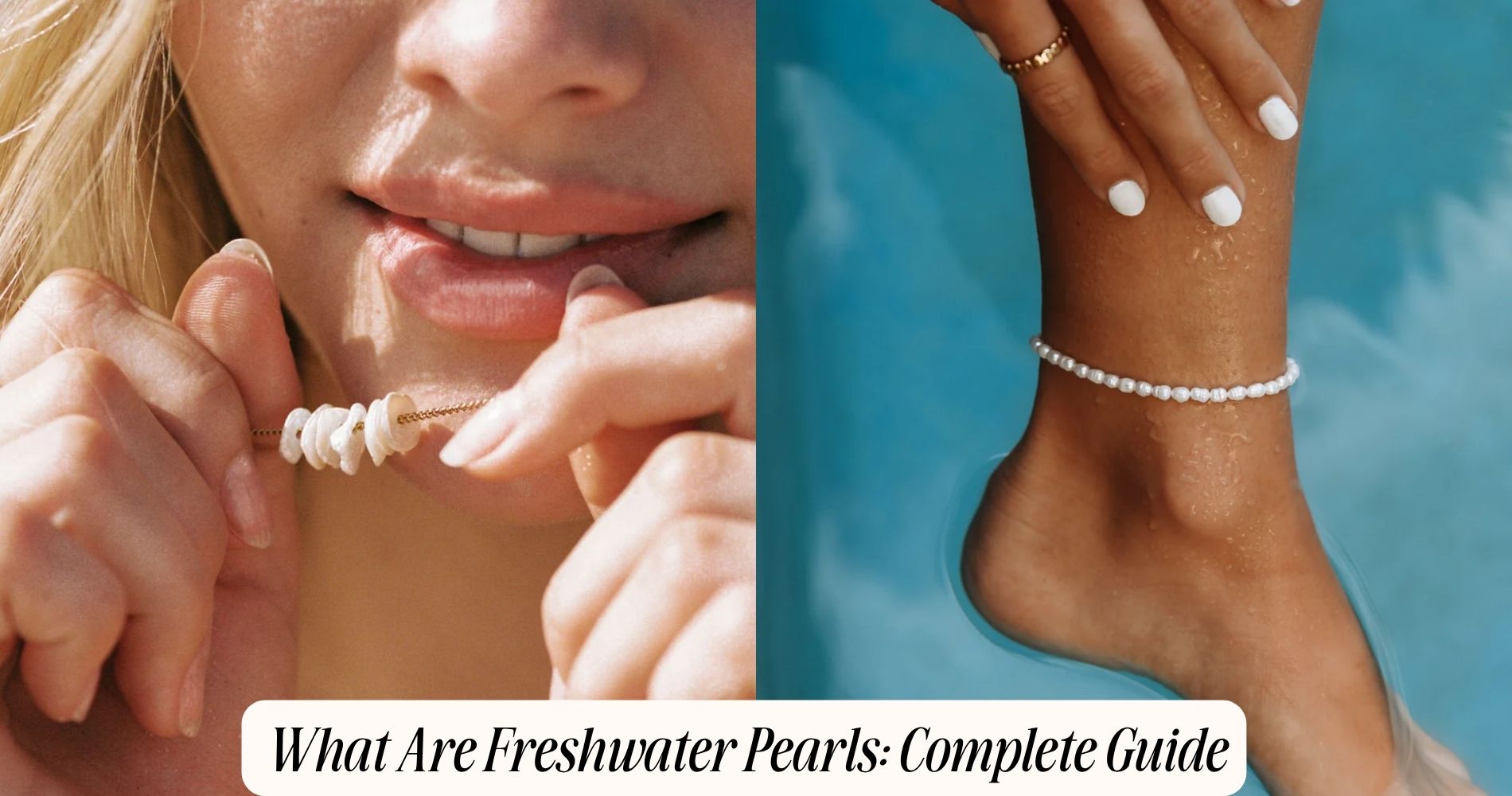
What Are Freshwater Pearls: Complete Guide
Freshwater pearls are among the most misunderstood gemstones in the jewelry market. They are frequently dismissed as lower quality than saltwater pearls without much examination of what that claim actually means, and the gap between that reputation and the current reality of freshwater pearl quality is significant. Understanding what are fresh water pearls accurately, how they form, what makes them different from saltwater pearls, and how to evaluate their quality gives you a much clearer picture of what you are actually buying. Freshwater Pearls Jewelry built around the best of what freshwater production offers demonstrates where the category actually stands. This guide covers the formation process, the qualities that define freshwater pearls, how they compare to major saltwater types, and what to look for before buying.
What Are Freshwater Pearls: Formation and Origin
Freshwater pearls are pearls produced by freshwater mussels rather than the saltwater oysters that produce Akoya, Tahitian, and South Sea pearls. They grow in rivers, lakes, and ponds rather than in ocean environments, and the mussels that produce them are primarily species from the family Unionidae.
The formation process begins when a small piece of mantle tissue from a donor mussel is implanted into the host mussel. Unlike saltwater cultured pearls, which are typically bead-nucleated with a round shell sphere that provides the core around which nacre is deposited, freshwater pearls are tissue-nucleated without a bead nucleus. The mussel responds to the foreign tissue by secreting nacre, the same composite of aragonite crystals and conchiolin protein that forms all pearls, around the tissue graft.
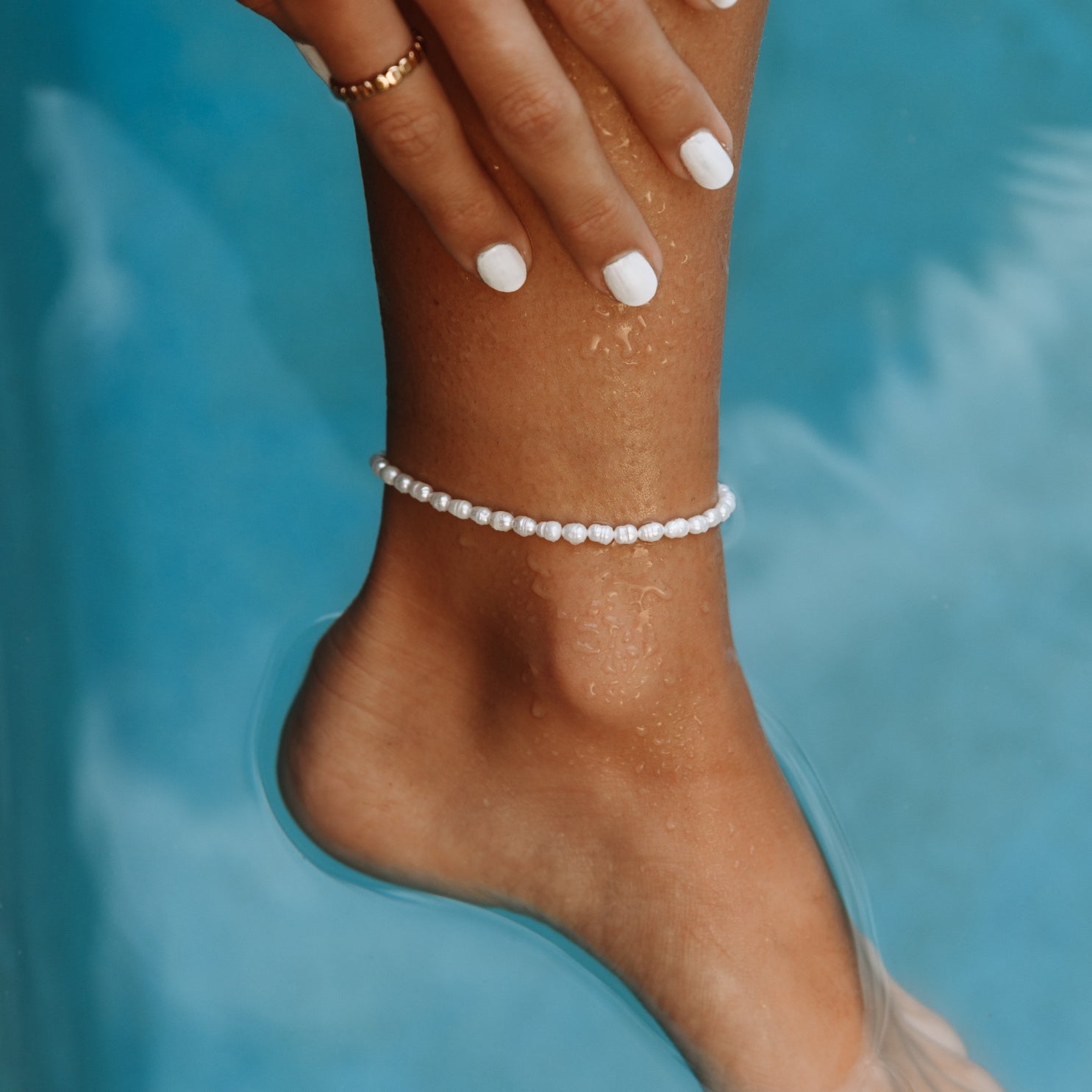
Because there is no bead nucleus, the nacre is deposited around a much smaller central point. The result is a pearl that is solid nacre throughout its entire structure rather than a thin nacre coating over a large shell bead. A freshwater pearl is essentially all pearl material, which is a genuinely different and in some respects superior structural characteristic compared to bead-nucleated saltwater pearls where the nacre layer may be as thin as 0.3mm over a nucleus that comprises most of the pearl's volume.
A single freshwater mussel can produce up to 40 to 50 pearls in one harvest cycle, compared to the single pearl typically produced by a saltwater oyster. This productivity is what makes freshwater pearls more abundant and more accessible in price than saltwater alternatives, but abundance alone does not determine quality.
Freshwater pearl farming is concentrated primarily in China, which accounts for approximately 95% of global freshwater pearl production. Key farming regions include Zhejiang, Jiangsu, Anhui, and Guangdong provinces, where the climate and water quality support large-scale mussel cultivation.
How Freshwater Pearls Differ From Saltwater Pearls
The comparison between freshwater and saltwater pearls is more nuanced than the simple hierarchy most buyers assume.
Nacre structure: Freshwater pearls are solid nacre throughout their construction. Saltwater Akoya pearls, by contrast, have a large shell bead nucleus coated with a relatively thin nacre layer. The nacre layer on an Akoya pearl is typically 0.3mm to 0.8mm thick. A freshwater pearl of the same diameter is essentially entirely nacre. This structural difference means freshwater pearls have more nacre per pearl by volume than most bead-nucleated saltwater pearls.
Luster quality: The luster of a pearl is determined by the quality and regularity of its nacre layers. Akoya pearls are specifically known for a mirror-like, highly reflective luster that is considered the benchmark of pearl brightness. Freshwater pearls produce a slightly different optical quality: a softer, more diffuse luster that many people find equally beautiful but which reads differently under comparison with high-grade Akoya pearls. At the top grades, the difference requires direct side-by-side comparison to perceive clearly.
Shape: Bead-nucleated saltwater pearls tend toward rounder shapes because the round shell bead provides a template around which nacre is deposited relatively evenly. Tissue-nucleated freshwater pearls historically produced more irregular shapes, from rice-grain forms to baroque shapes. Modern freshwater pearl farming techniques have significantly improved shape control, and current production includes high proportions of near-round and round freshwater pearls that rival Akoya shapes. The baroque and off-round shapes that remain in freshwater production are often prized for their organic quality rather than treated as defects.

Size: Freshwater pearls typically range from 5mm to 12mm in standard production, with baroque styles reaching larger sizes. Akoya pearls range from 5mm to 9mm. Tahitian and South Sea pearls are significantly larger but in a different price and production category entirely.
Price: Freshwater pearls are considerably more accessible than Akoya pearls of comparable visible quality, and dramatically more accessible than Tahitian and South Sea pearls. This accessibility reflects production economics rather than inherent inferiority: the higher yield per mussel, the shorter growing cycle, and China's scale of production all contribute to lower prices without necessarily indicating lower quality in the pearl itself.
Quality Factors for Freshwater Pearls
The same five quality factors that apply to all pearls apply to freshwater pearls, and understanding them helps you evaluate any freshwater pearl purchase accurately.
Luster is the most important quality factor. It describes the depth and intensity of the reflection from the pearl surface. High-luster freshwater pearls show a clear, bright reflection with visible depth. Low-luster freshwater pearls appear chalky or dull. The luster range within freshwater production is very wide, from exceptional quality that approaches Akoya brightness to very poor quality that looks matte and lifeless. Price should reflect luster level more than any other single variable.
Surface quality refers to the number and visibility of natural blemishes on the pearl surface, including pits, bumps, spots, and scratches. Blemish-free freshwater pearls are rare and command premiums. Minor blemishes visible only under close inspection reduce price modestly. Significant blemishes reduce value substantially.
Shape ranges from round and near-round at the highest value through off-round, oval, button, drop, and baroque at progressively lower price points. Top-grade round freshwater pearls require careful selection and command prices that approach comparable Akoya pearls. Baroque and irregular shapes are less expensive and often chosen for their distinctive character.

Size affects price significantly because larger pearls require longer growing time and are naturally rarer within any harvest. At the same quality grade, a 10mm freshwater pearl is more expensive than an 8mm pearl of equal luster and surface quality.
Color is a natural variable in freshwater pearls. White, cream, pink, lavender, and peach tones all occur naturally. Dyed freshwater pearls in colors that do not occur naturally, including black, dark green, and vivid blue, should be disclosed as dyed rather than presented as natural color. Natural pink and lavender overtones in freshwater pearls are genuinely produced by the mussel and are among the qualities that distinguish freshwater from Akoya pearls, which tend toward white and cream body colors.
Freshwater vs Saltwater Pearls: A Direct Comparison
| Factor | Freshwater | Akoya | Tahitian | South Sea |
|---|---|---|---|---|
| Producing species | Freshwater mussel | Pinctada fucata | Pinctada margaritifera | Pinctada maxima |
| Nucleus type | Tissue only (solid nacre) | Shell bead + nacre | Shell bead + nacre | Shell bead + nacre |
| Size range | 5 to 12mm (larger baroque) | 5 to 9mm | 8 to 16mm | 10 to 20mm |
| Luster type | Soft, diffuse | Mirror-bright | Deep, satiny | Deep, satiny |
| Natural colors | White, cream, pink, lavender, peach | White, cream, silver | Dark, green, peacock, aubergine | White, silver, gold |
| Price range | Accessible | Moderate to high | High | Very high |
| Yield per mollusk | 20 to 50 pearls | 1 pearl | 1 pearl | 1 pearl |
How to Care for Freshwater Pearl Jewelry
Freshwater pearls are organic gemstones with properties that differ from mineral stones and require corresponding care.
Avoid chemical contact. Pearls are calcium carbonate at their base and react with acids. Perfume, hairspray, and acidic skincare products should not contact pearl surfaces. Apply all products before putting on pearl jewelry. After wearing, wipe gently with a soft cloth to remove any skin oil and product residue before storing.
Keep away from prolonged water exposure. Brief contact with water does not harm freshwater pearls, but sustained soaking weakens the organic conchiolin layer between the nacre platelets over time, eventually causing surface deterioration. Remove pearl jewelry before swimming, showering, and extended water activities.
Store separately. Pearls are soft relative to most gemstones, rating approximately 2.5 to 3 on the Mohs hardness scale. Storing pearl jewelry alongside harder stones, metal jewelry, or in a hard-surfaced container causes scratching. Soft cloth pouches or a dedicated soft-lined jewelry box compartment protect pearl surfaces between wearings.

Restring knotted pearl strands periodically. Traditional pearl strands use silk thread with knots between each pearl to prevent pearls rubbing against each other and to limit loss if the strand breaks. Silk thread weakens over time and with contact with skin oils, water, and product residue. Restringing every one to three years depending on wear frequency maintains both the strand's appearance and the security of the individual pearls.
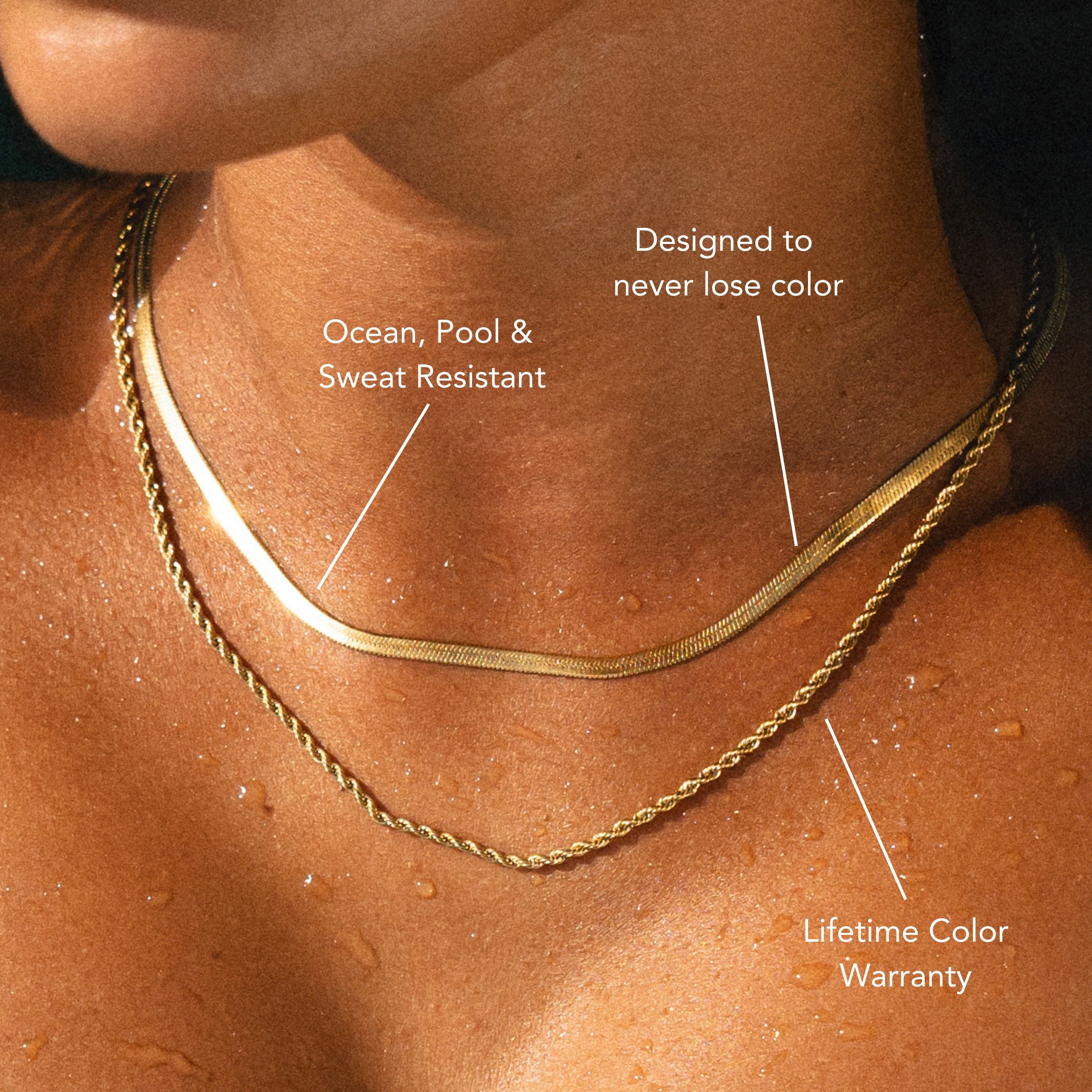
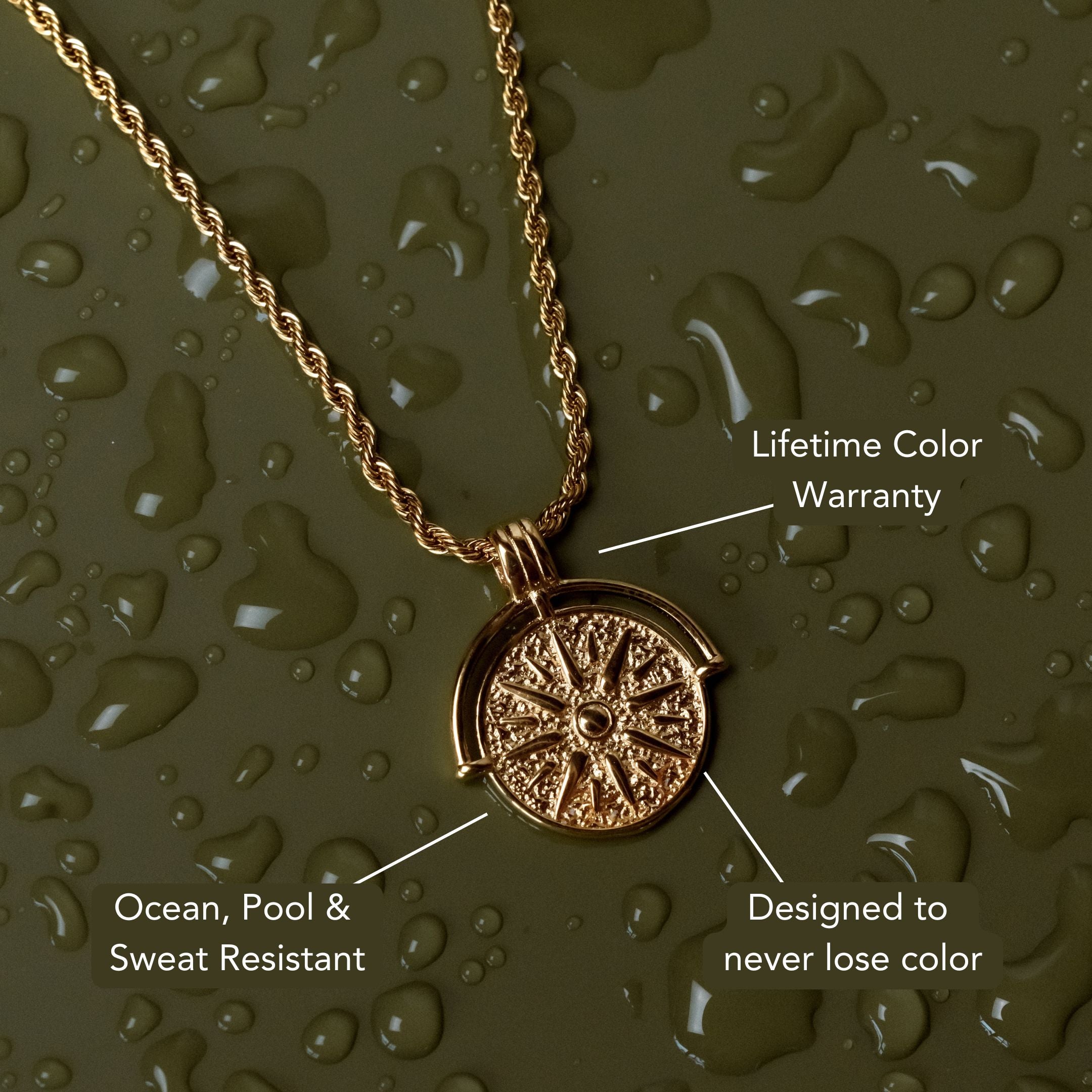
For pearl pieces set in metal, the base metal construction matters for long-term appearance. PVD-coated stainless steel settings resist tarnishing around the pearl and maintain their appearance without the metal discoloration that sterling silver settings develop over time. ATOLEA's freshwater pearl range pairs genuine pearl components with waterproof construction and a lifetime color warranty on the metal elements, which keeps both the pearl and its setting looking consistent through daily wear.
Frequently Asked Questions
Are freshwater pearls real pearls?
Yes. Freshwater pearls are genuine cultured pearls produced by freshwater mussels through the same nacre deposition process as saltwater pearls. They are not imitation, synthetic, or simulated pearls. The distinction between natural and cultured applies to all commercial pearl types: natural pearls form without human intervention while cultured pearls are grown with an initial tissue or bead implant. Freshwater pearls are cultured but genuinely pearl material throughout their structure.
Are freshwater pearls lower quality than saltwater pearls?
Not categorically. Freshwater pearls vary enormously in quality within their production range, as do saltwater pearls. Top-grade freshwater pearls with high luster, near-round shape, and clean surfaces are beautiful and durable gemstones that compare favorably with mid-grade Akoya pearls. The optical difference between high-grade freshwater luster and high-grade Akoya mirror luster is real but requires direct comparison to perceive. At lower grades, freshwater pearls do show the chalky, irregular quality associated with the category's reputation. Quality selection matters far more than pearl type alone.
How long do freshwater pearls take to grow?
Freshwater pearl growing cycles typically run two to seven years depending on the size and quality target. Shorter cycles of two to three years produce smaller pearls with thinner nacre. Longer cycles of five to seven years produce larger, rounder pearls with deeper nacre development. The solid nacre structure of freshwater pearls means longer growth cycles produce a higher proportion of nacre by volume than comparable saltwater pearls grown over the same period.
Do freshwater pearls come in different colors?
Yes, naturally. White, cream, pink, lavender, and peach tones all occur naturally in freshwater pearls depending on the mussel species and the water conditions during growth. These natural overtone colors are one of the qualities that distinguish freshwater pearls aesthetically from the predominantly white and cream tones of Akoya pearls. Dyed freshwater pearls in vivid or dark colors are also widely available and should be disclosed as dyed at point of sale.
How can you tell freshwater pearls from imitation pearls?
The tooth test is the most reliable at-home check: rub the pearl gently against the edge of a front tooth. Real freshwater pearls have a slightly gritty texture from their crystalline nacre surface. Imitation pearls made from glass or plastic feel smooth or waxy. Weight is a secondary indicator: real pearls are denser than most imitation materials of the same size. The depth and quality of the luster under natural light also distinguishes genuine nacre from surface-coated imitations, which show a flatter, more uniform surface reflection without the depth of genuine pearl luster.
Understanding Freshwater Pearls Before You Buy
What are fresh water pearls is answered most accurately by their formation: solid-nacre cultured pearls produced by freshwater mussels, distinct from saltwater pearls in their nacre structure, luster character, natural colors, and price range. The category's reputation for lower quality reflects the wide range within freshwater production rather than a ceiling on what the best freshwater pearls achieve. Evaluating luster, surface quality, shape, and size independently of pearl type gives you the framework to identify genuine quality in freshwater pearls at a price point that saltwater alternatives cannot match.











コメントを書く
このサイトはhCaptchaによって保護されており、hCaptchaプライバシーポリシーおよび利用規約が適用されます。