

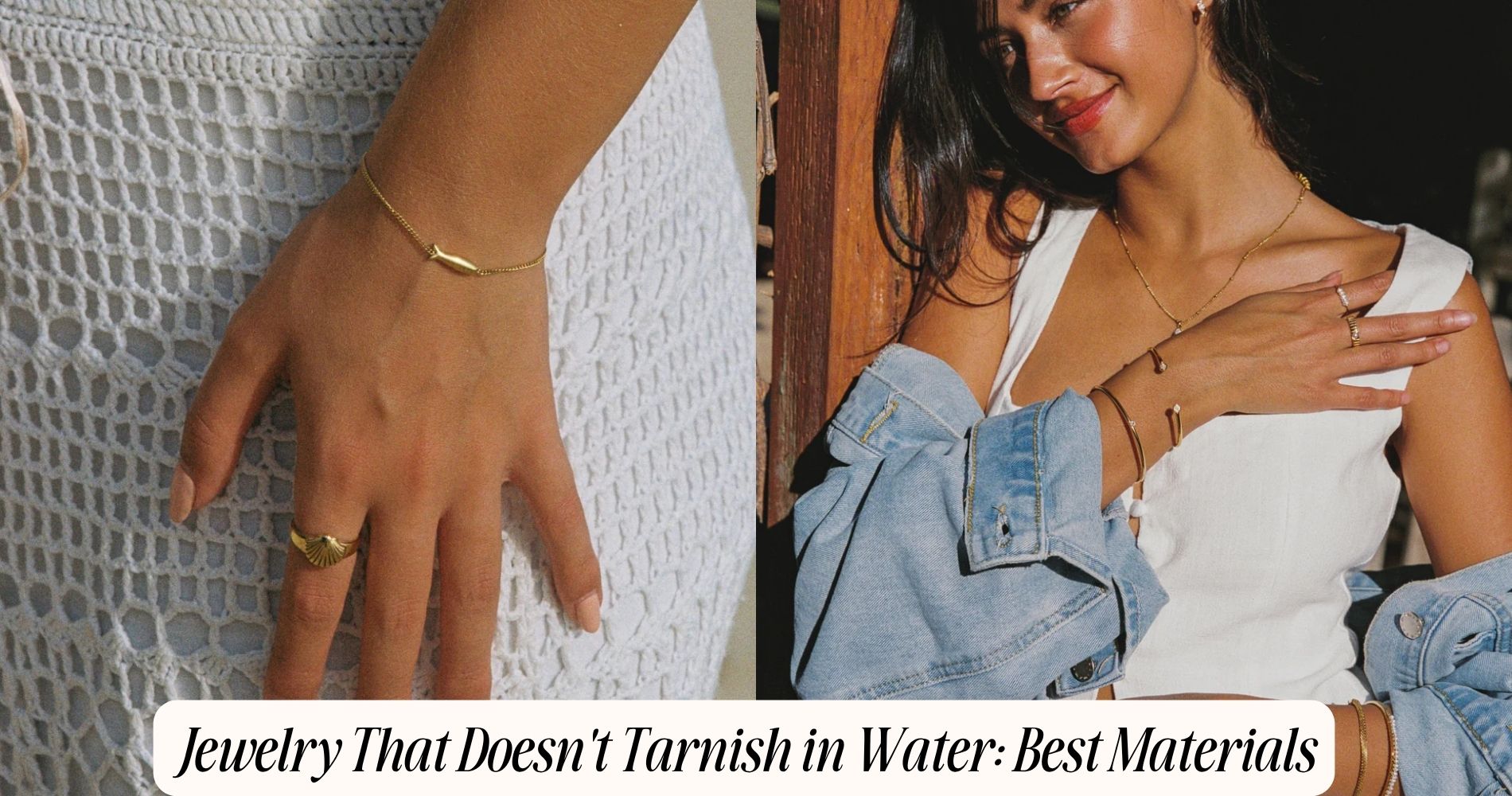
Jewelry That Doesn't Tarnish in Water: Best Materials
Jewelry that survives a shower is one thing. Jewelry that doesn't tarnish in water through months of daily swimming, gym sessions, and beach days is a different category entirely. Most pieces marketed as water-resistant handle brief exposure but degrade with the kind of regular, sustained contact that an active lifestyle involves. Waterproof Jewelry built for continuous wear solves that problem at the material level. This guide covers which materials genuinely resist water-related tarnishing, how water damages jewelry that is not built for it, and what to check before buying a piece you plan to keep on.
How Water Causes Tarnishing in Jewelry
Water itself is not the primary cause of tarnishing, but it accelerates the reactions that are. Understanding that distinction helps you evaluate which materials actually protect against the problem.
Fresh water from showers and pools contains dissolved minerals and, in the case of pool water, chlorine. As water evaporates from a jewelry surface, those minerals concentrate and leave deposits in link joins, settings, and surface texture. Over time those deposits dull the finish and trap moisture against the metal, accelerating further reactions.
Chlorine is particularly aggressive. It is a reactive halogen added to pools specifically to break down organic compounds, and it reacts readily with the copper and brass base metals used in most fashion jewelry. Chlorine attacks the bond between a plating layer and its base metal, loosening it with each exposure until the plating lifts and the reactive base metal underneath is in direct contact with skin and water.

Salt water introduces a corrosive compound that draws moisture into metal surfaces and promotes oxidation at an accelerated rate. Ocean swimming also involves sand abrasion that physically removes thin plating layers faster than water alone would.
Sweat compounds all of these effects. It contains salt, acids, and trace compounds that react with copper-containing alloys to produce the green skin discoloration most people associate with low-quality jewelry. A piece worn through a Pilates session or a beach swim encounters all of those conditions simultaneously.
The result is that jewelry not built for water exposure degrades through a combination of chemical reaction, mechanical abrasion, and sustained moisture contact. Pieces that resist this do so because their base material does not participate in those reactions, or because their protective layer is thick and stable enough that water cannot penetrate it.
Jewelry That Doesn't Tarnish in Water: The Materials That Qualify
Four material categories genuinely resist water-related tarnishing through the conditions an active lifestyle produces.
PVD-coated stainless steel
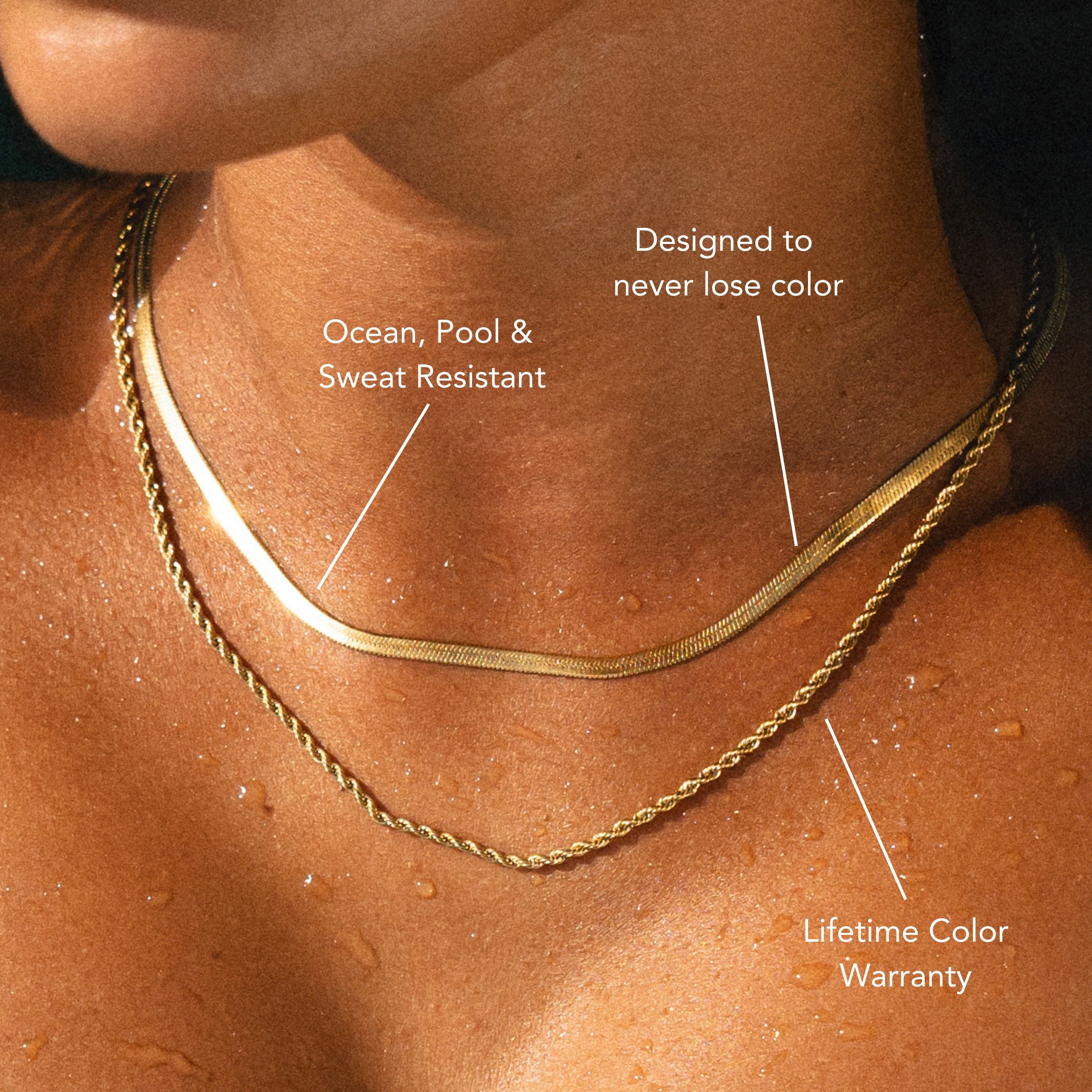
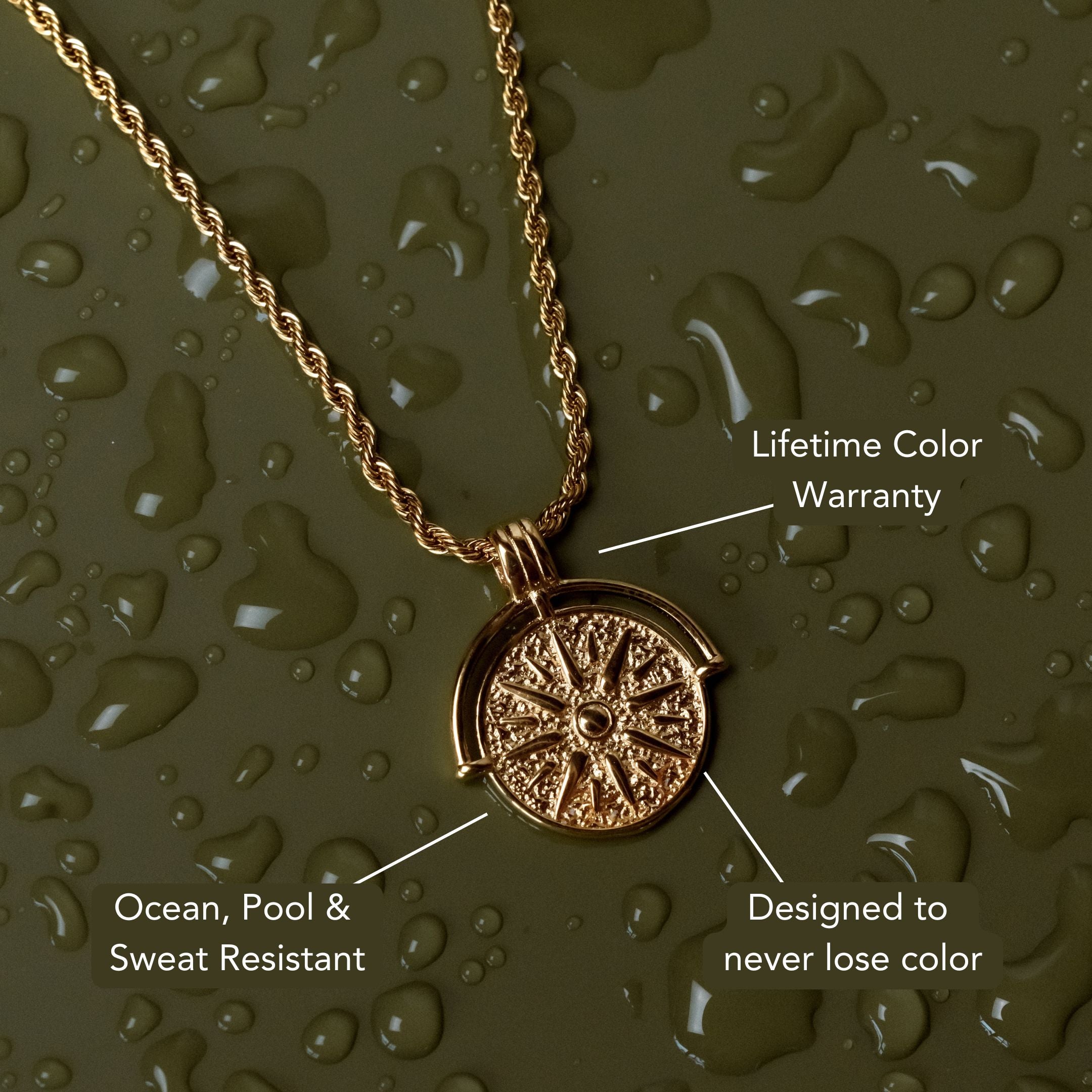
PVD (Physical Vapor Deposition) coating over a surgical steel base is the most practical water-resistant jewelry material at an accessible price point. The PVD process deposits the finish layer in a vacuum environment at the molecular level, creating a bond 10 times thicker than standard electroplating. That thickness and bonding method means the finish does not have the adhesion vulnerabilities of standard plating. Chlorine, salt water, fresh water, and sweat do not penetrate or lift it.
The stainless steel base beneath the PVD layer is 316L surgical grade, which forms a stable chromium oxide surface that prevents corrosion from reaching the iron content in the alloy. The combination of a non-reactive base metal and a molecularly bonded finish layer produces jewelry that holds its appearance through daily pool sessions, ocean swims, and shower wear without requiring removal or special care.

Solid gold at 14k and above
Gold does not react with water, chlorine, salt, or the compounds present in sweat and skincare products. At 14k, the alloy contains enough gold by weight that its fundamental non-reactive character carries through to the piece's behavior in water. A solid gold ring, necklace, or bracelet worn through daily swimming holds its appearance over years rather than months.
The limitation is price. Solid gold jewelry sits at a price point that places it outside the everyday accessible range for most buyers, particularly for pieces worn through activities where loss or damage is possible.
Surgical-grade stainless steel (316L)
Uncoated 316L stainless steel resists water-related tarnishing because its chromium content passivates the surface against corrosion. It does not react with chlorine, salt water, or fresh water, and does not tarnish or pit under sustained immersion. Its natural finish is a cool silver-gray. For gold or warm-toned finishes, a PVD coating is applied over the steel base.
Surgical steel is the standard material for body jewelry worn in piercings continuously because its stability through water exposure and skin contact is clinically verified rather than just marketing language.
Titanium
Titanium forms a stable oxide layer on its surface that passivates it completely against water, salt, and chlorine. It does not tarnish, does not corrode, and does not react with skin chemistry. It is lighter than stainless steel for the same volume, which makes it comfortable for pieces worn continuously including through sleep and swimming.
Titanium's limitation for everyday accessible jewelry is the design range available. It is harder to work at fine scales than stainless steel, which limits style variety at lower price points.
Materials That Fail in Water: A Direct Comparison
| Material | Water Resistance | Chlorine Resistance | Salt Water Resistance | Tarnish Timeline With Daily Swim Wear |
|---|---|---|---|---|
| PVD-coated stainless steel | Excellent | Excellent | Excellent | Does not tarnish |
| Solid gold (14k+) | Excellent | Excellent | Excellent | Does not tarnish |
| Surgical steel (316L) | Very good | Very good | Very good | Does not tarnish |
| Titanium | Excellent | Excellent | Excellent | Does not tarnish |
| Sterling silver | Poor | Very poor | Very poor | Days to weeks |
| Gold-plated brass | Poor | Poor | Poor | 1 to 4 months |
| Gold-filled | Moderate | Moderate | Poor | 6 to 18 months |
| Rhodium-plated silver | Poor | Poor | Poor | 1 to 6 months |

What to Look for When Buying Water-Resistant Jewelry
Marketing language around water resistance is inconsistent across the jewelry industry. A few specific checks protect against buying a piece that does not hold up to the use you have in mind.
The base metal specification matters more than the finish description. A piece described as water-resistant tells you nothing about the material. A piece described as PVD-coated 316L stainless steel tells you the base metal and the coating method, both of which you can evaluate independently. Always look for the base metal name in the product description.
Coating method distinguishes durable finishes from standard plating. Electroplated finishes are thin and applied through a process that does not create a molecular bond with the base metal. PVD coating is applied through a vacuum deposition process that bonds at the molecular level. The thickness difference between these two methods is approximately tenfold, and the bonding difference determines whether the finish lifts with sustained water exposure.

Warranty terms signal material confidence. A brand offering a lifetime color guarantee on pieces intended for water wear is making a verifiable claim. ATOLEA provides a lifetime color warranty on every piece in its waterproof range, with replacement if any piece loses its color, regardless of how it has been worn. That kind of guarantee is only sustainable if the material genuinely performs through water exposure.
Hypoallergenic construction matters specifically for pieces worn through water and sweat. Water and perspiration both amplify contact between metal and skin, which means any nickel content in the alloy has more opportunity to cause reactions during swimming or exercise. PVD-coated stainless steel and titanium are both nickel-free, which eliminates that risk for sensitive skin.
Frequently Asked Questions
What jewelry can you wear in the shower every day?
PVD-coated stainless steel, solid gold at 14k and above, and surgical-grade stainless steel all handle daily shower wear without tarnishing or losing their finish. Sterling silver, gold-plated, and brass pieces are not designed for daily shower exposure and will show visible degradation within weeks of regular contact with water and soap.
Does gold-plated jewelry tarnish in water?
Yes. Gold-plated jewelry uses a thin gold layer over a reactive base metal, typically brass or copper. Water, particularly chlorine in pool water, attacks the bond between the plating and the base metal. Once the plating layer is compromised, the reactive base metal tarnishes and discolors rapidly. Gold-plated pieces worn through regular swimming typically show finish degradation within one to four months.
Can I wear jewelry in the ocean without it tarnishing?
Only if the piece is made from a material that resists salt water corrosion. PVD-coated stainless steel, solid gold, surgical steel, and titanium all resist salt water without tarnishing. Sterling silver, brass, and copper-based metals corrode quickly in ocean conditions. Even brief ocean swimming repeated regularly will damage pieces made from those materials.
What is the best waterproof jewelry for an active lifestyle?
PVD-coated stainless steel provides the best combination of water resistance, finish durability, and accessible price for people who swim, work out, and wear jewelry continuously. It handles chlorine, salt water, sweat, and daily shower contact without tarnishing, and does not cause skin reactions on sensitive skin. Solid gold offers equivalent water resistance at a significantly higher price point.
How do I know if jewelry is genuinely waterproof?
Check for a specific base metal and coating method in the product description. PVD coating over 316L stainless steel is the combination that genuinely holds through sustained water exposure. Look for a warranty on the color or finish. Brands confident in their material durability back it with a guarantee. If the description uses only the terms water-resistant or waterproof without specifying materials, request clarification before purchasing.
Conclusion
Jewelry that doesn't tarnish in water is defined by what it is made from, not how it is described on a label. PVD-coated stainless steel, solid gold at 14k and above, surgical-grade steel, and titanium all hold up through showers, pools, ocean swims, and gym sessions without the tarnishing and finish degradation that affect standard plated and sterling silver pieces. Of those, PVD-coated stainless steel sits at the intersection of genuine water resistance and everyday accessible pricing, which makes it the practical answer for jewelry worn through an active daily life without conditions on when it comes off.









コメントを書く
このサイトはhCaptchaによって保護されており、hCaptchaプライバシーポリシーおよび利用規約が適用されます。