



How to Tell the Difference Between Freshwater and Saltwater Pearls: Complete Guide
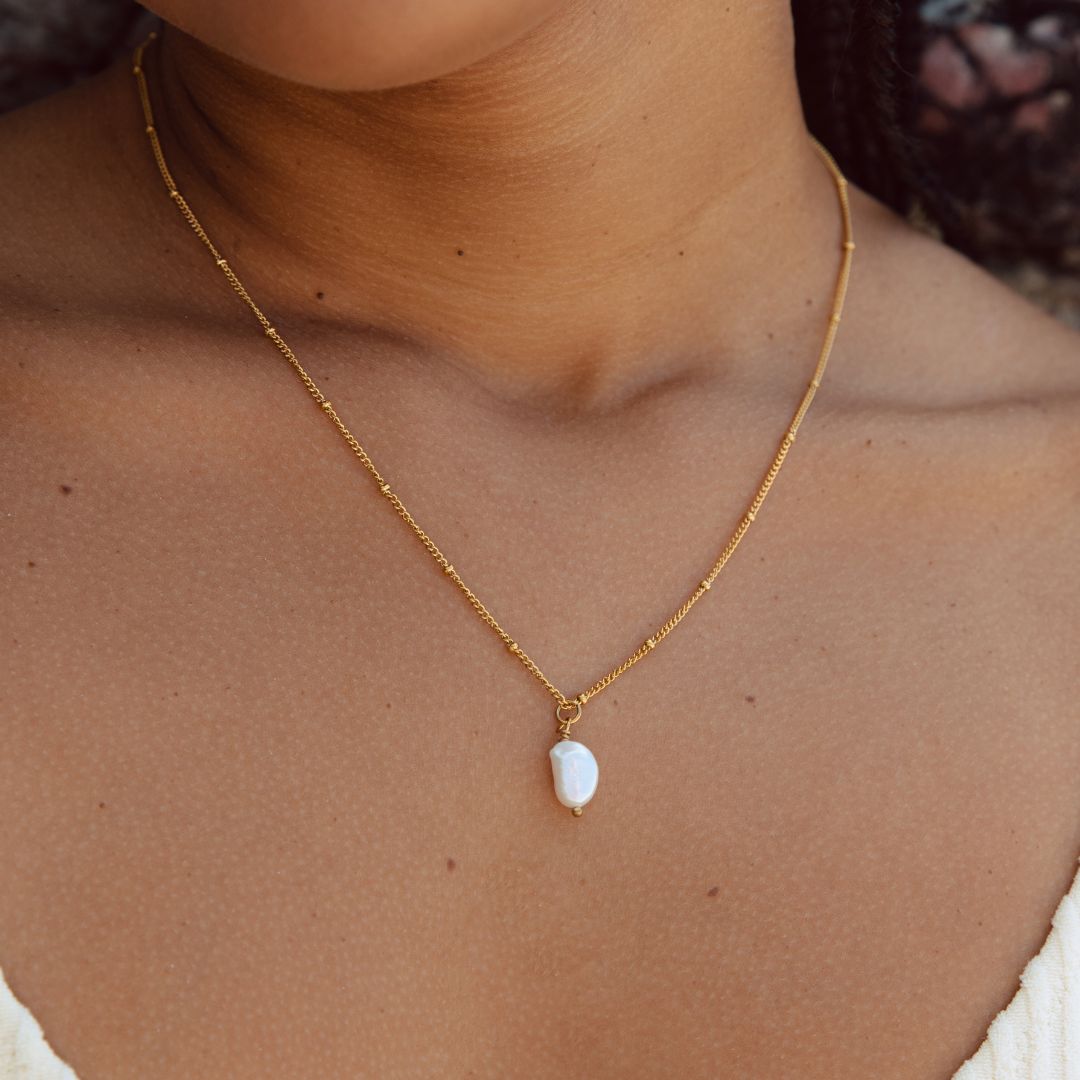
Pearls are often grouped together as one type of gemstone, but there are actually significant differences between freshwater and saltwater varieties that affect everything from appearance to price. Knowing how to tell the difference between freshwater and saltwater pearls can help you shop more confidently and understand exactly what you are paying for. If you love the natural, understated beauty of freshwater pearls, our Freshwater Pearls Jewelry collection offers a range of designs that showcase their unique charm.
In this guide, we will cover the key differences between freshwater and saltwater pearls, how each type forms, and how to identify them when shopping.
Where Freshwater and Saltwater Pearls Come From
The most fundamental difference between these two pearl types lies in where they are cultivated. Freshwater pearls grow in freshwater mussels, typically found in lakes, rivers, and ponds, with China being the dominant producer of freshwater pearls today. Saltwater pearls, on the other hand, form in oysters living in oceans and seas, with major producing regions including Japan, known for Akoya pearls, French Polynesia, known for Tahitian pearls, and various locations in the South Pacific, known for South Sea pearls.
This difference in habitat is the root cause of nearly every other distinction between the two pearl types, from shape and size to overall value.

Shape Differences
One of the most noticeable differences between freshwater and saltwater pearls is their typical shape. Freshwater pearls are often slightly irregular or asymmetrical, sometimes described as having a more organic, baroque appearance. This is because freshwater mussels can produce multiple pearls within a single shell at once, and the pearls often grow using a different nucleation method that naturally results in more varied shapes.
Saltwater pearls, particularly Akoya pearls, tend to be more consistently round and symmetrical. This is partly due to the nucleation process used in saltwater pearl farming, which typically involves inserting a round bead nucleus that the oyster coats with layers of nacre, resulting in a more uniformly spherical shape.
That said, perfectly round freshwater pearls have become increasingly available in recent years as cultivation techniques have improved, so shape alone is not always a definitive indicator of pearl type.
Luster and Surface Quality
Luster, the way light reflects off a pearl's surface, is another area where freshwater and saltwater pearls often differ. Saltwater pearls, particularly Akoya pearls, are generally known for their sharp, mirror like luster, a result of the thicker, more uniform nacre layers that develop during their typically longer cultivation period in saltwater environments.
Freshwater pearls tend to have a softer, more satin like luster compared to the sharper shine of saltwater varieties, though high quality freshwater pearls have improved significantly in recent decades and can now rival saltwater pearls in overall shine and surface quality.

Size Comparison
Size is another area where meaningful differences often appear. Freshwater pearls are typically produced in a wide range of sizes, from very small seed pearls to larger statement sized pearls, since the nucleation process allows farmers more flexibility in cultivation. South Sea pearls, a type of saltwater pearl, are known for being among the largest cultured pearls available, often significantly larger than typical Akoya or freshwater varieties.
Akoya pearls, another common saltwater type, tend to fall into a relatively consistent small to medium size range, making them a classic choice for traditional pearl strands and stud earrings.
Color Variations
Both freshwater and saltwater pearls occur in a range of natural colors, though certain colors are more commonly associated with specific types. Freshwater pearls often appear in white, cream, pink, lavender, and peach tones, offering a soft, naturally varied color palette. Saltwater pearls can display their own distinct colors depending on the specific variety, with Tahitian pearls known for dark, often black or gray tones with green, blue, or purple overtones, and South Sea pearls known for warm white, cream, and golden hues.
This color variation means that identifying pearl type by color alone is not always reliable, since overlap exists between certain freshwater and saltwater varieties.
Price Differences
Price is often one of the most practical ways to distinguish between freshwater and saltwater pearls, since the two types typically occupy very different price points. Freshwater pearls are generally more affordable due to a more efficient cultivation process that allows multiple pearls to be grown within a single mussel at once, significantly increasing overall yield per harvest.
Saltwater pearls, particularly Akoya, Tahitian, and South Sea varieties, tend to be considerably more expensive. This higher price reflects a combination of factors, including a typically longer cultivation period, a more limited yield per oyster, often just one pearl per oyster, and the labor intensive conditions required for saltwater pearl farming.

How Nucleation Affects Pearl Type
The nucleation process, meaning how a pearl begins forming inside its host mollusk, differs significantly between freshwater and saltwater cultivation methods. Saltwater pearls are typically nucleated using a round bead, often made from mussel shell, which the oyster then coats in nacre over time, resulting in a more consistently spherical shape with a solid, uniform nucleus bead at its center.
Freshwater pearls are more commonly nucleated using a small piece of mantle tissue rather than a bead, meaning the resulting pearl is composed almost entirely of nacre throughout, without a large bead nucleus at the core. This difference can sometimes be observed if a pearl is cut in half, since freshwater pearls typically show solid nacre throughout, while saltwater pearls often reveal a bead nucleus at the center.
How to Identify Pearl Type When Shopping
For most shoppers, a combination of a few simple observations can help identify whether a pearl is likely freshwater or saltwater. Checking the price point relative to size and quality often provides a strong initial indicator, since saltwater pearls of comparable size and quality typically command significantly higher prices. Examining the shape and consistency across a strand can also help, since perfectly matched, highly symmetrical pearls are more commonly associated with saltwater varieties, particularly Akoya pearls.
Asking the retailer directly about the specific pearl type and origin is always the most reliable method, since reputable sellers should be able to confirm whether a piece features freshwater or saltwater pearls, along with relevant details about cultivation origin and any treatments applied.
Which Type Is Better
Neither freshwater nor saltwater pearls are inherently better than the other, since each offers distinct advantages depending on personal preference and budget. Freshwater pearls offer excellent value, a wide range of natural colors and shapes, and increasingly impressive quality at accessible price points. Saltwater pearls offer a more classic, uniformly round appearance and often superior luster, particularly in higher end Akoya, Tahitian, and South Sea varieties, though typically at a significantly higher price point.
Choosing between the two often comes down to budget, desired aesthetic, and whether a perfectly round, high luster finish or a more organic, varied natural look feels like the better fit for your personal style.

Final Thoughts
Learning how to tell the difference between freshwater and saltwater pearls comes down to understanding a few key factors, including shape, luster, size, color, and price. While saltwater pearls are often associated with a more classic, uniformly round appearance and higher cost, freshwater pearls offer excellent value and an increasingly impressive range of shapes, colors, and quality levels.
Whether you are drawn to the affordability and natural variation of freshwater pearls or the classic luster of saltwater varieties, understanding these differences helps you make a confident, informed choice for your next pearl purchase.
Frequently Asked Questions
1. How can I tell if a pearl is freshwater or saltwater just by looking at it? Freshwater pearls often have a slightly irregular shape and softer luster, while saltwater pearls, particularly Akoya, tend to be more consistently round with a sharper, mirror like shine.
2. Are freshwater pearls less valuable than saltwater pearls? Generally yes, freshwater pearls are typically more affordable due to a more efficient cultivation process, though high quality freshwater pearls can still be quite valuable.
3. Why are saltwater pearls more expensive than freshwater pearls? Saltwater pearls usually require a longer cultivation period and yield fewer pearls per oyster, often just one, making the overall production process more labor intensive and costly.
4. Do freshwater and saltwater pearls come in different colors? Yes, freshwater pearls commonly appear in white, cream, pink, and lavender tones, while saltwater varieties like Tahitian pearls are known for darker colors with unique overtones.
5. Is the best way to confirm pearl type to ask the seller? Yes, asking a retailer directly about the specific pearl type and origin is the most reliable way to confirm whether a piece features freshwater or saltwater pearls.










コメントを書く
このサイトはhCaptchaによって保護されており、hCaptchaプライバシーポリシーおよび利用規約が適用されます。