

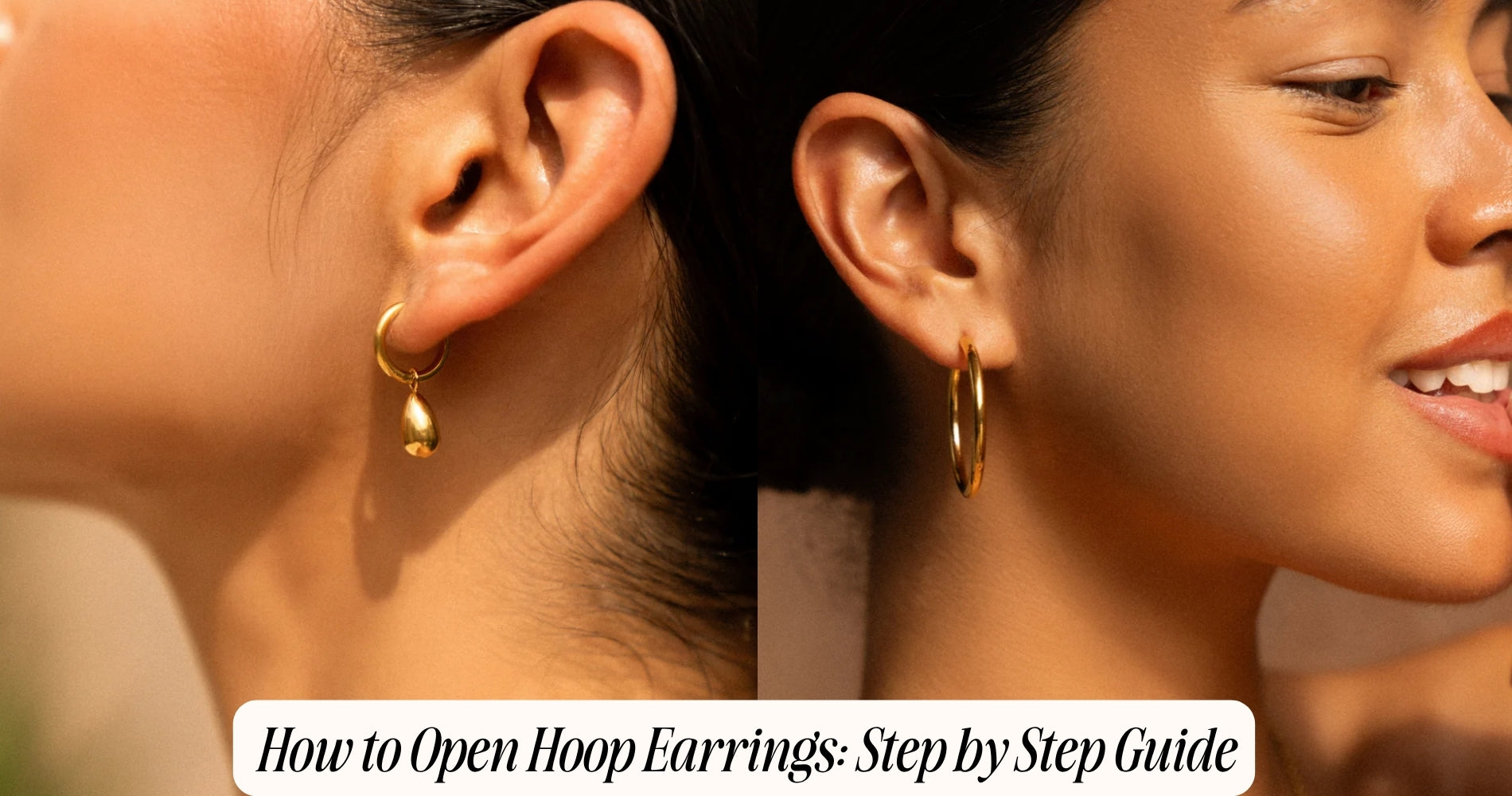
How to Open Hoop Earrings: Step by Step Guide
If you have ever stood in front of the mirror fumbling with a pair of hoop earrings, unsure which part moves or how it is supposed to open, you are far from alone. Hoop earrings come in several different closure styles, and each one opens just a little differently. Once you know which type you are working with, putting them on becomes second nature.
In this guide, we will walk through the most common hoop earring closures, how to open hoop earrings, and a few tips to make it easier. We will also point you toward comfortable, skin-friendly options from our Hypoallergenic Hoop Earrings collection if you are in the market for a new pair.
Why Hoop Closures Vary So Much
Unlike stud earrings, which almost always use the same push-back closure, hoops come in a wide range of styles. This variety exists because hoops need to loop through the ear and close securely without slipping out, while staying comfortable and easy to take on and off.
The four most common types of hoop closures are hinged snap closures, clicker closures, latch-back closures, and the classic French wire or hook style. Each one works a little differently, so let's break down how to open and close each type step by step.

1. Hinged Snap Hoops
Hinged snap hoops are one of the most popular styles, especially for smaller and medium-sized hoops. These hoops have a small hinge on one side and a post that snaps into place on the other, similar to a tiny clasp.
How to open them:
- Look closely at the hoop to find the small hinge, usually located at the back or side of the circle.
- Gently press or pull apart at the hinge point. Many hinged hoops have a small lever or seam that pops open with light pressure.
- Once open, the hoop will separate into two halves, like a tiny gate swinging open.
How to close them:
- Insert the open end of the hoop through your earlobe.
- Bring the two ends back together at the hinge.
- Press gently until you hear or feel a small click, which means the closure has snapped securely into place.
If the hinge feels stiff, avoid forcing it, since hinged closures are often delicate. A little wiggle and gentle pressure usually does the trick.
2. Clicker Hoops
Clicker hoops are known for their sleek, seamless look, since the closure is nearly invisible once fastened. These are popular for cartilage piercings and small, minimalist hoops.
How to open them:
- Locate the small gap or seam in the hoop, which is often harder to see than on hinged styles.
- Gently pull the hoop apart at this seam. Clicker hoops usually open with a slight twisting or pulling motion rather than a hinge swing.
How to close them:
- Insert the hoop through the piercing.
- Line up both ends of the seam carefully.
- Press them together firmly until you feel a small click or snap, confirming the closure is secure.
Because clicker hoops rely on a tight seam for their seamless look, they can take extra practice to open and close smoothly at first.
3. Latch-Back Hoops
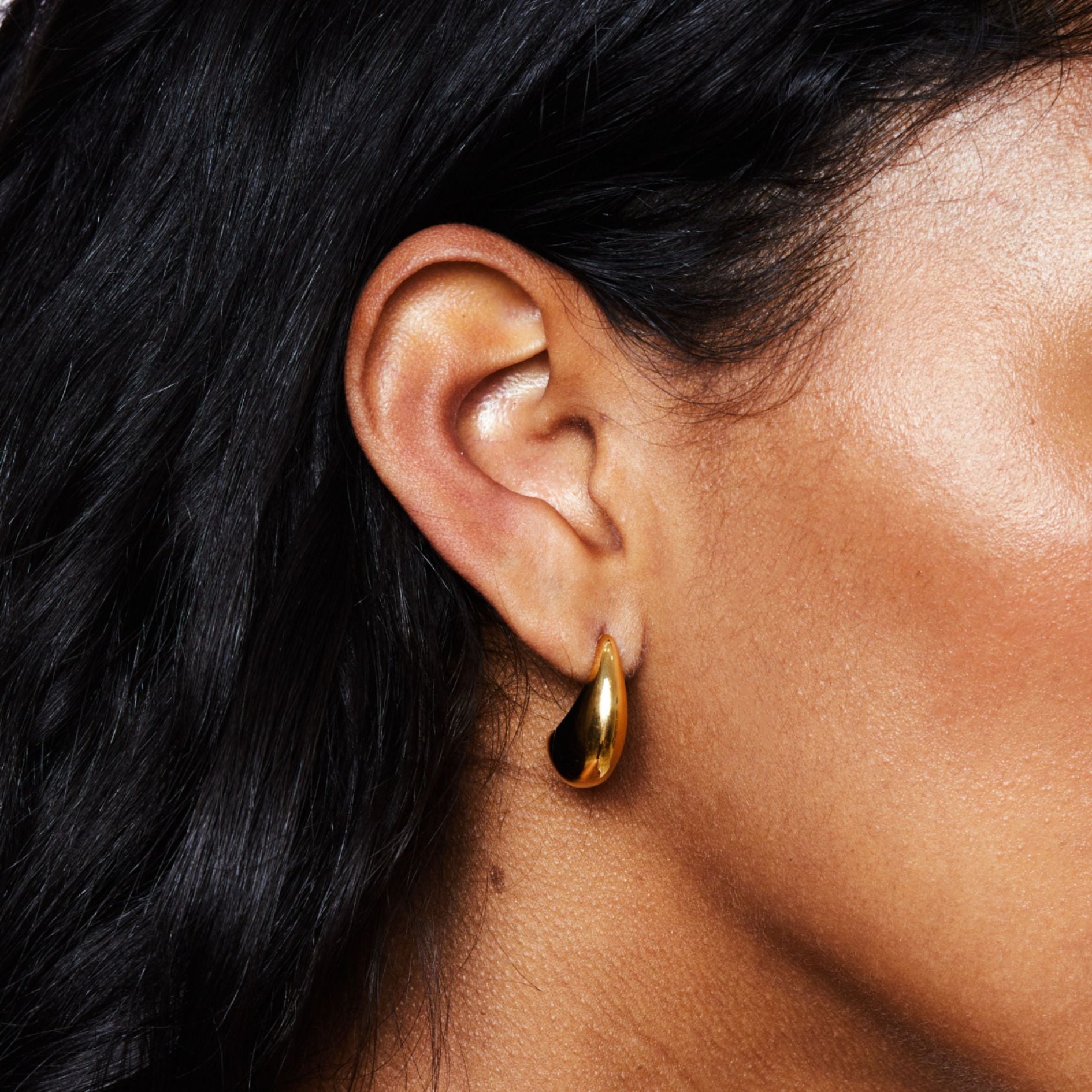
Latch-back hoops, sometimes called huggie hoops, use a small latch mechanism similar to a tiny door hinge. These are popular for both small huggies and larger statement hoops.
How to open them:
- Find the small latch, usually located at the back of the hoop near the post.
- Gently lift or swing the latch open, similar to opening a tiny door.
How to close them:
- Insert the post through your earlobe.
- Swing the latch back into place until it clicks shut.
- Give it a gentle check to make sure it is fully closed and secure before wearing.
Latch-back hoops are generally considered secure and beginner-friendly, since the latch mechanism is easy to see and feel.
4. French Wire and Hook-Style Hoops
This style is less of a true hoop closure and more of a hook that curves into a circular or hoop-like shape. These are common with lightweight, dangly hoop designs.
How to open them:
- There is often no true opening mechanism. Instead, the hook simply slides through the piercing.
- If there is a small safety catch at the end, gently lift it to release the wire.
How to close them:
- Slide the hook through your earlobe.
- If there is a safety catch, snap it back into place to keep the earring secure throughout the day.
This style tends to be the easiest to put on quickly, though it may feel less secure than hinged or latch-back designs during activity.

Tips for Opening and Closing Hoops With Ease
No matter which closure style you are working with, a few simple habits can make the process smoother and help protect your earrings from damage.
Work in good lighting. Small hinges and seams can be hard to see, especially on delicate or minimalist hoops. A well-lit mirror helps.
Use gentle pressure. Forcing a stiff closure can bend or damage the mechanism over time. If a hoop feels difficult to open, try a slight twist or wiggle rather than pulling hard in one direction.
Practice with your fingertips, not nails. Using the pads of your fingers rather than your nails gives you better control and reduces the risk of scratching the metal or your skin.
Double check the closure before wearing. After closing any hoop style, gently tug to confirm it is secure, especially before a busy day or workout.
Clean closures occasionally. Small amounts of buildup from lotion, hair products, or natural oils can make hinges and latches stiffer over time. Wiping them down regularly can help keep the mechanism smooth.
Why Comfortable, Hypoallergenic Hoops Make a Difference
Beyond the closure style, the material of your hoop earrings plays a big role in comfort, especially for those with sensitive ears. Certain metals can cause irritation, redness, or itching, particularly with prolonged wear.
At Atolea, our hoop earrings are designed with both comfort and durability in mind, using hypoallergenic, tarnish-resistant materials that are gentle on sensitive skin while still being easy to open and close throughout the day. Whether you prefer a small huggie hoop for everyday wear or a bold statement piece, choosing a well-made closure paired with skin-friendly materials makes all the difference in how often you actually reach for your hoops.

Final Thoughts
Learning how to open hoop earrings really comes down to identifying which closure style you are working with, whether that is a hinge, a clicker, a latch, or a simple hook. Once you understand the mechanism, putting your hoops on becomes quick and effortless rather than a daily struggle in front of the mirror.
If you are ready to find a pair that is as comfortable to wear as it is easy to put on, explore our collection of hypoallergenic hoop earrings designed for everyday comfort and style.
Frequently Asked Questions
1. Why won't my hoop earring open? It may be a clicker style, which requires a gentle twisting or pulling motion at the seam rather than a swinging hinge. If it still feels stuck, avoid forcing it and check for buildup around the closure.
2. Are clicker hoops harder to put in than hinged hoops? They can be slightly trickier at first since the seam is less visible, but with a little practice, clicker hoops become just as easy to open and close as hinged styles.
3. How do I know if my hoop earring is closed properly? Gently tug on the hoop after closing it. A properly secured closure should feel snug and stay in place without shifting or popping open.
4. Can hoop earring closures be repaired if they break? In many cases, yes. A jeweler can often repair or replace a damaged hinge, latch, or clicker mechanism, especially on higher-quality pieces.
5. What type of hoop closure is best for sensitive ears? Latch-back and hinged styles tend to be beginner-friendly and secure, but the most important factor for sensitive ears is choosing hypoallergenic materials that reduce the risk of irritation.









コメントを書く
このサイトはhCaptchaによって保護されており、hCaptchaプライバシーポリシーおよび利用規約が適用されます。