

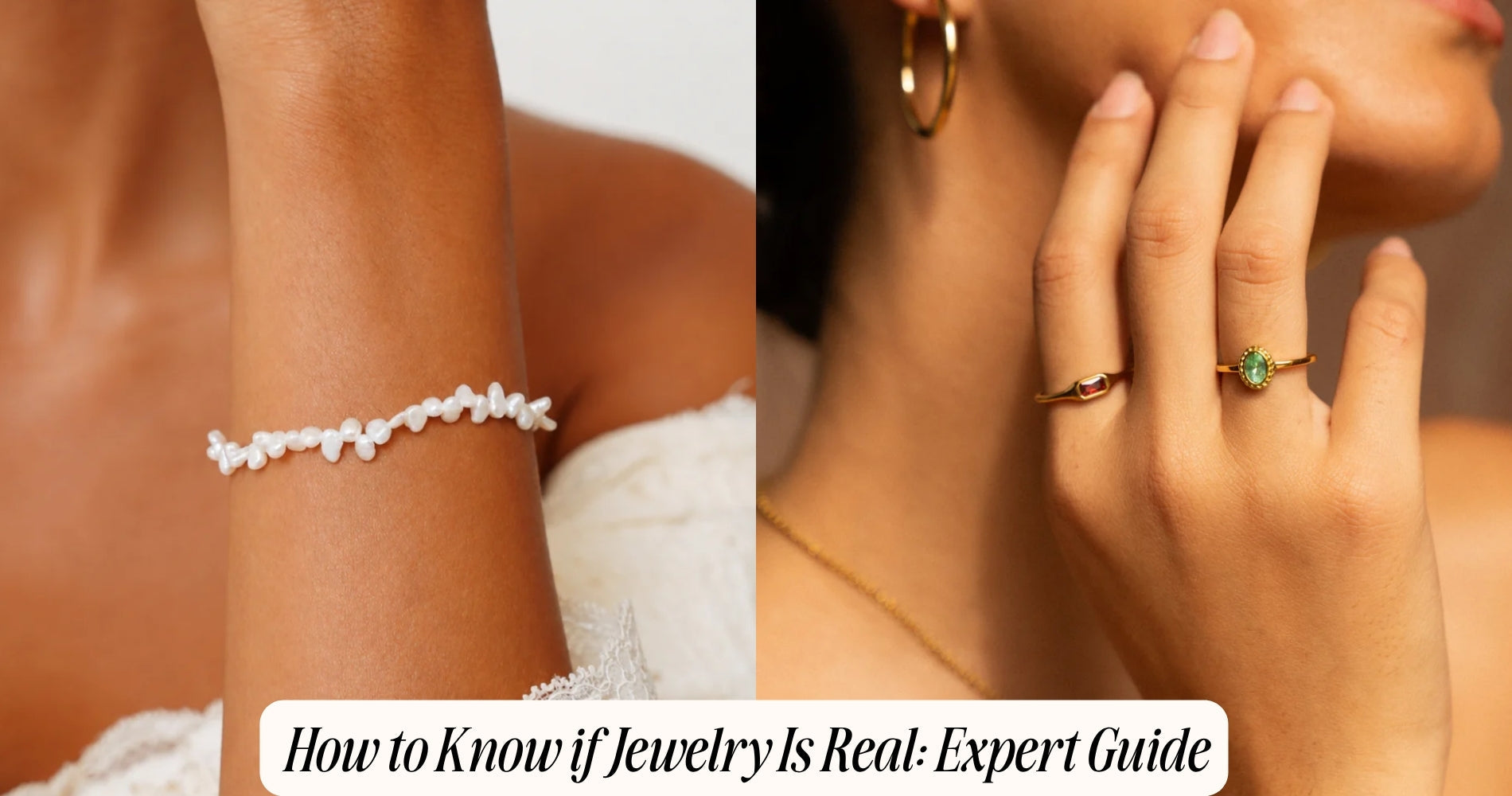
How to Know if Jewelry Is Real: Expert Guide
Whether you inherited a piece, found something at an estate sale, or simply want to confirm what you already own, knowing how to know if jewelry is real starts with understanding that real means different things depending on the material. Real gold, real silver, real gemstones, and real pearls each have their own verification methods, and no single test works across all of them. Sun Jewelry is built and marketed with full transparency about its construction, which is the standard every piece should be measured against. This guide covers hallmark reading, at-home tests for the most common materials, red flags that suggest a piece is not what it claims to be, and when professional verification is worth the cost.
Start With the Hallmark
Before running any physical test, check for a hallmark, the small stamp indicating metal purity, usually located inside a ring band, on a clasp, on the back of an earring post, or at the bail of a pendant.
For gold, look for a karat stamp (10K, 14K, 18K, 24K) or a millesimal fineness number (417, 585, 750, 999). For silver, look for 925 or the word Sterling. For platinum, look for PT950, PT900, or PLAT. The absence of any hallmark on a piece described as solid precious metal is not automatically proof of a fake, since some handmade, vintage, or smaller artisan pieces were never required to carry one, but it is a signal to investigate further before trusting the claim.
A hallmark alone is not definitive proof, since stamps can be applied inaccurately or, less commonly, counterfeited. It is the starting point for verification, not the final word, which is why the physical tests below matter as a next step.
How to Know if Jewelry Is Real: Testing Gold
The magnet test is the simplest first check. Real gold is not magnetic. Hold a strong magnet near the piece. If it is pulled toward the magnet, the base material is likely a ferrous metal with a gold-colored coating rather than genuine gold. A very weak, barely perceptible pull can occur with some gold alloys, but a strong, obvious attraction indicates the piece is not solid gold.
The float test is the second. Solid gold is dense and sinks quickly in water. Drop the piece into a glass of water. Genuine gold sinks directly to the bottom. If it floats or drifts down slowly, the material is likely lighter and less dense than real gold, suggesting a base metal core.
The skin discoloration test is the third. Wear the piece against skin for several hours, particularly in a location prone to sweat. Genuine gold at 14K and above does not typically cause skin discoloration. If the skin beneath the piece turns green or black, the piece likely has significant base metal content, either a low-karat alloy or a plated piece with the plating already compromised.
The acid test is the most definitive but should be left to professionals. A jeweler applies a small drop of nitric acid to an inconspicuous scratch on the piece. Real gold shows minimal to no reaction. Base metals react visibly, often with color change or fizzing. This test is destructive on a small scale and best performed by a professional rather than attempted at home.

How to Know if Jewelry Is Real: Testing Silver
Like gold, real silver is not magnetic, so the magnet test applies here too. A strong attraction to a magnet indicates a non-silver base metal.
The ice test is one of the more reliable and dramatic at-home checks. Silver has the highest thermal conductivity of any common metal. Place an ice cube directly on the piece. Genuine silver conducts heat away from the ice so efficiently that the ice begins melting rapidly, noticeably faster than it would on most other metals.
The sound test provides a supplementary check. Drop the piece gently onto a hard surface from a small height. Genuine silver produces a distinct, somewhat bell-like ring. Base metals typically produce a duller, flatter thud. This test requires some experience to interpret confidently.
The tarnish check rounds out the silver tests. Real silver tarnishes over time through exposure to air, developing a gray to black patina, particularly in areas with less air circulation like the back of a pendant. A piece that has been worn for a long period and shows no tarnish at all in low-airflow areas is worth investigating further, since this can indicate a silver-plated surface over a non-reactive base rather than solid silver.

How to Know if Jewelry Is Real: Testing Gemstones
The fog test works specifically for diamonds. Breathe on the stone the way you would fog a mirror. Genuine diamonds disperse heat so efficiently that the fog clears almost immediately, within a second or two. Cubic zirconia and glass imitations hold the fog noticeably longer because they do not conduct heat away as quickly.
The scratch test applies more broadly. Most genuine gemstones used in fine jewelry, diamond, sapphire, ruby, are significantly harder than glass. A genuine stone should not scratch when tested gently against a glass surface, while most glass and lower-hardness imitations will show scratching or will themselves be scratched by the glass. This test should be performed cautiously and is not recommended for stones you are not prepared to risk damaging.
Loupe inspection is a step up in reliability. A jeweler's loupe, a small magnifying tool, inexpensive and widely available, lets you examine a stone closely for natural inclusions, tiny internal characteristics that occur in genuine gemstones formed through geological processes. Perfectly flawless clarity under magnification, especially in a stone sold at a low price, can indicate a synthetic or simulated stone rather than a natural one, though high-quality natural stones with excellent clarity do exist and are simply priced accordingly.
Weight and density offer a final check. Genuine gemstones have a specific density that differs from common glass and plastic imitations. A stone that feels unusually light for its size, particularly in a larger piece, warrants closer inspection.

How to Know if Jewelry Is Real: Testing Pearls
The tooth test is the most accessible pearl check. Gently rub the pearl against the edge of a front tooth. Genuine pearls feel slightly gritty or sandy due to the microscopic crystalline structure of nacre. Imitation pearls made from glass or coated plastic feel smooth or slick against the tooth.
The weight test provides a second data point. Real pearls are denser than most glass or plastic imitations of the same apparent size. Holding a genuine pearl and a convincing imitation side by side, the real pearl typically feels noticeably heavier.
The luster depth check is the third method. Examine the pearl's surface in natural light. Genuine pearls show a glow with visible depth, as though the light is coming from within the pearl rather than simply reflecting off its surface. Imitation pearls typically show a flatter, more uniform surface sheen without that same depth.

Verification Method Summary
| Material | Quick Home Test | What It Reveals |
|---|---|---|
| Gold | Magnet test, float test | Non-precious base metal presence |
| Silver | Ice test, magnet test | Thermal conductivity, base metal presence |
| Diamond | Fog test | Heat dispersion rate |
| General gemstone | Loupe inspection | Natural inclusions vs synthetic clarity |
| Pearl | Tooth test | Nacre crystalline texture |
| Any precious metal | Hallmark check | Stated purity, starting point only |
Red Flags Beyond Physical Tests
A few contextual signals are worth noting alongside physical testing.
A price significantly below the typical market rate for the claimed material and weight is one of the most reliable warning signs, since genuine precious metals and gemstones have production costs that set a practical price floor. Vague or evasive product descriptions that avoid specifying a base metal, karat, or stone type, using only broad terms like gold tone or gemstone without further detail, warrant direct clarification before purchase. A seller unwilling to provide a hallmark close-up photo, a certificate, or basic material specifications for a piece marketed as fine jewelry is a signal to proceed cautiously or request further verification before committing to a purchase.
When to Get Professional Verification
For any purchase of meaningful value, particularly estate jewelry, antique pieces, or anything sold without clear documentation, professional verification is worth the modest cost relative to the purchase price at stake.
A jeweler can perform acid testing or use an electronic metal tester to confirm precious metal content definitively. A certified gemologist, particularly one with GIA credentials, can assess gemstones and pearls with equipment and expertise that at-home tests cannot match, including spectroscopic analysis that identifies treatments and synthetics conclusively. This is the appropriate step for anything you plan to insure, anything with significant claimed value, or anything you are unsure about after at-home testing.
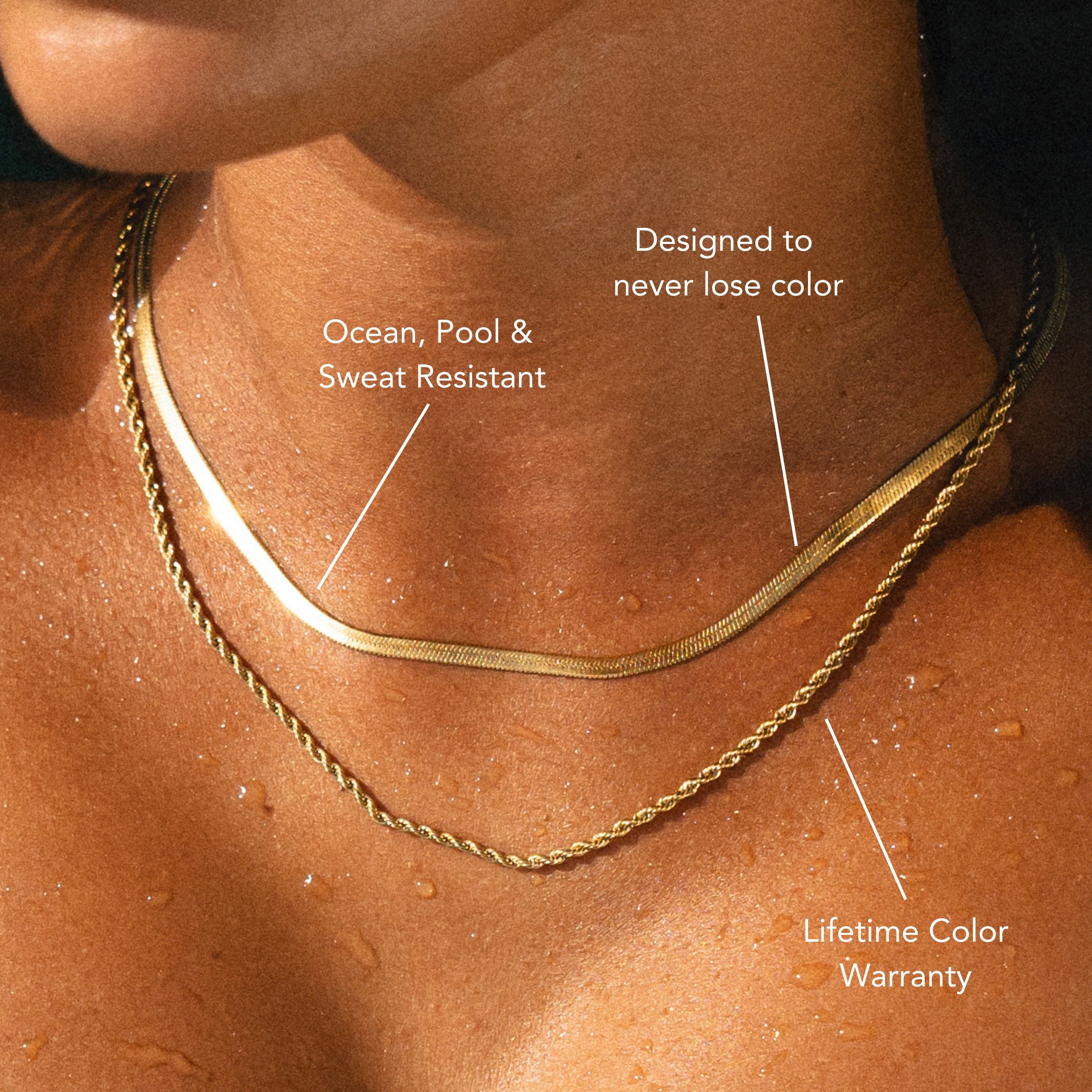
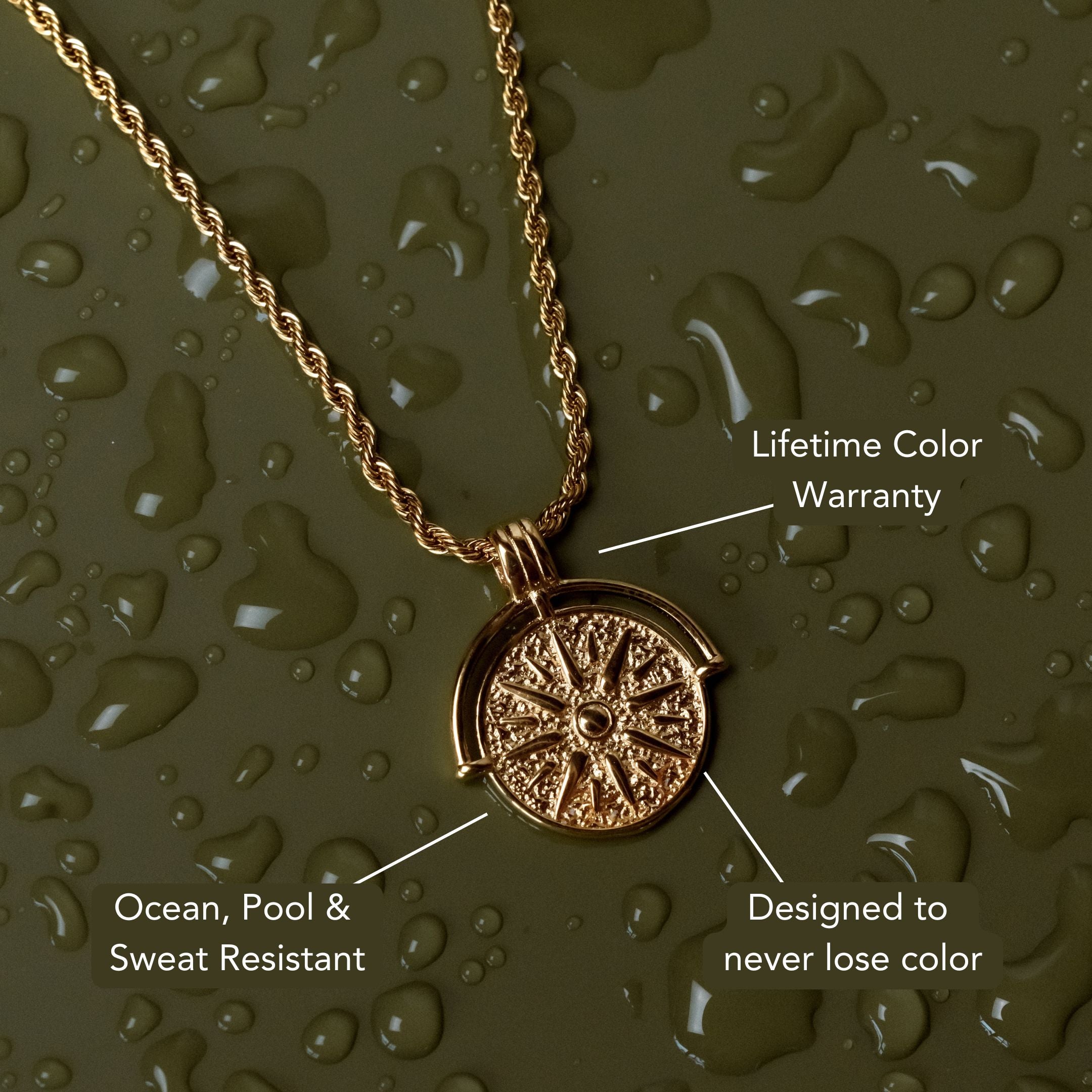
For everyday jewelry purchases where the goal is simply understanding what a piece is actually made from, transparent product descriptions that specify base metal and construction method directly remove most of the guesswork. ATOLEA states its material construction, PVD-coated 316L stainless steel, directly in every product description rather than relying on ambiguous terms, and backs that construction with a lifetime color warranty, which functions as a practical guarantee that the material performs as described.
Frequently Asked Questions
How can I tell if my gold jewelry is real at home?
Try the magnet test first: real gold is not magnetic, so a strong pull toward a magnet indicates a base metal. The float test is a second check: solid gold sinks quickly in water due to its density, while lighter base metals sink slowly or float. Checking for a karat hallmark inside the band or clasp provides a third data point, though it should be confirmed with a physical test rather than trusted alone.
What is the easiest way to test if silver is real?
The ice test is one of the most reliable and easy at-home silver tests. Place an ice cube directly on the piece. Genuine silver has extremely high thermal conductivity and will melt the ice noticeably faster than most other metals, making this a dramatic and easy-to-observe result.
How do you know if a diamond is real without a jeweler?
The fog test is the most accessible at-home check: breathe on the stone to fog it, similar to fogging a mirror. Genuine diamonds disperse heat so quickly that the fog clears within a second or two. Cubic zirconia and glass imitations hold the fog noticeably longer. For a definitive answer, a jeweler's thermal or electrical conductivity tester provides conclusive results.
Can jewelry hallmarks be fake?
Yes, though it is less common than simply omitting a hallmark on a non-genuine piece. A genuine hallmark is pressed cleanly and consistently, matches the piece's apparent weight and density, and is consistent with other markings on the item. If a stamp looks shallow, uneven, or inconsistent with the piece's other details, further testing is warranted before trusting it.
Is it worth paying for a professional jewelry appraisal?
For pieces of significant claimed value, estate or inherited jewelry, or anything you plan to insure, yes. A certified gemologist or jeweler can perform tests and use equipment that at-home methods cannot replicate, providing a definitive answer rather than a probable one. For everyday fashion jewelry with a low claimed value, the cost of formal appraisal often exceeds what a professional opinion would meaningfully add.
Testing With Confidence
How to know if jewelry is real comes down to matching the right test to the right material: magnet and float tests for gold, the ice test for silver, the fog test for diamonds, loupe inspection for gemstones generally, and the tooth test for pearls. A hallmark is a useful starting point but never the final word on its own. For anything of meaningful value, combining a couple of at-home tests with a professional appraisal gives you the most reliable answer, and for everyday purchases, choosing pieces with clear, specific material descriptions from the start removes most of the uncertainty before it begins.









コメントを書く
このサイトはhCaptchaによって保護されており、hCaptchaプライバシーポリシーおよび利用規約が適用されます。