

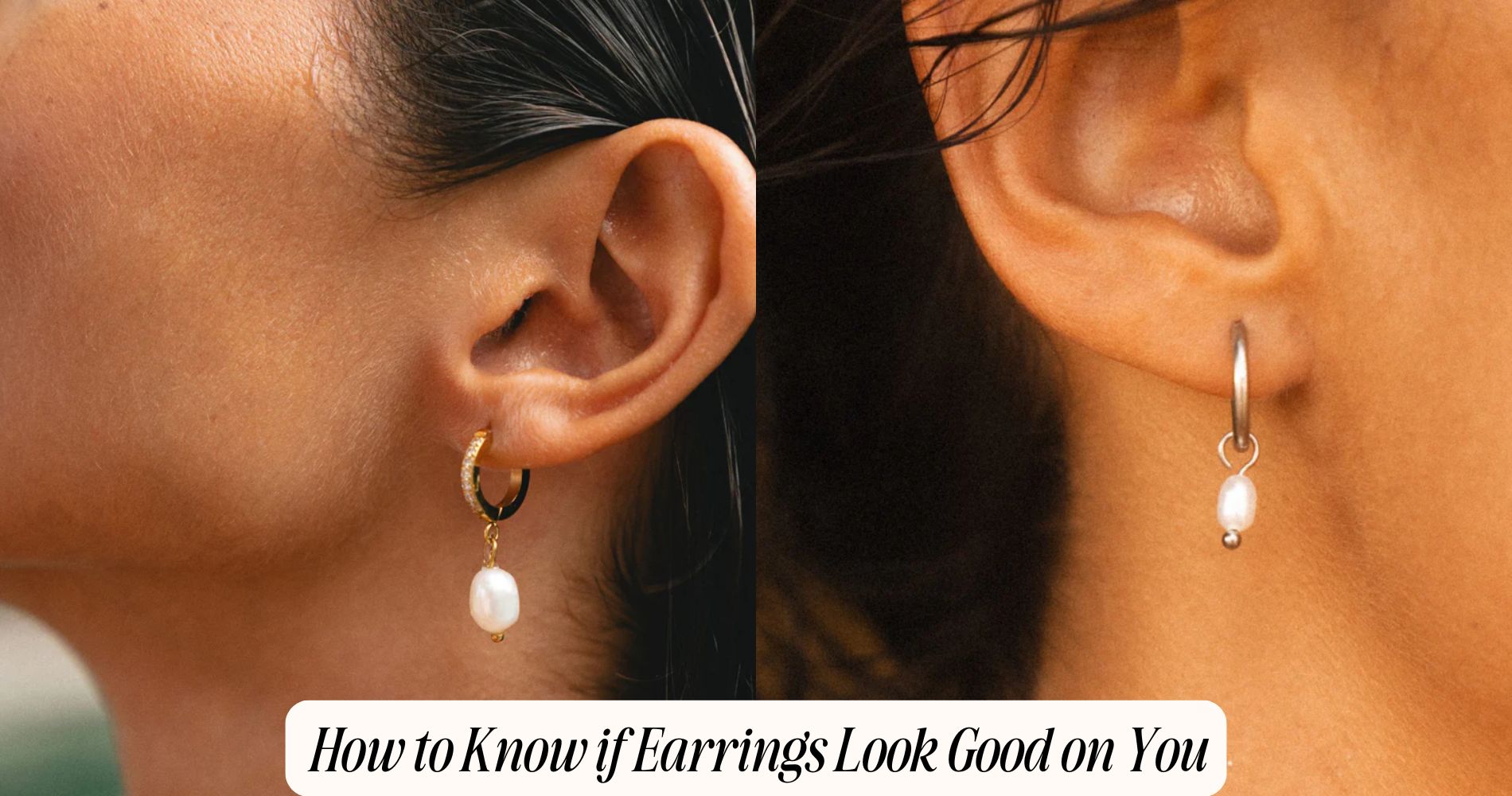
How to Know if Earrings Look Good on You
How do you know if earrings look good on you? Earrings work when they echo your face shape, coloring, and personal style rather than compete with them. Long drops help slim round faces, soft hoops complement square jawlines, and wider silhouettes balance longer faces. Choose metals that match your undertone, and scale size to your bone structure so earrings frame your features without overpowering them. Lightweight, expressive styles—like Vacation Earrings—are especially flattering when they enhance your eyes and smile instead of stealing focus. From here, there’s even more you can master to refine your look.
Understanding Your Face Shape
Before you can judge whether a pair of earrings truly flatters you, you need a clear understanding of your face shape and its proportions.
Start with a quick face shape analysis: pull your hair back, stand in front of a mirror, and note three key measurements—forehead width, cheekbone width, and jawline width—plus overall face length.
Check whether your jaw is rounded, pointed, or squared, and whether your face appears longer than it's wide or closer to equal.
Notice where the widest point sits: forehead, cheeks, or jaw.
This structural map lets you evaluate earring proportions precisely—how long, wide, or voluminous a design can be without overwhelming your features or shortening your neck visually—so every piece supports your natural geometry.
Matching Earring Styles to Face Shapes
Once you know your face shape, you can start pairing it with earring silhouettes that enhance your natural structure instead of fighting it.
If you’ve got a round face, choose long drops or angular geometric pieces that visually lengthen your proportions and skip chunky hoops.
For an oval face, most hoop styles and stud options work; focus on scale—medium to bold sizes keep everything balanced.

If your face is square, soften sharp jawlines with rounded hoops, teardrops, and organic curves.
A heart-shaped face benefits from triangular or chandelier designs that add width near the jaw.
For long or rectangular faces, reach for wider hoops, climbers, or clustered studs that create horizontal emphasis and reduce vertical length.
Considering Your Skin Tone and Undertone
Even the most flattering earring shape can fall flat if the metal and stones fight your skin tone and undertone.
Start with quick undertone analysis: look at your veins in daylight. If they read green, you’re warm; blue or purple, you’re cool; mixed, you’re neutral.
Warm undertones and deeper skin tones wear yellow gold, bronze, and copper exceptionally well, especially with stones like citrine, garnet, tiger’s eye, and warm pearls.
Cool undertones sync with sterling silver, white gold, and platinum, plus icy gems like sapphire, amethyst, emerald, and cool pearls.
If you’re neutral, you can flex trends freely—mixed metals, champagne diamonds, or opalescent stones.
Prioritize pieces that enhance your natural warmth or coolness instead of competing with it.

Working With Your Haircut and Hair Color
Whether you wear a blunt bob, long layers, or a curly shag, your haircut and color can either showcase your earrings or swallow them.
First, study how your hair length frames your jawline and ears. Short crops and sharp bobs expose lobes completely, so you can wear more visually intricate settings without visual noise from your hair. Longer cuts often curtain the face; choose finishes and silhouettes that still read through movement.
Align metal and stone tones with your color. Platinum, cool silver, and icy stones pop against ash blondes and blue-black shades. Warm gold, champagne, and amber stones harmonize with copper, honey blonde, and chocolate brunettes.
If your hair texture is very curly or coily, prioritize snag-free, smooth-edged designs.
Balancing Proportions: Size, Length, and Volume
Because earrings sit so close to your face, their size, length, and volume need to echo your features and overall frame rather than overpower them. You’re aiming for proportion balance: match earring scale to your bone structure, not your height alone.
If you have delicate features, choose slimmer profiles and shorter drops; bolder features can handle chunkier hoops and statement chandeliers.
Length should visually break at flattering points: jawline, collarbone, or just above the shoulder, never where they collide with your neck or clothing lines.
Use volume variation strategically—mix flat, elongated shapes to lengthen a rounder face, or airy open hoops to soften angular jawlines.
Always check from multiple angles; earrings must sit cleanly without distorting your natural contours.

Aligning Earrings With Your Personal Style
Ultimately, earrings have to feel like you, not just look “right” on paper. Use earring trends as a toolbox, not a rulebook.
If you gravitate toward clean lines and neutrals, refined huggies, knife‑edge hoops, and bezel‑set studs echo that streamlined aesthetic. Prefer bold fashion and directional silhouettes? Go for sculptural metals, asymmetrical pairs, or oversized resin pieces that read as intentional personal expression, not clutter.
Map your earrings to your style archetype: minimalist, classic, romantic, edgy, or eclectic. Examine finish, color, and detailing—matte metals feel modern; high‑polish and pavé signal glam; oxidized or hammered textures skew indie and artisanal.
When your earrings visually “speak” the same language as your clothes and makeup, they’ll look inherently right on you.
Testing Comfort, Fit, and Everyday Practicality
How do you actually know if earrings work for your real life, not just your mirror selfie? Start with a quick comfort levels check: after 15–30 minutes, notice pressure on your lobes, tugging when you turn your head, or heat and itching around the piercing. Any sharp pinch from the post or backing is a red flag.
Then do a precise fit assessment. The post should sit perpendicular to your lobe, with no drooping angle. Huggies and hoops should close securely without pinching skin.
Test movement: nod, tilt, and gently shake your head—earrings shouldn’t swing into your neck or tangle in hair or collars.
Finally, ask if you’d wear them for a full workday; if not, they’re not truly practical.
Using Mirrors, Photos, and Lighting to Evaluate
One of the most reliable ways to judge whether earrings actually flatter you is to test them under different mirrors, camera angles, and lighting setups.
Stand in front of a large mirror, then vary mirror angles: straight on, three-quarter turn, and full profile. This reveals how length, drop, and width interact with your jawline and neck.
Next, take photos in natural light, warm indoor light, and cooler LED light to see lighting effects on metal finishes and gemstones.
Zoom in: check if shadows from hoops or chandeliers drag your features down or visually lift them.
Record short videos while you turn your head; movement exposes whether pieces overwhelm your proportions or frame your face in a clean, editorial way.
Building a Go-To Earring Wardrobe You Love
A focused earring wardrobe frees you from decision fatigue and guarantees that almost anything you grab will suit your face, outfit, and day.
Start by defining your earring essentials: everyday studs, small hoops, medium statement hoops, linear drops, and one dramatic pair for events. Choose metals that match your undertone and prioritize consistent proportions that echo your best shapes from earlier evaluations.
Next, refine by texture and finish—mix smooth, high-polish surfaces with brushed, hammered, or pavé details so your options never feel flat.
Then elevate your jewelry organization: use a hanging board for drops and hoops, a compartmentalized tray for studs, and small labeled dishes for pairs in heavy rotation.
Visible, orderly storage makes strong style choices practically automatic.
Frequently Asked Questions
Can I Wear Earrings if I Have Sensitive or Newly Pierced Ears?
Yes, you can, but you must prioritize piercing care. Choose hypoallergenic metals and minimalist earring styles with smooth posts. Avoid heavy designs, clean with saline twice daily, and don’t change earrings until your piercer confirms full healing.
How Do I Prevent Earrings From Causing Infections or Irritation?
You prevent infections by cleaning posts with saline, practicing strict earring hygiene tips, and choosing hypoallergenic metals like titanium. Rotate gently, avoid sleeping in heavy styles, disinfect backs weekly, and use irritation reduction methods like barrier creams or silicone sleeves.
What Earring Materials Are Safest for Allergy-Prone Skin?
You should choose hypoallergenic materials like implant-grade titanium, niobium, or 14k–18k nickel-free gold; they’re safest for allergy-prone skin and metal sensitivities. Avoid nickel, brass, and low-quality plated metals, even if they look on-trend.
How Often Should I Clean My Earrings and Earlobes?
You clean earrings and earlobes at least once weekly for routine earring care, but increase cleaning frequency to daily after new piercings, workouts, swimming, or heavy product use, using fragrance-free cleanser, saline, and lint-free tools.
Are There Specific Earrings Better for Professional or Formal Dress Codes?
Yes. You’ll elevate workplace styles with small hoops, diamond or pearl studs, and sleek huggies in gold or silver. For formal occasions, choose symmetrical drop earrings, refined gemstones, and high-polish metals that complement necklines, not overpower them.
Conclusion
When you know your face shape, undertone, haircut, and proportions, you stop guessing and start curating. Use scale, line, and color intentionally—sharp hoops, sculptural studs, elongated drops—to frame your features, not fight them. Check earrings in natural light and photos, then edit ruthlessly. Over time, you’ll build a tight rotation of pieces that feel like you: modern, polished, and effortless—so every pair you reach for is a guaranteed yes.









コメントを書く
このサイトはhCaptchaによって保護されており、hCaptchaプライバシーポリシーおよび利用規約が適用されます。