


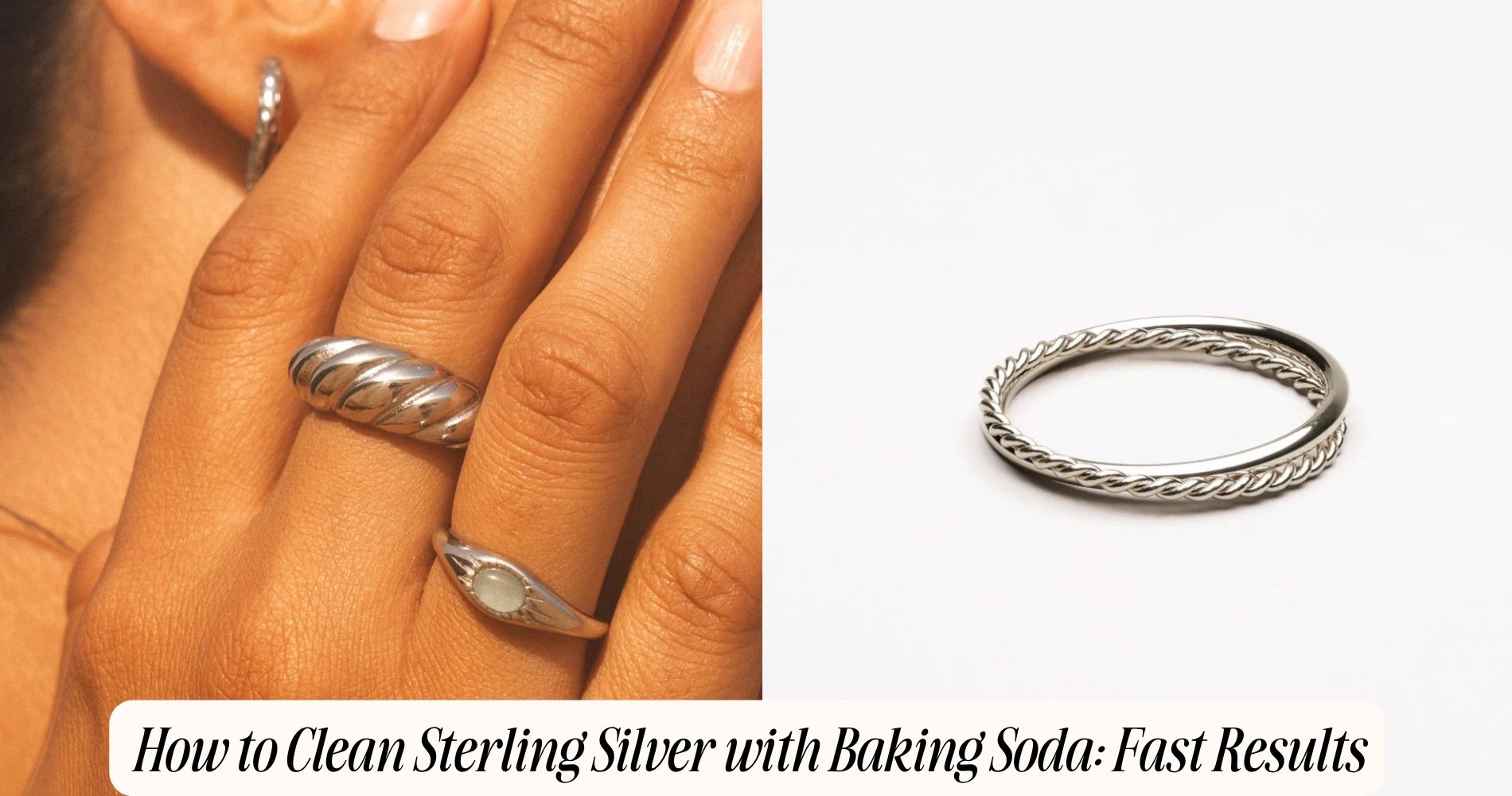
How to Clean Sterling Silver with Baking Soda: Fast Results
How to clean sterling silver with baking soda? You can quickly restore sterling silver by creating a hot baking-soda bath: line a shallow pan with aluminum foil, sprinkle baking soda, then pour near-boiling water and submerge the pieces so they touch the foil. This reaction helps lift tarnish within minutes. Remove with tongs, rinse thoroughly, and dry with a soft cloth. Avoid using this method on plated or delicate items. For lower-maintenance options, pieces from the Silver Waterproof Jewelry collection are designed to stay polished longer with less effort.
Quick Answer: Clean Sterling Silver Fast
In minutes you can remove tarnish and restore shine using a few common household items: baking soda, aluminum foil, hot water, and a shallow pan.
You’ll set up a foil-lined pan, sprinkle baking soda, add near-boiling water, and submerge the silver so the chemical reaction lifts sulfides. Let items sit until fizzing stops, usually minutes, then lift with tongs, rinse, and dry promptly to prevent water spots.
For pieces with crevices, use a soft brush after the soak. This method targets tarnish removal efficiently and minimizes abrasion compared with polishing compounds.
You should handle fragile or plated items cautiously and follow standard silver care afterward: store in anti-tarnish bags and avoid sulfur-containing materials to slow future discoloration.

What You Need: Supplies for the Baking-Soda Method
Gather five basic supplies before you start: plain baking soda, a sheet of aluminum foil, a shallow glass or stainless-steel pan, near‑boiling water, and tongs or a slotted spoon for lifting pieces.
You'll also want a soft microfiber cloth for drying and a small bowl to mix a paste for stubborn spots, but those are optional. Use plain, unscented baking soda—no additives.
Line the pan with foil, shiny side up, to enable the chemical reaction. Measure about one tablespoon of baking soda per cup of water so you can scale the bath.
Choose a pan large enough that items lie flat without touching each other. Tongs keep you from burning fingers and prevent fingerprints.
These focused cleaning techniques set the foundation for regular silver maintenance.
When Baking Soda Is Safe : And When to Avoid It (Sterling vs. Plated)
Although baking soda works well for genuine sterling silver, you should avoid the hot‑foil bath on silver‑plated items and pieces with glued parts or porous gemstones.
You can safely use a baking‑soda paste or quick aluminum/foil soak on solid .925 pieces to remove oxidation without abrading metal.
Avoid soaking plated jewelry: the chemical bath strips thin silver layers and exposes base metal, ruining finish and voiding delicate tarnish prevention.
Don’t use baking soda on items with resin, glued stones, or soft porous gems—alkaline paste and hot water can loosen adhesives and stain porous surfaces.
When in doubt, test a hidden spot for one minute, rinse thoroughly, and dry immediately.
For plated or mixed‑material pieces, choose a mild soap and soft cloth instead.

Prep: Inspect and Protect Delicate Pieces
Now that you've decided which cleaning methods are safe for a piece, inspect it closely before you touch any solutions. Check for loose settings, missing prongs, cracks, or chips in delicate gemstones; any instability means send the item to a jeweler first.
Note surface treatments and protective coatings—old lacquer, rhodium, or plating can be damaged by abrasives and alkalis. Photograph problem areas for reference.
Work on a soft, well-lit surface with a tray to catch small parts. If a piece has glued-in stones or visible corrosion near joints, avoid soaking or vigorous polishing.
Plan your approach: spot-test an inconspicuous area, choose nonabrasive tools, and use gentle motions. When in doubt, err on the side of caution to prevent irreversible damage.
Step-by-Step Baking-Soda Method for Jewelry and Flatware
Before you begin, set up a clean workspace with a soft cloth and a shallow heatproof dish; you'll use plain baking soda, hot water, and a piece of aluminum foil to create a safe, electrochemical cleaning bath for most sterling jewelry and flatware.
Line the dish with foil, shiny side up. Sprinkle a tablespoon of baking soda per cup of hot (not boiling) water, stir until dissolved. Submerge items so they contact the foil; leave delicate pieces on the cloth nearby to avoid direct contact.
Wait 2–5 minutes, watch for tarnish transfer to the foil, then remove with tongs. Rinse thoroughly in warm water, dry immediately with the soft cloth.
Consider cleaning alternatives for nonstandard finishes and store silver in anti-tarnish pouches for proper silver storage.
Fixing Stubborn Tarnish and Heavily Oxidized Silver
If your baking-soda bath doesn't fully restore a piece, tackle stubborn tarnish with targeted, progressively stronger methods so you remove heavy oxidation without damaging the silver.
First, try a soft-bristle brush and a paste of baking soda and water for localized spots; scrub gently along contours and rinse.
For deeper oxidation, use a diluted commercial tarnish remover following label timing and safety precautions. Test restoratives on an inconspicuous area first.
For pieces with crevices or gemstones, consider ultrasonic cleaning only if the stones allow it.
After aggressive treatment, neutralize residues with warm water and mild soap, then dry thoroughly.
Keep notes on what worked for each item—these tarnish removal techniques and silver restoration tips will guide future interventions.
Polish Sterling Silver for a Lasting Shine
Polish your sterling silver with the right tools and a steady technique to achieve a durable, even shine. Choose a soft, lint-free cloth or a dedicated silver polishing cloth and a small, soft-bristle brush for crevices.
Apply a pea-sized amount of polish or a paste made from baking soda and water; work in small sections using gentle, circular motions following the grain of the metal. Rinse thoroughly with warm water and dry immediately to prevent water spots.
For intricate pieces, use a microfiber swab and minimal polish to avoid buildup. Finish by buffing lightly with a clean cloth to restore luster.
Incorporate regular silver care into your routine: short, frequent polishing sessions preserve the finish and reduce abrasive wear over time.

Frequently Asked Questions
Can Baking Soda Damage Gemstones Set in Sterling Silver?
Yes — baking soda can damage some gemstones and loosen settings, so you shouldn't use it universally; prioritize gemstone care, test inconspicuous spots, and choose gentle cleaning alternatives like mild soap, soft cloths, or professional cleaning.
How Often Should I Use Baking Soda on My Silver?
Use baking soda about every 3–6 months for routine care; you’ll adjust based on tarnish. Baking soda benefits include gentle polishing and tarnish removal. Cleaning frequency depends on wear, storage, and exposure to humidity.
Is It Safe to Clean Antique Sterling With This Method?
Yes — you can, but proceed cautiously: for antique restoration use gentler cleaning techniques, avoid abrasive pastes on delicate patina, test a hidden area first, rinse thoroughly, and consult a conservator for high-value or fragile pieces.
Can I Use Baking Soda on Silver-Plated Items?
You can, but cautiously: baking soda can abrade silver-plated items, so for silver plated care use mild soap, soft cloths, or baking soda alternatives like diluted vinegar or specialized polishes to avoid wearing through the plating.
How Should I Store Silver After Cleaning to Prevent Tarnish?
Store silver in airtight pouches or sealed containers, using anti tarnish solutions like strips or treated cloths. You’ll separate pieces with soft layers, avoid rubber and humidity, and regularly inspect and reapply anti-tarnish treatments.
Conclusion
You’ve got the basics down: baking soda’s great for solid sterling silver but avoid it on plated, fragile, or porous pieces. Inspect items first, protect settings and stones, then follow the aluminum-and-baking-soda soak or gentle paste methods for quick, effective results. For heavy tarnish, repeat carefully or use a commercial polish. Rinse, dry thoroughly, and buff to a lasting shine. Store silver properly to slow future tarnish and keep your pieces looking their best.











コメントを書く
このサイトはhCaptchaによって保護されており、hCaptchaプライバシーポリシーおよび利用規約が適用されます。