

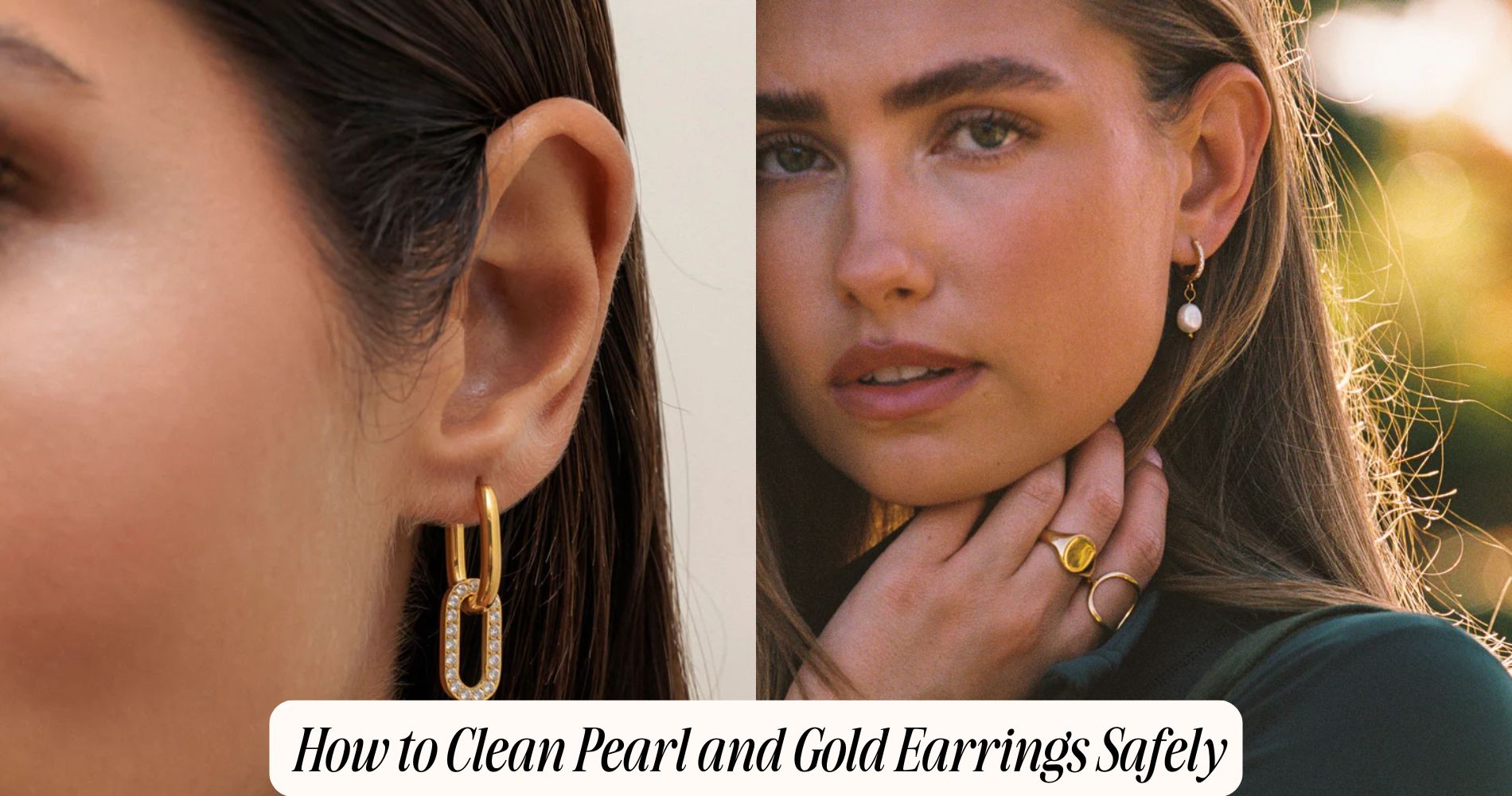
How to Clean Pearl and Gold Earrings Safely
How to clean pearl and gold earrings? Begin by placing them on a padded towel and preparing a solution of lukewarm distilled water with a few drops of pH-neutral, non-citrus soap. Lightly dampen a soft microfiber cloth—never soak it—and gently wipe the gold first, then carefully sweep over the pearls using minimal pressure. Rinse with another barely damp cloth and pat dry before allowing the earrings to air-dry completely. For low-maintenance everyday options like Waterproof Earrings, proper cleaning helps preserve both shine and structure. Always avoid harsh chemicals, abrasives, and soaking to extend longevity.
Understanding the Delicate Nature of Pearls and Gold
Because pearls and gold are both relatively soft and chemically sensitive materials, you need to understand their vulnerabilities before you clean them.
Pearl properties differ fundamentally from gemstones: pearls consist of microscopic aragonite platelets bound by organic conchiolin, so heat, acids, alcohol, and ammonia can dehydrate or etch their surface. Their nacre can abrade easily, so you must minimize friction and pressure.

Gold characteristics also demand care. Pure gold is very soft; alloys gain hardness from metals like copper, silver, or nickel, but they can tarnish or react with harsh chemicals.
High-karat gold bends and scratches more readily than lower-karat alloys. When pearls are mounted on gold, any aggressive treatment directed at the metal can transfer damage to the adjacent nacre.
Essential Tools and Gentle Cleaning Supplies
With those vulnerabilities in mind, you need tools and cleaning agents that protect both nacre and gold alloys rather than stress them.
Assemble a shallow bowl, lukewarm distilled water, and a tiny amount of pH-neutral, fragrance-free soap formulated for delicate jewelry. Avoid household cleaners, alcohol, ammonia, and peroxide-based cleaning solutions; they can etch nacre and weaken adhesives.
Choose soft, non-abrasive materials: lint-free microfiber cloths, cotton pads, and very gentle brushes with ultra-soft bristles designed for jewelry or baby care. Reserve them exclusively for your earrings to prevent cross-contamination with harsher products.
Keep wooden toothpicks or silicone-tipped tools available for carefully reaching metal crevices while avoiding the pearl surface.
Finally, use a clean, padded towel to create a stable, impact-absorbing work area.
Step-by-Step Method for Cleaning Pearl and Gold Earrings
Start by preparing a controlled cleaning setup that keeps moisture away from the pearl drill holes and earring posts.
Lay a soft, clean cloth on a stable surface.
Mix a few drops of mild, non-citrus soap into a small bowl of lukewarm water for balanced pearl care and gold maintenance.

Dampen a microfiber cloth or cotton pad in the solution, then wring it out thoroughly so it’s barely moist.
Wipe the gold areas first, following the metal’s contours without flooding joints or hinges.
Next, gently sweep over each pearl’s surface with fresh, lightly dampened material, using minimal pressure.
Use a separate cloth lightly moistened with plain water to remove soap residue, again targeting gold first and then pearl surfaces.
Drying, Polishing, and Safe Handling Practices
Once cleaning is complete, dry your pearl and gold earrings immediately to prevent moisture from seeping into drill holes or loosening adhesive.
Use controlled drying techniques: place earrings on a soft, lint‑free cloth and gently pat, never rub, the pearls. Let them air‑dry fully on a clean surface, away from direct heat or sunlight, to protect nacre integrity and gold solder joints.
For polishing tips, limit polishing to the metal only. Support the earring so you don’t torque posts or settings, then use a separate, dry microfiber cloth to buff the gold in small, light strokes, avoiding pearl contact.
Handle earrings by the metal components, not the pearls, and store them individually in soft pouches to prevent abrasion.
Common Mistakes and Harsh Products to Avoid
Although pearl and gold earrings seem durable, several common cleaning habits can permanently damage them, so you need to know what to avoid.
Never expose pearls to harsh chemicals such as bleach, ammonia, alcohol, or strong detergents; these dissolve the nacre, dull luster, and weaken adhesive securing pearls to posts. Avoid ultrasonic cleaners and steamers, which can fracture nacre and loosen mounts.
Don’t use toothpaste, baking soda, scouring powders, or other abrasive materials on pearls or gold; they scratch surfaces and create microscopic grooves that trap dirt.
Skip rough cloths, stiff brushes, and paper towels, which can abrade nacre and fine gold finishes. Also avoid soaking earrings for extended periods; water intrusion can compromise glues and destabilize delicate settings.

Long-Term Care, Storage, and Cleaning Frequency
Because pearls and gold are inherently soft and vulnerable to chemicals, you need a long‑term care routine that minimizes wear between cleanings and protects them in storage.
Always put earrings on last and remove them first to reduce exposure to cosmetics, hairspray, and perfume. Wipe them gently with a soft, dry, lint‑free cloth after each wear to remove skin oils and perspiration.
Follow a conservative cleaning schedule: for occasionally worn earrings, clean monthly; for daily wear, every one to two weeks, unless they’re visibly soiled sooner.
Apply strict storage tips: keep earrings in a dedicated, padded compartment, never loose in a drawer. Isolate them from harder gemstones and metals, use soft pouches for travel, and avoid direct heat or sunlight.
Frequently Asked Questions
Can I Wear Pearl and Gold Earrings While Swimming or Showering?
You shouldn’t wear pearl and gold earrings while swimming or showering. For swimming precautions, remove them to avoid chlorine and salt damage. For showering advice, keep them dry; soaps, shampoos, and heat degrade nacre and weaken settings.
Are Ultrasonic Jewelry Cleaners Ever Safe for Pearl and Gold Combinations?
They’re not safe. You shouldn’t use ultrasonic cleaners on pearl-and-gold earrings; ultrasonic cleaner effectiveness applies to hard gemstones, but pearl durability concerns dominate—vibration, heat, and chemicals can craze nacre, loosen glue, and compromise settings.
How Do I Tell if My Pearls Are Real or Imitation Before Cleaning?
You compare real vs imitation by doing pearl testing: gently rub pearls against your teeth (gritty feels real, smooth feels fake), inspect drill holes, surface irregularities, luster, and weight; when unsure, consult a gemologist.
What Should I Do if a Pearl Becomes Loose During Cleaning?
Stop cleaning immediately when you notice a loose pearl; dry it gently, store it separately, and avoid glue. Consult a qualified jeweler to assess damage, recommend repair options, and guarantee secure, non-invasive re-setting of the pearl.
Can Makeup, Hairspray, or Perfume Permanently Damage Pearl and Gold Earrings?
Yes, they can. You expose pearls to cumulative makeup residue, hairspray effects, and perfume solvents that dehydrate nacre and weaken glue. You should apply products first, let them dry, then wear earrings and wipe them gently afterward.
Conclusion
By treating your pearl and gold earrings as delicate engineered materials, you’ll protect both their structure and their surface finish. Use only controlled, gentle cleaning methods, avoid harsh chemicals or abrasives, and handle each earring by its metal, not the pearl. Dry thoroughly, store in soft, separate compartments, and follow a consistent, conservative cleaning schedule. With this safety‑focused routine, you’ll maintain their luster, integrity, and long-term value.











コメントを書く
このサイトはhCaptchaによって保護されており、hCaptchaプライバシーポリシーおよび利用規約が適用されます。