

How Much Is a Real Pearl Necklace: Value Guide
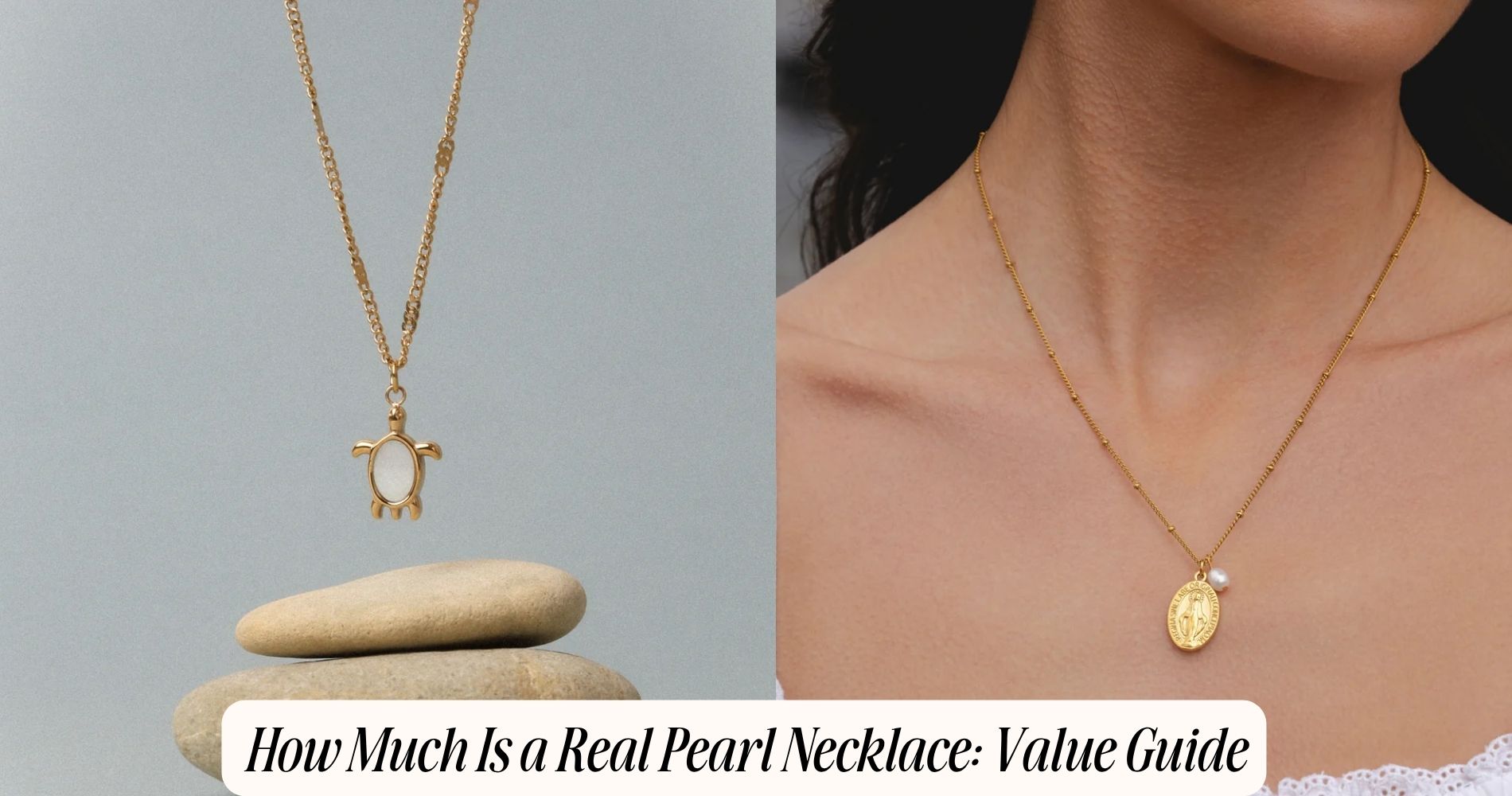
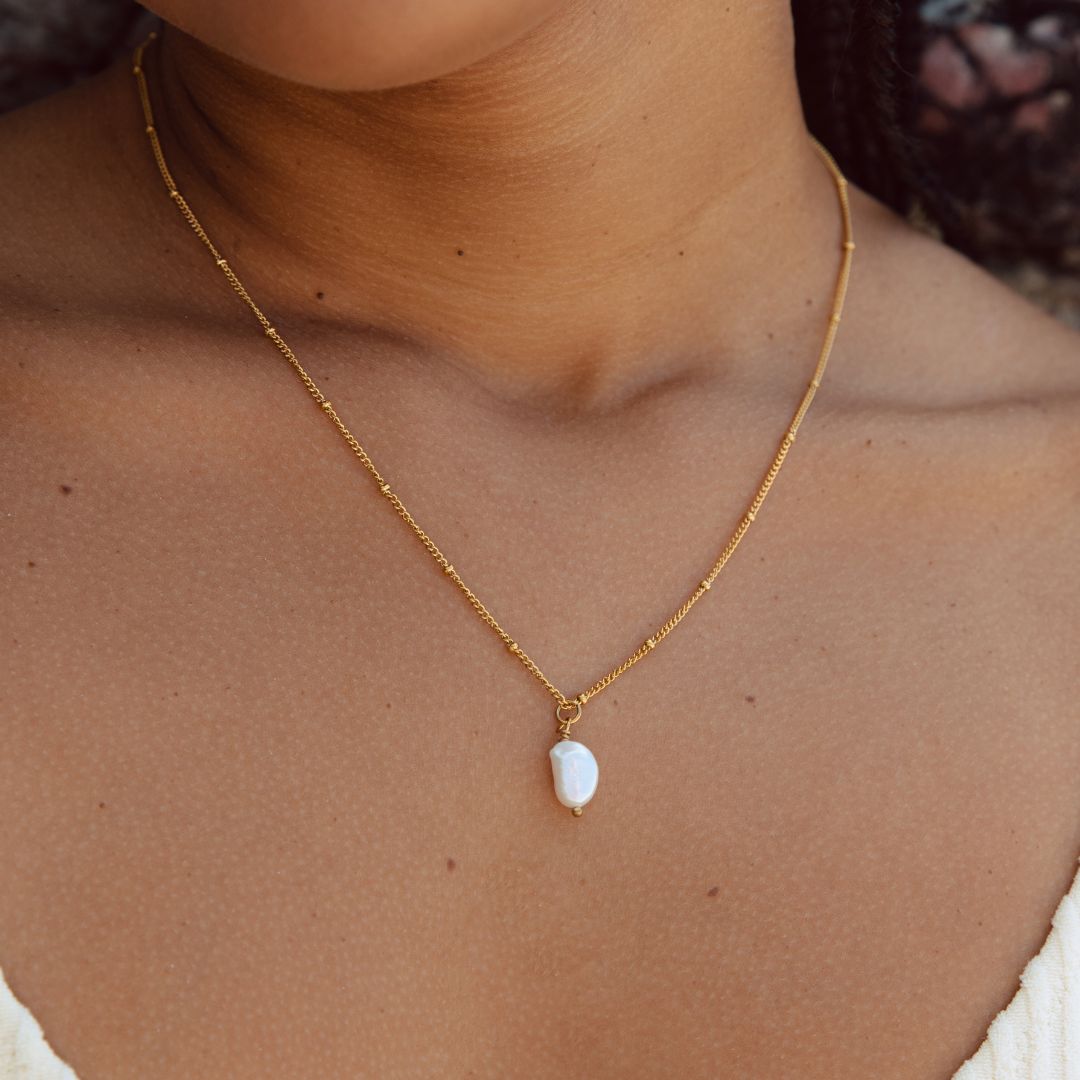
Pearl necklace prices cover an enormous range, from under fifty dollars to hundreds of thousands, and every price point in between can include the words "real pearls" on the label. Without knowing what drives that range, it is impossible to evaluate whether a given price is reasonable, inflated, or suspiciously low. Understanding how much is a real pearl necklace at different quality and type levels gives you the reference points to shop accurately. Single Pearl Necklaces are among the most accessible genuine pearl necklace options available. This guide breaks down prices across every major pearl type, explains the quality factors that justify price differences within each type, covers the different necklace formats and how they affect price, and helps you identify what you are actually getting at any price point.
Why Real Pearl Necklace Prices Vary So Dramatically
Real pearl necklace pricing is driven by multiple variables that compound in their effect, which is why the price range is wider than for almost any other jewelry category.
Pearl type is the largest single variable. Freshwater, Akoya, Tahitian, and South Sea pearls are produced by different mollusk species in different geographic regions with different production economics and rarity. A fine South Sea strand is not a better version of a freshwater strand: it is a categorically different product in terms of nacre thickness, luster quality, size, and production cost per pearl.
Necklace format adds a second layer. A single pearl pendant necklace, a simple strand of matched pearls, and a multi-strand collar piece all involve very different labor inputs even when the pearls used are from the same harvest. Matching a full strand of pearls for consistent size, shape, color, and luster requires selecting from a much larger pool of individual pearls, and that selection effort is reflected in the price.
Quality within any given type is the third variable. Luster, surface quality, shape, size, and color each affect value, and they interact rather than add independently. A single-grade improvement in luster alongside a single-grade improvement in surface quality produces a more than proportional price increase because the combination of both attributes in one pearl is genuinely rare.
Understanding these three layers makes it possible to evaluate any pearl necklace price accurately rather than relying on general impressions of what pearls should cost.

How Much Is a Real Pearl Necklace: By Type
Freshwater Pearl Necklaces
Freshwater pearls are produced by freshwater mussels primarily in China and account for the large majority of pearl volume in the global market. Advances in freshwater pearl farming over the past two decades have dramatically improved quality: current top-grade freshwater pearls rival Akoya pearls in luster and near-round shape at significantly lower prices.
Freshwater pearls are solid nacre throughout their structure, unlike bead-nucleated pearls which have a shell nucleus coated in nacre. This solid nacre construction is not inferior: it simply produces a different optical quality, typically with a slightly softer, more diffuse luster than the mirror-like brightness of fine Akoya.
Freshwater pearl necklace price ranges:
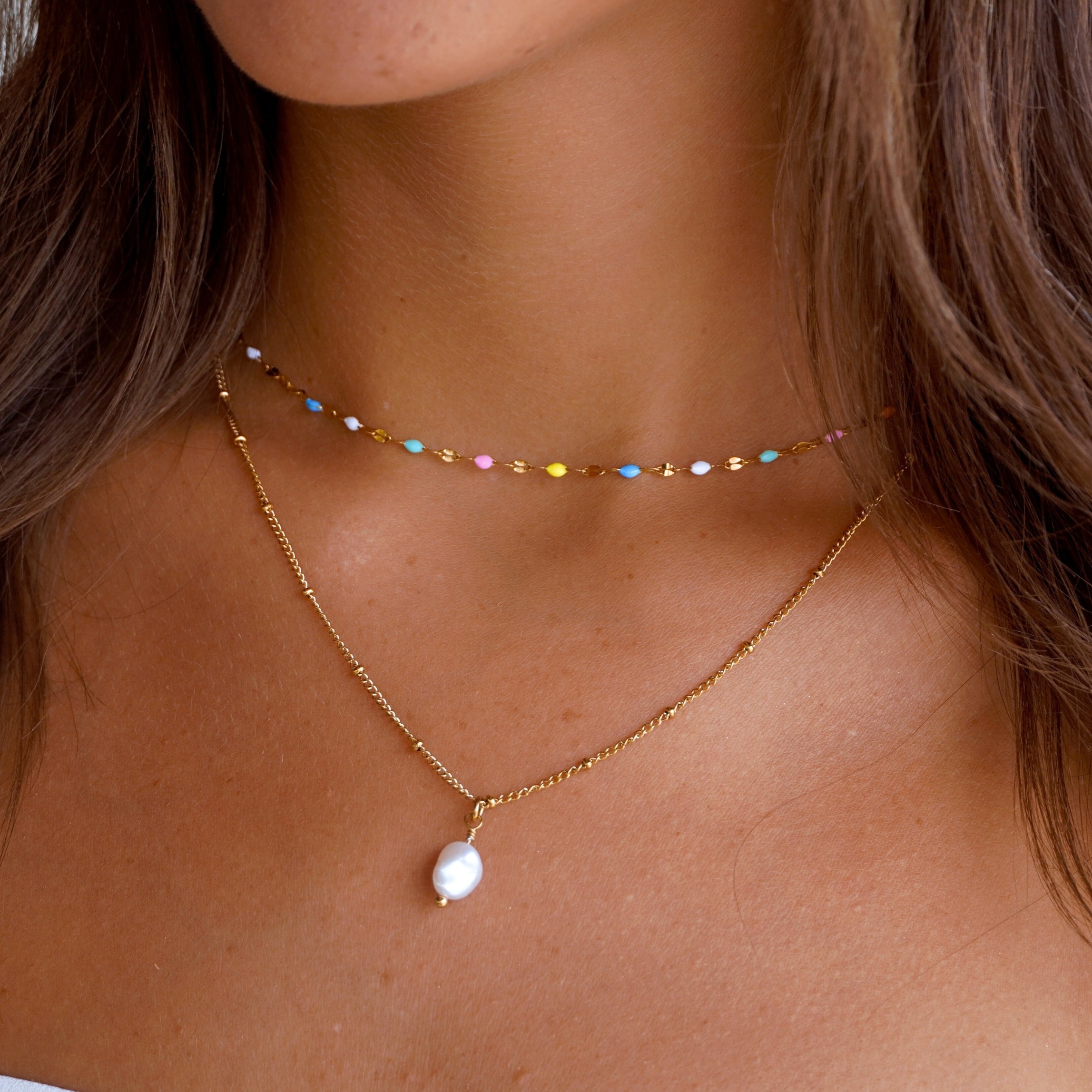
- Single freshwater pearl pendant on chain: $25 to $150
- Simple strand, 16 inches, mixed or near-round, standard quality: $40 to $200
- Matched strand, 16 inches, near-round, good luster: $150 to $500
- High-quality matched strand, 16 inches, round, high luster: $500 to $1,200
- Baroque or irregular freshwater pearl strand: $30 to $150
The wide range within freshwater reflects how dramatically quality varies within this category. A $40 freshwater strand and a $600 freshwater strand are both made from real pearls. The difference is in luster intensity, shape roundness, surface blemish level, and how well the pearls in the strand are matched to each other.

Akoya Pearl Necklaces
Akoya pearls are the classic round white pearl most associated with the traditional Japanese pearl strand. Produced primarily by Pinctada fucata oysters in Japan and China, Akoya pearls are bead-nucleated with nacre deposited over one to two years. Their distinctive characteristic is a mirror-like reflective luster that freshwater pearls do not replicate at the same intensity.
Akoya pearls are smaller than Tahitian and South Sea pearls, typically ranging from 5mm to 9mm in diameter. Size increases within this range produce significant price jumps because larger Akoya oysters are rarer and larger pearls from them rarer still.
Akoya pearl necklace price ranges:
- Single Akoya pearl pendant on chain: $100 to $400
- Matched strand, 16 inches, standard quality (6 to 7mm): $400 to $1,200
- Fine matched strand, 16 inches, high luster (7 to 8mm): $1,200 to $4,000
- Premium matched strand, 18 inches, top grade (8 to 9mm): $4,000 to $10,000 and above
The price jump from a standard to a fine Akoya strand reflects both the rarity of consistently high-luster pearls and the labor of selecting and matching them. A matched 18-inch strand of fine 8mm Akoya pearls requires selecting from a substantially larger pool of individual pearls to find enough that match closely enough for a well-graduated strand.
Tahitian Pearl Necklaces
Tahitian pearls are produced by Pinctada margaritifera, the black-lipped oyster, in French Polynesia. They are the only naturally dark pearl type available, ranging from charcoal and jet black through deep greens, peacock, and aubergine overtones. Each pearl's color combination is distinct, and the most prized pieces show strong peacock or green overtone with deep luster against a dark body color.
Tahitian pearls range from 8mm to 16mm in diameter for most commercial production.
Tahitian pearl necklace price ranges:
- Single Tahitian pearl pendant on chain: $100 to $600
- Semi-matched strand, 16 inches, standard quality: $600 to $2,000
- Well-matched strand, 16 inches, consistent color and high luster: $2,000 to $8,000
- Premium matched strand with prized peacock overtone throughout: $8,000 and above
Color matching across a full Tahitian strand is significantly more challenging than luster and size matching alone because each pearl's overtone color is unique. A strand where peacock overtone appears consistently throughout every pearl represents a very small fraction of total Tahitian production.
South Sea Pearl Necklaces
South Sea pearls are produced by Pinctada maxima, the largest pearl oyster, in Australia, Indonesia, and the Philippines. They develop over two to four years with nacre layers significantly thicker than any other cultured pearl type. This thick nacre produces a deep, satiny luster distinct from Akoya's mirror brightness and from freshwater's softer glow.
South Sea pearls range from 10mm to 20mm in diameter, making them the largest commercially available cultured pearl type.
South Sea pearl necklace price ranges:
- Single South Sea pearl pendant on chain: $300 to $2,000
- Simple strand, 16 inches, standard quality (10 to 12mm): $3,000 to $10,000
- Fine matched strand, 18 inches, high luster (12 to 14mm): $10,000 to $40,000
- Premium golden South Sea strand, fine grade: $20,000 to $100,000 and above
Golden South Sea pearls from the gold-lipped variety of Pinctada maxima are among the rarest cultured pearl products available and command the highest prices in the South Sea category.

Quality Factors That Justify Price Differences Within Any Type
Two pearl necklaces of the same type can differ substantially in price. These five quality factors explain why.
Luster is the single most important value driver in pearl pricing. It describes the depth, intensity, and sharpness of the reflection from the pearl's surface. High-luster pearls show clear, sharp reflections with visible depth. Low-luster pearls appear chalky. The difference is immediately visible and accounts for a significant portion of the price variation within any type.
Surface quality refers to the number and visibility of natural surface blemishes including pits, bumps, spots, and scratches. Flawless or near-flawless surfaces are rare and command meaningful premiums over slightly blemished pearls of otherwise identical quality. Minor blemishes that are only visible under close inspection reduce price modestly. Visible blemishes reduce price substantially.
Shape affects price because perfectly round pearls are genuinely rare. Round and near-round shapes command the highest prices. Off-round, oval, drop, and baroque shapes trade at lower prices. For single pendant necklaces, a slight off-round or near-round shape may not be distinguishable from perfectly round in the setting. For a full matched strand, any shape inconsistency reads immediately.
Size scales price within any type because larger pearls require more time in the water, more nacre deposition, and are naturally rarer. Each millimeter increase above the average size for a given type produces a meaningful price premium.
Strand matching applies to strand necklaces specifically. Assembling a strand where every pearl matches the others closely in size, luster, shape, and color requires selecting from a much larger pool than a loosely matched strand. That selection effort adds genuine labor value to a well-matched strand.
How to Evaluate a Pearl Necklace Price
A few practical checks help you assess whether a pearl necklace price is reasonable before buying.
Compare the price to the type and size reference in the table above. A price significantly below the low end of the range for a claimed type warrants closer evaluation of whether the pearls are genuine and whether the quality is as described. A price at the high end of the range should be accompanied by visible high luster, near-round shape, and good surface quality.
For pendants and simple necklaces, the single pearl price ranges are the most relevant reference. A single freshwater pearl pendant priced at $200 to $300 may be using high-quality pearls with strong luster or it may be overpriced for the quality. Examining the luster quality in the product images or in person is the most direct check.
For full strands, ask specifically about matching quality. A well-matched strand requires more selection effort and justifies a higher price than an unmatched strand of the same pearl type and individual pearl quality.
The tooth test confirms whether pearls are genuine: rub the pearl gently against the front edge of a tooth. Real pearls have a slightly gritty texture from the crystalline nacre surface. Imitation pearls feel smooth or waxy. This test works because the aragonite crystal microstructure of nacre creates a natural micro-roughness that no synthetic coating replicates at that scale.
Frequently Asked Questions
How much should a real pearl necklace cost?
A single freshwater pearl pendant necklace starts around $25 to $150 for genuine pearls. A matched freshwater strand of decent quality runs $150 to $500. Akoya pearl strands start around $400 for standard quality. The right price depends on pearl type, size, luster quality, and strand matching. Prices significantly below these ranges for claimed pearl types warrant authenticity verification.
Are inexpensive pearl necklaces real?
An inexpensive pearl necklace can be real if it uses freshwater pearls, which are genuine cultured pearls produced at significantly lower cost than Akoya, Tahitian, or South Sea pearls. A $50 to $150 freshwater pearl necklace can be a real pearl product of modest quality. A $50 Akoya or South Sea pearl necklace is almost certainly either imitation pearls or misrepresented quality.
What is the difference between a $100 and a $1,000 pearl necklace?
Both can be real pearl necklaces, likely in different types and quality grades. A $100 pearl necklace is most likely freshwater pearls of moderate quality. A $1,000 pearl necklace is likely either high-quality freshwater pearls, entry-level Akoya, or a single high-quality Tahitian or South Sea pendant. The difference is in pearl type, size, luster intensity, surface quality, and how well the pearls in a strand are matched to each other.
How can you tell if a pearl necklace is real?
The tooth test is the most accessible at-home check: rub the pearl against the edge of a front tooth. Real pearls feel slightly gritty from their crystalline nacre surface. Imitation pearls feel smooth. Additional indicators are weight (real pearls are denser than glass or plastic imitations of the same size) and luster depth (real pearls show a depth to their reflection that surface-coated imitations do not replicate convincingly).
Do real pearl necklaces hold their value?
Fine Akoya, Tahitian, and South Sea pearl necklaces in top grades retain value reasonably well compared to fashion jewelry. Freshwater pearl necklaces at standard quality do not hold resale value significantly above their purchase price. Natural (non-cultured) pearl necklaces are extremely rare and command investment-level prices that do hold value well, but natural pearls are rarely encountered in the current market outside specialist auction houses.
Understanding What You Are Paying For
How much is a real pearl necklace is answered accurately only by specifying the pearl type, the quality grade, and the necklace format. Freshwater pearl pendants and strands start at accessible prices with genuine pearl quality. Akoya strands range from several hundred to several thousand dollars depending on size and grade. Tahitian and South Sea strands begin at the thousands and reach significantly higher for fine matched pieces. At every price point, luster is the most important quality variable to evaluate, and the tooth test confirms you are working with genuine nacre rather than a convincing imitation.









コメントを書く
このサイトはhCaptchaによって保護されており、hCaptchaプライバシーポリシーおよび利用規約が適用されます。