

How Much Are Crystals: Price Guide
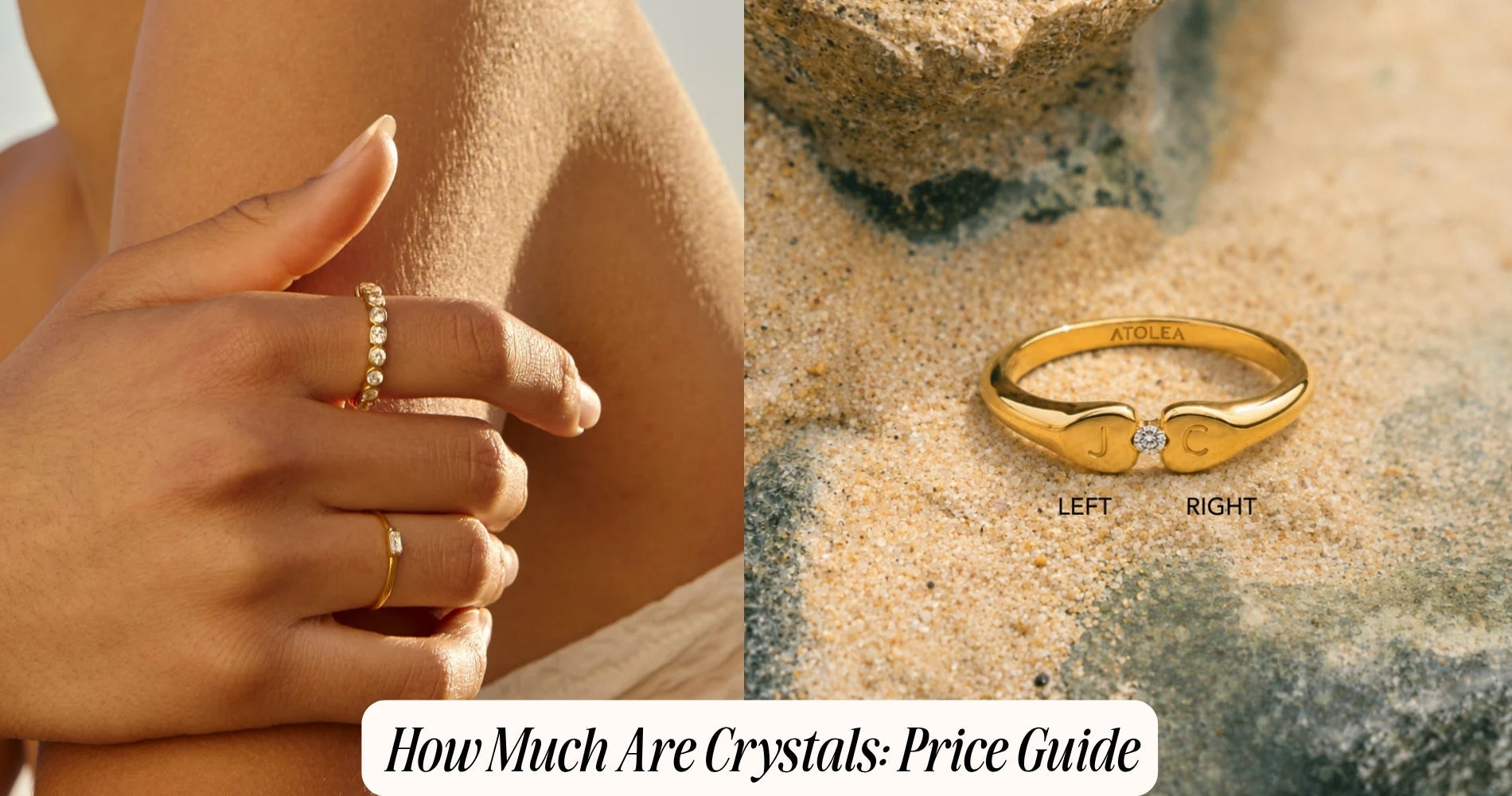
If you have ever wondered how much are crystals actually worth, the honest answer is that it depends heavily on the type of stone, its size, its quality, and whether you are buying a raw specimen, a tumbled stone, or a finished piece of jewelry. Prices for crystals can range from just a couple of dollars for a small tumbled stone to thousands of dollars for a rare, museum-quality specimen. If you are looking for an easier way to enjoy crystals without guessing at fair pricing, Atolea's Stone Collection offers waterproof, everyday jewelry featuring real stones at consistent, transparent prices, so you always know what you are getting.
This guide breaks down exactly what affects crystal pricing, what you can expect to pay for popular varieties, and how to tell when a price feels fair versus inflated.
What Determines the Price of a Crystal
Crystal pricing is not random. A handful of factors consistently drive how much a stone costs, whether you are buying a raw chunk at a rock shop or a faceted gem for a ring.
Type of Crystal
Some crystals are simply more common than others, and abundance plays a major role in price. Clear quartz, rose quartz, and amethyst are mined in large quantities around the world, which keeps their prices low. Rarer stones, like moldavite, paraiba tourmaline, or fine-grade tanzanite, command much higher prices because the supply is limited and demand from collectors is high.
Size and Weight
Larger crystals cost more, but not always in a straightforward way. A small tumbled stone might cost a few dollars, while a large raw cluster of the same material could cost well over a hundred dollars simply because of its size and the labor involved in extracting it intact. For faceted gemstones used in jewelry, price is typically calculated per carat, and the cost per carat often increases as the stone gets larger, since bigger clean stones are harder to find.
Quality and Clarity
Color saturation, clarity, and the presence of inclusions or damage all affect price. A crystal with deep, even color and few visible flaws will cost significantly more than a similar stone with dull coloring or visible cracks. This is especially true for stones like amethyst, citrine, and emerald, where color quality varies widely from one specimen to the next.

Natural Versus Treated
Many crystals on the market have been treated in some way, most commonly through heat treatment to enhance or change their color. Citrine, for example, is frequently created by heating amethyst, which makes natural, untreated citrine considerably more expensive and harder to find than the heat-treated version most commonly sold.
Form: Raw, Tumbled, or Jewelry
How a crystal is presented also changes its price. Raw, unpolished specimens and clusters tend to be valued for their natural shape and visual impact, which can make unusual or large pieces quite expensive. Tumbled stones, which are smoothed and polished, are generally the most affordable way to own a piece of nearly any crystal type. Crystals set into jewelry carry an additional cost for the metal, craftsmanship, and setting, on top of the value of the stone itself.
Average Price Ranges by Crystal Type
While exact prices vary by retailer and location, here is a general idea of what to expect for some of the most popular crystals.
Clear Quartz: Among the most affordable and widely available crystals. Small tumbled pieces often cost just a few dollars, while larger points or clusters can range from fifteen to fifty dollars or more depending on size.
Rose Quartz: Similarly affordable in tumbled form, usually in the same low single digit to low double digit dollar range. Larger carved pieces or polished spheres cost more based on size.

Amethyst: Small tumbled stones and points are inexpensive, often under ten dollars. Larger clusters, cathedrals, or geodes can range from thirty dollars into the hundreds, depending on color depth and size.
Citrine: Heat-treated citrine tends to be affordable, similar in price to amethyst. Natural, untreated citrine is considerably rarer and can cost several times more for a comparable size.
Black Tourmaline: Raw chunks and tumbled pieces are generally budget friendly, often ranging from five to thirty dollars depending on size.
Selenite: Wands and small towers are inexpensive due to how common and soft the material is, often available for under fifteen dollars.

Labradorite: Pricing varies a great deal based on the strength of the flash, or iridescent color play, within the stone. Pieces with strong, vivid flash cost noticeably more than duller specimens of the same size.
Moonstone: Small tumbled or cabochon-cut moonstones are moderately priced, while stones with a strong blue sheen command a premium.
Turquoise: Natural, untreated turquoise from well-known sources can be quite expensive, while stabilized or treated turquoise, which is far more common in affordable jewelry, costs significantly less.
Emerald and other precious gemstones: These are priced per carat and can range from modest amounts for small, included stones to thousands of dollars per carat for clean, vivid examples. This category behaves very differently from the more affordable healing crystal market.
How Crystal Jewelry Pricing Works
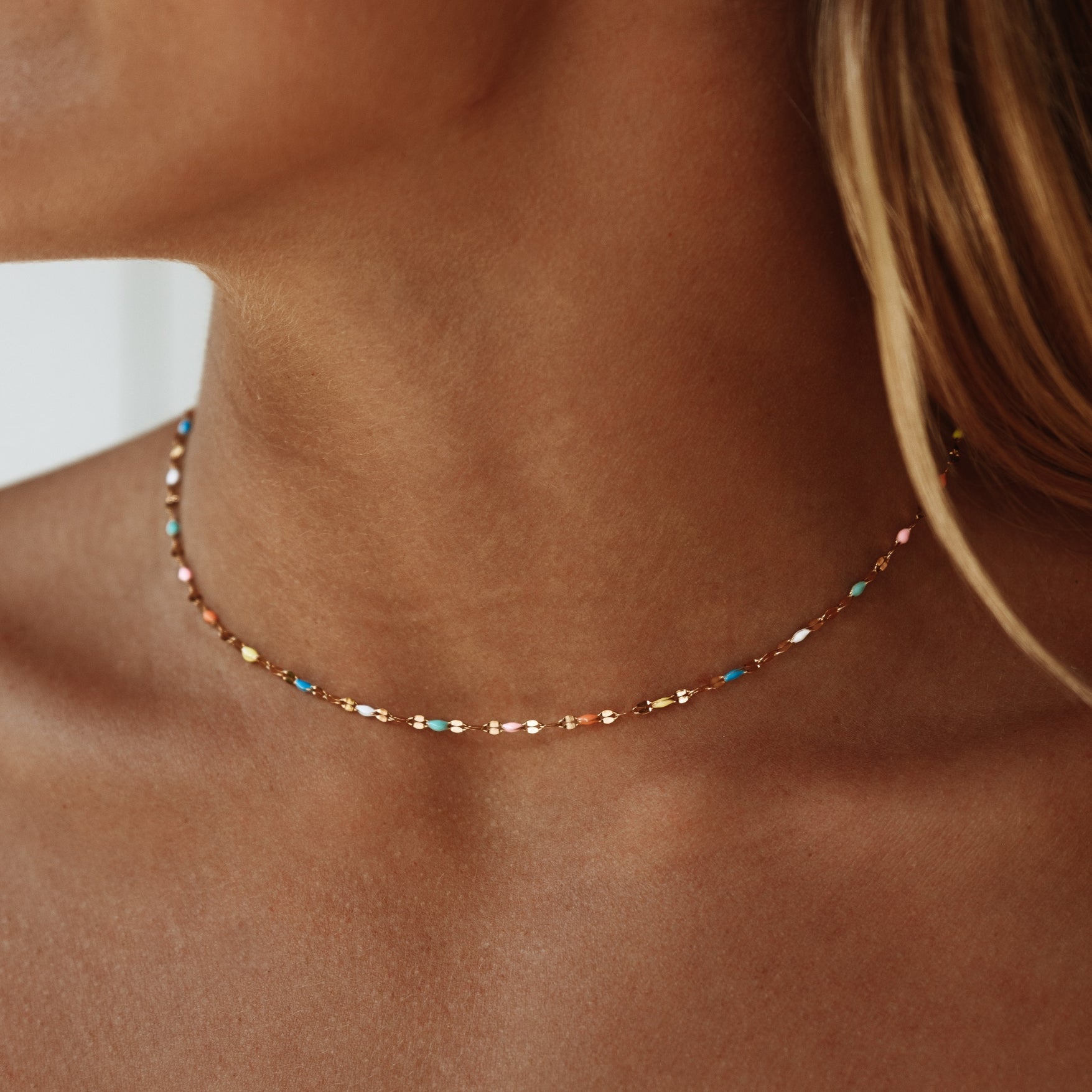
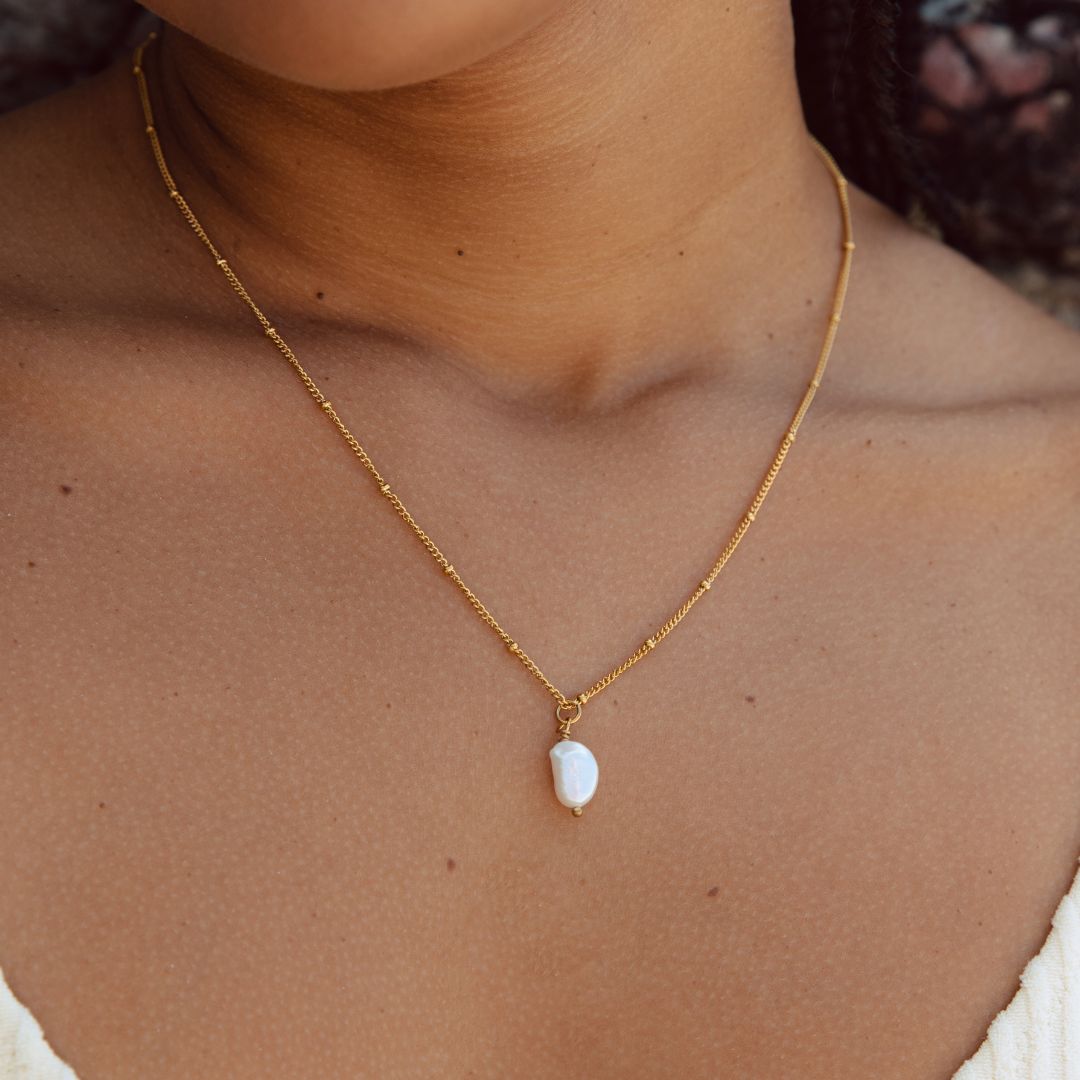
When a crystal becomes part of a finished piece of jewelry, the price reflects more than just the stone itself. The metal used, whether it is sterling silver, gold vermeil, or a plated base metal, makes a significant difference. The complexity of the setting, the brand's craftsmanship standards, and any additional treatments like waterproof coatings also factor into the final price.
This is why two necklaces featuring what looks like a similar stone can have very different price tags. A piece with genuine sterling silver, a well secured setting, and a coating designed to resist tarnishing will generally cost more than a similar looking piece made with lower quality materials, but it will also hold up far better over time.
How to Know If You Are Paying a Fair Price
A few simple checks can help you figure out whether a crystal or piece of crystal jewelry is reasonably priced.
Compare similar listings. Search for the same crystal type, similar size, and similar quality from a few different sellers. If one price is drastically higher or lower than the rest, there is usually a reason, whether it is quality, treatment, or simply markup.
Ask about treatment. If a stone's color seems unusually vivid or perfectly uniform, ask whether it has been dyed, heat-treated, or otherwise enhanced. Treated stones are not inherently bad, but they should generally cost less than natural, untreated examples of similar appearance.
Consider the whole package. For jewelry, factor in the metal quality, the warranty or guarantee offered, and how well the piece is likely to hold up with regular wear. A slightly higher price for a piece backed by a real warranty often works out to better value over time than a cheaper piece that tarnishes or loses its stone within months.
Be skeptical of extreme rarity claims. Terms like "rare" or "one of a kind" get used loosely in the crystal market. If a stone is genuinely rare, that rarity should be reflected in well-documented sourcing information, not just marketing language.

Final Thoughts
So, how much are crystals really worth? The answer ranges from just a few dollars for common tumbled stones to thousands for rare, gem-quality specimens, with the price shaped by type, size, quality, treatment, and form. For most people who want to enjoy crystals as part of their everyday style rather than as a collector's investment, affordable tumbled stones and well-made crystal jewelry offer the best balance of beauty and value. Pay attention to the factors outlined here, compare a few options before buying, and you will be well equipped to spot a fair price whenever you come across a crystal that catches your eye.









コメントを書く
このサイトはhCaptchaによって保護されており、hCaptchaプライバシーポリシーおよび利用規約が適用されます。