


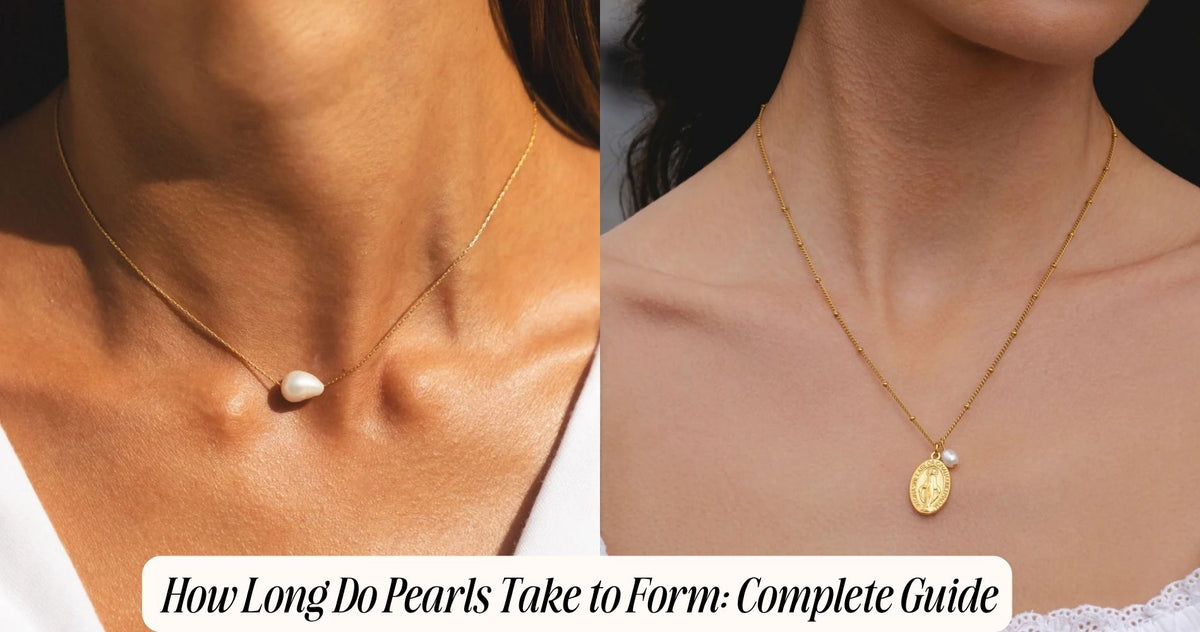
How Long Do Pearls Take to Form: Complete Guide
How long do pearls take to form? Every pearl represents a small act of patience on the part of a living creature, one that responds to an irritant by slowly, quietly building something beautiful around it. But exactly how long does that process take? The honest answer is that it varies considerably, ranging anywhere from about six months to several years, and in rare cases even decades, depending on the type of mollusk, the specific pearl variety, and the conditions the creature is growing in.
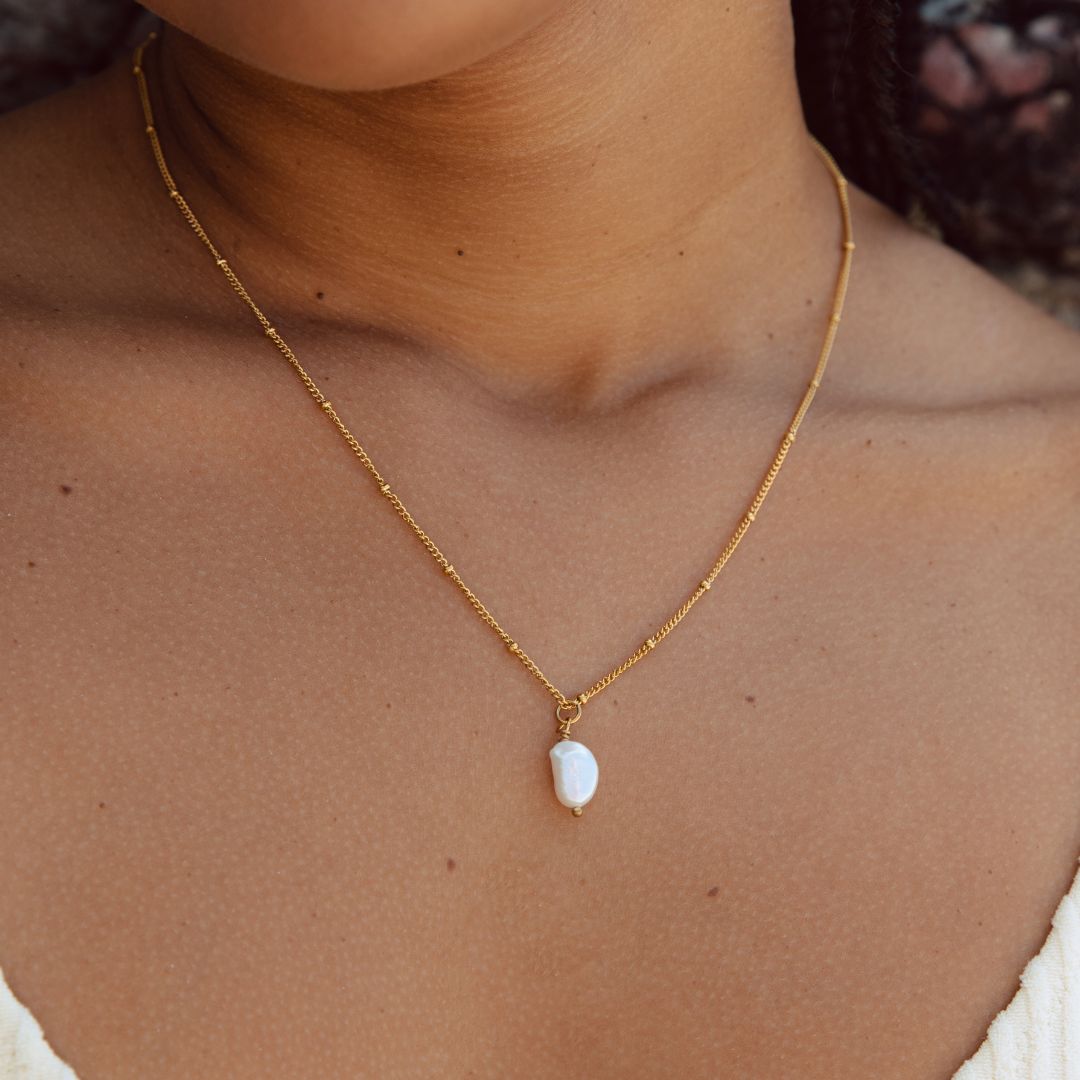
In this guide, we will break down what actually happens during pearl formation, how timelines differ across pearl types, and why longer growth does not automatically mean a better pearl. If you want to see the results of this remarkable process in a finished piece, our Single Pearl Necklaces collection offers genuine pearls worth admiring.
How Long Do Pearls Take to Form: The General Range
According to gemological sources, pearl formation generally takes anywhere from about six months to seven years, depending heavily on the species of mollusk involved and the specific type of pearl being cultivated. This is a genuinely wide range, and the exact timeline for any individual pearl depends on several interacting factors rather than a single fixed answer.
Understanding why this range is so broad requires looking at both the basic biological process behind pearl formation and the specific differences between the major pearl types available today.

The Basic Biological Process Behind Pearl Formation
A pearl begins when an irritant, such as a grain of sand, a parasite, or in cultured pearls, a small bead or piece of tissue deliberately inserted by a technician, becomes lodged within a mollusk's soft mantle tissue. In response, the mollusk forms a small sac around the irritant and begins secreting nacre, the same iridescent substance that lines the inside of its shell, in thin, successive layers around this foreign object.
Each individual layer of nacre is extremely thin, meaning a pearl's overall size and quality depend directly on how many of these layers accumulate over time. This is the core reason pearl formation cannot be rushed. The mollusk simply needs enough time to deposit sufficient nacre for a pearl of meaningful size and luster to develop.
How Formation Time Varies by Pearl Type
Because different pearls come from different mollusk species, each with its own growth rate and biological rhythm, formation timelines vary considerably across the major pearl categories.
Akoya Pearls
Akoya pearls, cultivated primarily in saltwater oysters off Japan and China, tend to form relatively efficiently compared to other saltwater varieties, with documented cultivation periods ranging from around six months up to roughly two years depending on the specific farm and desired quality outcome.
Freshwater Pearls
Freshwater pearls, grown in mussels rather than oysters, are often tissue nucleated rather than built around a bead, and a single mussel can produce multiple pearls simultaneously. Freshwater cultivation periods commonly range from about one to six years, with Chinese pearl farms in particular refining their processes to balance efficient turnover with acceptable quality.
South Sea Pearls
South Sea pearls, grown in larger oysters found off Australia, Indonesia, and the Philippines, generally require considerably more time, often two to four years, reflecting both the oyster's slower natural growth rate and the substantial size these pearls ultimately reach.
Tahitian Pearls
Tahitian pearls, cultivated in black lipped oysters in French Polynesia, typically require somewhere between eighteen months and three years, with longer growth periods generally associated with the deeper, richer coloring and higher luster prized in top quality examples.
Natural Pearls
Natural pearls, forming entirely without human intervention in the wild, follow no predictable schedule at all, since the entire process depends on chance rather than the deliberate techniques used in pearl farming. Some documented natural pearls found inside older mollusks are believed to have developed over several decades, contributing to their exceptional rarity and value.

Why Longer Growth Does Not Always Mean a Better Pearl
It might seem logical to assume that the longer a pearl grows, the better it becomes, but the reality is more nuanced. While additional time does allow more nacre layers to accumulate, which can contribute to greater size and depth of luster, time alone does not guarantee quality. A mollusk's overall health, water temperature, water quality, and seasonal conditions throughout the growth period all play significant roles in determining whether the final pearl actually develops strong luster, a smooth surface, and an appealing shape.
A pearl grown for a shorter period under excellent conditions can sometimes outperform one grown for much longer under poor or inconsistent conditions, which is part of why pearl farmers must balance growth duration against these environmental variables rather than simply extending cultivation time indefinitely.
What Happens If a Pearl Is Harvested Too Early
Pearls harvested before sufficient nacre has accumulated often display thin, weak luster and can be more prone to surface flaking or peeling over time, since insufficient layering leaves the coating more vulnerable to damage. This is one of the key reasons why reputable pearl farms carefully monitor cultivation timelines rather than harvesting purely based on the fastest possible turnaround, since a poorly developed pearl ultimately commands a lower price and reflects poorly on the farm's overall reputation.
What Happens If a Pearl Grows for an Extended Period
On the other end of the spectrum, allowing a pearl to grow for an extended period generally increases nacre thickness, which can enhance both size and luster, assuming favorable conditions throughout that time. However, this extended growth period also carries increased risk, since a longer cultivation period gives more opportunity for the mollusk to experience illness, environmental stress, or death before the pearl can be harvested at all. Pearl farmers must weigh this risk against the potential quality benefits when deciding how long to let a particular batch continue developing.

How Environmental Factors Affect Formation Time
Beyond the biological differences between species, water temperature plays a particularly significant role in how quickly nacre accumulates. Mollusks in warmer waters generally have higher metabolic rates, which can accelerate nacre secretion and shorten overall formation time compared to mollusks living in cooler conditions. This is part of why formation timelines can vary even within the same pearl type depending on the specific farm's geographic location and water conditions.
Water quality and nutrient availability also affect the mollusk's overall health and, consequently, its ability to consistently produce quality nacre throughout the growth period, meaning even farms cultivating the same pearl type under similar general timelines can produce noticeably different results depending on these environmental variables.
Why This Timeline Matters for Pearl Value
Understanding how long pearls actually take to form helps explain why they carry the value and reputation they do. Unlike many manufactured materials that can be produced almost instantly, every pearl represents months or years of biological patience, careful environmental management, and inherent risk on the part of the farmer or, in the case of natural pearls, sheer chance. This extended, uncertain timeline is part of what continues to set pearls apart from lab created gemstone alternatives, which can be produced on a far more predictable and immediate schedule.

Final Thoughts
So, how long do pearls take to form? The honest answer spans a wide range, generally from about six months to seven years depending on the specific pearl type, with Akoya pearls often forming on the shorter end of that range and South Sea or natural pearls frequently requiring considerably longer. Throughout this process, factors like water temperature, mollusk health, and environmental conditions matter just as much as time itself in determining whether a pearl ultimately develops the size, luster, and quality that make it worth treasuring.
Understanding this timeline adds a genuine layer of appreciation to every pearl, recognizing the patient, quietly remarkable biological process behind each one.
Frequently Asked Questions
1. What is the fastest a pearl can form?
Some pearls, particularly smaller Akoya varieties, can form in as little as six months, though most pearls require considerably longer to reach a marketable size and quality.
2. Do freshwater pearls form faster than saltwater pearls?
Generally yes, freshwater pearls often develop in one to six years, while many saltwater varieties, particularly South Sea pearls, require two to four years or more.
3. Does a longer formation time always mean a higher quality pearl?
Not necessarily, since factors like water conditions and the mollusk's overall health matter just as much as time alone in determining a pearl's final luster and quality.
4. How long can natural pearls take to form?
Natural pearl formation follows no predictable schedule, and some documented examples are believed to have developed over several decades inside older mollusks.










コメントを書く
このサイトはhCaptchaによって保護されており、hCaptchaプライバシーポリシーおよび利用規約が適用されます。