

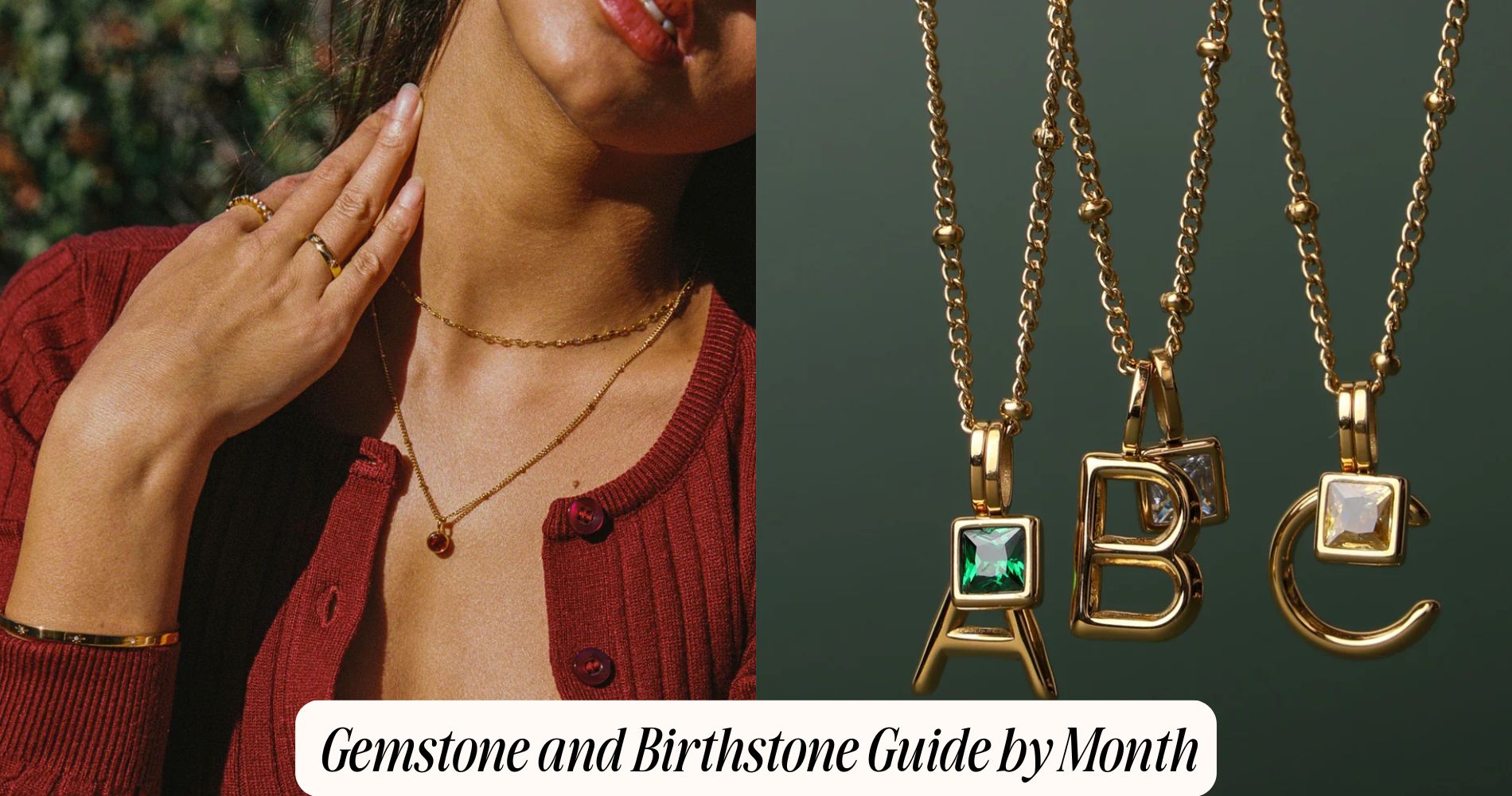
Gemstone and Birthstone Guide by Month
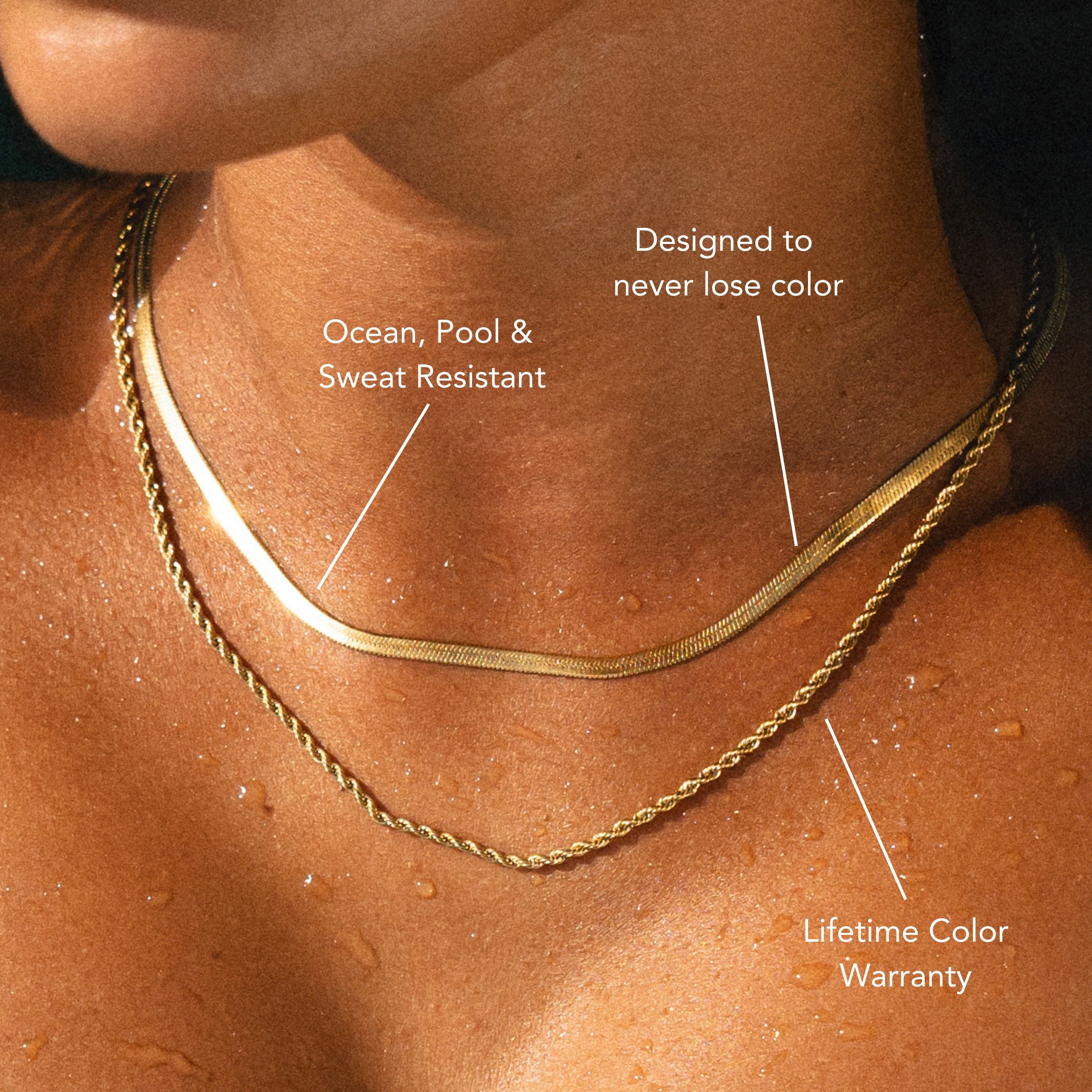
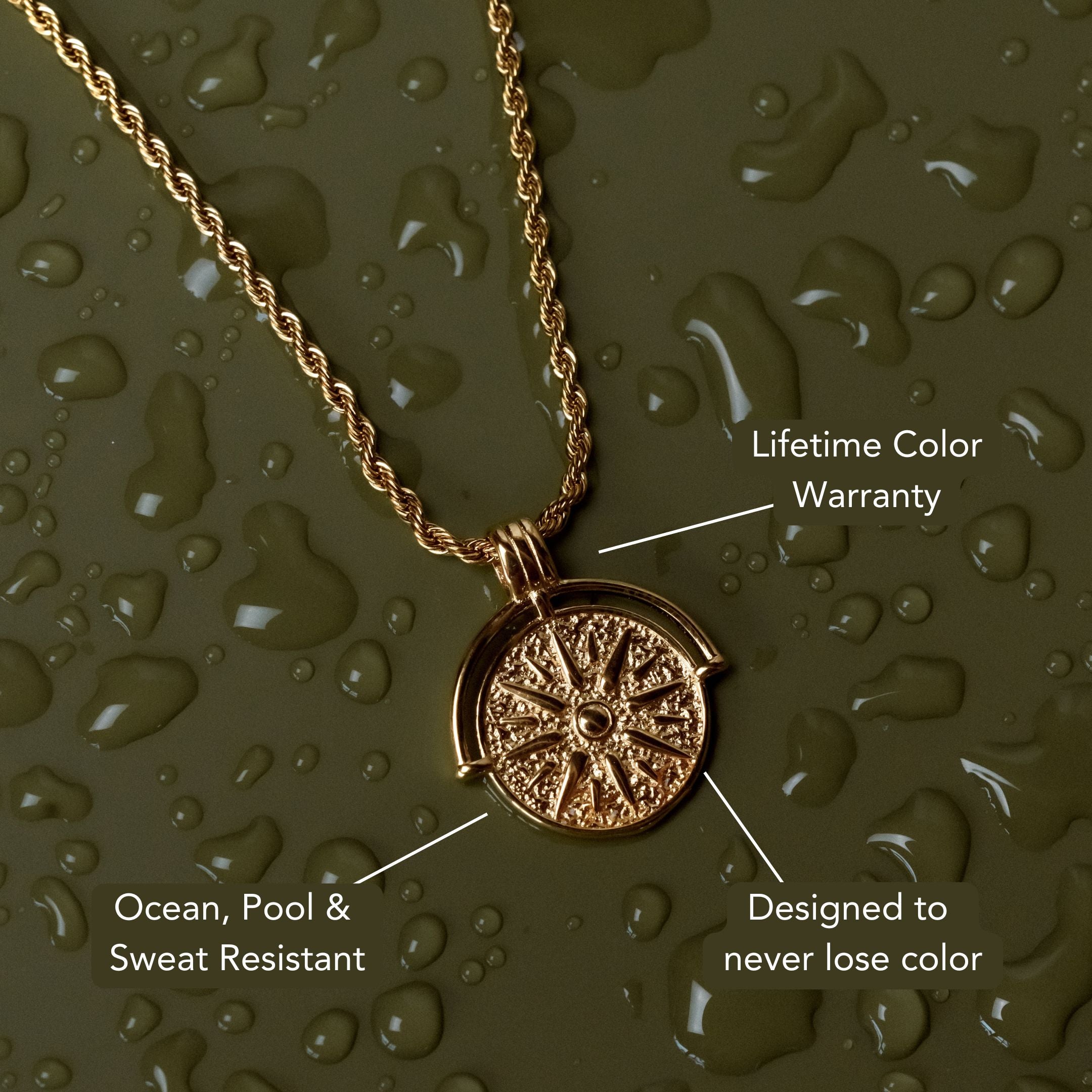
This gemstone and birthstone guide takes you month by month with both traditional and modern picks—from garnet through turquoise and tanzanite—grounded in mineralogy you can trust. You’ll learn each stone’s composition, color-causing trace elements, Mohs hardness, cleavage, and stability, plus why sapphire’s blue comes from Fe–Ti charge transfer and ruby and emerald owe their color to Cr³⁺. We also cover how treatments like diffusion, irradiation, and annealing affect value, along with care tips (including ultrasonic cautions), durability for daily wear, and ethical choices such as lab-grown options, chain-of-custody, and RJC standards. For stones suited to everyday exposure, our Waterproof Jewelry collection highlights designs engineered for durability without compromising beauty. Practical buying checklists and sourcing insights round it out.
Birthstones by Month: Traditional and Modern Picks
Although traditions vary by culture, most modern lists align each month with a primary gemstone and, in some cases, an accepted alternative, balancing historical lore with gemological practicality.
You’ll see traditional choices like garnet (January, pyrope-almandine), amethyst (February, macrocrystalline quartz), aquamarine (March, beryl), diamond (April), emerald (May, beryl), pearl and alexandrite (June, biogenic aragonite and chrysoberyl), ruby (July, corundum), peridot (August, olivine), sapphire (September, corundum), opal (October, hydrous silica), topaz (November, fluorine-bearing aluminosilicate), and turquoise (December, hydrous copper aluminum phosphate).
Modern alternatives expand options with durability and availability in mind: add bloodstone to March, white sapphire to April, alexandrite to June, spinel to August, tourmaline to October, citrine to November, and tanzanite or zircon to December.
You’ll evaluate refractive index, Mohs hardness, cleavage, and stability to select appropriate cuts and settings.

Meanings and Symbolism of Each Gem
You’ve matched months to minerals; now anchor each stone’s lore to its material properties and cultural record.
You’ll interpret amethyst’s sobriety myth via quartz macrocrystals colored by Fe4+ and irradiation; garnet’s protection aligns with its hardness and isometric toughness.
Aquamarine’s calm derives from beryl’s hexagonal clarity and Fe2+ chromophore associations.
Diamond’s fidelity echoes extreme Mohs 10 hardness and lattice perfection.
Emerald signals renewal; its Cr3+-bearing beryl and inclusion-rich gardens shaped its cultural significance.
Pearl’s purity reflects biogenic aragonite nacre layering.
Ruby’s courage matches corundum’s Cr3+ fluorescence and durability.
Peridot’s warmth stems from olivine’s Fe-Mg silicate composition.
Sapphire’s wisdom links to corundum’s stability.
Opal’s inspiration maps to hydrated silica’s play-of-color.
Topaz’s constancy mirrors orthorhombic Al2SiO4(F,OH)2.
Turquoise’s protection reflects copper-aluminum phosphate traditions and reputed healing properties.
Color Variations, Imitations, and Alternatives
While each birthstone carries a canonical hue, most span diagnostic color ranges driven by trace-element chemistry, valence state, and defect structures—and those signatures guide detection of treatments and simulants.
You’ll see color variations: Fe-Ti intervalence charge transfer in sapphire yields blue; Cr3+ gives ruby and emerald red/green; Mn2+/Mn3+ drive pink-to-red in tourmaline and garnet; Cu2+ produces paraíba blue; color centers govern amethyst and smoky quartz.
Treatments—diffusion, irradiation, annealing, and fracture filling—alter chromophores or optics; you should verify with spectroscopy, immersion, and magnification.
Imitations include glass, doublets, and assembled stones, often flagged by gas bubbles or mismatch at junctions.
Synthetic alternatives (flux, hydrothermal, Czochralski, HPHT, CVD) match chemistry but reveal growth zoning, curved striae, metallic inclusions, or atypical spectra.

Durability, Care, and Everyday Wear Tips
Identifying chromophores and treatments is only half the job; keeping a stone stable on the body demands understanding hardness, toughness, and cleavage.
Mohs hardness resists abrasion; toughness resists chipping; cleavage dictates how a crystal fractures along lattice planes. Diamond and sapphire withstand daily wear; emerald’s fissures and perfect cleavage demand protective settings and gentle cleaning techniques.
Avoid ultrasonic or steam for stones with fluid inclusions (opal, emerald, tanzanite) or heat sensitivity (kunzite). Use mild detergent, soft brush, and lukewarm water; rinse thoroughly.
Limit thermal shock and prolonged UV for color centers in topaz and amethyst.
For gemstone storage, segregate pieces: hard species scratch softer ones. Use padded compartments and silica gel to manage humidity for opal.
Inspect prongs, tighten settings, and remove jewelry during impact-prone tasks.
Budget, Ethics, and Sourcing Considerations
Even before choosing a hue or cut, define your budget and align it with sourcing criteria such as origin, mining method, and disclosure standards. Set a price ceiling, then compare budget options: mined, lab-grown, or recycled gemstones.
Lab-grown corundum or diamond offers identical crystallography and refractive indices with lower cost and traceable inputs.
Prioritize ethical sourcing by requesting chain-of-custody documentation, mine-of-origin data, and treatment disclosure (e.g., heat, diffusion, fracture filling).
Look for third-party verification: RJC certification, Fairmined/Fairtrade gold for settings, and audits for artisanal and small-scale mining.
Evaluate environmental impact via tailings management, water use, and cyanide/mercury controls.
Use reputable laboratories (GIA, AGS, IGI) for reports listing species, variety, treatments, and geographic indicators.
You’ll balance provenance, welfare, and performance without exceeding your budget.

Frequently Asked Questions
How Do I Choose Ring Settings That Best Showcase My Birthstone?
Select settings that maximize light return and protect cleavage planes. Choose prong or bezel depending on hardness. Optimize color contrast with complementary metal choice; use white metals for cool hues, yellow/rose for warm. Guarantee secure seat, precise girdle support, durable alloys.
Can Birthstones Be Used in Men’s Jewelry Beyond Rings?
Yes. You can integrate birthstones into men’s jewelry via birthstone bracelets, gemstone cufflinks, tie bars, and pendants. Prioritize Mohs hardness ≥7, toughness, secure bezel settings, and protective mountings; select stable species (e.g., sapphire, garnet) for durability.
What Birthstone Designs Suit Minimalist Jewelry Styles?
Choose bezel-set cabochons, flush-set melee, or tension-set solitaires; they deliver minimalist designs and subtle elegance. Opt for small carat weights, high Mohs hardness (≥8), neutral hues, calibrated cuts, and ethical provenance. Use brushed metals to reduce specular reflection.
Are There Cultural Variations in Birthstone Assignments by Region?
Yes. You’ll find regional differences: Western lists (1912/1952 AGS) emphasize modern trade stones, while Vedic jyotisha assigns navaratna by planetary rulership. East Asian systems use zodiacal correspondences. Cultural significance shapes substitutions, e.g., nephrite vs. jadeite, spinel vs. ruby.
How Do I Style Birthstones With Other Gemstones in One Piece?
Combine birthstones with complementary gemstones using layering techniques and deliberate color combinations. Prioritize Mohs hardness compatibility, refractive index contrast, and cut symmetry. Use bezel settings for softer minerals, calibrate carat proportions, and space high-birefringence stones to avoid optical interference.
Conclusion
You’re now equipped to choose a birthstone with mineralogical precision. Weigh crystal system, refractive index, specific gravity, and Mohs hardness alongside cleavage (e.g., diamond perfect, emerald poor) to gauge durability and care. Verify treatments (HPHT, diffusion, fracture-fill) and distinguish synthetics from simulants via spectroscopy or inclusion analysis. Consider color zoning, pleochroism, and fluorescence. For daily wear, prioritize toughness (corundum, diamond) and protective settings. Source responsibly: seek origin disclosure, independent grading, and third‑party ethical certifications.









コメントを書く
このサイトはhCaptchaによって保護されており、hCaptchaプライバシーポリシーおよび利用規約が適用されます。