

Does Every Jewelry Tarnish: Truth You Should Know
The assumption that all jewelry eventually tarnishes is so widespread that most people accept it without question. It influences buying decisions, shapes expectations, and leads to the belief that replacing jewelry every few months is simply part of owning it. But the assumption is wrong. Does every jewelry tarnish? No. Some materials tarnish reliably and quickly. Others do not tarnish at all under any normal wearing condition. The difference is the chemistry of the metal, not the price tag or the age of the piece. Tarnish-Free Jewelry built on non-reactive materials proves this in practice. This guide explains the science behind tarnishing, names which materials do and do not tarnish, and gives you the information to make a buying decision based on accurate expectations rather than assumptions.
What Tarnishing Actually Is
Tarnishing is a chemical reaction at the surface of a metal that produces a new compound with different optical properties than the original metal. That new compound is what appears as the dull gray, black, or greenish discoloration most people associate with tarnishing.
The most common reactions are:
Sulfidation: Silver reacts with hydrogen sulfide in the air to form silver sulfide, a dark gray to black compound. This is the primary tarnishing mechanism for sterling silver and is what produces the familiar blackening on silver chains and rings. Hydrogen sulfide is present in air at trace levels everywhere, which means sterling silver tarnishes through air exposure alone, even without water or skin contact.
Oxidation: Copper and copper-containing alloys react with oxygen and moisture to form copper oxide and, with further reaction, copper carbonate. The green patina on aged copper architecture is the same compound that causes green skin staining and discoloration on fashion jewelry with copper or brass bases.
Chloride attack: Certain metals react with chlorine ions in pool water, tap water, and salt environments, producing surface corrosion that appears as pitting, dulling, or discoloration.
These reactions all require the metal to participate chemically. Materials that sit below the reactivity threshold for those reactions do not tarnish because they do not form the surface compounds that produce visible discoloration. Tarnishing is not an inevitable property of jewelry. It is a property of specific metals that participate in specific reactions.

Does Every Jewelry Tarnish: The Direct Answer by Material
Metals That Do Not Tarnish
Solid gold at 14k and above does not tarnish under normal wearing conditions. Gold is one of the least reactive metals, which is why gold artifacts from ancient civilizations retain their appearance after thousands of years. At 14k, the alloy contains 58.5% gold, sufficient to maintain the non-reactive character of pure gold through daily wear including water, sweat, and skincare product contact. At 18k and 24k, the gold content is higher and the alloy even more stable.
Platinum does not tarnish or corrode under any standard wearing condition. It is fully inert against sulfur compounds, chlorine, salt water, and the acidic environment of skin contact. Platinum's appearance holds indefinitely without any protective coating or maintenance routine.
Titanium does not tarnish because its surface forms a stable titanium dioxide layer that passivates it against further reactions. That passive layer is self-renewing: if disrupted, it reforms immediately on oxygen contact. Titanium jewelry worn through daily showers, pool sessions, and ocean swims holds its appearance without any tarnishing reaction occurring.
316L surgical-grade stainless steel does not tarnish through normal wearing conditions. Its chromium content forms a chromium oxide passive layer that prevents the oxidation and sulfidation reactions that tarnish other metals. The same mechanism makes it suitable for medical implants and marine hardware exposed to sustained water and salt environments.
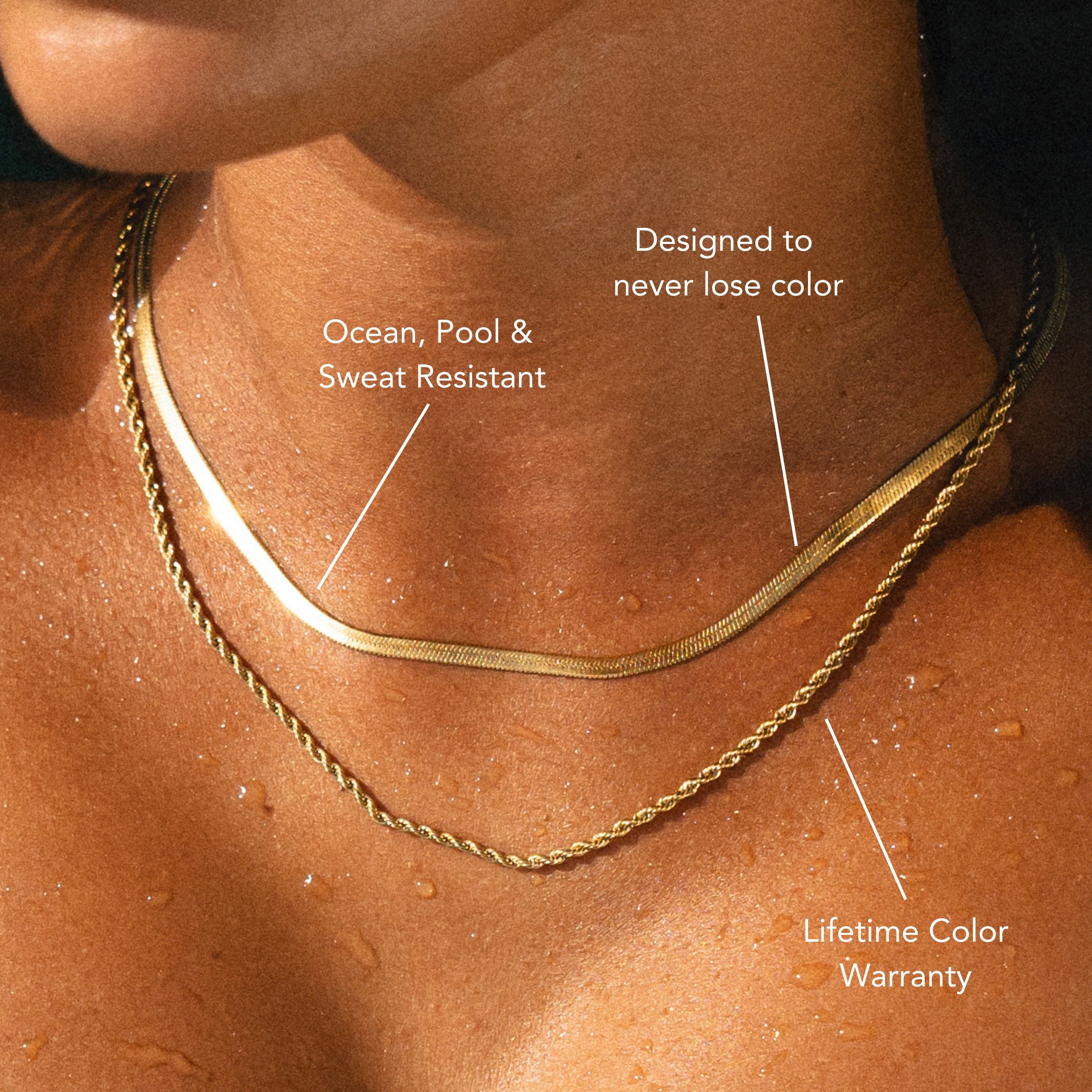
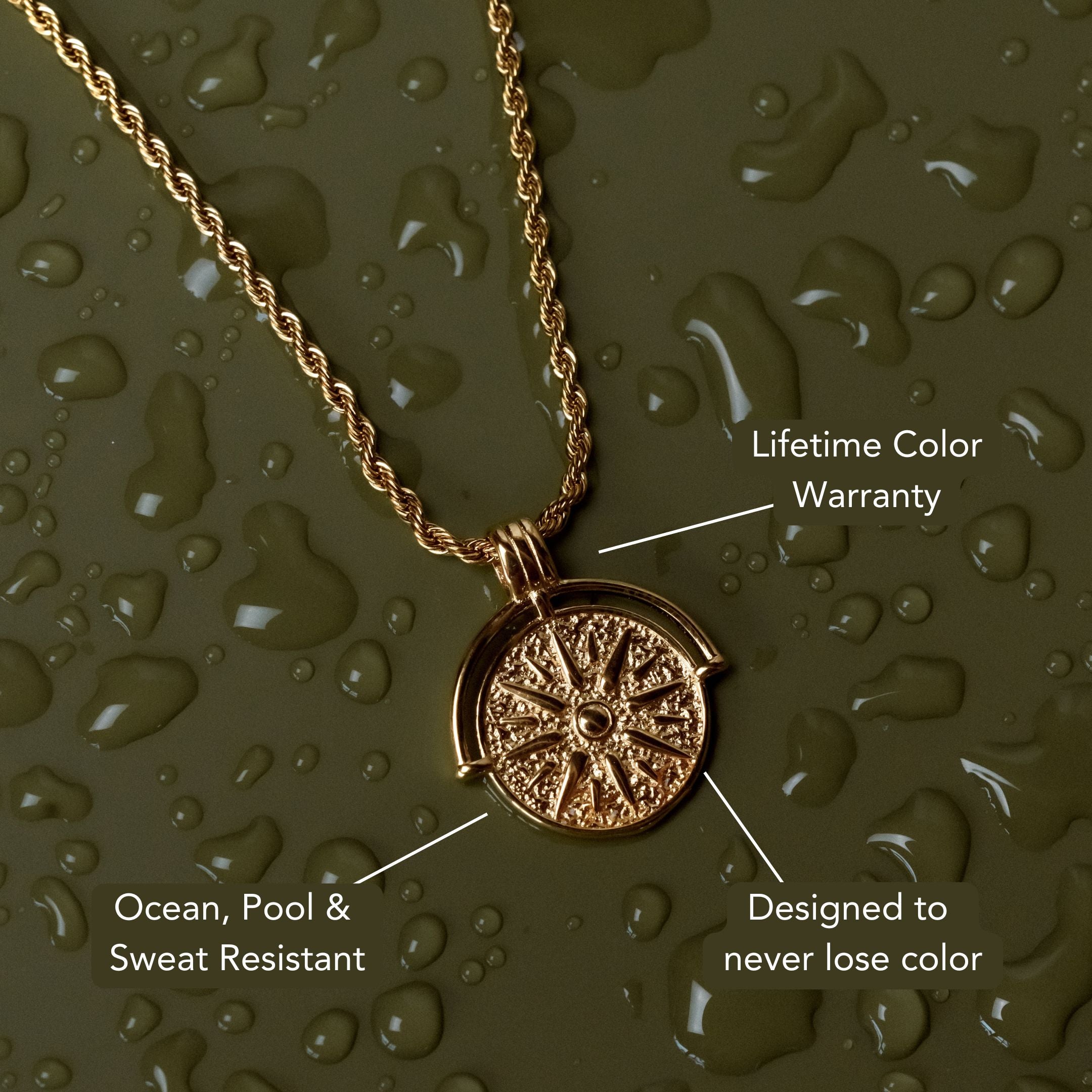
PVD-coated stainless steel does not tarnish. The PVD (Physical Vapor Deposition) finish bonded at the molecular level over 316L stainless steel produces a coating approximately 10 times thicker than standard electroplating. That coating does not participate in tarnishing reactions and does not have the adhesion vulnerabilities that cause standard plating to fail and expose a reactive base. Both the coating and the steel beneath it are non-reactive under all normal daily wear conditions.

Metals That Do Tarnish
Sterling silver tarnishes reliably through air exposure alone. The 7.5% copper content accelerates the process beyond what pure silver would produce. Daily wear through skin contact, water, and product exposure speeds up the tarnishing further. A sterling silver ring or necklace worn daily without maintenance typically shows visible tarnishing within weeks.
Brass and bronze tarnish quickly because their high copper content reacts with oxygen, moisture, and sulfur compounds simultaneously through multiple reaction pathways. Brass jewelry worn against skin produces the green staining most people associate with low-quality jewelry within days to weeks of contact.
Standard gold-plated jewelry tarnishes once the plating layer wears through to the reactive base metal beneath it. The gold layer itself does not tarnish, but it is too thin to remain intact through sustained daily wear. Once the copper or brass base is exposed, tarnishing follows rapidly.
Copper tarnishes almost immediately in skin contact conditions. Pure copper jewelry worn against skin produces green discoloration within days and darkens with air exposure continuously.
The Tarnishing Rate Spectrum
Not all tarnishing metals tarnish at the same rate. Understanding the spectrum helps you calibrate realistic expectations for pieces you already own.
| Material | Tarnishes | Tarnish Rate | Primary Trigger | Reversible |
|---|---|---|---|---|
| Solid gold (14k+) | No | N/A | N/A | N/A |
| Platinum | No | N/A | N/A | N/A |
| Titanium | No | N/A | N/A | N/A |
| 316L stainless steel | No | N/A | N/A | N/A |
| PVD-coated stainless steel | No | N/A | N/A | N/A |
| Sterling silver | Yes | Fast | Air sulfur, water, sweat | Yes, with cleaning |
| Gold-plated brass | Yes | Moderate to fast | Plating wear, water, sweat | Partially |
| Brass | Yes | Very fast | Oxygen, moisture, skin acids | Partially |
| Copper | Yes | Very fast | Oxygen, moisture, skin acids | Partially |
| Gold-filled | Yes | Slow | Extended wear at friction points | Partially |
| Rhodium-plated silver | Yes | Slow to moderate | Rhodium layer wear | Partially |
The spectrum matters for making sense of your own experience. If a piece tarnished within days, the base metal is almost certainly copper or brass with either no plating or very thin plating. If a piece lasted months before tarnishing, it is likely gold-filled or rhodium-plated silver. If a piece has not tarnished after years of daily wear, it is either solid gold, a non-reactive metal, or carries a durable PVD finish.

The Conditions That Accelerate Tarnishing
For metals that do tarnish, the rate is not fixed. Specific conditions accelerate tarnishing significantly compared to careful dry storage.
Water and humidity are the most impactful daily accelerators. Steam and moisture introduce the water component that most tarnishing reactions require. A sterling silver chain worn through daily showers tarnishes in days. The same chain stored dry in an airtight container between occasional dry wearings might last months before visible tarnishing appears.
Skin contact and sweat introduce salt, lactic acid, and trace compounds that react with copper-containing metals simultaneously. Rings and bracelets, which maintain sustained skin contact through movement and heat, tarnish faster than necklaces worn against clothing for part of the day.
Skincare products, perfume, and sunscreen all contain compounds that react with reactive metals. Applying products directly over jewelry concentrates those compounds at the metal surface and accelerates the reaction significantly compared to incidental contact.
Pool water and ocean exposure add chlorine and salt to the mix, which are among the most aggressive tarnishing accelerators for copper-based metals. A brass-based fashion ring worn through a single pool session can show visible discoloration within hours.
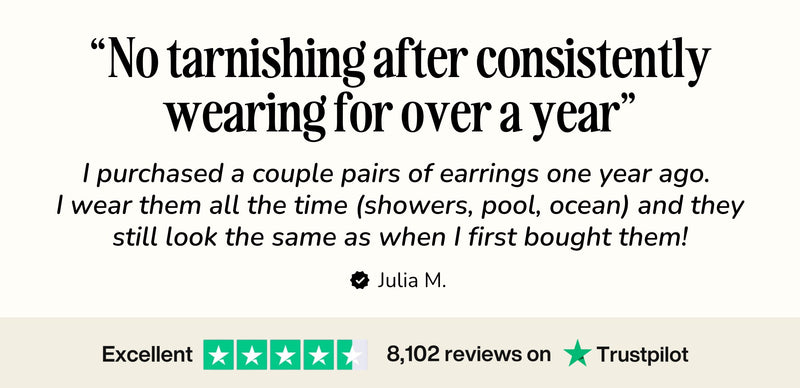
For pieces made from non-reactive materials, none of these conditions matter. A PVD-coated stainless steel bracelet worn through daily gym sessions, beach days, and ocean swims does not tarnish because the conditions that accelerate tarnishing in reactive metals simply do not trigger any reaction in the materials it is made from.
What This Means for Buying Decisions
The practical consequence of understanding tarnishing chemistry is that the choice of base material at purchase determines your entire future relationship with that piece.
Buying a piece whose base metal tarnishes locks you into a maintenance cycle: cleaning, careful storage, removing it before water exposure, replacing it when the finish fails completely. That cycle has a real cost in time, attention, and eventual replacement spending.
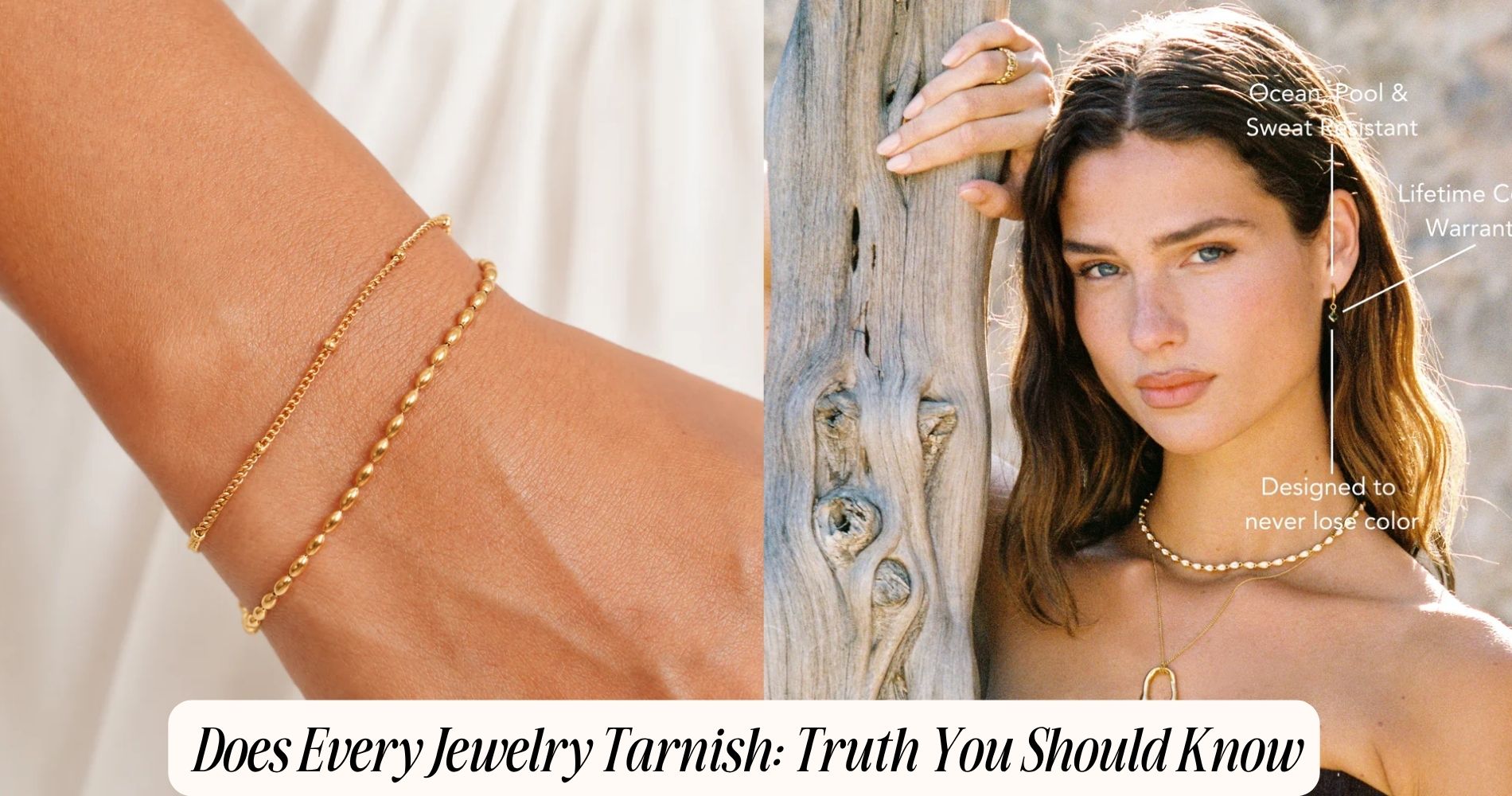
Buying a piece whose base material does not tarnish removes that cycle entirely. ATOLEA builds its full range on PVD-coated 316L stainless steel specifically because the combination of non-reactive base metal and molecular-bond coating eliminates tarnishing through the conditions daily life actually involves: gym sessions, ocean swims, travel, beach days, and daily showers. Every piece carries a lifetime color warranty, backed because the material genuinely does not tarnish rather than as a marketing gesture.
The question to ask at the point of any jewelry purchase is not how to prevent tarnishing. It is whether the base material participates in tarnishing reactions at all. The answer to that question determines whether maintenance is something you will manage forever or something you never need to think about.

Frequently Asked Questions
Does all jewelry tarnish eventually?
No. Solid gold at 14k and above, platinum, titanium, 316L stainless steel, and PVD-coated stainless steel do not tarnish under normal daily wearing conditions. These materials are either chemically inert or carry stable passive layers that prevent tarnishing reactions from occurring. Tarnishing is a property of specific reactive metals, not an inevitable outcome for all jewelry.
Why does some jewelry tarnish faster than others?
Tarnishing rate depends on two factors: the reactivity of the base metal and the conditions it encounters. Copper and brass tarnish fastest because copper participates in multiple simultaneous reactions with oxygen, sulfur, and moisture. Sterling silver tarnishes more slowly than brass but faster than gold. Water, sweat, and product contact all accelerate whatever tarnishing rate the base metal already has.
Can you stop jewelry from tarnishing?
For jewelry made from reactive metals, you can slow tarnishing through airtight storage, avoiding water and product contact, and regular cleaning. You cannot prevent it entirely because those metals participate in tarnishing reactions through air exposure alone. For jewelry made from non-reactive materials, there is nothing to prevent because the tarnishing reaction does not occur in the first place.
Does sterling silver always tarnish?
Yes. Sterling silver contains 7.5% copper, which adds a second oxidation reaction pathway to the standard silver sulfidation reaction. Both reactions occur through air exposure without water or skin contact, which means sterling silver tarnishes even with careful storage, just more slowly than with active daily wear. Regular cleaning manages the appearance but does not stop the underlying reactions.
Is tarnish-free jewelry real or just a marketing claim?
Tarnish-free is a verifiable material claim for jewelry built from solid gold at 14k and above, platinum, titanium, 316L stainless steel, and PVD-coated stainless steel. These materials do not produce the surface reactions that cause tarnishing. The claim is genuine when attached to those materials and verifiable through the base metal specification in the product description. When attached to unspecified materials or standard plated pieces without a base metal callout, it is not a reliable claim.
Conclusion
Does every jewelry tarnish has a factually clear answer: no. Tarnishing is a chemical reaction specific to reactive metals, and several commonly available jewelry materials do not participate in those reactions. Solid gold, platinum, titanium, surgical-grade stainless steel, and PVD-coated stainless steel all hold their appearance through the conditions daily life creates because their chemistry does not produce the surface compounds that tarnishing requires. Knowing which category a piece falls into before buying is the single most useful piece of information in any jewelry purchase decision.









コメントを書く
このサイトはhCaptchaによって保護されており、hCaptchaプライバシーポリシーおよび利用規約が適用されます。