


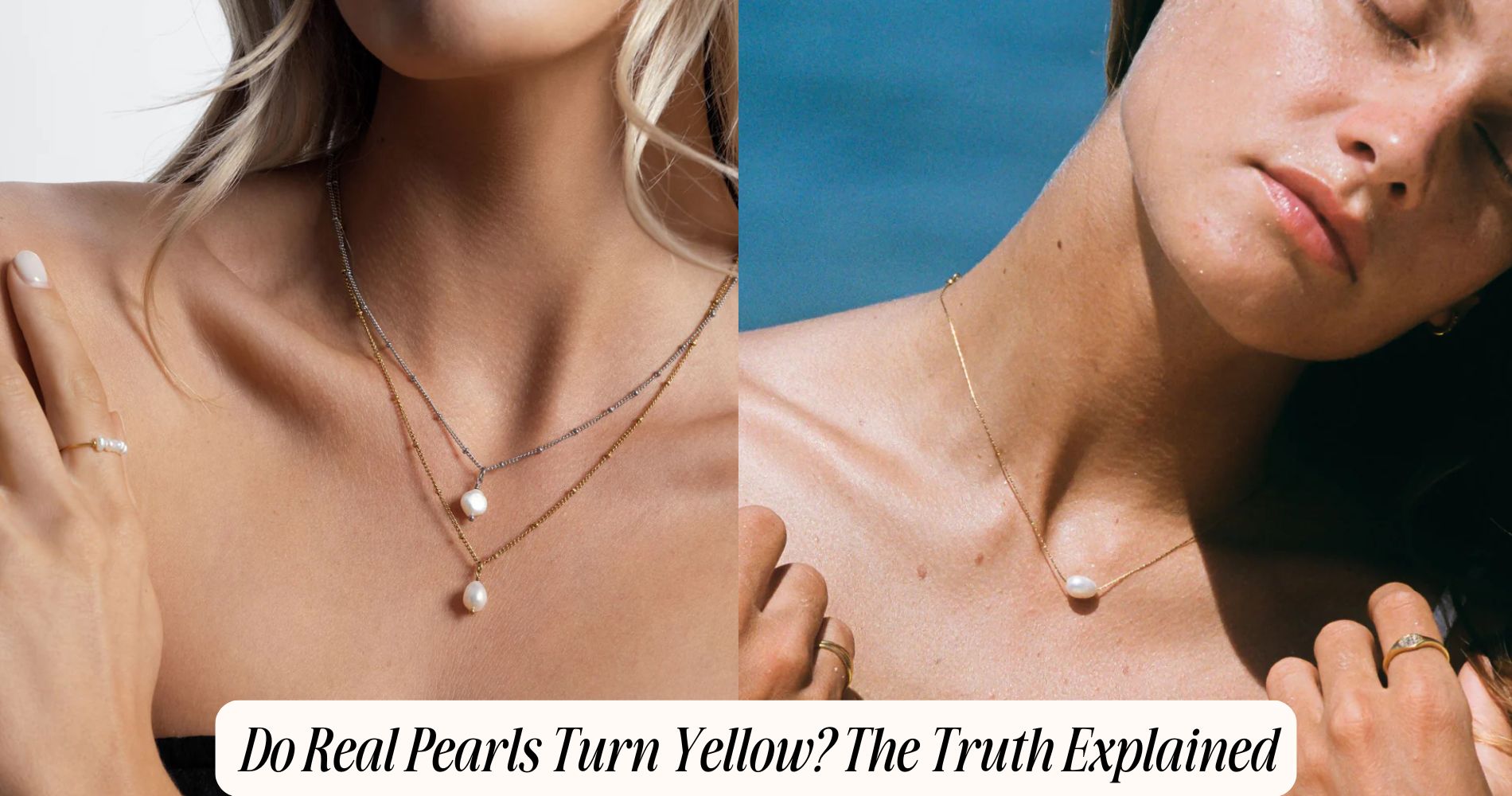
Do Real Pearls Turn Yellow? The Truth Explained
Do real pearls turn yellow? Yes—real pearls can yellow over time as nacre, a porous bioceramic, slowly oxidizes and exchanges moisture and ions with its environment. These changes alter light refraction within nacre layers, warming the pearl’s body color and softening its overtones. Even, uniform warmth typically signals natural aging, while blotchy discoloration, chalkiness, or microcracks indicate damage. Factors like humidity, UV exposure, pollutants, and skin oils speed up the process. Gentle, pH-neutral cleaning may remove surface discoloration, but harsh chemicals won’t help. Proper storage is especially important for pieces like Single Pearl Necklaces to preserve luster and slow progression. Up next, learn how to test reversibility and prevent further yellowing.
Why Pearls Change Color Over Time
Although pearls look inert, their color shifts because nacre is a porous, composite biomaterial that interacts with its environment. You’re dealing with aragonite platelets bonded by organic conchiolin; this pearl composition permits slow diffusion of moisture, ions, and airborne organics into microgaps.
As water content varies, refractive indices and scattering at platelet interfaces change, subtly altering overtone and body color. Oxidation of the organic matrix can warm hues toward cream or yellow, while adsorbed pollutants may mute luster.
You can influence kinetics: humidity, temperature, salinity, and UV exposure affect diffusion and oxidation rates. Even storage materials matter; sulfur-containing papers or off-gassing plastics catalyze discoloration.
The historical significance of pearl jewelry supports this mechanism—archival pieces show predictable tonal drift consistent with nacre’s composite structure and environmental coupling.

Natural Aging vs. Damage: What’s the Difference?
While pearls inevitably mellow as their nacre ages, you can distinguish natural patina from damage by the pattern, mechanism, and reversibility of change.
Natural aging arises from slow dehydration, oxidation, and micro-abrasion of aragonite platelets and organic matrix—natural processes that shift luster toward a warm tint while preserving uniformity. You’ll see even coloration, intact orient, and high surface coherence.
Damage results from accelerated chemical reactions or mechanical stress. UV, heat, acids, skin oils, chlorine, and harsh cleaners disrupt the proteinaceous conchiolin, pit aragonite tablets, and delaminate layers. You’ll notice blotchy yellowing, chalkiness, microcracks, and luster collapse.
Test reversibility: gentle rehydration in a closed, humid environment can slightly revive aged luster, but it won’t fix etching or pitting.
Inspect under raking light; uniform sheen suggests aging, discontinuities indicate damage.
Types of Pearls and Their Typical Hues
Because pearl color originates in nacre chemistry and structure, different pearl types exhibit distinct baseline hues and overtones.
You’ll see Akoya pearls present cool whites with silver, rose, or cream overtones due to tightly packed aragonite platelets.
Freshwater pearl varieties span white, peach, lavender, and apricot; their thicker, often irregular nacre yields softer luster and diffuse color.
Tahitian pearls, formed in Pinctada margaritifera, show natural blacks to charcoal with green, peacock, or aubergine overtones from organic pigment content.
South Sea pearls divide into white/silver (Pinctada maxima, silver-lipped) and golden (gold-lipped), where carotenoid-like chromophores drive golden intensity.
When selecting pearl varieties, assess color significance: baseline body color, overtone interference, and nacre thickness together determine perceived hue, contrast, and stability under normal wear.

Environmental Factors That Cause Yellowing
Knowing each pearl type’s inherent hue sets the baseline; shifts toward yellow usually arise from external conditions that alter nacre and surface films.
You’re dealing with a biogenic composite: aragonite tablets and conchiolin. Oxidation and adsorption processes drive color change. Environmental pollutants—ozone, nitrogen oxides, sulfur compounds, and cigarette smoke—oxidize organics in the matrix, deepening yellow chromophores.
Airborne oils and particulates deposit on microtextured surfaces, scattering light and warming tone.
Humidity levels matter. Low humidity dehydrates the conchiolin, increasing microcracking and refractive mismatch, which dulls luster and skews warm. Excess humidity promotes uptake of moisture and acidic gases, accelerating hydrolysis and ionic exchange that stain organic layers.
UV and high heat further reconfigure organics, while chlorinated pool vapor and salon aerosols introduce reactive species that catalyze these pathways.
Storage Mistakes That Accelerate Discoloration
Even pristine nacre will skew yellow if you store pearls in conditions that stress their aragonite–conchiolin composite.
You accelerate discoloration when you trap pearls in airtight plastics, where residual volatiles and moisture exposure promote hydrolysis of the organic matrix.
You also risk damage in hot closets or cold basements; repeated temperature fluctuations expand and contract nacre platelets, opening microfissures that catch contaminants.
Leaving strands on wooden dressers can introduce acidic off-gassing (formaldehyde, tannins) that oxidizes the matrix.
Sealed safes without humidity control desiccate pearls; dehydrated conchiolin darkens and loses translucency, making nacre appear yellower.
Direct sunlight or bright LEDs photo-oxidize organics and degrade dyes in silk threads, transferring discolorants.
Storing uncleaned pearls lets skin lipids oxidize and migrate into pores.
How to Tell If Yellowing Is Reversible
So how do you gauge whether a pearl’s yellowing will lift or is baked into the material? Start by evaluating yellowing indicators under neutral daylight: uniform, surface-level haze that doesn’t penetrate growth lines often points to reversible oxidation or adsorbed contaminants.
Examine luster—if orient and sharp specular highlights remain intact, nacre integrity is likely sound. Contrast that with blotchy, patchy staining that follows microcracks or drill holes; that pattern suggests deeper ingress.
Use magnification to check nacre thickness and layering. If you still see crisp aragonite platelets and tight interfaces, color shift is more likely superficial.
Rub gently across the surface; transferable residue indicates removable films. Finally, compare adjacent pearls: differential yellowing with similar wear histories often responds to targeted restoration techniques, whereas uniformly embedded discoloration typically doesn’t.

Safe Cleaning and Restoration Methods
While pearls tolerate gentle maintenance, treat them as a biomineral composite: aragonite platelets bound by an organic conchiolin matrix that’s vulnerable to heat, acids, alkalis, and solvents.
Use only pH‑neutral cleaning solutions: deionized water with a drop of mild, dye‑free surfactant. Wipe with a soft microfiber, then rinse with deionized water and air‑dry on a breathable surface.
Avoid ultrasonic, steam, ammonia, peroxide, baking soda, vinegar, and alcohols; they disrupt the matrix and induce micro‑pitting.
For restoration techniques targeting superficial yellowing, employ low‑pressure aqueous cleaning with controlled contact time, followed by humidity reconditioning (45–55% RH) to rehydrate organics.
If nacre is crazed or abraded, consult a conservator for micro‑abrasive polishing under magnification and restringing with fresh silk.
Never bleach. Document pre/post condition to track material response.
Daily Care Tips to Maintain Luster
Two habits preserve pearl luster: controlled environment and low‑stress handling. Treat nacre as a bioceramic–organic composite: it dehydrates, abrades, and acid‑etches easily.
After wear, do daily cleaning with a soft, dry microfiber to remove sweat, sebum, and aerosols that lower surface pH and accelerate dissolution. Avoid detergents and alcohol; both denature conchiolin binders.
Keep pearls last on, first off. Perfume, sunscreen, and hair spray deposit plasticizers and acids; let them cure before contact.
Maintain moderate humidity (45–55%) and stable temperature to limit nacre microcracking. For storage solutions, use breathable fabric pouches or lined trays; never sealed plastic, which traps acids, or cotton wool, which wicks moisture.
Store strands flat to reduce thread tension, and isolate pearls from harder gemstones to prevent scratch wear.
When to Consult a Professional Jeweler
Daily care slows nacre degradation, but some conditions exceed at‑home maintenance and warrant a jeweler’s assessment. Seek a jeweler consultation when you notice abrupt yellowing, chalky patches, or a matte surface—signs of demineralization within the aragonite platelets.
If pearls feel unusually light, sound hollow when lightly tapped, or show micro‑crazing under magnification, you’re likely dealing with compromised nacre thickness. A professional assessment is also essential if knots are stained, the drill hole shows brown halos, or you detect sulfurous odor after storage—possible moisture intrusion or protein breakdown.
Consult a professional jeweler after chemical exposure (hair spray, chlorine, perfume), thermal shock, or prolonged high humidity.
They’ll measure nacre depth, evaluate surface crystallography, verify restringing tension, recommend controlled reconditioning, and document stability for appropriate conservation.
Frequently Asked Questions
Do Cultured and Natural Pearls Age Differently in Resale Value?
Yes. You’ll see stronger resale stability in natural pearls, driven by rarity and thicker nacre. Cultured pearls depreciate faster; quality, nacre thickness, luster, and provenance govern both. You should prioritize certification, minimal treatments, and documented origin for value.
Can Skincare or Perfume Ingredients Permanently Alter Pearl Color?
Yes. You expose nacre to acids, alcohols, and oxidizers; skincare effects and perfume reactions can etch aragonite and degrade conchiolin, causing irreversible dulling or discoloration. Apply products first, let them dry, then wear pearls; wipe and store desiccated.
How Does Lighting Affect Perceived Yellowing in Photographs?
Lighting skews perceived yellowing by shifting white balance and spectral distribution. You counteract it using neutral lighting techniques, calibrated photography settings, gray cards, RAW capture, custom white balance, and ICC profiles. Avoid mixed light sources; reference spectrally flat reflectance standards.
Are There Insurance Implications for Discolored Pearl Jewelry?
Yes. Discoloration can affect insurance coverage if value changes. You’ll need a current pearl appraisal documenting nacre thickness, luster, and discoloration causes. Insurers may exclude gradual deterioration; schedule items, verify maintenance requirements, and update appraisals to preserve claims.
Do Pearl Coatings or Treatments Mask or Worsen Future Yellowing?
Yes—coatings can initially mask discoloration but may trap moisture, accelerate degradation, and complicate restoration. You should prioritize breathable storage, gentle cleaning, and controlled humidity. Apply reversible treatments only, follow pearl maintenance tips, and adopt yellowing prevention strategies to minimize long‑term risk.
Conclusion
You now understand why pearls yellow: dehydration, oxidation of organic matrix, and environmental contaminants. You can distinguish natural patina from damage, match expectations by pearl type, and avoid heat, UV, ozone, acids, and sulfur. Store pearls in breathable, slightly humid conditions, away from airtight plastics. Assess reversibility before cleaning; use only mild, pH-neutral methods and soft materials. Wear pearls regularly to maintain moisture. When structural integrity, nacre loss, or mounting issues arise, consult a professional for evaluation and restoration.









コメントを書く
このサイトはhCaptchaによって保護されており、hCaptchaプライバシーポリシーおよび利用規約が適用されます。