

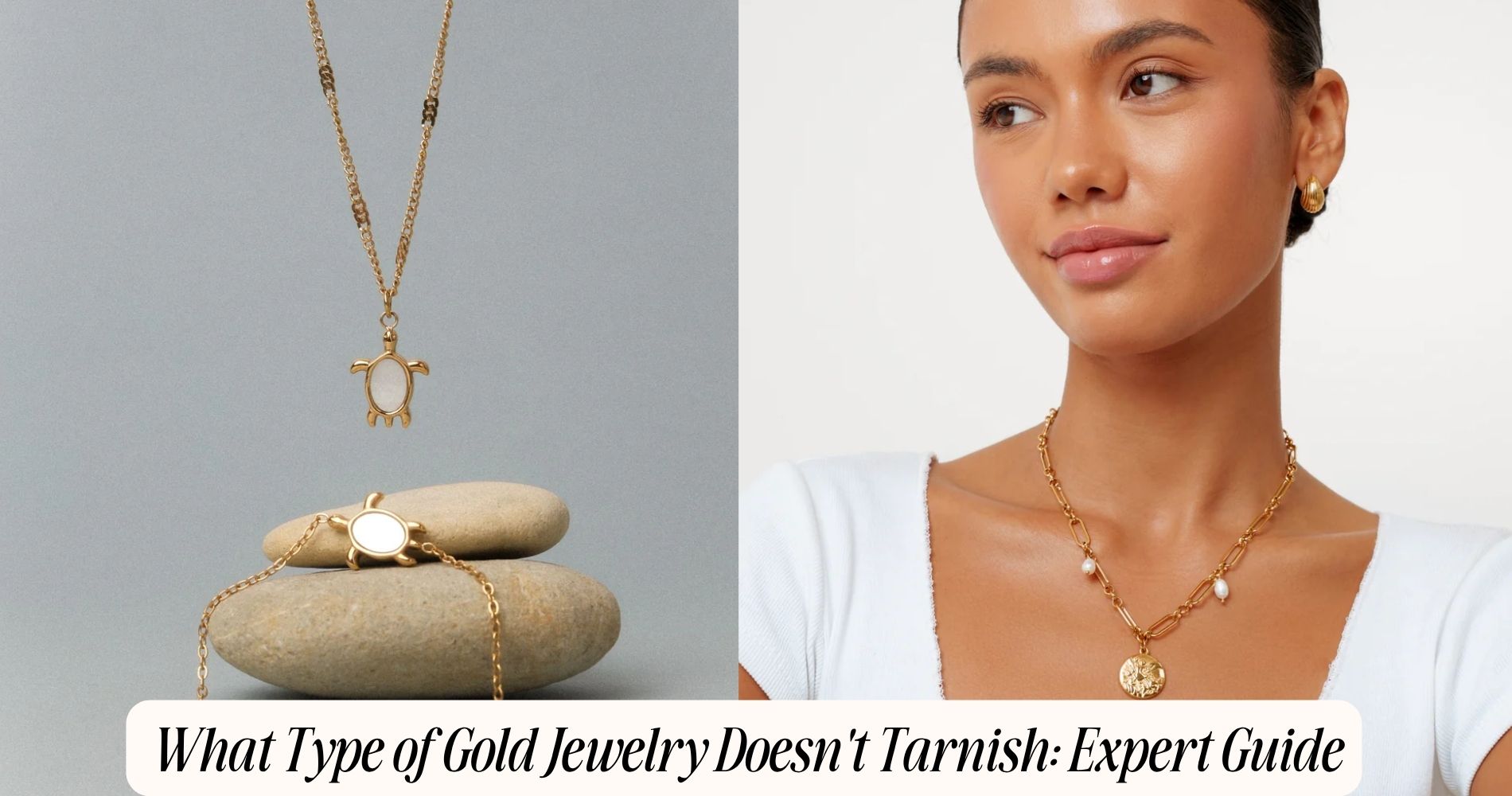
What Type of Gold Jewelry Doesn't Tarnish: Expert Guide
Not all gold jewelry behaves the same way over time. Two pieces can look identical on a shelf and produce entirely different results after six months of daily wear. Understanding what type of gold jewelry doesn't tarnish requires looking past the gold appearance to the construction beneath it, because in most cases the gold you see is a surface layer over a very different base material. Tarnish-Free Jewelry built to hold its appearance through daily life is defined by what sits underneath that gold finish. This guide breaks down every gold jewelry type, explains the chemistry behind why each one does or does not tarnish, and gives you a clear framework for identifying lasting quality before you buy.
Why Gold Jewelry Tarnishes at All
Pure gold, at 24 karats, does not tarnish. It is chemically inert under all normal conditions, which is why gold artifacts thousands of years old retain their appearance. The tarnishing problem with gold jewelry does not come from the gold itself. It comes from everything mixed with the gold, or used beneath it.
Most gold jewelry sold today is not pure gold. It is either a gold alloy (where other metals are mixed in to add durability) or a base metal with a gold-colored layer applied over it. The metals mixed in or used as the base are where tarnishing originates.

Copper is the main culprit. It reacts with oxygen, sulfur compounds in the air, and the acids and moisture present in skin contact to produce the discoloration and surface dullness associated with tarnishing. Copper is present in most gold alloys and is the primary base metal beneath most gold-plated fashion jewelry. When copper reaches the surface, either because it is part of the alloy or because a plating layer has worn through, tarnishing follows.
Understanding this makes the question of what type of gold jewelry does not tarnish a question about copper management: how much is present, where it sits relative to the surface, and whether anything protects it from skin and air contact.
What Type of Gold Jewelry Doesn't Tarnish: Type by Type
Solid Gold at 14k and Above
Solid gold jewelry contains gold throughout its construction. There is no separate base metal and no plating layer. The gold alloy is the entire piece.
At 14 karats, the alloy is 58.5% gold by weight. The remaining 41.5% typically consists of silver, copper, zinc, and other metals depending on the color: yellow gold, white gold, and rose gold each use different alloy compositions. At this karat level, the gold matrix encapsulates the copper and other reactive metals sufficiently that they do not reach the surface in quantities that cause visible tarnishing under normal daily wear conditions.
At 18 karats (75% gold), the proportion of reactive metals is lower, which makes the alloy even more stable against tarnishing. At 10 karats (41.7% gold), the higher proportion of copper and other alloy metals means a small number of people with highly reactive skin chemistry may see occasional mild discoloration, though this is not common.
Solid gold at 14k and above is the most reliable gold-toned material that genuinely does not tarnish. Its limitation is price. Solid gold jewelry sits at fine jewelry costs that make it inaccessible as a daily wear option for many buyers, particularly for pieces worn through the conditions that risk loss or physical damage.
Gold-Filled
Gold-filled jewelry uses a thick layer of gold alloy bonded mechanically under heat and pressure to a brass or copper core. The gold content in a gold-filled piece must legally represent at least 5% of the total weight in the United States, which produces a layer significantly thicker than electroplating.
The practical result is that gold-filled jewelry resists tarnishing far better than standard gold-plated pieces and can last one to five years of daily wear before the gold layer begins to wear through at high-friction points like ring shanks and bracelet clasps. Once the brass core is exposed at those points, tarnishing follows.
Gold-filled is more durable than plated and more accessible than solid gold, but it is not tarnish-free over the long term. For pieces worn through regular water exposure including showers, gym sessions, and beach days, the brass core becomes relevant faster than in dry conditions because water accelerates wear on the bond at the gold layer edges.

Gold Vermeil
Gold vermeil is sterling silver with a gold plating layer over it. US standards require at least 10-karat gold at a minimum thickness of 2.5 microns. The sterling silver base is a step up from brass because silver is less reactive than copper, but the gold layer still wears through over time with daily wear and water exposure.
The tarnishing that eventually appears on gold vermeil comes from the sterling silver base rather than copper, which means it produces the gray-silver tarnish of oxidized silver rather than the greenish copper tarnish of brass-based pieces. For people who have experienced skin irritation or green marks from brass-based plated jewelry, vermeil eliminates those reactions while still eventually tarnishing from the silver base.
Gold vermeil is a quality step up from standard gold plating, but it does not qualify as tarnish-free for daily active wear.
Standard Gold-Plated
Gold-plated jewelry applies a thin gold layer over a base metal, typically brass or copper, through electroplating. The gold layer is usually between 0.5 and 2.5 microns thick. At that thickness, the layer wears through quickly at friction points and degrades faster with water, sweat, and product contact.
The tarnishing that follows plating failure comes from the copper or brass base reacting directly with skin, air, and moisture. This is the source of green skin discoloration and the rapid dulling that most people associate with fashion jewelry.
| Gold Type | Gold Content | Tarnish Risk | Water Resistance | Daily Wear Lifespan |
|---|---|---|---|---|
| Solid gold (14k+) | 58.5% to 75%+ | None | Excellent | Indefinite |
| Gold-filled | 5% minimum by weight | Low to moderate | Moderate | 1 to 5 years |
| Gold vermeil | 2.5 micron minimum over silver | Moderate | Poor | 6 months to 2 years |
| Standard gold-plated | 0.5 to 2.5 microns over brass | High | Very poor | Weeks to months |
| PVD gold-tone coating | Molecular bond over steel | None | Excellent | Years, with warranty |
PVD Gold-Tone Over Stainless Steel
PVD (Physical Vapor Deposition) coating over 316L surgical-grade stainless steel is not solid gold, but it produces a gold-toned finish that genuinely does not tarnish through daily active wear. The PVD process deposits the finish layer in a vacuum environment at the atomic level, creating a bond approximately 10 times thicker than standard electroplating and far more durable than the mechanical bond of gold-filled construction at the surface.
The stainless steel base contains no exposed reactive copper at the surface and does not corrode or tarnish independently. The PVD finish over it does not lift, peel, or dull through water, sweat, chlorine, or skincare product contact because its atomic-level bond does not have the adhesion vulnerabilities of electroplating.
For buyers who want gold-toned jewelry that holds its appearance through showers, pool sessions, ocean swims, and gym sessions without the cost of solid gold, PVD-coated stainless steel is the most practical answer. The finish behavior matches solid gold in terms of tarnish resistance while sitting at an everyday accessible price point.
How to Identify What Type of Gold Jewelry You Are Buying
Three checks at the point of purchase identify the gold type and its expected longevity.
Look for karat or hallmark stamps. Solid gold carries a karat stamp: 10k, 14k, 18k, or 24k on the piece itself, typically on the inner band of a ring, a clasp, or a low-visibility area. Gold-filled pieces are often stamped GF or 1/20 14K GF. Vermeil pieces may be stamped 925 (for the sterling silver base) with a gold indicator. The absence of any stamp on a piece described as gold strongly suggests standard plating over an unspecified base.
Check the base metal specification. Any product description that names only the finish (18k gold plated, gold tone) without specifying the base metal almost certainly uses brass or copper underneath. A description that names 316L stainless steel, sterling silver, or solid gold karat as the base gives you verifiable construction information.
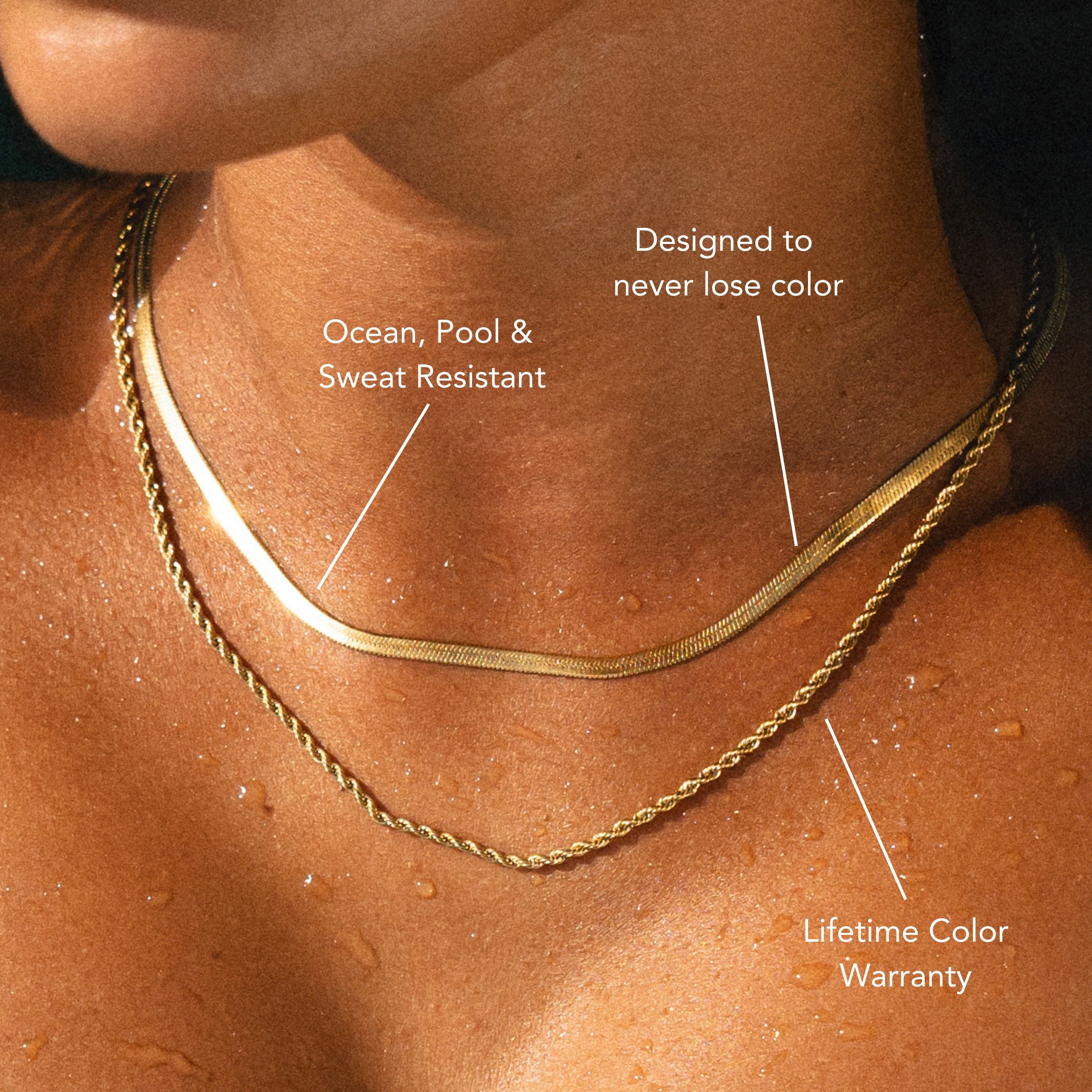
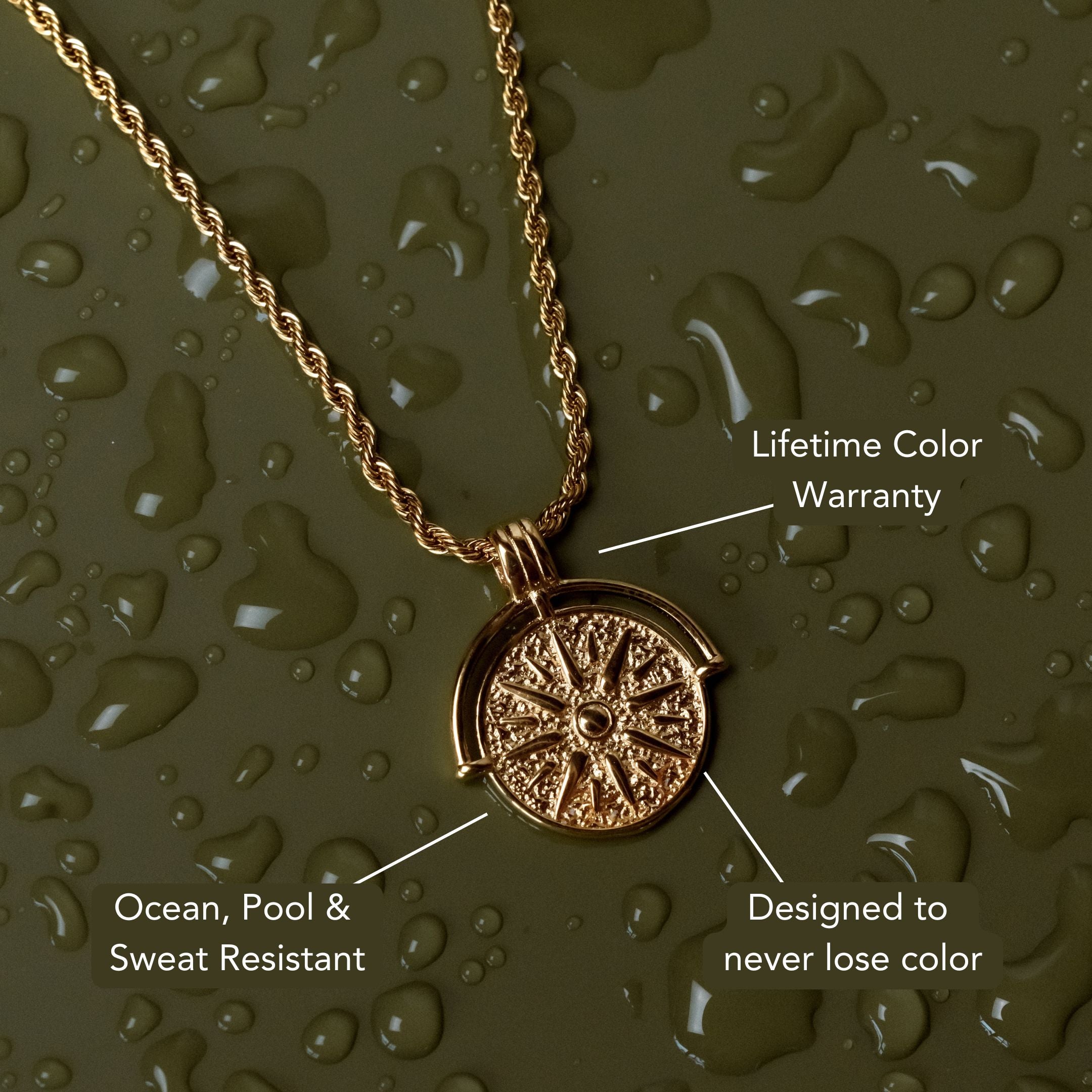
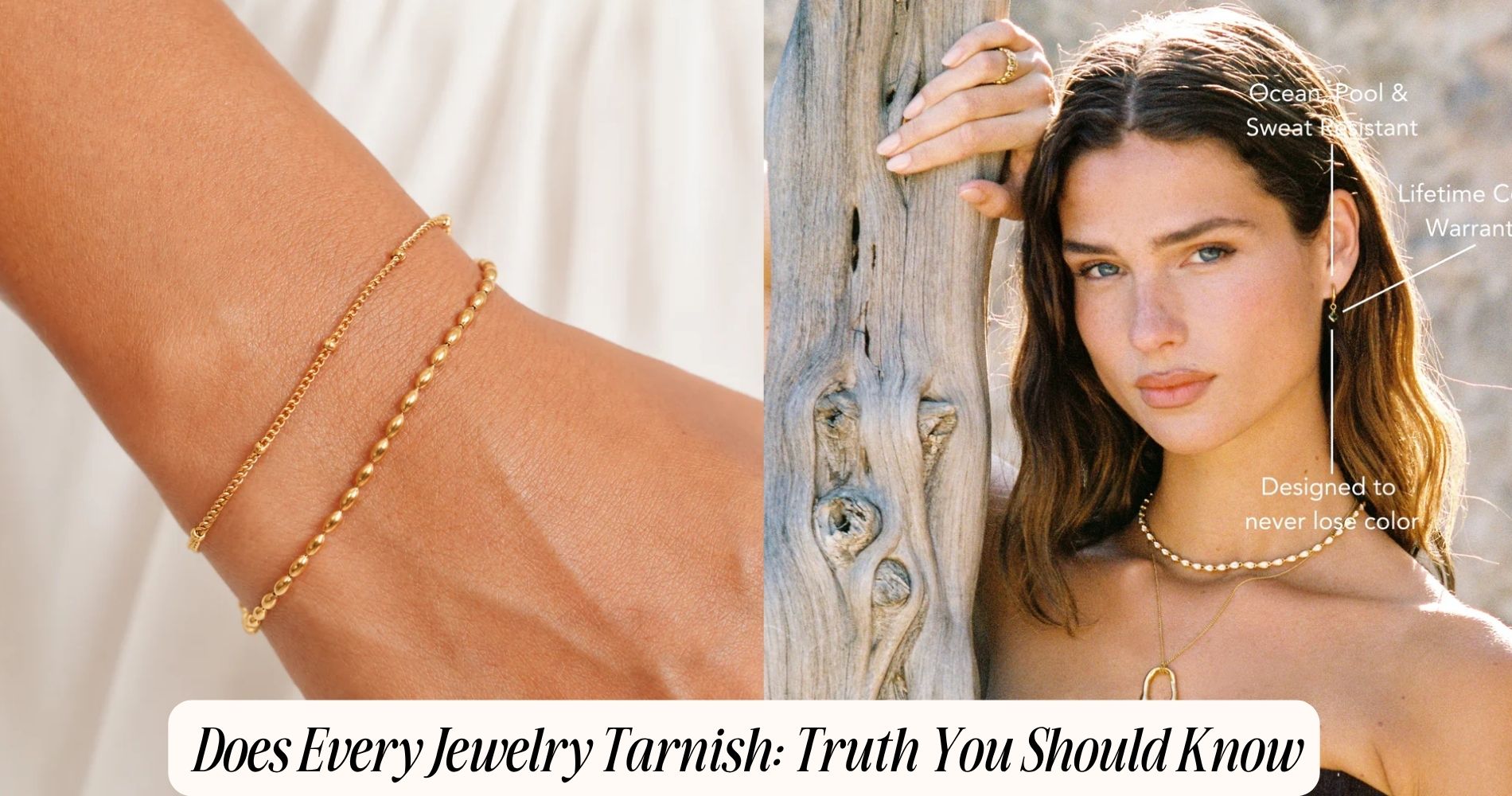
Assess the warranty terms. A brand offering a lifetime color warranty on gold-toned jewelry is making a claim that only makes financial sense if the material genuinely holds. ATOLEA backs its tarnish-free range with a lifetime color warranty on every piece, with replacement guaranteed if any piece loses its color regardless of how actively it is worn. That commitment is a reliable proxy for genuine material durability because no brand can sustain that warranty on standard plated pieces that fail within months.

Frequently Asked Questions
What type of gold jewelry doesn't tarnish with daily wear?
Solid gold at 14k and above and PVD gold-tone coating over 316L stainless steel are the two options that genuinely do not tarnish through daily wear including water, sweat, and product contact. Gold-filled and gold vermeil resist tarnishing better than standard plating but are not tarnish-free over the long term, particularly through regular water exposure.
Does 14k gold tarnish?
14k solid gold does not tarnish under normal daily wearing conditions. The gold content at 58.5% is high enough that the alloy retains gold's fundamental chemical stability. Minor surface dulling can occur from soap residue or mineral deposits from water, but this wipes off cleanly and is not tarnishing. True tarnishing, the discoloration from oxidation or sulfur reactions, does not occur on solid 14k gold.
Why does my gold jewelry tarnish if gold doesn't tarnish?
If a gold piece is tarnishing, it is almost certainly gold-plated rather than solid gold. The tarnishing comes from the base metal beneath the plating, typically copper or brass, which reacts with air, moisture, and skin contact once the thin plating layer wears through. Genuine solid gold at 14k and above does not tarnish. The piece should have a karat hallmark if it is solid gold. No hallmark typically means plated.
Is gold-filled jewelry worth buying over gold-plated?
For daily wear, yes. Gold-filled construction bonds a significantly thicker gold layer than electroplating, producing a piece that resists tarnishing for one to five years of daily wear rather than weeks to months. For pieces worn through regular water exposure including gym sessions and beach days, gold-filled still has a finite lifespan as the brass core eventually becomes relevant at wear points. For fully tarnish-free performance through water, PVD-coated stainless steel is the more practical long-term option.
What is the difference between gold vermeil and gold-plated?
Gold vermeil uses sterling silver as the base metal and requires a thicker gold layer (minimum 2.5 microns) than standard electroplating. Standard gold-plated jewelry uses brass or copper as the base and applies a thinner gold layer, often 0.5 microns or less. Vermeil is a quality step up: the silver base does not cause green skin discoloration the way brass does, and the thicker plating lasts longer. Neither is tarnish-free over the long term with daily active wear.
Conclusion
What type of gold jewelry doesn't tarnish has a specific answer: solid gold at 14k and above and PVD gold-tone coating over stainless steel are the two constructions that genuinely hold their gold appearance through daily wear, water, and skin contact without a tarnishing cycle. Gold-filled and gold vermeil are meaningful quality steps above standard plating but still have finite lifespans under active conditions. Standard gold-plated pieces tarnish fastest. The construction beneath the gold tone, not the appearance of the finish when new, is what determines how long it actually stays gold.









Leave a comment
This site is protected by hCaptcha and the hCaptcha Privacy Policy and Terms of Service apply.