

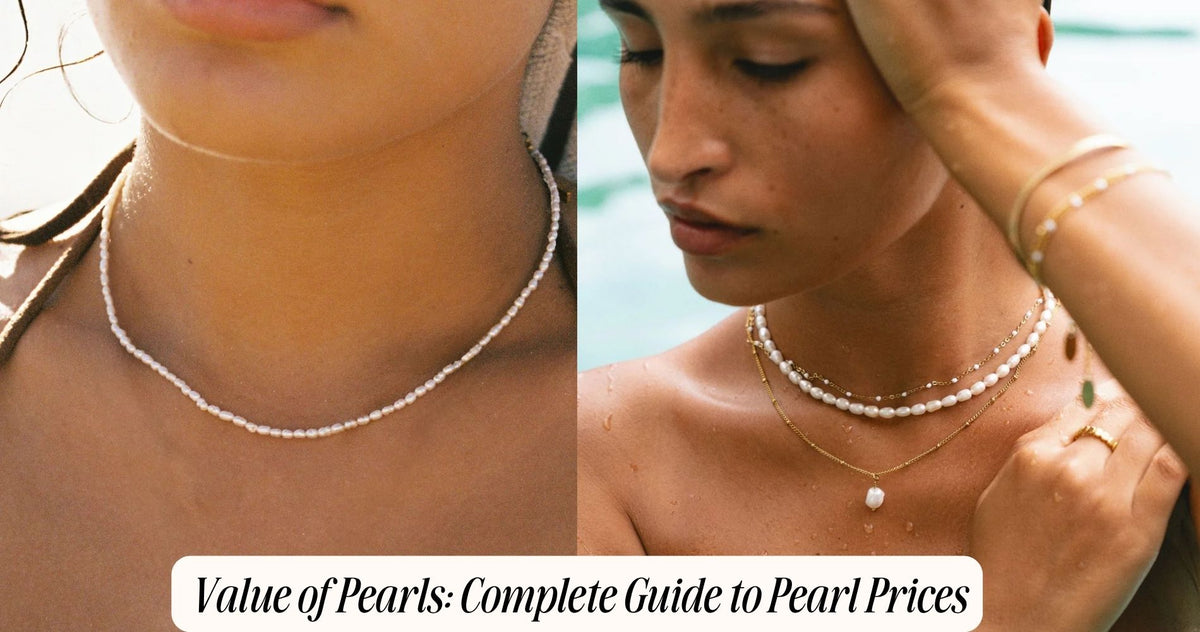
Value of Pearls: Complete Guide to Pearl Prices
Whether you inherited a strand from a grandmother, found pearls at an estate sale, or simply want to understand what your existing jewelry is worth, figuring out the value of pearls you already own is a different exercise than simply comparing shopping prices. Appraisal and resale value depend on a specific set of assessment factors, and understanding how professionals actually evaluate pearls can help you make sense of what you have and what to expect if you ever decide to sell or insure it.
In this guide, we will walk through how pearl value is actually assessed, what documentation matters, and how to approach getting a piece appraised. If you are looking to add genuine, well made pearls to your own collection going forward, our Freshwater Pearls Jewelry collection offers pieces worth considering.
Why Assessing Value Differs From Shopping for Pearls
Shopping for pearls involves comparing retail prices across new pieces from known sources. Assessing the value of pearls you already own is a fundamentally different process, since you are working backward from an unknown or uncertain piece, often without documentation, a receipt, or even certainty about whether the pearls are genuine at all. This process typically involves authentication, quality grading, and sometimes formal appraisal, each of which plays a distinct role in arriving at an accurate value.

Step One: Confirm the Pearls Are Genuine
Before any meaningful value can be assigned, it is essential to confirm that a piece actually contains real pearls rather than glass, plastic, or shell based imitations. A few preliminary checks can offer initial clues, though they are not a substitute for professional verification on anything potentially valuable.
Gently rubbing a pearl along the edge of your front teeth is a commonly used first test, since genuine pearls typically feel slightly gritty due to their natural layered structure, while imitations tend to feel smooth. Examining the drill holes closely, ideally with a magnifying glass, can also reveal whether the material visible at the hole's edge matches the surface material, since imitation pearls often reveal a different substance underneath their coating.
If these initial checks suggest the pearls may be genuine, or if you remain uncertain, professional verification is the appropriate next step before pursuing any formal valuation.
Step Two: Determine Natural Versus Cultured Origin
Once authenticity is established, the next major factor in value assessment is determining whether the pearls are natural, formed entirely without human intervention, or cultured, meaning a pearl farmer intentionally introduced an irritant to begin the pearl forming process. This distinction dramatically affects value, since natural pearls are exceptionally rare in the modern market and can be worth many times more than a visually similar cultured pearl.
Distinguishing between natural and cultured pearls typically requires specialized equipment, specifically X-ray examination performed by a gemological laboratory, since the internal structure differs between the two even when the outer appearance looks identical. This step generally cannot be done reliably at home, making it one of the primary reasons professional appraisal matters for potentially significant pieces.

Step Three: Identify the Pearl Type
For cultured pearls specifically, identifying which type you have, freshwater, Akoya, South Sea, or Tahitian, significantly narrows the expected value range. Each type carries different baseline pricing due to differences in rarity, size potential, and production method, so correctly identifying the type is a necessary step before any further quality based valuation can proceed.
A professional appraiser can typically identify pearl type through a combination of visual examination, considering factors like size, luster character, and color, along with knowledge of typical characteristics associated with each cultivation method and region.
Step Four: Evaluate the Standard Quality Factors
Once type and origin are established, value assessment moves into evaluating the same core quality factors used throughout the pearl industry.
Luster
Appraisers examine how sharply and brightly light reflects off the pearl's surface. High luster pearls display a crisp, almost mirror like glow, while lower luster pearls appear flatter or hazier. This factor alone can meaningfully shift value even among pearls of identical size and type.
Shape
Perfectly round pearls are assessed as the most valuable shape category, since true symmetry is rare in natural pearl formation. Appraisers note whether pearls are round, near round, oval, button shaped, or baroque, with each category carrying different value implications.
Surface Quality
Surface blemishes, including spots, bumps, and small cracks, are examined closely, since cleaner surfaces generally command higher value. Appraisers typically note both the number and severity of any surface characteristics observed.
Size
Measured in millimeters, pearl size is recorded precisely, since even small differences can meaningfully affect value, particularly as pearls approach the upper size range for their specific type.
Color and Overtone
Body color and any secondary overtone are documented, since certain colors carry premium value within specific pearl types, such as particular overtones within Tahitian pearls or especially white, rosé toned Akoya pearls.
Matching, for Strands
For a full strand rather than a single pearl, appraisers also assess how well matched the individual pearls are to one another across all the factors above. A strand with highly consistent luster, size, and color throughout is generally more valuable than one with noticeable variation from pearl to pearl.

Step Five: Consider the Setting and Additional Materials
For pearls set into finished jewelry rather than a loose strand, the metal and any accompanying gemstones also factor into overall value. A pearl pendant set in solid 18 karat gold with diamond accents carries additional material value beyond the pearl itself, while a pearl set in gold plated metal contributes comparatively little beyond the pearl's own worth.
When to Seek a Formal Appraisal
For pieces with significant potential value, particularly inherited jewelry, larger natural pearls, or substantial South Sea or Tahitian strands, a formal written appraisal from a certified gemologist is the most reliable way to establish documented value. This is particularly important for insurance purposes, estate planning, or if you are considering selling the piece, since a formal appraisal provides third party documentation that carries weight in ways an informal at home assessment cannot.
When seeking an appraisal, look for a gemologist certified through a recognized organization, and consider getting a second opinion for particularly high value pieces, since appraisal can involve some degree of professional judgment, especially around subjective factors like luster quality.
Understanding the Difference Between Appraisal and Resale Value
It is worth understanding that a formal appraisal value, often used for insurance purposes, typically reflects retail replacement cost, meaning what it would cost to purchase an equivalent piece new. Resale or auction value is frequently lower than this appraised figure, since buyers in a resale market generally expect to pay less than full retail price. If you are specifically considering selling a piece, consulting with a reputable jewelry buyer or auction house, in addition to any formal appraisal, will give you a more realistic sense of what the piece might actually sell for in the current market.
Documentation That Supports Value
Whenever possible, retaining original purchase receipts, prior appraisal documents, or any certificates from the original point of sale strengthens the overall record supporting a piece's value. For inherited pieces without this documentation, a current professional appraisal becomes even more important, since it establishes a documented baseline going forward, even without historical paperwork.

Final Thoughts
Understanding the value of pearls you already own requires moving through a specific sequence, confirming authenticity, determining natural versus cultured origin, identifying pearl type, and evaluating the standard quality factors of luster, shape, surface, size, and color. For anything beyond a casual curiosity, a formal appraisal from a certified gemologist remains the most reliable way to arrive at a documented, defensible value, particularly for insurance or resale purposes.
Whether you are assessing an heirloom piece or simply satisfying your own curiosity, understanding this process gives you a far more accurate picture than relying on appearance alone.
Frequently Asked Questions
-
Can I determine if my pearls are natural or cultured at home? No, this distinction generally requires X-ray examination performed by a gemological laboratory, since the internal structure differs even when the pearls look identical on the outside.
-
Does appraised value match what I could sell a pearl piece for? Not always, since appraisals typically reflect retail replacement cost, while resale value in the actual market is often lower.
-
What single factor affects pearl value the most? Luster is often considered one of the most significant factors, since it dramatically affects visual appeal even among pearls of similar size and type.
-
Is it worth getting an inherited pearl piece professionally appraised? Yes, particularly for insurance, estate planning, or resale purposes, since a formal appraisal provides documented value that informal assessment cannot offer.










Leave a comment
This site is protected by hCaptcha and the hCaptcha Privacy Policy and Terms of Service apply.