


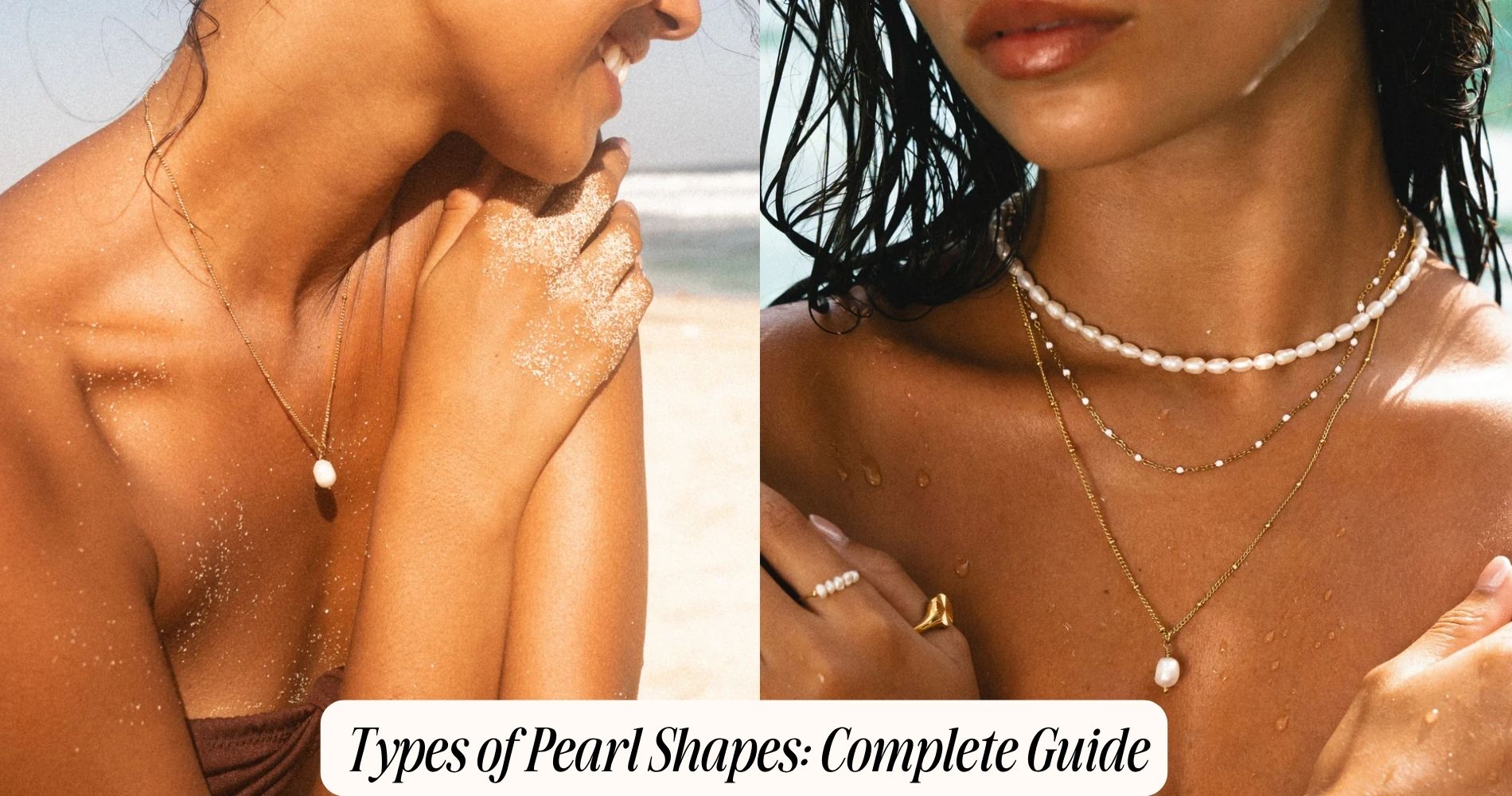
Types of Pearl Shapes: Complete Guide
Pearl shape is one of the most visible quality variables in pearl jewelry, and one of the least understood. Most buyers know that round pearls are considered the most desirable, but the range of shapes beyond round, and what drives that range, is worth understanding in detail. Knowing the types of pearls shapes, what causes each one, and how shape affects value and jewelry suitability gives you a much clearer basis for evaluating any pearl piece you encounter. Freshwater Pearls Jewelry demonstrates the full range of shapes freshwater production offers. This guide covers every major pearl shape category, the biological reasons behind each, their relative value, and which jewelry applications suit each shape best.
Why Pearl Shape Varies
Pearl shape is determined primarily by two factors: the shape of the nucleus or tissue implant that initiates nacre deposition, and the specific conditions inside the mollusk during the growth period.
For bead-nucleated saltwater pearls (Akoya, Tahitian, and South Sea), the round shell bead nucleus provides a template around which nacre is deposited. If the nacre deposition is even and the conditions inside the oyster are stable throughout the growth period, the resulting pearl is round or near-round. If the oyster experiences stress, disease, temperature fluctuation, or interference during growth, the nacre deposition becomes uneven, producing off-round and baroque shapes.

For tissue-nucleated freshwater pearls, no spherical template exists because the implant is a small piece of mantle tissue rather than a round bead. This means freshwater pearls historically produced a wider range of shapes than bead-nucleated saltwater pearls. Modern freshwater pearl farming techniques have significantly improved shape control, and current top-grade freshwater production includes high proportions of round and near-round pearls. The organic shapes that remain in freshwater production, particularly baroque and oval forms, are among the most visually distinctive pearl products available.
The shape of a pearl is not a defect unless it prevents the piece from serving its intended purpose. Many of the most prized and visually interesting pearl jewelry pieces use off-round and baroque shapes deliberately for their organic, distinctive character.
The GIA Pearl Shape Classifications
The Gemological Institute of America classifies pearl shapes into seven categories that cover the full range from perfectly spherical to freely irregular.
1. Round
Round is the rarest naturally occurring pearl shape and commands the highest prices within any pearl type. A truly round pearl appears spherical from every angle with no flattening, elongation, or irregular surface that would indicate departure from perfect spherical geometry.
To assess roundness, roll a pearl across a flat surface. A round pearl rolls in a straight line without wobbling. Any deviation indicates an off-round shape even when the pearl appears round to the eye.
Round pearls are most associated with Akoya pearl production, where the round bead nucleus provides a reliable spherical template and shorter growth periods limit the opportunity for shape distortion. Top-grade round freshwater pearls require careful selection from a much larger production pool and command prices approaching comparable Akoya rounds.
Best jewelry applications: Stud earrings, single pearl pendants, classic pearl strands where uniformity of roll and appearance is essential.
2. Near-Round
Near-round pearls are slightly oval, slightly flattened, or slightly off-spherical but appear round to casual observation. The deviation from perfect spherical geometry is visible when the pearl is examined closely or rolled across a surface, but is not apparent in a finished piece at conversational distance.
Near-round pearls make up the majority of production in the "round" category at most price points. Most pearl strands labeled as round pearl strands contain a mix of round and near-round pearls that present uniformly to the eye. Near-round pearls are significantly more available than truly round pearls and command lower but still substantial prices.
Best jewelry applications: Strands, earrings, pendants. The shape difference from round is rarely perceivable in finished pieces.
3. Oval
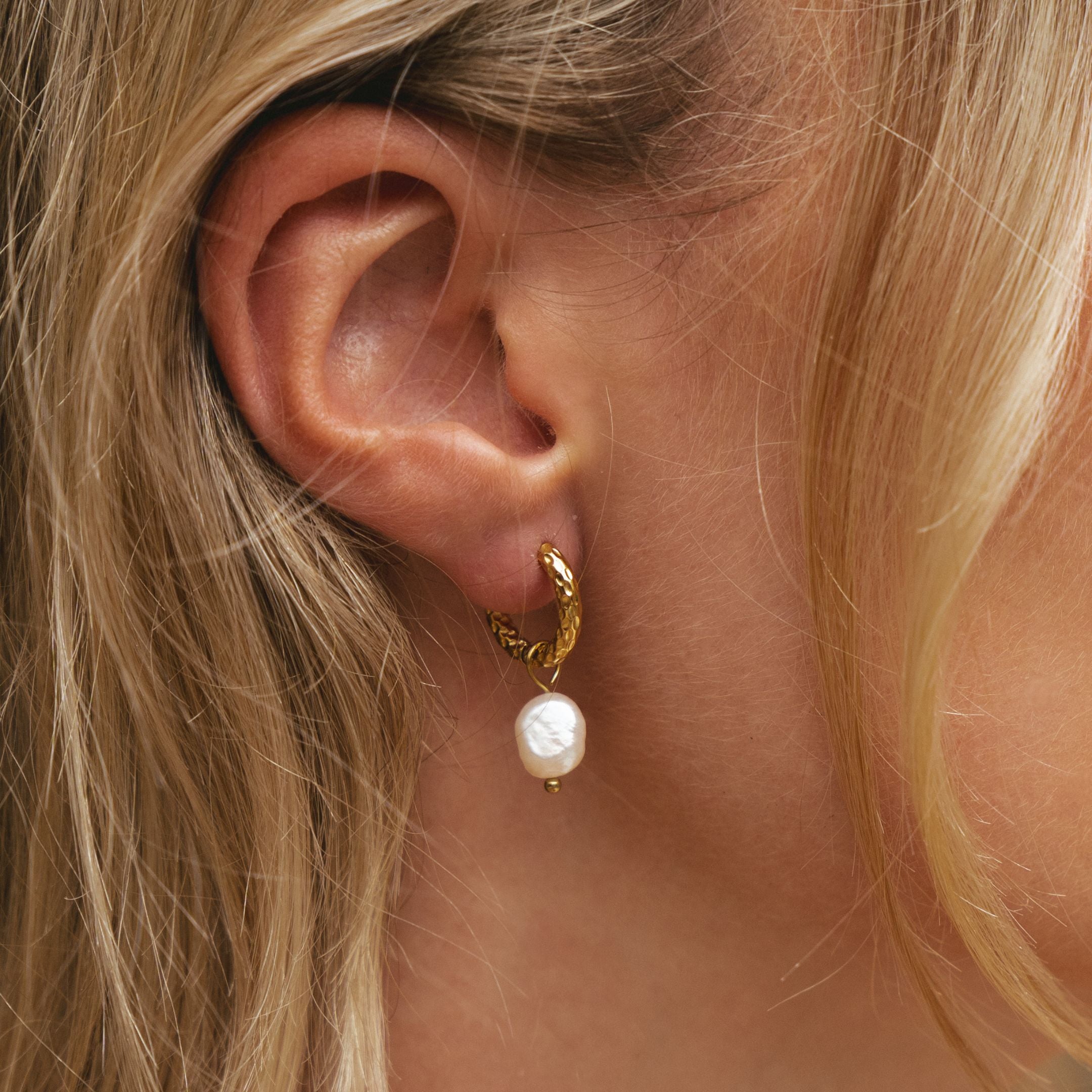
Oval pearls are elongated along one axis, producing an egg-like or elliptical shape that is clearly not round but is symmetrical. The elongation is consistent, distinguishing oval from off-round shapes where the departure from round is irregular.
Oval pearls are widely produced in freshwater pearl farming and are popular for their visual distinctiveness. An oval pearl in a pendant setting reads as elegant and deliberate rather than as a shape imperfection. Oval shapes can also make a pearl appear larger than it measures because the elongation creates more visual presence than a round pearl of the same mass.
Best jewelry applications: Pendant necklaces where the oval shape is showcased, drop earrings where vertical elongation is a styling advantage.
4. Button
Button pearls are flattened along one axis, producing a dome shape on one side and a flatter surface on the other. Viewed from the top they appear round or near-round. Viewed from the side they show a distinct flattening.
Button pearls are particularly practical for earring applications because the flat side sits against the earlobe naturally, providing a stable base for stud settings and keeping the dome face forward without requiring complex setting to orient the pearl correctly.
Best jewelry applications: Stud earrings where the flat back provides natural stability, pendant settings where the dome face is the visible surface.
5. Drop
Drop pearls have a pear or teardrop shape: round or domed at the top and tapering to a point or rounded tip at the bottom. They are either symmetrical (the taper is even from all angles) or semi-baroque (the taper has some irregularity).
Symmetrical drop pearls are among the most prized non-round shapes because the teardrop form is inherently elegant and translates naturally into pendant and drop earring designs. A well-matched pair of symmetrical drop pearls for earrings requires careful selection and commands prices approaching round pearls of comparable quality.
Best jewelry applications: Drop earrings, pendant necklaces where the teardrop shape hangs naturally, bridal jewelry where the drop shape adds formality.
6. Semi-Baroque
Semi-baroque pearls are asymmetrical but have at least one clearly defined axis of rotation. They include off-round pearls (pearls that are not quite round but have a generally spherical quality), oval pearls with some irregularity, and drop shapes with uneven tapers. The defining characteristic is that while the shape is not regular, it shows a clear dominant axis.
Semi-baroque shapes are common in freshwater pearl production and offer significant visual interest at price points below round and symmetrical shapes. The irregularity that defines semi-baroque is often visually appealing in casual jewelry settings where organic form is part of the aesthetic intention.
Best jewelry applications: Casual necklaces, layered jewelry where shape variety adds visual interest, baroque-style jewelry where the irregularity is a design element.
7. Baroque
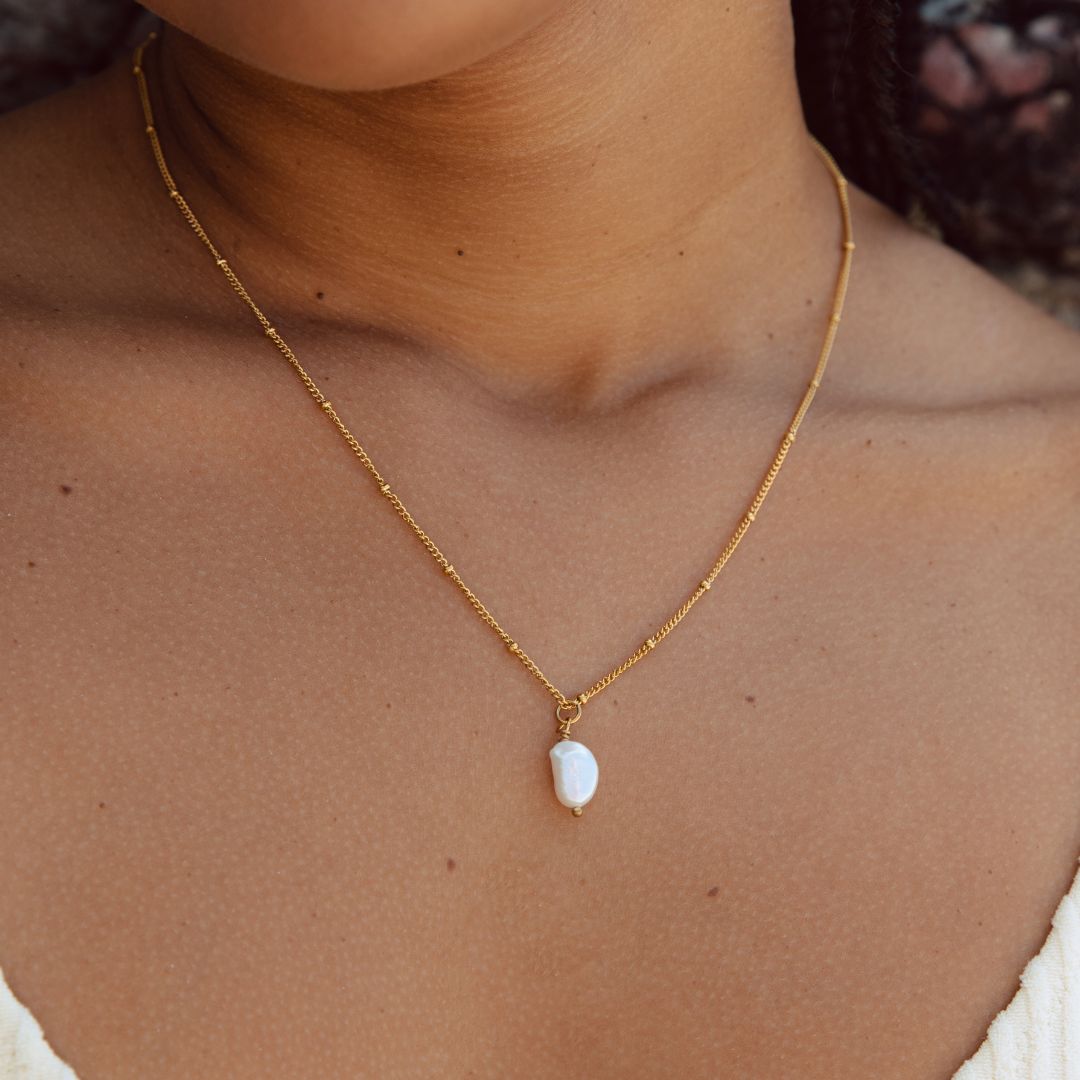
Baroque pearls are freely irregular with no defined axis of rotation or symmetrical quality. Each baroque pearl is unique: no two are the same shape, and the organic, sculptural forms they take are genuinely individual objects rather than variations on a standard shape.
The term baroque derives from the Portuguese barroco, historically used to describe irregular natural pearls. Baroque pearls were prized by Renaissance and Baroque-period European jewelers specifically for their distinctive shapes, which were incorporated into sculptural jewelry designs where the pearl's organic form was part of the artwork.
In contemporary jewelry, baroque freshwater pearls have experienced significant renewed interest because their organic forms suit the current direction of jewelry design toward natural, imperfect, and distinctive aesthetics. Large baroque freshwater pearls in vivid luster can be among the most visually striking pearl products at any price point.
Best jewelry applications: Statement necklaces, sculptural pendant designs, earrings where individuality is the design intention, contemporary jewelry where organic form is valued over uniformity.

Pearl Shape Value Hierarchy
| Shape | Relative Value | Availability | Best For |
|---|---|---|---|
| Round | Highest | Rare | Strands, studs, classic pieces |
| Near-round | High | Moderate | Strands, most standard settings |
| Symmetrical drop | High | Moderate | Drop earrings, pendants |
| Oval | Moderate | Good | Pendants, drop settings |
| Button | Moderate | Good | Stud earrings |
| Semi-baroque | Lower | High | Casual settings, layering |
| Baroque | Variable | High | Statement pieces, artistic designs |

Frequently Asked Questions
What are the most valuable pearl shapes?
Round and near-round pearls command the highest prices within any pearl type because of their rarity. Symmetrical drop pearls are also highly valued for their elegant teardrop form and the difficulty of finding matched pairs for earrings. Within freshwater production, round pearls require careful selection from a much larger pool than other shapes and command prices approaching comparable Akoya pearls.
Are baroque pearls less valuable than round pearls?
Baroque pearls are generally lower in price than round pearls of comparable luster and surface quality, but this does not make them lower quality in absolute terms. A baroque pearl with exceptional luster and clean surface is a more valuable and visually compelling object than a round pearl with poor luster. Shape is one of seven value factors, and luster consistently outweighs shape as a value driver when the difference in luster quality is significant.
Why are freshwater pearls often non-round?
Freshwater pearls are tissue-nucleated without a round bead nucleus, which means there is no spherical template guiding the nacre deposition from the beginning of growth. This produces a wider natural range of shapes than bead-nucleated saltwater pearls. Modern freshwater pearl farming techniques have significantly improved round shape yield, but the full range of shapes from round through baroque remains characteristic of freshwater production.
What is a baroque pearl?
A baroque pearl is a pearl with a freely irregular shape that has no defined axis of rotation or symmetrical quality. Each baroque pearl is unique. The term comes from the Portuguese barroco and has described irregular pearls since the Renaissance period, when baroque pearl forms were incorporated into sculptural jewelry designs. Baroque freshwater pearls have experienced significant renewed interest in contemporary jewelry for their organic, distinctive aesthetic.
Can you tell pearl shape affects quality?
Pearl shape is one of seven quality factors used by the GIA to assess pearl value, alongside luster, surface quality, size, color, nacre quality, and matching for strands. Shape affects value through its influence on price within a type, but it interacts with all other factors. High luster is consistently the most important value driver, and a baroque pearl with exceptional luster outvalues a round pearl with poor luster at most price points.
Understanding Pearl Shape Before You Buy
Types of pearls shapes range from the perfectly spherical round through near-round, oval, button, and drop to the freely irregular baroque, with each shape category reflecting different biological formation conditions and commanding different positions in the pearl value hierarchy. Shape interacts with luster, surface quality, and size rather than determining value in isolation. Knowing the full range of shapes and what suits different jewelry applications gives you a better basis for evaluating any pearl piece, whether you are drawn to the classic uniformity of a round pearl strand or the distinctive organic character of a large baroque freshwater pendant.









Leave a comment
This site is protected by hCaptcha and the hCaptcha Privacy Policy and Terms of Service apply.