


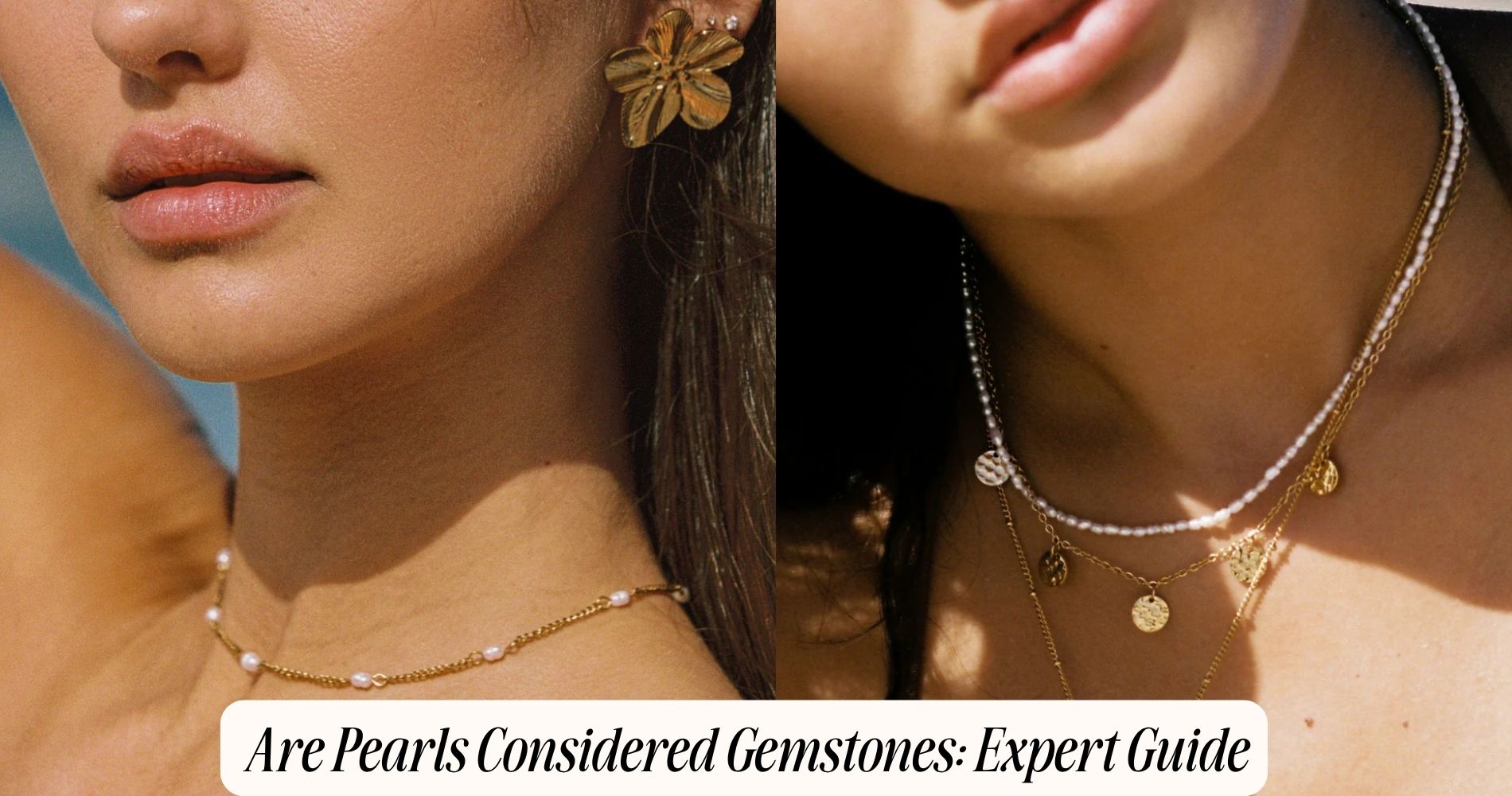
Are Pearls Considered Gemstones: Expert Guide
The answer to whether pearls are gemstones is yes, but with a distinction that sets them apart from every other gem in the category. Are pearls considered gemstones in the traditional mineralogical sense? No. Are they considered gemstones in the jewelry and gemology sense? Definitively yes. Understanding that distinction reveals something genuinely interesting about what makes pearls unique among precious materials and why they have been prized across every major civilization for thousands of years. Freshwater Pearls Jewelry draws on that long tradition. This guide covers how pearls are classified, what distinguishes them from mineral gemstones, how they are valued and graded, and what their organic origin means for how they behave compared to other gems.
What Makes Something a Gemstone
To answer whether pearls are gemstones accurately, it helps to start with what the word gemstone actually covers.
In the strict mineralogical definition, a gemstone is a mineral with specific crystal structure, chemical composition, and physical properties that make it suitable for use in jewelry or decoration. Diamonds, sapphires, rubies, and emeralds fit this definition: they are minerals formed through geological processes in the earth's crust, with defined crystal structures and measurable physical properties like refractive index, specific gravity, and hardness on the Mohs scale.

In the broader gemological and jewelry industry definition, a gemstone is any natural material of sufficient beauty, rarity, and durability to be used in jewelry. This broader definition includes both mineral stones and organic materials: substances produced by living organisms that meet the beauty and utility criteria. Amber, coral, jet, and pearls all fall into this organic gemstone category.
Pearls are therefore gemstones by the broader definition used throughout the jewelry industry, gemological institutions including the Gemological Institute of America, and historical tradition. They are not mineral gemstones in the strict geological sense, but they are among the most important and historically significant gemstones in the wider category.
This distinction matters practically because it affects how pearls are graded, how they behave during wear, and how they should be cared for. Organic gemstones have properties and vulnerabilities that mineral stones do not, and understanding those differences protects a pearl investment over time.
How Pearls Form: The Organic Origin
The organic origin of pearls is what places them in a separate category from mineral gemstones and is also what gives them their particular beauty.
Pearls form inside mollusks, primarily oysters and freshwater mussels, through a biological response to an irritant or implanted nucleus. The mollusk secretes nacre, a composite of aragonite (a crystalline form of calcium carbonate) and conchiolin (an organic protein), in concentric layers around the irritant. Over time those layers build up to form the pearl.
The process is essentially the same whether a pearl is natural (forming without human intervention around a naturally occurring irritant) or cultured (forming around a deliberately implanted tissue graft or shell bead nucleus). In both cases, the pearl material is genuine nacre produced by the mollusk's biology. The cultural practice changes how the pearl's formation is initiated, not what the pearl is made from.

Nacre's optical properties come from the layered structure of its aragonite crystals. Each crystal tablet is approximately 0.5 microns thick. Light entering the nacre reflects off each successive layer and interferes with the reflections from the layers below through thin-film interference, producing the characteristic shifting, luminous glow called luster that defines pearl quality. No mineral gemstone produces this optical effect through the same mechanism, which is why pearl luster is visually distinctive even when placed alongside diamonds, sapphires, and emeralds.
Are Pearls Considered Gemstones: What the Major Institutions Say
Major gemological institutions consistently classify pearls as gemstones, while acknowledging their organic origin as a distinguishing characteristic.
The Gemological Institute of America, the most widely recognized authority in gemology, includes pearls in its gemstone classification and offers dedicated pearl grading and identification services. The GIA grades pearls using the seven pearl value factors: size, shape, color, luster, surface quality, nacre quality, and matching (for strands). These factors parallel the four Cs used for diamond grading, adapted for the specific characteristics of organic gem material.
The International Colored Gemstone Association classifies pearls alongside sapphires, rubies, and emeralds as significant gemstones despite their organic origin. Pearls appear in the gemstone sections of every major jewelry and gemology reference text.
Historically, pearls were considered among the most precious gemstones available for most of human history, valued above diamonds in many cultures and periods. The modern diamond engagement ring tradition only became dominant in the twentieth century. Before that, pearl jewelry was among the most prestigious objects a person could own, and pearls appear in the royal jewel collections of virtually every major civilization from ancient Egypt and Rome through the Mughal Empire and European royalty.

How Pearls Differ From Mineral Gemstones
Understanding the differences between pearls and mineral gemstones helps explain both their unique appeal and their specific care requirements.
| Property | Pearls | Mineral Gemstones |
|---|---|---|
| Origin | Organic (mollusk secretion) | Geological (mineral formation) |
| Composition | Aragonite and conchiolin | Crystalline mineral compounds |
| Mohs hardness | 2.5 to 3 | 7 to 10 (sapphire, diamond, ruby) |
| Acid sensitivity | High (calcium carbonate dissolves in acid) | Low to none |
| Water sensitivity | Moderate (prolonged soaking weakens nacre) | Very low |
| Heat sensitivity | High (organic material degrades with heat) | Low (most mineral stones) |
| Luster mechanism | Thin-film interference in nacre layers | Refractive index of crystal |
| Rarity basis | Biological formation conditions | Geological formation conditions |
Hardness: At 2.5 to 3 on the Mohs scale, pearls are significantly softer than virtually all mineral gemstones used in jewelry. Diamond rates 10, sapphire and ruby 9, emerald 7.5 to 8. This softness means pearls scratch from contact with harder materials including other jewelry, metal clasps, and even fine dust particles (which typically contain quartz at Mohs 7). Separate storage in soft pouches is essential for pearl jewelry rather than optional.
Acid sensitivity: The aragonite in nacre is calcium carbonate, which reacts with acids. Perfume, hairspray, sweat, and many skincare products contain acidic compounds that etch the nacre surface and dull the luster over time. This is the primary reason pearl jewelry requires removal before applying products and before any acidic exposure that mineral stones typically tolerate without concern.
Organic degradation: As organic material, nacre can dry out, dehydrate, and lose its luster over time if stored in extremely dry conditions or exposed to sustained heat. A pearl necklace stored in a hot attic or left in a car during summer heat will show luster degradation that a sapphire in the same conditions would not. Moderate humidity and room temperature storage protect pearl integrity over decades.
Natural Versus Cultured Pearls: Both Are Gemstones
A common misconception is that only natural pearls are "real" gemstones while cultured pearls are imitations. This is incorrect.
Natural pearls form entirely without human intervention when a naturally occurring irritant (a parasite, a grain of sand, a shell fragment) enters a mollusk and the mollusk secretes nacre around it. Natural pearls are exceptionally rare in the current market: commercial saltwater oyster fisheries that produced natural pearl harvests historically have been almost entirely depleted. Natural pearls that do reach auction typically command very high prices and are purchased by collectors and museums rather than everyday jewelry buyers.
Cultured pearls are produced through human-initiated nacre deposition: a tissue graft or shell bead nucleus is implanted into the mollusk and the mollusk secretes genuine nacre around it over the growing period. The pearl that results is made of real nacre produced by the mollusk's own biology. It is not a synthetic or imitation product. The distinction between natural and cultured is about how the pearl's formation was initiated, not about the composition of the pearl material itself.
Every major gemological institution, including the GIA, classifies cultured pearls as genuine pearls, requiring disclosure of the cultured status but not treating cultivation as a disqualification from gemstone classification. Freshwater cultured pearls, Akoya cultured pearls, Tahitian cultured pearls, and South Sea cultured pearls are all genuine gemstones by any recognized standard.

Frequently Asked Questions
Are pearls real gemstones or just organic material?
Pearls are both: they are organic material and genuine gemstones. The gemstone category includes both mineral stones formed through geological processes and organic gems produced by living organisms. Pearls fall into the organic gemstone subcategory alongside amber, coral, and jet. Every major gemological institution including the GIA classifies pearls as gemstones and offers pearl grading services on the same basis as colored stone grading.
Are cultured pearls real gemstones?
Yes. Cultured pearls are genuine pearls made of real nacre secreted by the mollusk. The cultivation process changes how the pearl's formation is initiated by implanting a nucleus or tissue graft, but the nacre deposited around it is identical in composition and structure to the nacre in a natural pearl. Gemological institutions require disclosure of cultured status but classify cultured pearls as genuine gemstones rather than imitations.
How hard are pearls compared to other gemstones?
Pearls rate 2.5 to 3 on the Mohs hardness scale, making them significantly softer than most mineral gemstones used in jewelry. Diamond is 10, sapphire is 9, and even relatively soft gems like emerald rate 7.5 to 8. This softness means pearls require separate storage away from harder materials and more careful handling than mineral stones to prevent scratching.
Why were pearls so valuable historically?
Before pearl cultivation techniques were developed in the early twentieth century, all pearls were natural, formed without human intervention. Natural pearl harvests were unpredictable, limited in volume, and dependent on the chance formation of pearls inside wild mollusks. This rarity drove pearl prices to levels that exceeded diamond prices in many periods. Queen Elizabeth I of England famously had a collection of pearl jewelry that was among the most valuable in the world. The development of cultured pearl production made pearls more accessible but did not diminish the inherent beauty and gemstone status of the material.
Are pearls more valuable than diamonds?
In the current market, fine diamonds in top grades command higher per-carat prices than pearls. Historically this was not always the case: pearls were among the most expensive gem materials available for most of human history before cultivation made them more accessible. Fine South Sea and natural pearls in exceptional quality still sell at auction prices comparable to significant colored gemstones, though the comparison depends heavily on the specific quality grades being compared.
Conclusion
Are pearls considered gemstones is answered with a clear yes, qualified by their organic rather than mineral origin. Pearls are classified as organic gemstones by every major gemological institution, valued through a dedicated grading system that reflects their unique biological formation, and prized across every major culture in human history. Their distinction from mineral stones is not a diminishment but a difference: organic origin gives pearls the thin-film nacre luster that no mineral gemstone replicates, and that optical quality is precisely what has made pearls among the most continuously desired gemstones across thousands of years of jewelry tradition.











Leave a comment
This site is protected by hCaptcha and the hCaptcha Privacy Policy and Terms of Service apply.