

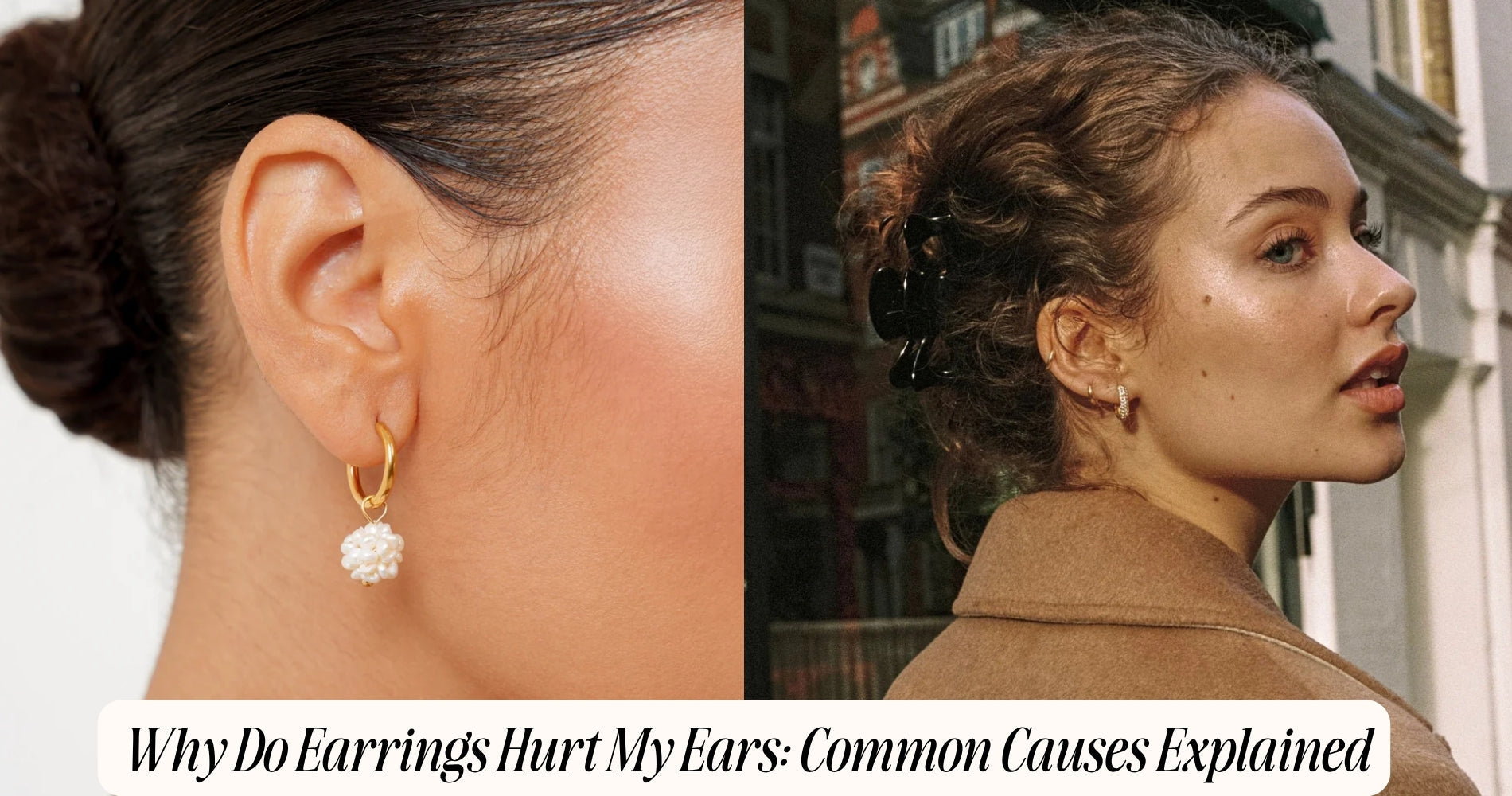
Why Do Earrings Hurt My Ears: Common Causes Explained
If a specific pair, or every pair, of earrings leaves your ears sore, red, itchy, or swollen, there is a specific and identifiable reason behind it. Why do earrings hurt my ears is a question with several distinct possible answers, and the right fix depends entirely on which one applies to your situation. Allergy-free Earrings address the most common cause directly, but metal reactivity is only one of several reasons earrings can cause discomfort. This guide covers every major cause of earring-related ear pain, how to identify which one you are experiencing, and the specific fix for each.
Cause 1: Nickel and Metal Sensitivity
The most common cause of earring discomfort by a significant margin is contact dermatitis triggered by nickel. Nickel is present in most fashion jewelry alloys, primarily brass and lower-quality steel, because it is inexpensive and easy to work with in manufacturing. When nickel-containing metal sits inside a piercing, nickel ions leach out through sweat and skin moisture, and in sensitive individuals this triggers an immune response that produces redness, itching, swelling, and sometimes weeping or crusting at the piercing site.
Nickel sensitivity is extremely common, affecting an estimated 10 to 20 percent of the population to some degree, which makes it the leading explanation whenever earrings cause a consistent, predictable reaction. It is also cumulative: repeated low-level exposure over months or years can trigger a sensitivity in someone who previously tolerated fashion jewelry without any issue at all. This is why earrings that seemed fine for years can suddenly start causing problems, without the material itself having changed.

How to identify this cause: the reaction typically appears within hours to a day or two of wearing the specific earrings, is localized directly to the piercing site, and improves once the earrings are removed. It tends to recur predictably with the same or similar low-quality metal pieces while sparing higher-quality metals.
The fix: switch to genuinely nickel-free materials, implant-grade titanium, solid 14K or higher yellow gold, niobium, or PVD-coated 316L stainless steel, where the coating creates a non-reactive surface even though the underlying steel contains trace nickel.
Cause 2: Weight and Pressure
Heavier earrings, particularly large hoops, chandelier styles, or dense statement pieces, place sustained downward pressure and mechanical stress on the earlobe over the course of wear. This is a purely physical cause of discomfort, unrelated to material reactivity, and it produces a different kind of pain: a dull ache or soreness concentrated at the piercing itself rather than the redness and itching characteristic of a metal reaction.
Over time, consistently heavy earrings can also stretch the piercing hole gradually, which changes how future earrings fit and can create a looser, less secure piercing than the wearer started with.
How to identify this cause: the discomfort develops gradually over the hours the earrings are worn, is felt as pressure or ache rather than itching or redness, and resolves relatively quickly once the earrings are removed, without the lingering irritation a metal reaction typically produces.
The fix: choose lighter earring constructions, hollow rather than solid metal forms where visual scale is still desired, smaller stone settings, and thinner wire gauges for hoops. For statement pieces worn only occasionally, limiting wear time to a few hours reduces cumulative pressure significantly.

Cause 3: Incorrect Post Gauge or Fit
A post that is too thick for your piercing forces the channel to stretch slightly with every insertion, creating friction and micro-trauma with repeated wear. A post that is too thin allows the earring to move around excessively within the piercing, which creates its own friction against the channel walls from a different direction.
Standard consumer earring posts are typically 20 gauge (0.8mm), while professional piercing studios often use 18 gauge (1.0mm) or, for cartilage, 16 gauge (1.2mm). Wearing earrings sized for a different gauge than your actual piercing is a genuinely common and often overlooked cause of ongoing discomfort.
How to identify this cause: discomfort centers on the sensation of the earring feeling either too tight or unusually loose and mobile within the piercing, rather than a rash-like reaction. It often applies consistently across different earring brands and materials, since the issue is dimensional rather than material-based.
The fix: confirm your actual piercing gauge, either by checking with the piercer who performed it or by measuring a well-fitting existing earring, and choose new pieces that match that gauge specifically rather than assuming standard sizing applies.

Cause 4: Closure Type and Construction
Certain earring back and closure designs create discomfort through their construction rather than through material or fit. Butterfly backs, the most common stud closure, protrude behind the lobe and can press uncomfortably against the head during sleep or when wearing certain hats or headphones. Screw backs that are overtightened compress the lobe tissue directly, creating pressure discomfort distinct from a metal reaction. Hoops with wire-through-catch closures can pinch the lobe if not seated correctly, creating a sharp, localized discomfort at the closure point specifically rather than throughout the piercing.
How to identify this cause: discomfort is localized to a specific point, often the back of the lobe or the exact closure location, rather than distributed across the piercing generally, and it often correlates with specific activities, lying down, wearing a hat, or putting on headphones.
The fix: switch to flat back labret studs, which eliminate the protruding butterfly mechanism entirely, or to hinged closures for hoops, which distribute pressure more evenly than wire-through-catch designs and avoid the pinching risk of an improperly seated wire.
Cause 5: Piercing Irritation From Buildup or Bacteria
Sebum, dead skin cells, and product residue that accumulate around a piercing without regular cleaning can cause irritation that mimics a metal reaction in its symptoms, redness, tenderness, and mild swelling, even when the earring material itself is not the underlying cause.
How to identify this cause: this type of discomfort tends to develop gradually over weeks of infrequent cleaning rather than appearing suddenly with a new pair of earrings, and it typically improves significantly with a thorough cleaning routine rather than requiring a change in earring material.
The fix: clean the earring post and the piercing area regularly, roughly once a week for continuously worn earrings, using mild soap and water for the earring and saline solution for the piercing skin itself.

Cause 6: Genuine Infection
True piercing infection is less common than the causes above but requires different handling. Infection typically presents with more pronounced symptoms than a simple metal reaction or buildup irritation: significant swelling, warmth at the site, persistent pain rather than mild discomfort, and discharge that is yellow or green rather than clear.
How to identify this cause: the combination of pain, warmth, swelling, and colored discharge together, rather than any single symptom in isolation, is the pattern that distinguishes infection from the other causes on this list.
The fix: this requires professional evaluation rather than a jewelry change. Consult a healthcare provider or a professional piercer if you suspect genuine infection, particularly if symptoms are worsening rather than improving.
Cause Comparison Table
| Cause | Key Symptom Pattern | Onset | Primary Fix |
|---|---|---|---|
| Nickel sensitivity | Redness, itching, localized to piercing | Hours to days | Switch to nickel-free material |
| Weight and pressure | Dull ache, resolves quickly on removal | Gradual during wear | Choose lighter constructions |
| Incorrect gauge | Feels too tight or too loose | Consistent across pieces | Match post gauge to piercing |
| Closure type | Localized to specific closure point | Correlates with activities | Switch closure style |
| Buildup or bacteria | Gradual redness and tenderness | Weeks of infrequent cleaning | Regular cleaning routine |
| Infection | Pain, warmth, swelling, discharge | Worsening over days | Professional evaluation |
Choosing Earrings That Prevent the Most Common Cause
Since nickel sensitivity is the single most common cause of earring discomfort, starting with a genuinely nickel-free material addresses the largest share of cases before any other factor becomes relevant. Implant-grade titanium and niobium are the most reliably safe options for the most reactive skin. PVD-coated stainless steel provides a nickel-free surface at more accessible everyday pricing, since the PVD coating creates a stable barrier between the underlying steel alloy and the piercing regardless of the trace nickel present in the base metal itself.
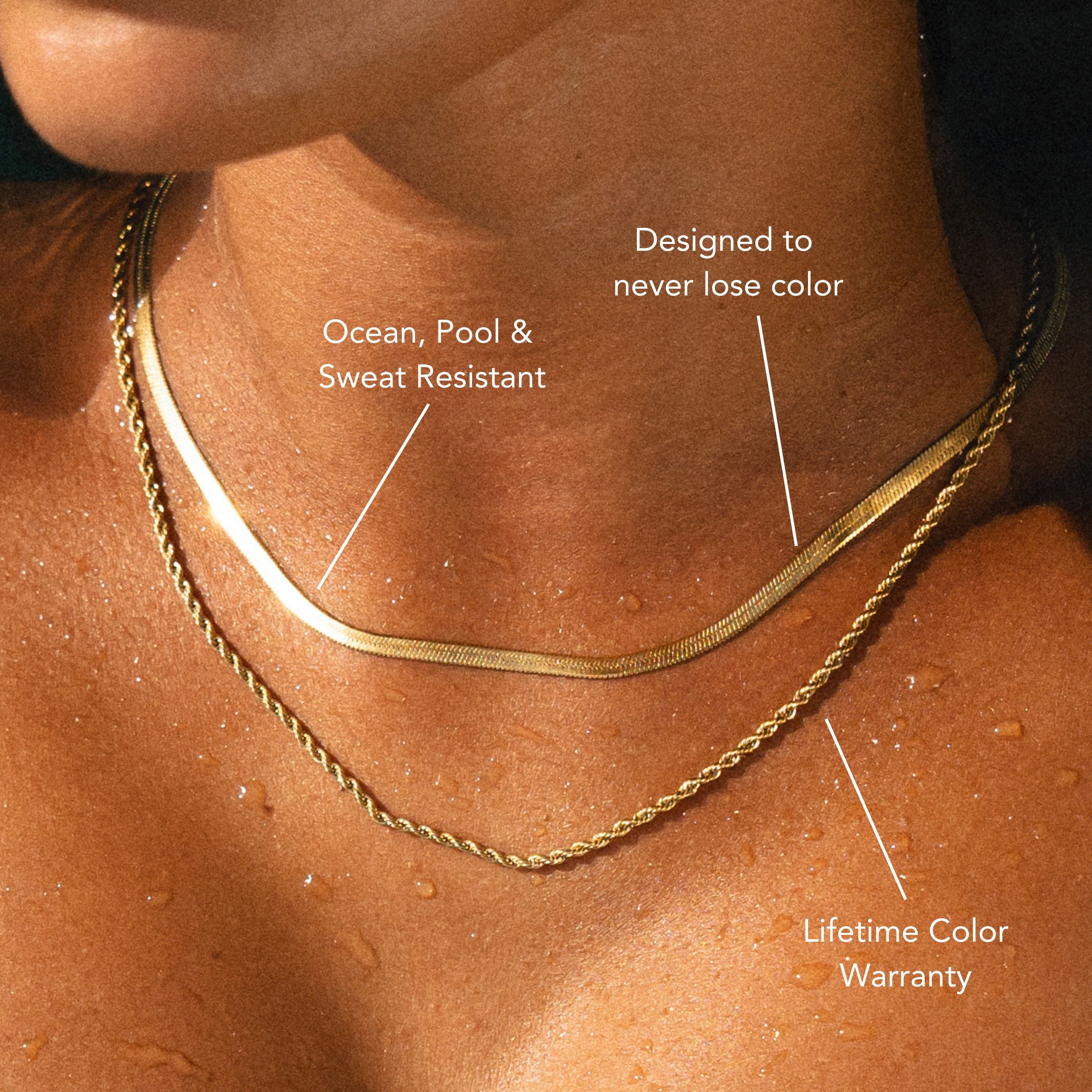
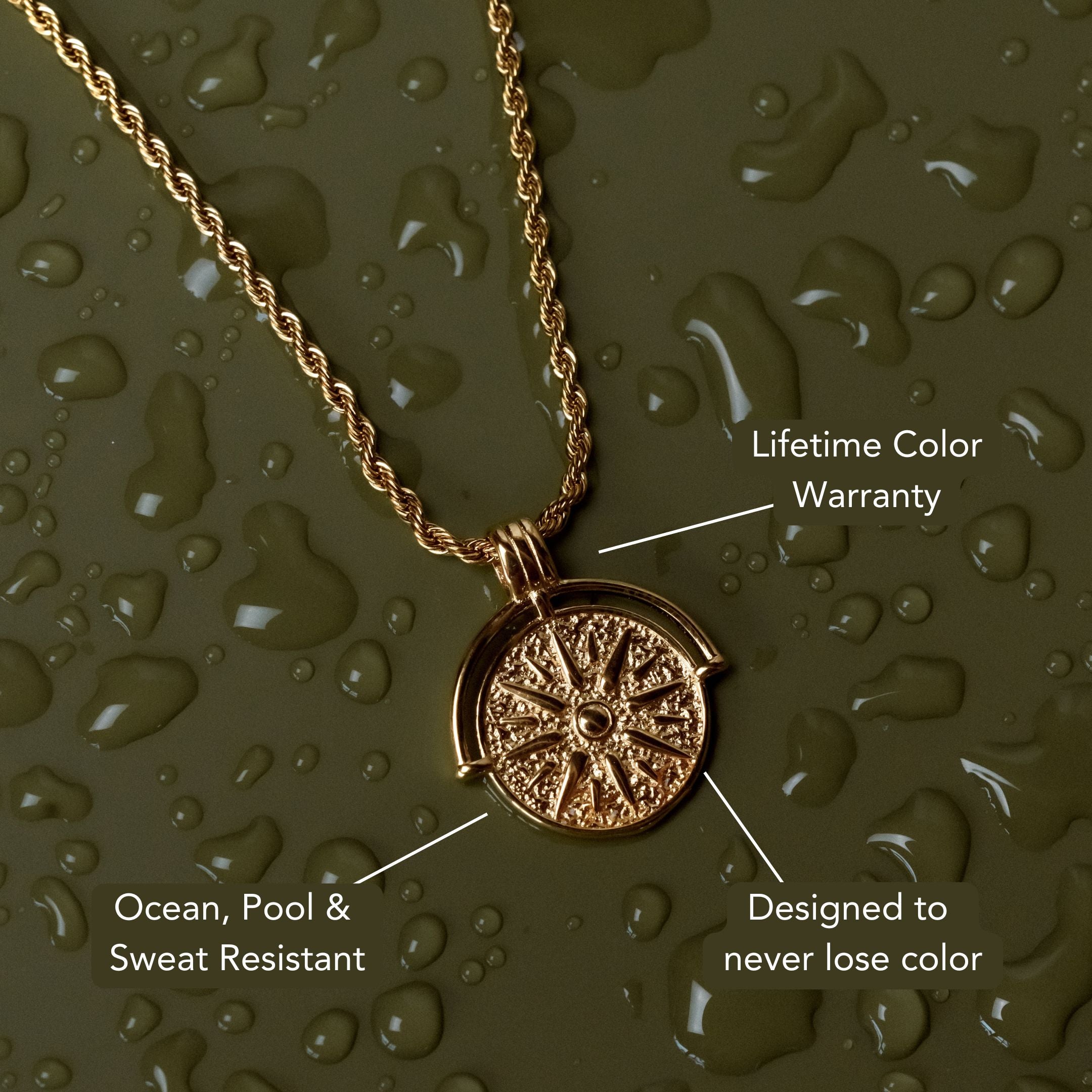
Beyond material, choosing flat back closures over butterfly backs addresses the second most common structural cause, and confirming post gauge before purchasing addresses the third. ATOLEA's allergy-free earring range is built specifically around this combination: PVD-coated 316L stainless steel construction with hypoallergenic, nickel-free surface contact throughout the post and back, paired with flat back and secure hinged closure options, addressing the two most common and most fixable causes of earring discomfort in a single piece.

Frequently Asked Questions
Why do my ears hurt every time I wear earrings?
Consistent discomfort with most or all earrings, regardless of style or brand, most commonly points to nickel sensitivity, since nickel is present in the majority of standard fashion jewelry alloys. If the discomfort is specifically an ache rather than redness or itching, incorrect post gauge or excessive earring weight are the next most likely explanations to investigate.
How do I know if my earrings are giving me an allergic reaction?
An allergic reaction to earring metal typically produces redness, itching, and sometimes mild swelling or crusting localized directly to the piercing site, appearing within hours to a couple of days of wearing the specific piece and improving once removed. This pattern, localized skin reaction correlating with a specific material, is the key distinguishing feature from other causes like weight or fit.
Can the wrong earring size cause pain?
Yes. A post gauge that is too thick for your piercing creates friction and micro-trauma with insertion. A post that is too thin allows excessive movement within the piercing, creating friction from the opposite direction. Both produce discomfort that feels distinctly different from a rash-like metal reaction, centered instead on a sensation of tightness or looseness.
Why do only certain earrings hurt, not all of them?
If discomfort is specific to certain pairs rather than universal, the most likely explanation is that those specific pieces contain a reactive metal like nickel while your other, comfortable earrings do not, or that the uncomfortable pieces are simply heavier or have a different post gauge or closure style than the ones that feel fine.
What earring material is least likely to hurt sensitive ears?
Implant-grade titanium and niobium are the most reliably nickel-free and biocompatible materials available, recommended specifically for the most reactive skin. PVD-coated stainless steel provides a nickel-free surface contact at more accessible pricing through its molecularly bonded coating, making it a practical option for moderately sensitive ears at everyday jewelry price points.
Getting to the Root of the Discomfort
Why do earrings hurt my ears has several distinct possible answers, and identifying which one applies to your specific situation is the key step before choosing a fix. Nickel sensitivity, the most common cause, calls for a genuinely nickel-free material. Weight and pressure call for lighter constructions. Incorrect gauge calls for confirming your actual piercing size. Closure type calls for switching to flat backs or hinged designs. Buildup calls for more regular cleaning. And genuine infection calls for professional evaluation rather than a material change. Matching the symptom pattern to the right cause is what actually resolves the discomfort rather than simply guessing at a new pair and hoping it helps.









コメントを書く
このサイトはhCaptchaによって保護されており、hCaptchaプライバシーポリシーおよび利用規約が適用されます。