



Types of Pearl: Ultimate Guide You Need to Know
Understanding the types of pearl becomes much easier once you know how Akoya, South Sea, Tahitian, and Freshwater pearls differ in nacre thickness, luster, body color, and overtone. Akoya pearls are known for their classic white glow, South Sea pearls stand out for their large size and luxurious appearance, Tahitian pearls feature naturally dark tones, and Freshwater pearls offer versatile shapes at a more accessible price—styles commonly seen in pieces like those from Atolea’s Freshwater Pearls Jewelry collection. Learning the differences among natural, cultured, and imitation pearls—along with luster and surface quality—helps you match the right types of pearl to your style, budget, and long-term durability needs.
Types of Pearls: Key Differences That Matter
Although all pearls share the same basic calcium carbonate structure, the type of pearl you choose—Akoya, South Sea, Tahitian, or freshwater—determines its luster quality, body color, overtone, size range, and value.
You’ll see Akoya pearls in smaller pearl size ranges, typically 6–8 mm, with tightly controlled pearl color grades, usually white with rose or silver overtones.
South Sea pearls, grown in Pinctada maxima, yield large diameters, often 10–15 mm, with white, silver, or golden body tones.
Tahitian pearls, from Pinctada margaritifera, exhibit naturally dark pearl color, spanning charcoal to peacock green.
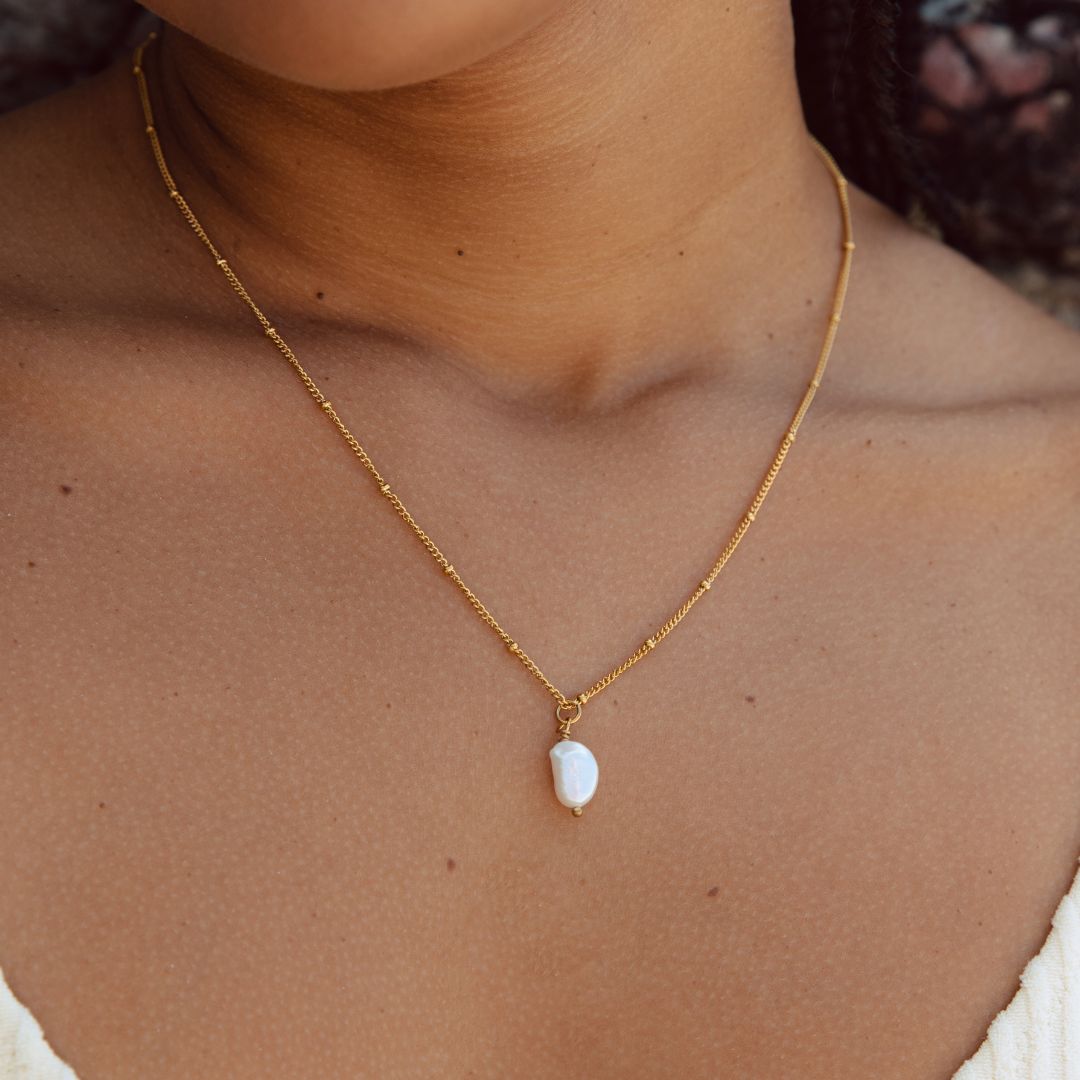
Freshwater pearls, nucleated in mussels, give you the broadest spectrum of pearl size and hue, from pastels to vivid naturals, at more accessible price points.

Essential Pearl Terminology (Luster, Nacre, Shape)
Understanding the major pearl types is only half the equation; you also need the core grading language that describes how each gem actually looks and performs.
When you evaluate luster significance, you’re judging how sharply objects reflect on the surface—top-grade pearls show mirror-like, high-contrast reflections, not dull glow.
Next, assess nacre quality: thicker, tightly layered aragonite plates create deeper orient, better durability, and more stable color; thin or uneven nacre reveals chalky spots and weak structure.
Finally, study shape variations. Perfectly round pearls remain the most valuable, but near-round, oval, drop, and baroque shapes each carry distinct design and pricing implications.
Mastering these three factors anchors your pearl grading decisions and prevents costly, appearance-based surprises.
Natural vs Cultured vs Fake Pearls
Three distinct categories define what people casually call “pearls”: natural, cultured, and imitation (fake). You’ll distinguish them by origin, internal structure, and surface behavior.
In natural pearl formation, the mollusk deposits concentric nacre layers around an accidental irritant, with no human intervention. In cultured pearl cultivation, technicians surgically implant a nucleus or tissue graft, but the mollusk still secretes nacre, creating a true pearl with controlled size and shape.
Imitation beads contain no nacre; manufacturers use glass, plastic, or shell cores coated with synthetic or fish‑scale essence. For reliable fake pearl identification, you’ll examine luster quality, drill‑hole structure, surface tactility, and magnified layering.
Pearl value factors—rarity, nacre thickness, luster intensity, surface cleanliness, and matching—strongly favor natural, then high‑grade cultured pearls.

Akoya Pearls: Classic White Saltwater Style
When you handle classic white saltwater pearls, you’re usually looking at Akoya—round, bead‑nucleated cultured pearls from the saltwater oyster Pinctada fucata.
Akoya origins trace mainly to Japan and China, where controlled grafting produces small‑diameter pearls with tight nacre layering and high luster. You’ll notice distinct Akoya characteristics: near‑perfect sphericity, sharp specular reflection, and subtle overtones (often rose, silver, or ivory) on a neutral white bodycolor.
In Akoya jewelry, you typically see calibrated strands (5–9 mm), matched for tone, luster, and surface grade, as well as stud earrings and uniform‑size bracelets.
For proper Akoya care, avoid ultrasonic cleaners, acids, high heat, and prolonged dehydration; wipe pearls with a soft cloth and store them separately in a breathable, fabric‑lined container.
South Sea Pearls: Large, Luxurious, and Rare
Akoya strands set the standard for classic white pearls, but South Sea pearls occupy the top tier in scale, rarity, and value. When you compare them, you’ll notice immediately that South Sea pearls are notably larger, often 9–16 mm, with exceptionally thick nacre layers that create a deep, satin luster rather than a sharp mirror gloss.
South Sea characteristics include a naturally low-contrast surface, subtle orient, and bodycolors ranging from silver-white to cream and rare warm gold.
These pearls originate from Pinctada maxima oysters, which require pristine, nutrient-rich waters and long cultivation cycles. South Sea origins center on Northern Australia, Indonesia, and the Philippines, where low-density seeding and strict environmental controls produce limited harvests and justify their premium price.
Tahitian Pearls: Natural Black and Bold Colors
Although jewelers often call them “black pearls,” Tahitian pearls actually display a spectrum of naturally dark bodycolors accented by vivid overtones. You’ll see hues ranging from charcoal, pistachio, and peacock green to aubergine, all produced by the Pinctada margaritifera oyster.
Understanding Tahitian pearl origins helps you evaluate quality: major farms in French Polynesia cultivate pearls with thick nacre, high luster, and relatively minimal surface blemishes.
You should assess bodycolor uniformity, overtone sharpness, and orient (subsurface iridescence) when selecting stones.
For Tahitian pearl care, avoid ultrasonic cleaners, harsh chemicals, and prolonged dry storage. Instead, wipe pearls with a soft, damp cloth after wear, store them in a breathable pouch, and restring strands periodically on silk with knots between each pearl.
Freshwater Pearls: Versatile and Budget‑Friendly
In contrast to the naturally dark Tahitian palette, freshwater pearls offer the widest range of shapes, sizes, and colors at the most accessible price point. You’ll see everything from near-round and oval to baroque and keshi forms, with overtones spanning rose, lavender, peach, and metallic.
Because most are tissue‑nucleated, many display thick nacre and subtly irregular surface features that add visual texture.
When you select freshwater pearl jewelry, you typically get higher nacre thickness relative to cost, making strands, studs, and station necklaces ideal for daily wear.
Prioritize proper freshwater pearl care: avoid acidic cleaners, ultrasonic machines, and prolonged water immersion. Instead, wipe pearls with a soft cloth after wear and store them separately to prevent abrasion and nacre loss.

Choosing the Right Pearl Type for You
Ultimately, you choose a pearl type by aligning its material properties with your aesthetic priorities, lifestyle, and budget. Start by evaluating nacre thickness, surface clarity, and overtone.
If you want high optical performance and durability, prioritize thick-nacred Akoya or South Sea pearls. For bold chroma and contemporary pearl trends, consider Tahitian pearls with peacock or aubergine overtones.
Match shape and size to usage: round, 7–8 mm Akoya for daily wear; large, baroque South Sea or freshwater for statement pieces.
If you prefer low‑maintenance pearl care, avoid extremely soft, heavily blemished nacre. Assess drill position, matching, and luster uniformity across a strand.
Finally, determine whether you’ll value rarity and long‑term heirloom potential over immediate affordability.
Frequently Asked Questions
How Should I Clean and Store Pearl Jewelry to Prevent Damage?
You clean pearls with a damp, soft cloth, avoiding detergents, acids, and ultrasonic cleaners. For pearl maintenance tips, store them separately in soft pouches—ideal pearl storage solutions prevent abrasion, dehydration, and nacre degradation from hard gemstones or dry air.
Can Pearls Be Worn Daily, Including in the Shower or Swimming Pool?
You can wear pearls for daily wear, but you shouldn’t expose them to water exposure like showers or pools. Chlorine, soaps, and heat degrade nacre, weaken silk thread, dull luster, and accelerate structural microcracking.
Do Pearls Increase in Value Over Time Like Other Gemstones?
They can, but you shouldn’t treat pearls like typical appreciating gemstones. Their investment potential depends on nacre thickness, luster, origin, and rarity, while market trends, fashion cycles, and condition (surface wear, re-stringing needs) heavily influence long‑term value.
How Do I Choose a Reputable Seller or Certification for Pearl Quality?
You vet sellers by demanding transparent sourcing pearls documentation, recognized certification standards (e.g., GIA or SSEF reports), precise nacre-thickness data, luster grading, surface-blemish mapping, and consistent size-matching; you avoid vague “AAA” claims without laboratory-backed measurement criteria.
Are There Ethical or Sustainable Concerns When Buying Modern Cultured Pearls?
Yes, you should consider hatchery impacts, ethical sourcing, and sustainable farming. You’ll evaluate water-quality management, stocking density, shellfish welfare, habitat restoration, chemical usage, labor standards, and traceability documentation from certified farms (RJC, Fairtrade Gold & Precious Metals equivalents).
Conclusion
Now that you understand nacre thickness, luster grades, overtones, and origin, you can match pearl types to your priorities. If you want mirror-like luster and classic symmetry, choose Akoya. Prefer impressive size and satin glow? Go with South Sea. For natural dark bodycolor and exotic overtones, select Tahitian. Need versatility and value? Opt for freshwater. Focus on nacre quality, surface grade, and shape to pick pearls that truly fit your style and budget.











コメントを書く
このサイトはhCaptchaによって保護されており、hCaptchaプライバシーポリシーおよび利用規約が適用されます。