

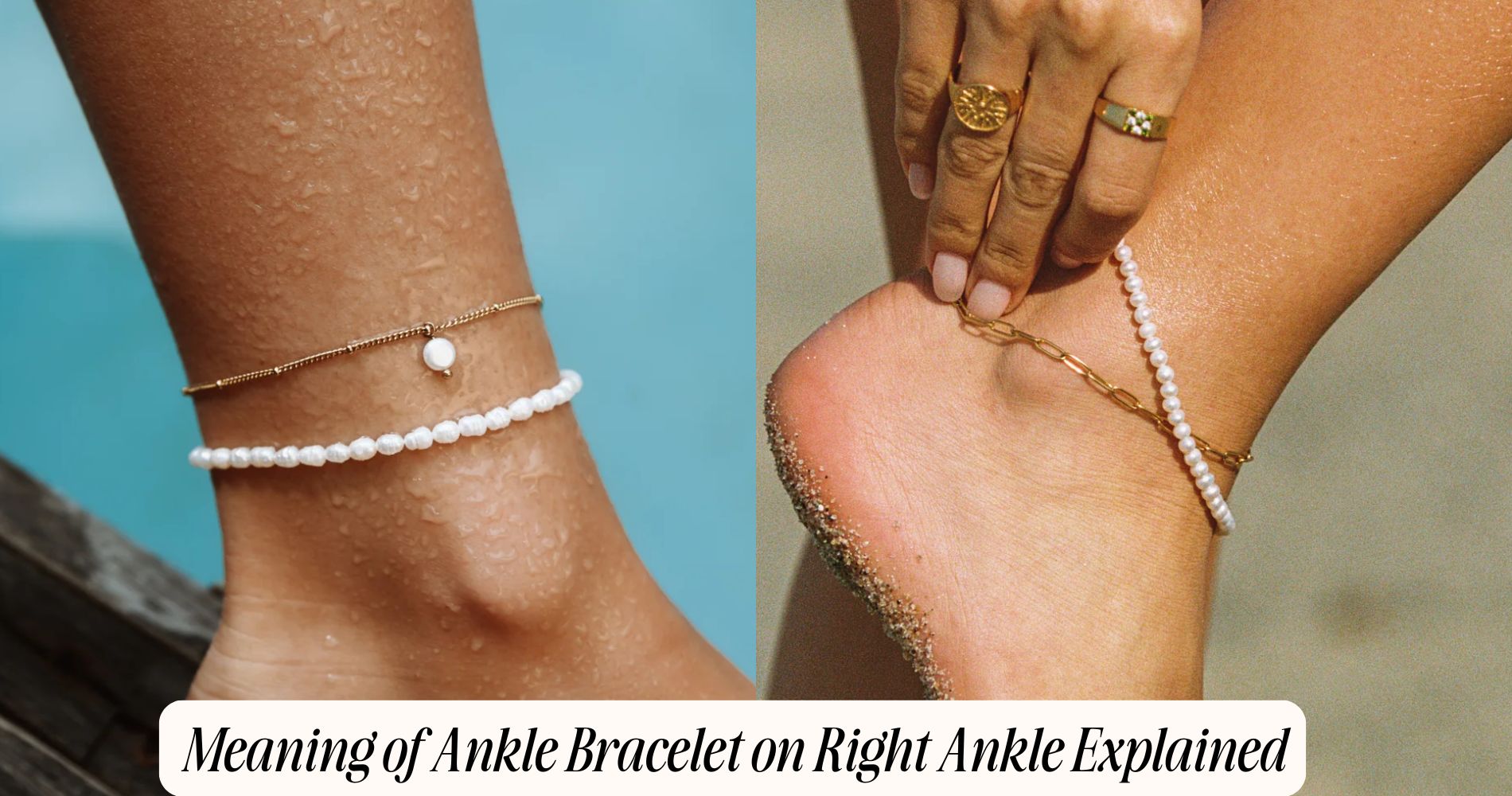
Meaning of Ankle Bracelet on Right Ankle Explained
The meaning of ankle bracelet on right ankle can shift widely depending on culture, location, and materials. In South Asia, it often represents sound, beauty, and family ties; in parts of West and East Africa, it may signal age or lineage. Around the Mediterranean, charm anklets are worn for protection against the evil eye, while in beach towns they’re sometimes read as a sign of flirtation or openness. Materials add another layer—gold suggests status, shells hint at travel, and bells emphasize presence. Choosing modern designs like Waterproof Anklets lets you carry this symbolism into everyday life, whether worn solo or styled with rings. Each detail adds nuance, and there’s more to explore ahead.
Cultural Roots and Global Variations
Though a small accessory, the ankle bracelet carries big cultural weight, and its meanings shift across place and time.
When you look at cultural symbolism across regions, you see patterns and contradictions. In South Asia, you might encounter anklets as everyday adornment that signals aesthetics, sound, and kin ties.
In parts of West and East Africa, metal or beadwork can index age, status, or lineage. In the Middle East, delicate chains may blend modesty with ornament, while in Southeast Asia, anklets can mark celebration or protection.
If you focus on the right ankle, interpretations vary with global diversity. In some urban Western scenes, it’s read as a style choice or flirtatious cue; in coastal Latin contexts, it can express conviviality or travel.
You navigate meanings locally.

Historical Significance of Anklets
Even before you read contemporary signals into an ankle bracelet, you’re stepping into a deep historical current that links ornament to social life.
You trace ancient origins from Mesopotamia and Egypt, where metal anklets marked status, devotion, or protection, to South Asia, where payals chimed through rites of passage.
You notice how cultural practices vary: in West Africa, beads indexed lineage and life stage; in the Mediterranean, amuletic charms warded the evil eye; in Southeast Asia, delicate chains mapped trade routes and craftsmanship.
You also see mobility encoded in form—heavy cuffs for durability in desert economies, silver for purity where gold was sacred, bells signaling presence in crowded courtyards.
Reading anklets this way, you situate personal adornment inside systems of kinship, economy, and belief, not merely style.
Fashion Versus Symbolism on the Right Side
While global fashion cycles make anklets feel like pure style, the meaning people read into which ankle you choose—especially the right—shifts with context. You navigate a spectrum where fashion statements and personal expression intersect with local norms.
In streetwear scenes, a right-ankle chain can signal trend fluency; in surf or festival cultures, it reads as carefree mobility. In South Asian and West African settings, you might see right-side wear align with handedness, practicality, or regional craft traditions rather than coded intent.
Compare urban Europe, where minimal metals frame the right ankle as a sleek accent, to Latin America, where colorful beading foregrounds travel memories.
You choose materials—silver, shells, cords—to match mood and terrain, letting aesthetics lead while acknowledging that observers may map their own narratives.

Relationship and Social Signals
Because anklets often sit at the edge of public view, people use them to send soft signals about availability, intimacy, or community ties, and those cues shift by place. You read them the way you’d read a greeting or a glance—context first, then pattern.
In beach towns, a right-ankle bracelet can hint at openness to meeting new people; in conservative settings, it may simply mark travel memories while staying discreet. You assess relationship dynamics by watching pairings: an anklet paired with a wedding band often says “taken but expressive,” while a solo anklet can suggest exploratory phases.
Across scenes—club culture, student circles, coastal markets—social cues vary. Friends note group belonging; partners notice commitment style. You calibrate meaning by locale, company, and how consistently it’s worn.
Materials, Charms, and Their Meanings
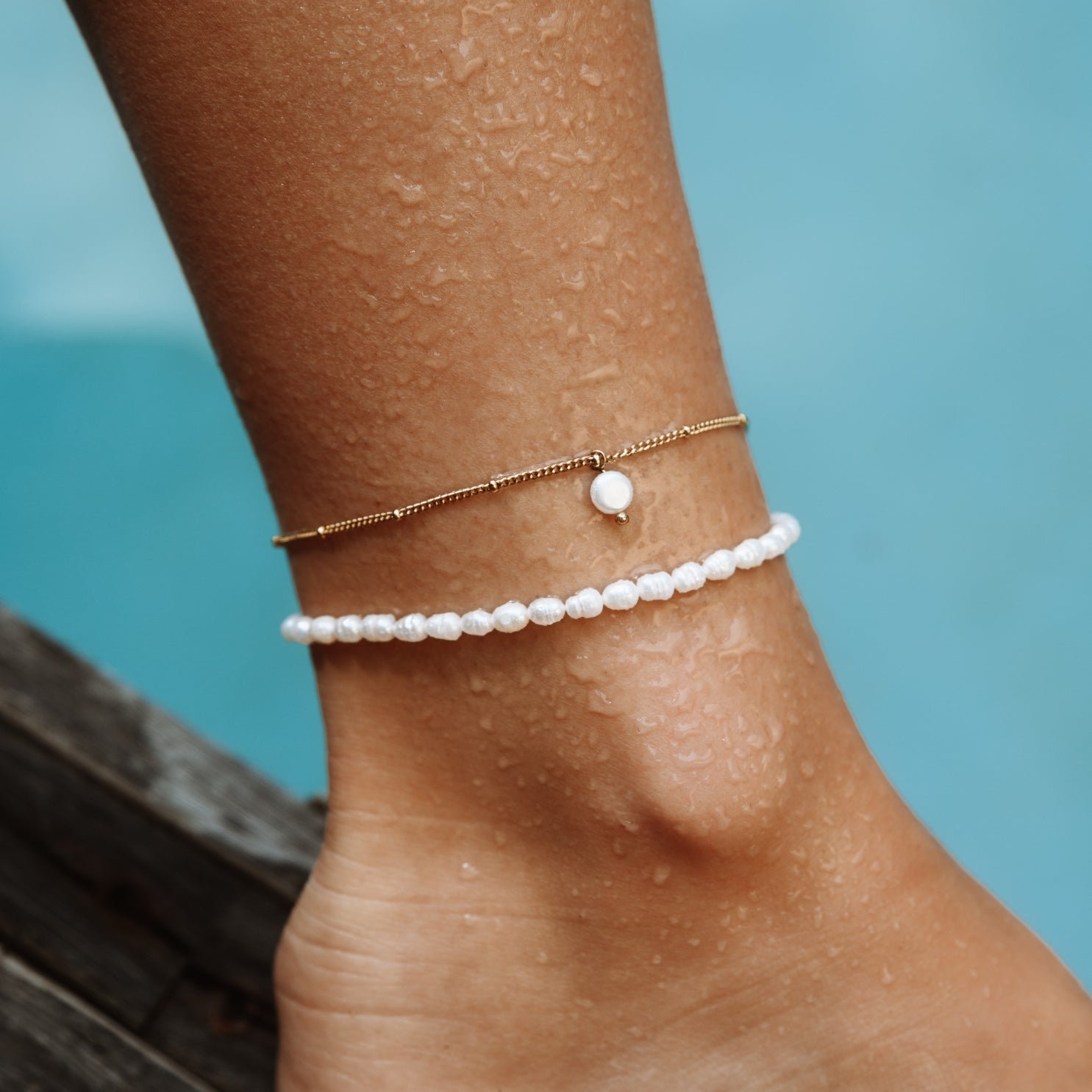
Across scenes and regions, you read anklet materials and charms the way you read dialects—each medium carries a social accent. When you make your materials selection, you’re choosing tone. Gold whispers durability and status; silver signals versatility and cool restraint.
Leather or cord suggests earthiness and mobility, while shells or wood lean into nature and travel. Beads let you code-shift through color.
Charm symbolism sharpens the message. A heart or lock nods to attachment; a key hints at autonomy. Ankhs, eyes, and moons speak to protection and cycles; anchors ground you, feathers lighten you.
Bells add audibility—inviting attention, playful or flirtatious. Initials personalize, coins evoke luck and commerce. You’re curating a portable glossary, where metal, texture, and icon together translate intent.
Regional and Community Traditions
Materials and charms only tell part of the story; meaning also shifts with place and people. When you trace anklets across regions, you see distinct cultural practices shaping how a right-ankle piece reads.
In South Asian weddings, silver anklets can mark marital ties, yet in coastal Southeast Asia, shells signal seafarer lineages and tidal blessings. In West African markets, you might notice bead colors functioning as regional symbols—blue for protection, gold for prosperity—translating local histories into portable codes.
Walk a Mediterranean promenade, and a delicate chain can suggest leisure or pilgrimage souvenirs, depending on the town.
In Latin American festivals, dancers’ anklets sync sound and movement, mapping neighborhood pride. Even within one city, diasporic communities maintain inherited motifs, while street vendors adapt designs to local rhythms.
Gender, Identity, and Modern Interpretations
Though anklets once tracked roles assigned by family or clan, you now read them as signals people curate for themselves—gendered for some, ungendered for others.
In street markets, clubs, and online feeds, the right-ankle choice often maps to how you negotiate gender expression: a slim chain whispering femme, a leather cord leaning masc, a bead mix refusing the binary. You compare scenes: in one city, queer communities reclaim right-ankle wear as playful defiance; elsewhere, it’s a quiet nod to fluidity.
You also navigate identity politics. Some friends treat the anklet as everyday sovereignty over your body; others critique imported symbols stripped of context.
You weigh tattoos, rings, and pronoun pins alongside anklets, reading how small ornaments assemble a public self without fixing you.
Etiquette, Occasions, and Styling Tips
When you move between beaches, offices, temples, and clubs, the anklet’s etiquette shifts with the room’s rhythms and the community’s norms.
In coastal towns, you can wear shell or cord styles; sand-friendly and carefree. In business settings, keep it minimal—thin chain, subtle charm, quiet movement.
In sacred spaces, many cultures expect no jewelry near altars; remove the anklet unless local custom invites it. At nightlife venues, bolder metals and layered textures fit the beat.
Use these etiquette tips: observe elders’ practice, note footwear rules, and consider sound—bells read festive in South Asia, distracting in meetings.
For styling occasions, match metal to hardware, scale to hemline, and anklet to shoe silhouette. Right ankle? Guarantee comfort, no snagging, and intentional, context-aware placement.
Common Myths and Misconceptions Debunked
Even as anklets circle countless ankles worldwide, a few stubborn myths still trail them—claims that left vs. right signals sexual availability, that only “bohemian” women wear them, or that they’re taboo outside beaches.
When you look ethnographically, those ideas collapse. In South Asia, you’ll see silver payals worn by married and unmarried women alike; in West Africa, bead anklets can mark age sets or simply style; in Mediterranean ports, gold chains read as maritime chic.
These aren’t universal codes but local cues often misread abroad.
If you’re hearing such mythical beliefs, check sources: many stem from colonial-era cultural misconceptions or niche subcultures generalized online.
Context matters—community, occasion, and material speak louder than side. Wear what fits your setting, not internet folklore.
Frequently Asked Questions
Can Wearing an Ankle Bracelet Affect Airport Security Scanners?
Yes, you can trigger airport security metal detectors. In some regions, you’ll breeze through with minimal notice; elsewhere, agents scrutinize adornments. Compared with necklaces, ankle bracelets sit lower, complicating wanding. You should remove metal pieces or declare them proactively.
Are Ankle Bracelets Allowed in Professional or Corporate Dress Codes?
Yes, but policies vary. You navigate expectations: conservative offices restrict visible fashion accessories; creative sectors tolerate them as subtle workplace attire. In multinational settings, norms shift—urban tech hubs embrace individuality, while traditional finance prioritizes neutrality. When unsure, opt minimalist, discreet metals.
Do Ankle Bracelets Interfere With Fitness Trackers or Ankle Monitors?
Yes, they can. You’ll find ankle bracelets sometimes disrupt fitness tracker compatibility and occasionally hinder ankle monitor functionality. In gyms and court-supervised settings alike, you’ll compare experiences: looser, non-metal bands coexist better; tight, metallic charms cause signal noise and skin-reading errors.
How Do You Measure Ankle Size for a Comfortable Bracelet Fit?
Wrap a flexible tape above your ankle bone, note the circumference, then add 0.25–0.5 inches for ankle sizing and a comfortable fit. In markets from Jaipur to Oaxaca, folks compare snugness culturally—dancers prefer slack, hikers tighter.
What Care Prevents Tarnish or Skin Irritation From Anklets?
You prevent tarnish through gentle cleaning, dry storage, and anti-tarnish strips; reduce skin irritation by choosing hypoallergenic metals. Across cultures, people rotate pieces, avoid sweat and seawater, compare plating thickness, and test patches—mirroring diaspora jewelry care rituals and beach-town habits.
Conclusion
As you trace the right-anklet’s path across cultures, you see more than ornament—you witness layered signals that shift with place, time, and community. You’re reading textures: courtship in one region, status in another, simple style elsewhere. You weigh materials, charms, and etiquette like dialects in a shared language. You compare gendered norms with today’s fluid identities and debunk myths that flatten nuance. In the end, you wear meaning deliberately—situated, respectful, and vividly your own.









コメントを書く
このサイトはhCaptchaによって保護されており、hCaptchaプライバシーポリシーおよび利用規約が適用されます。