


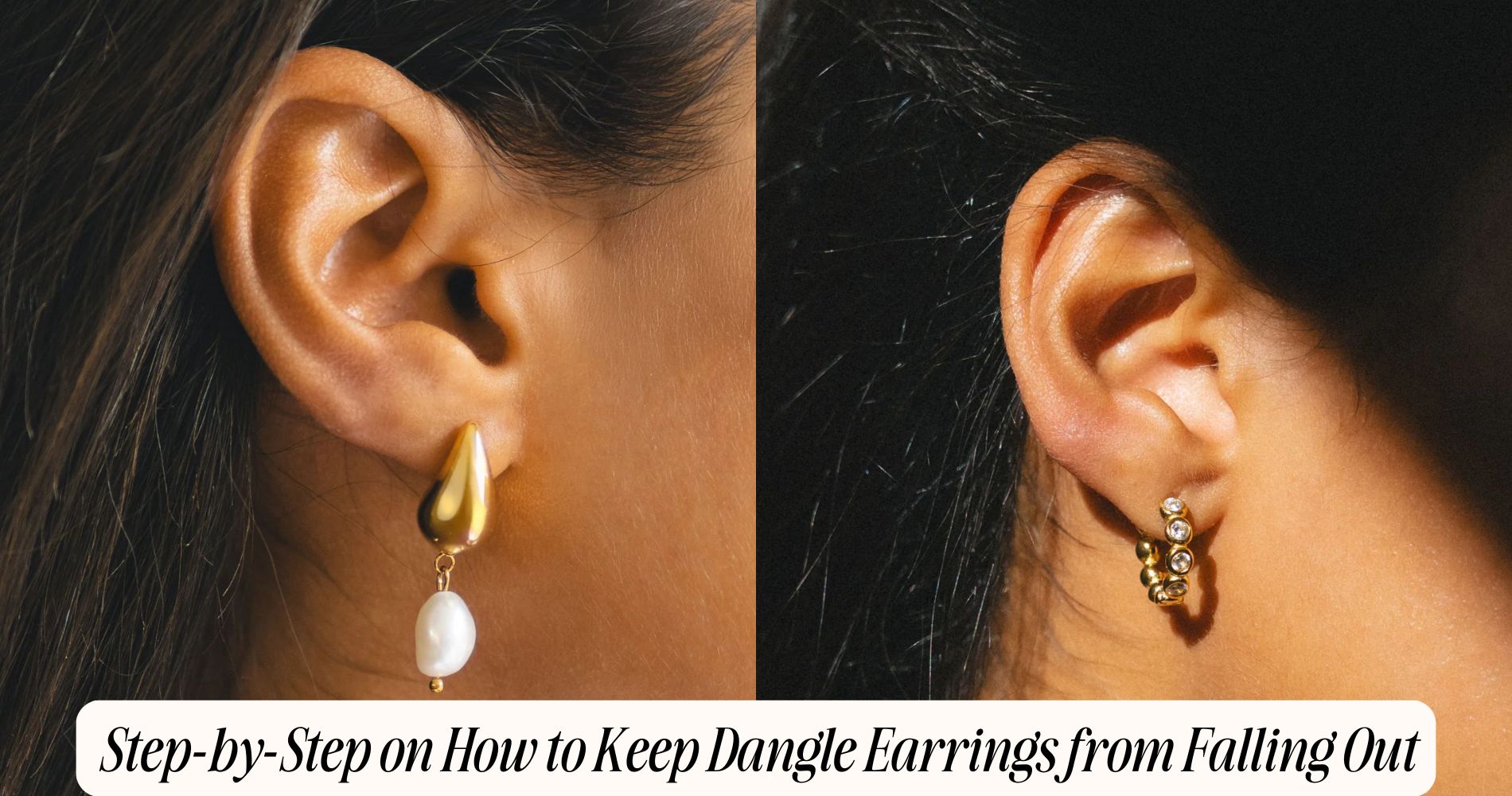
Step-by-Step on How to Keep Dangle Earrings from Falling Out
How to keep dangle earrings from falling out? First, make sure the hook or wire slides smoothly through your piercing and isn’t too thick for comfort. Gently close any gaps in fishhooks or kidney wires using smooth-jaw pliers. Add small rubber or silicone stoppers with narrow holes, pushing them snugly against the back of your lobe for extra security—especially helpful for everyday styles like Waterproof Earrings that are worn on the go. Lightly tug downward to test the hold, clean posts before each wear, and avoid rough handling. From here, you can explore more precise techniques and reliable backup options.
Assess Your Earring Type and Piercing Fit
Before you can secure dangle earrings properly, you need to evaluate both the hardware and how it interacts with your piercing. First, inspect the hook or wire gauge. It should match your piercing depth and channel width; too thin causes excessive movement, too thick stresses tissue. Confirm the post or wire slides through smoothly without forcing.
Next, analyze earring materials. Hypoallergenic metals (titanium, niobium, implant-grade steel) reduce swelling that can loosen the fit. Heavier designs demand a snugger, more perpendicular piercing angle to avoid torque.

Finally, check lobe thickness from front to back. If the visible gap between the earring’s front and back is large, the piercing depth may be insufficient for heavy dangles, increasing the risk of displacement during normal wear.
Choose the Right Earring Backs for Security
Once you understand how your piercing and earring wire fit together, you can choose backs that lock the hardware in place instead of relying on gravity and friction alone.
Focus on secure earring backs designed specifically for hooks and wires, not just studs.
First, identify compatible earring back types. For French hooks, use rubber or silicone stoppers that slide snugly onto the wire behind your lobe. For leverbacks, confirm the hinge closes fully and doesn’t gap. For kidney wires, verify the tail seats firmly into its catch.
Test each pair: insert the earring, attach the back, then gently pull and rotate the dangle. If the back shifts easily or deforms, discard it and select a tighter, higher‑quality option.
Tighten Loose Hooks and Wires Safely
Although backs add security, you still need the metal itself to fit correctly, so inspect each hook or wire and adjust it with care. First, verify the hook’s curve follows the natural line of your earlobe and sits close, not gaping.
For adjusting earring hooks, use smooth-jaw jewelry pliers to avoid marring the metal surface. Grip the hook near the bend, then close the curve slightly with small, controlled motions. Don’t kink the metal; gradual reshaping preserves alignment while maintaining wire strength.
If the hook deforms easily, the alloy may be too soft for reliable wear. For kidney wires or latch-back styles, gently tighten the closure gap so it clicks or rests firmly without pinching your skin.

Use Rubber or Silicone Stoppers for Extra Hold
For a low-profile way to secure dangle earrings, slide small rubber or silicone stoppers onto the back of each hook or wire after you insert it through your ear.
Choose rubber stoppers or silicone stoppers with a narrow center hole so they create friction against the metal. Inspect the hole: it should grip firmly without tearing when stretched over the hook.
Pinch the hook with one hand and push the stopper up until it rests snugly against your earlobe’s back, leaving no visible gap.
Don’t over-compress; too much pressure can irritate the piercing. Test security by gently tugging the earring downward a few millimeters. If it moves freely, switch to tighter rubber stoppers or shorter silicone stoppers for a more secure fit.
Add Clear Spacers to Support Stretched Piercings
Stoppers improve grip on the hook, but clear spacers support the piercing itself, which matters if your holes have thinned or stretched.
To reinforce stretched piercings, choose medical‑grade silicone clear spacers sized just large enough to fill the slack opening without causing pressure. Clean your lobes and earrings with saline or mild soap, then dry thoroughly.
Insert the clear spacer through the piercing first, centering it in the hole. Next, pass the dangle earring hook through the lumen of the spacer, ensuring it slides smoothly without snagging.
The spacer redistributes weight along the piercing channel, reducing downward pull and distortion. Check in a mirror: the lobe should sit more level, with the slit appearing rounder and the earring hanging closer to the entry point.
Secure Heavy Dangles With Locking Backs
When your dangle earrings are noticeably heavy, upgrade from standard rubber stoppers to locking backs that clamp securely onto the hook or post. Choose designs with internal locking mechanisms, such as screw-on, La Pousette, or guardian backs, rated to support higher earring weight.
Verify compatibility: the post should be straight, not threaded, unless you’re using screw-backs.
Slide the locking back onto the post until you hear or feel a click, then lightly tug the earring to confirm it’s engaged. Adjust tension—on some models you can compress or expand the internal spring to fine-tune grip.
Always balance both ears: match back type and tightness to distribute earring weight evenly and reduce torque on the piercing hole.

Reinforce Earrings With Household Items in a Pinch
In a pinch, you can stabilize loose dangle earrings with simple household materials that add friction, increase backing surface area, or temporarily block the hole.
Cut a tiny square of moleskin, felt, or bandage pad and place it behind the lobe; then push the post through and secure the back. This distributes weight and reduces wobble.
Create makeshift stoppers by trimming a small piece of pencil eraser or silicone earplug, then pushing it onto the post behind your regular backing for extra grip.
If you use household adhesives, apply only the thinnest film of clear, non‑super glue to the backing, let it become tacky, then attach.
Never glue skin, and clean both post and backing with alcohol afterward.
Check for Snags and Adjust Earring Length
Beyond quick reinforcements, you also need to control how your earrings interact with hair, clothing, and accessories.
Start by performing a snag inspection: move your head side to side and gently run your fingers along the earring path, checking contact points with collars, scarves, knitwear, and headset bands. Note any catching or resistance; that’s where loss risk increases.
For snag prevention, prioritize length adjustment. If the drop extends below your jawline or into high-friction areas (like turtlenecks or high collars), shorten it.
Use adjustable chains, removable links, or alternate hooks to raise the lowest point of the dangle. Re-test movement after each change.
Finally, secure loose hair away from earring hinges or joints so components swing freely without hooking.
Practice Putting Earrings On the Right Way
Proper insertion technique stabilizes dangle earrings as much as any backing or accessory.
Start by inspecting the post or hook for bends; correct them so they’re straight and smooth. During earring application, support your earlobe with one hand to prevent stretching, then guide the post through the piercing at a 90‑degree angle, not upward or downward, to maintain channel alignment.
Focus on proper positioning of the earring’s center of gravity. Once it’s through, seat the decorative portion so it lies flat against or just below the lobe instead of pulling forward.
For hooks, verify the curve passes fully through and rests closed against the skin. Finally, lightly tug downward and side‑to‑side to confirm secure, snag‑free placement before leaving.

Create a Pre‑Wear and Post‑Wear Care Routine
Two short routines—one before you put dangles on and one when you take them off—dramatically cut the risk of earrings loosening, warping, or slipping out.
Build a precise pre wear checklist: inspect hooks, jump rings, and clasps for gaps; confirm backs fit snugly; run a fingertip along each connection to feel for rough edges or looseness; then clean posts with alcohol and dry fully so skin oils don’t lubricate the holes.
For post wear maintenance, remove earrings over a soft surface, then wipe metal and stones with a lint‑free cloth.
Check for new bending, micro‑gaps, or weakened solder points. Store pairs in separate compartments or small pouches so hooks don’t tangle, torque, or deform between wears.
Frequently Asked Questions
Can Certain Metals or Materials Make Dangle Earrings Fall Out More Easily?
Yes, certain metal types and low material durability can increase slippage and deformation, making dangle earrings fall out more easily. You should prioritize surgical steel, titanium, or 14k gold and avoid soft alloys or poorly tensioned hooks.
How Do I Keep Dangle Earrings Secure During Intense Exercise or Sports?
You secure dangle earrings by choosing latch-back or lever-back earring styles, adding silicone stoppers, and taping posts with medical tape; then integrate sweatbands or sports headbands as exercise accessories to reduce snagging, impact, and accidental dislodgement.
Are There Professional Services That Can Modify Earrings for Better Security?
Yes, you can use professional services for earring modification. Jewelers can solder closed hoops, add locking backs, install safety chains, or rebalance weight distribution. You should request hypoallergenic components and verify all modifications maintain structural integrity and hallmark visibility.
How Often Should I Replace Worn-Out Earring Backs and Stoppers?
You should replace worn-out earring backs every 6–12 months, or immediately if they feel loose. For precise earring maintenance tips, inspect tension weekly; adjust your replacement frequency based on metal fatigue, deformation, or slipping under gentle tug.
Can I Safely Sleep With Dangle Earrings Without Increasing Loss or Injury Risk?
You shouldn’t sleep in dangle earrings; they increase snagging, tearing, and loss risk. For sleeping safety and earring comfort, remove them nightly, or switch to small, smooth studs with secure backs and regularly inspect posts and closures.
Conclusion
Now you’ve got a systematic process to keep dangle earrings from slipping out. You assess fit, choose secure backs, tighten hardware, and reinforce with stoppers, spacers, or quick household fixes. You also control risks by checking for snags, adjusting length, and putting earrings on correctly. Finish by following your pre‑wear and post‑wear routines consistently so the holes stay healthy, the metal stays intact, and your earrings stay exactly where you want them.











コメントを書く
このサイトはhCaptchaによって保護されており、hCaptchaプライバシーポリシーおよび利用規約が適用されます。