



How Do You Tell If Your Gold Is Real?
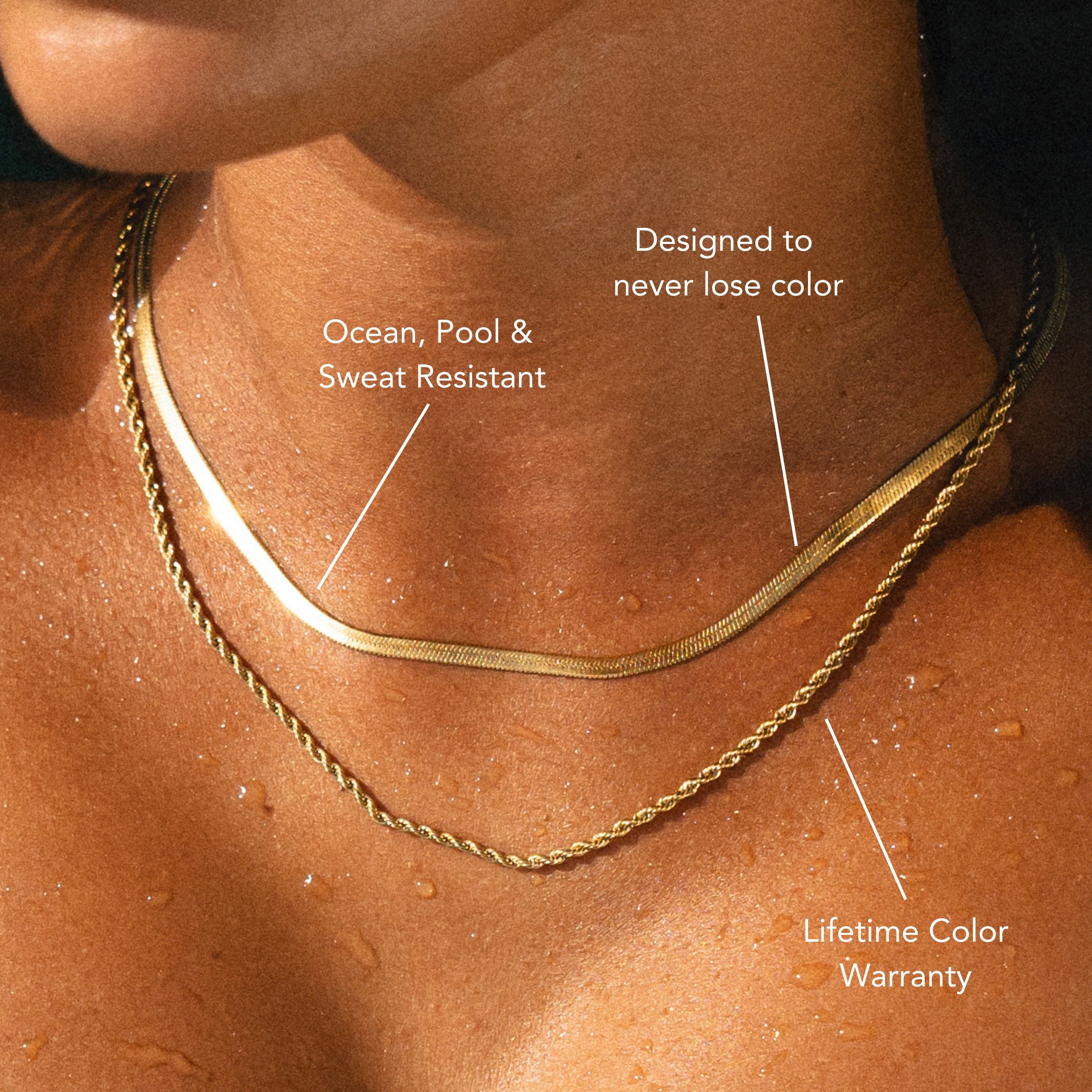
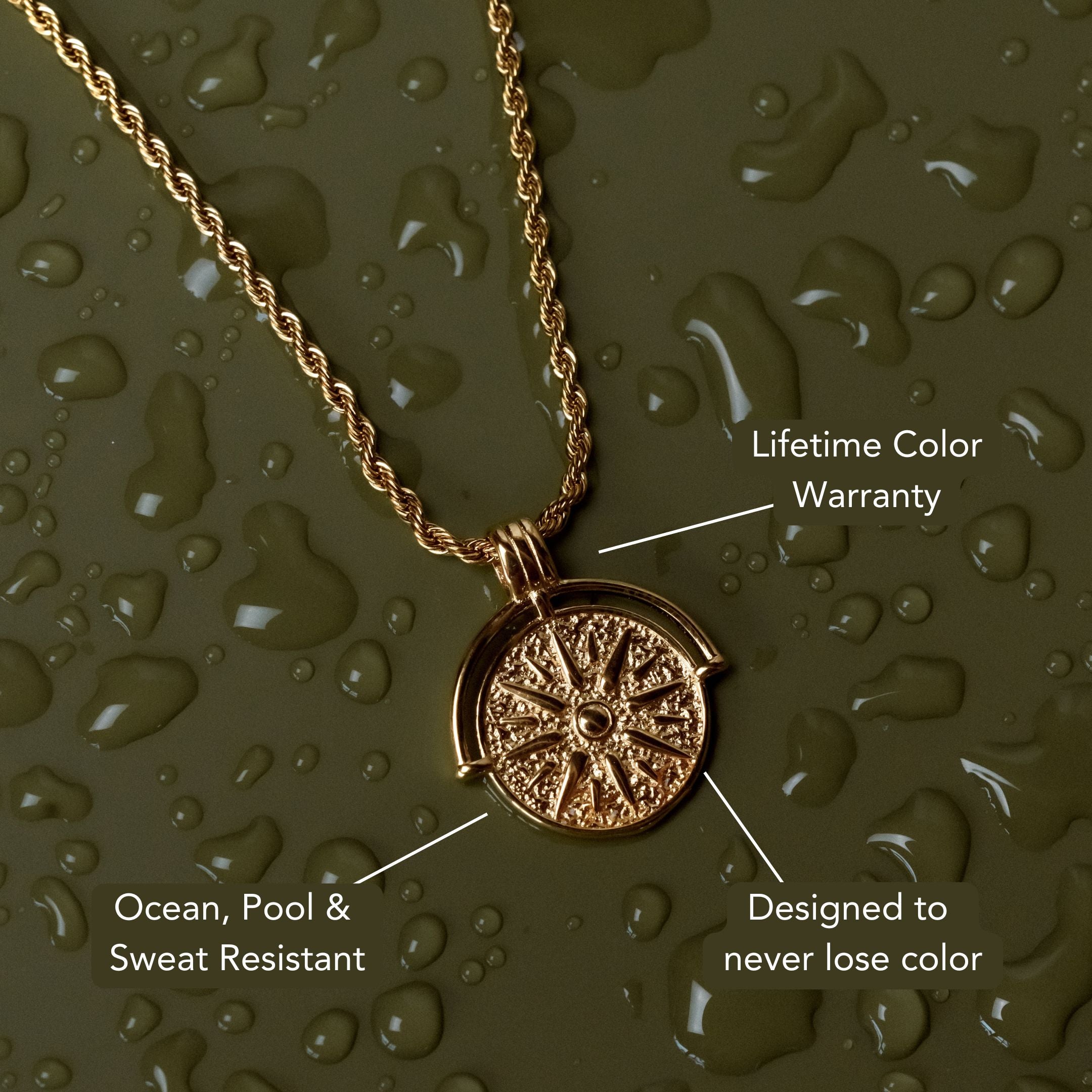
How do you tell if your gold is real? Start by examining it under neutral light—authentic gold shows a warm, saturated tone with a dense, mirror-like luster. Check edges and clasps for signs of base-metal wear, and verify hallmarks such as 18K or 750 while avoiding plating marks like GP, GEP, or HGE. Test with a strong magnet; real gold won’t be attracted. For deeper checks, use a touchstone and acid kit—a stable streak under the stated karat acid confirms authenticity. Vinegar should not discolor high-karat gold, and weight-to-size measurements should match expected density. Investing in well-crafted pieces like Minimalist Gold Necklaces helps reduce uncertainty, but for high-value items, XRF analysis or fire assay offers definitive confirmation.
Visual Clues: Color, Luster, and Wear Patterns
Color tells the first story. Evaluate hue under neutral lighting and compare known references. Genuine gold shows warm, saturated tones with minimal color variations across facets; inconsistent patches suggest plating or alloy mismatch.
Assess luster differences: solid gold produces a dense, mirror-like reflection with soft diffusion, while brass or gold-tone alloys skew brighter, glassy, or harsh. Rotate the piece to observe how reflections roll—uniform, cohesive highlights favor authenticity.
Inspect wear indicators at edges, clasp, shank, and high-contact points. Abrasion revealing a base metal substrate signals plating. Magnify for surface imperfections: pores, flaking, micro-scratches, and casting seams.
Gold’s malleability yields fine, rounded abrasions, not brittle chips. Check interior curves and engraving troughs; persistent consistency implies solid composition, while thin, discolored layers indicate overlying finish.

Decoding Hallmarks, Karats, and Purity Stamps
How do you read the tiny numbers and symbols stamped into a ring or pendant? Start by locating the purity mark: karat (K) or millesimal fineness.
Use karat calculations to translate K into percent gold: 24K = 99.9%, 18K = 75% (750), 14K = 58.5% (585), 10K = 41.7% (417). Fineness marks like 916 or 375 already state parts per thousand.
Cross-check for a maker’s mark and, where relevant, an assay office stamp; their presence raises hallmark significance and traceability.
Watch for plated indicators: GP, GEP, HGE, RGP, or “vermeil” (sterling base with gold layer).
Country-specific systems matter—UK hallmarks often include date letters and assay symbols; U.S. law requires responsibility marks.
Mismatched stamps, misspellings, or uneven impressions warrant professional authentication.
Magnet Test: What It Can and Can’t Tell You
Stamps tell you what the maker intended; a magnet checks what the metal actually is. Pure gold is nonmagnetic, so any attraction signals other metals. Use a strong neodymium magnet; weak fridge magnets mask subtle magnetic properties.
Hold the magnet near clasps, joints, and chains—areas where base-metal springs or wires are common. If the piece snaps to the magnet, you’re likely seeing steel or nickel content.
A slight tug doesn’t automatically mean fake. Many alloys used in lower-karat gold contain small amounts of ferromagnetic contaminants, and gold-filled items may hide magnetic cores.
Conversely, a zero response doesn’t prove purity; brass, copper, and many nonprecious alloys are also nonmagnetic. Calibrate your expectations by considering magnet strength, construction details, and known alloy behavior before drawing conclusions.
Scratch and Rub Tests: Safe Methods to Avoid Damage
Two controlled abrasion methods let you sample a surface without ruining a piece: the touchstone rub and the discreet scratch test.
With rub methods, you glide an inconspicuous edge across a fine-grained touchstone using uniform pressure and a short stroke. You’re creating a microsample streak, not gouging metal. Inspect the streak’s continuity, color, and luster; genuine high-karat gold produces a dense, buttery trace with minimal drag.
For scratch techniques, use a jeweler’s scribe to make a hairline mark on an inner surface or clasp. Keep depth under 0.02 mm to avoid structural compromise. Compare the mark’s brightness and deformation behavior: real gold displaces cleanly without fracturing.
Always clean the test area with alcohol, document findings, and stop if plating or base metal appears.

Vinegar and Acid Testing: Using Chemical Kits Properly
When abrasion tests leave doubts, chemical reagents provide higher diagnostic power with minimal material loss.
Start with a controlled vinegar reaction: place a drop of white vinegar on a discreet area, wait 60 seconds, then rinse and dry. Genuine high-karat gold shows no discoloration; base metals may darken or fizz.
For definitive results, use a jeweler’s acid kit with known acid concentration for 10K, 14K, 18K, and 22K. Clean the surface, create a fresh streak on a test stone, and apply the matching acid. Observe dissolution rate and color changes within 30 seconds. A streak that remains under higher karat acid implies equal or greater fineness; fading indicates lower purity.
Wear gloves, ventilate, neutralize with baking soda, and label bottles precisely.
Specific Gravity: A Simple At‑Home Density Check
Although it’s not as definitive as X‑ray fluorescence, a specific gravity test gives you a fast, non-destructive density check that often distinguishes solid gold from plated or base‑metal alloys.
Here’s the protocol: Dry-weigh the item (Wdry). Suspend it in room‑temperature water without touching the vessel, record the apparent submerged weight (Wwet), then compute specific gravity as Wdry ÷ (Wdry − Wwet). This is classic water displacement by buoyancy.
Compare the result to benchmarks: 24k ≈ 19.3, 18k ≈ 15.2–15.9, 14k ≈ 12.9–13.6. Conduct a density comparison against known karat ranges rather than a single value; alloys vary.
Remove stones and contaminants, and note that hollow, plated, or filled pieces skew low. Use a 0.01 g scale, degas water, and eliminate air bubbles for accuracy. Repeat measurements to confirm consistency.
Electronic Gold Testers: How They Work and When to Use Them
Because you can’t always scratch or file a piece, electronic gold testers offer a fast, minimally invasive way to estimate karat and identify plating. These devices measure electrical conductivity or thermal response, then map readings to expected gold purity ranges. You’ll get quick results on solid items, especially common karats (10k–24k).
To use one correctly, control variables. Clean the contact point, verify firm probe pressure, and match the metal’s temperature to room conditions. Perform tester calibration before each session using the manufacturer’s reference sample; recalibrate if readings drift.
Know the limits. Surface coatings, dirt, and mixed alloys can skew outputs. Test bare, unpainted areas, avoid gemstones and solder joints, and take multiple readings. When results cluster consistently, you can assign a defensible karat estimate.
Spotting Common Fakes: Plated, Filled, and Tungsten‑Core Items
Even seasoned buyers get fooled by look‑alikes, so you need a systematic way to distinguish solid gold from plated, filled, and tungsten‑core items.
Start with visual cues under magnification: plated jewelry often shows color discontinuities at edges, clasp interiors, and wear points; you’ll see base metal bleed‑through and micro‑blistering near solder joints.
For filled gold, inspect hallmarks such as “1/20 14K GF” and look for a bimetal seam at cut ends or engraving recesses.
Use a strong magnet to screen for ferromagnetic substrates; authentic karat gold isn’t attracted.
Perform a discreet file notch on inconspicuous areas; a thin yellow skin over different metal signals plating.
Probe thickness with an eddy‑current meter; anomalies suggest clad construction or a concealed tungsten core.

Weighing and Measuring: Dimensions vs. Expected Mass
Visual checks and magnet tests narrow suspects, but mass-to-volume analysis gives you quantitative proof. Start with accurate weight analysis: use a calibrated 0.01 g scale. Measure dimensions with vernier calipers to 0.01 mm.
Compute volume from geometry—cylinders (πr²h), rectangles (lwh), or use water displacement for irregular pieces, correcting for meniscus and temperature. Divide mass by volume for density comparison against standards: pure gold ≈19.32 g/cm³; 18k ≈15.6–15.9; 14k ≈13.0–14.0 (alloy dependent).
Cross-check with form factors. Coins and bars have published dimensions and nominal mass; deviations beyond tolerance suggest plating, hollowing, or high-density substitutes.
Control variables: remove stones, dry surfaces, avoid air bubbles, and measure at room temperature. Document uncertainty. If density is inconsistent with marked fineness, treat the item as suspect.
When to See a Pro: Jewelers, Appraisers, and Certified Assays
Although at‑home tests can screen out obvious fakes, you should escalate to a professional when results conflict, tolerances are tight, or the item’s value justifies formal verification.
Seek a bench jeweler for rapid diagnostics: microscopy, stone removal, and precise alloy testing. For market value, retain a credentialed appraiser; insist on written methodology, stated uncertainty, and USPAP compliance. Verify professional credentials such as GIA Graduate Gemologist, NAJA, ASA, or ISA.
Ask what assay method they’ll use. XRF is non‑destructive and fast, but surface‑weighted; fire assay is destructive, slower, and definitive for fineness.
Expect itemized appraisal costs and turnaround times. For bullion, require a certified assay from a recognized refinery or mint. Request chain‑of‑custody documentation and photos of stamps, serials, and tested cross‑sections.
Frequently Asked Questions
How Does Gold Value Change With Market Price Fluctuations?
Gold’s value tracks spot quotes; you’ll see premiums/discounts shift with market trends and price fluctuations. You mark-to-market holdings, adjust for bid-ask spreads, purity, and liquidity, and hedge exposure via futures or options to manage volatility and correlation.
Can Insurance Policies Cover Testing or Appraisal Costs for Gold?
Yes, but it’s limited. You’ll find insurance coverage occasionally reimburses appraisal costs when required for scheduling valuables. Review policy language, endorsements, and deductibles. Pre-authorization, qualified appraisers, and documented valuation standards (USPAP, ISO) typically determine eligibility and reimbursement parameters.
What Environmental Impacts Arise From Gold Mining and Sourcing?
Gold mining drives Environmental degradation through Habitat destruction, Water pollution, and Toxic waste from cyanide and mercury. You mitigate impacts by demanding Ethical sourcing, traceable supply chains, and Sustainable practices—closed-loop water, tailings management, reclamation, and lower-carbon extraction technologies.
Are There Legal Restrictions on Selling Gold Jewelry Privately?
Yes. You must follow legal regulations governing private sales: verify ownership, comply with anti-money-laundering and KYC rules, record transactions, respect hallmarking standards, collect required IDs, report cash thresholds, and observe state precious-metal dealer licensing, taxation, and consumer-protection mandates.
How Should Gold Be Stored to Prevent Tarnish or Damage?
Store gold in airtight containers with anti-tarnish strips for gold storage and tarnish prevention. Use soft pouches, separate pieces, control humidity below 40%, avoid chlorine and sulfur, and buffer against abrasion. Inspect periodically; clean with nonabrasive, pH-neutral solutions.
Conclusion
You’ve now got a systematic workflow to verify gold. Start with visual cues and hallmarks, then rule out impostors with magnet, weight, and dimension checks. Use non-destructive rub tests before escalating to vinegar or acid kits, following manufacturer procedures. Electronic testers add specificity when calibrated. Recognize plated, filled, and tungsten-core traps. When results conflict or value’s high, you’ll consult a qualified jeweler, appraiser, or assay service. Document every step, and you’ll reach a defensible conclusion on authenticity.













コメントを書く
このサイトはhCaptchaによって保護されており、hCaptchaプライバシーポリシーおよび利用規約が適用されます。