


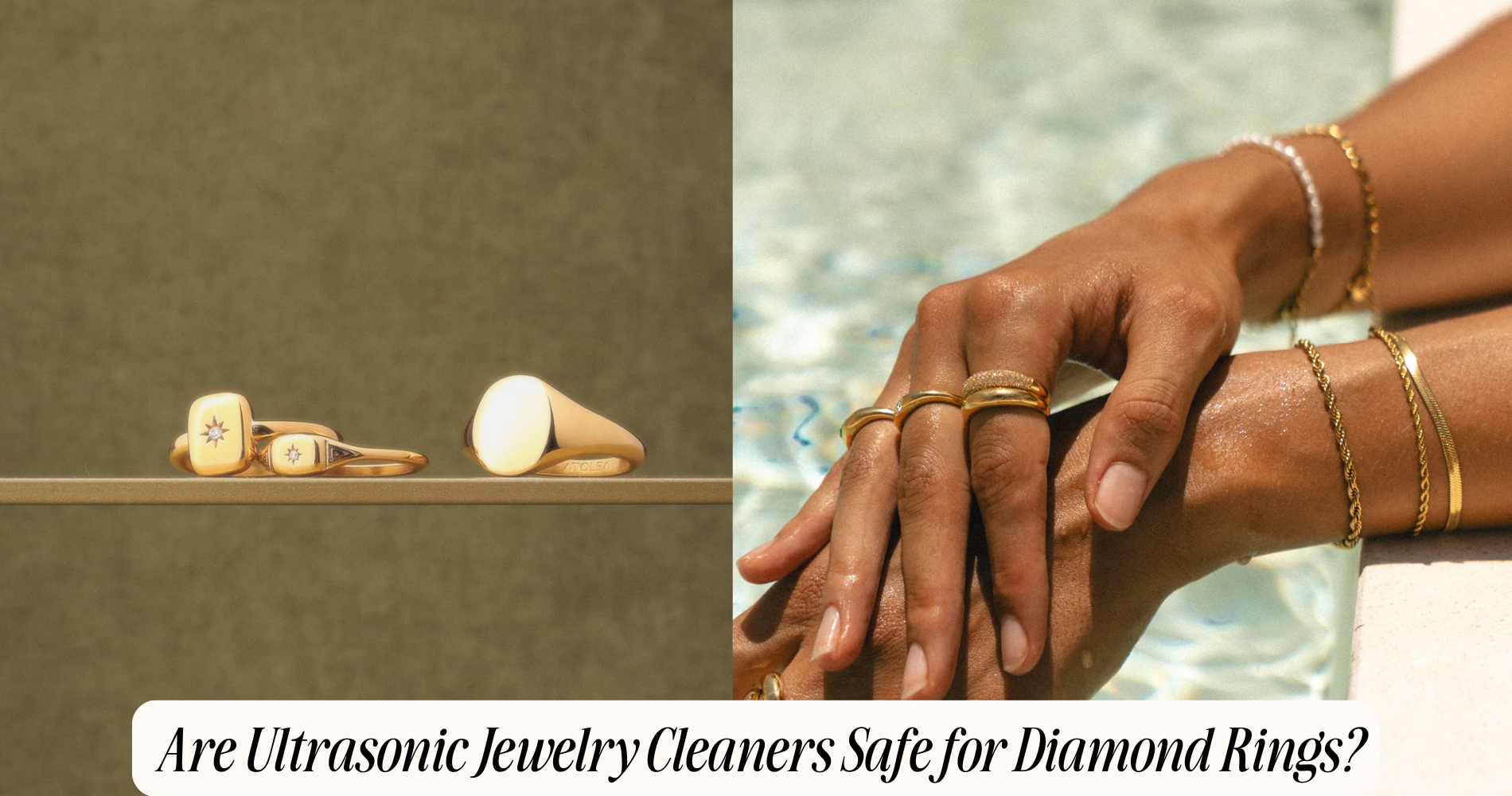
Are Ultrasonic Jewelry Cleaners Safe for Diamond Rings?
Are ultrasonic jewelry cleaners safe for diamond rings? Ultrasonic jewelry cleaners can be safe for a diamond ring when the stone is high-clarity, untreated, and secured in a rigid, well-built setting. The acoustic cavitation they produce removes biofilms and debris from micro-crevices, restoring brilliance. However, ultrasonic waves can exploit pre-existing fractures, loosen weak prongs, or damage fracture-filled and heavily included diamonds. Choosing durable designs—such as Waterproof Rings made for everyday wear—can reduce risk when regular cleaning is needed. Always assess the stone, setting integrity, and cleaning solution first, then use short, conservative cycles to maximize benefits while limiting potential damage.
How Ultrasonic Jewelry Cleaners Work
Although an ultrasonic jewelry cleaner looks simple from the outside, it relies on a controlled physical process called acoustic cavitation to remove contaminants from your diamond ring.
You place the ring in a tank filled with an aqueous cleaning solution, then an ultrasonic transducer converts electrical energy into high-frequency mechanical vibrations.
These vibrations propagate through the liquid as pressure waves at a defined cleaning frequency, typically around 35–45 kHz in consumer units.

At this ultrasonic technology range, microscopic vapor bubbles nucleate, grow, and then violently implode near the metal and diamond surfaces.
Each implosion generates localized microjets and shock fronts that shear away particulate debris, emulsified oils, and polishing residues.
You get intensive, uniform surface agitation without manual scrubbing.
Benefits of Using Ultrasonic Cleaners on Diamond Rings
When you use an ultrasonic cleaner on a diamond ring, you gain a level of contaminant removal that manual brushing can’t match, especially in micro-crevices and under settings.
Cavitation bubbles dislodge tightly adsorbed films of skin oils, silicones, and cosmetic residues that attenuate brilliance and apparent diamond clarity. By stripping these biofilms from pavilion facets and girdle edges, you restore maximum light return and scintillation.
You also standardize cleaning frequency with a repeatable, time-controlled procedure, reducing reliance on inconsistent hand techniques.
Ultrasonics penetrate complex mountings, including halos and intricate filigree, without requiring abrasive pastes. This minimizes surface burnishing of metals while keeping prongs and galleries visually accessible for routine inspection, helping you evaluate setting integrity and stone performance under magnification.
Risks and Potential Damage to Diamonds and Settings
Even with correctly tuned equipment, ultrasonic cleaning imposes significant mechanical and thermal stresses that can damage both diamonds and their mountings if you ignore certain constraints.
Cavitation microbubbles collapse against the stone and metal, generating localized shock waves that can exploit pre‑existing cleavage planes, laser drill channels, or filled fractures, challenging overall diamond durability.
You also risk compromising setting integrity.
Prongs, beads, and channels experience high-frequency vibrational loading that can loosen work‑hardened or previously resized metal.
Microcracks in solder joints or porous castings may propagate, allowing stones to shift or escape.
Abrupt temperature changes in the cleaning bath can induce differential expansion between diamond and alloy, further stressing contact points.
Over time, repeated ultrasonic cycles can cumulatively weaken both stone and setting.
Which Diamond Rings Are Good Candidates for Ultrasonic Cleaning
Understanding those stress mechanisms makes it possible to identify diamond rings that actually tolerate ultrasonic cleaning well. You’ll look for diamond ring types that combine mechanically robust stones with stable, well-engineered mountings. High-clarity, untreated, structurally sound diamonds (no major feathers, cavities, or laser drill channels) show better ultrasonic compatibility because internal stress concentrations are lower.

Rings with secure, intact settings—especially heavy prong, bezel, and channel mounts in platinum or high-karat gold—also perform well, since they resist vibration-induced loosening.
Factory-made, precision-cast settings generally fare better than very thin, hand-assembled mountings. Modern solitaire or three-stone designs with simple architectures usually tolerate cavitation more reliably than intricate, articulated styles.
When you combine a sound crystal, conservative faceting, and a rigid, well-maintained setting, ultrasonic cleaning becomes a viable option.
Situations When You Should Avoid Ultrasonic Cleaning
Although ultrasonic units excel at stripping away compacted grime, you should categorically avoid them whenever a diamond ring presents structural, treatment-related, or mounting vulnerabilities that cavitation can exploit.
You shouldn’t use ultrasound on diamonds with feathers reaching the girdle, cleavages, large open cavities, or laser-drilled, fracture-filled, or heavily included stones; intense micro-turbulence can propagate existing weaknesses.
Avoid it for older or intricate diamond settings—particularly pavé, micro-pavé, invisible, or tension mounts—where prong integrity and solder joints may already be marginal.
You’ll also want to skip ultrasonic cleaning for rings with mixed gemstones, especially opal, emerald, pearl, or tanzanite accents.
If you’ve increased cleaning frequency due to lotions or daily wear, consider that repeated sonic stress can cumulatively fatigue fragile mountings.
How to Use an Ultrasonic Cleaner Safely at Home
Once you’ve confirmed your diamond ring is structurally sound and suitable for ultrasonic cleaning, treat the process like a controlled lab procedure: select the correct cleaning solution (a mild, non-ammoniated jewelry detergent diluted with distilled water), verify the unit’s operating frequency and recommended fill line, and make certain the basket or rack is properly installed so your ring never rests directly on the tank floor.
For proper usage, pre-rinse the ring to remove loose particulates, then suspend it so prongs and pavé aren’t under mechanical stress.
Set conservative cycle times; multiple short runs are safer than one prolonged exposure.
As safety precautions, never operate the unit dry, avoid heated cycles for temperature-sensitive settings, keep the lid closed during cavitation, and air-dry the ring on a lint-free surface.

Professional Jeweler Guidance and Maintenance Checks
Even when you operate your ultrasonic cleaner correctly at home, you still need a jeweler to perform periodic diagnostic inspections and maintenance checks on your diamond ring.
During a professional cleaning, the jeweler uses magnification (10x–30x) to evaluate prong integrity, claw wear, micro-fractures, and any loosening of the stone within the setting. They’ll verify that pavé, channel, or tension configurations haven’t been destabilized by cavitation-induced vibration.
A structured jewelry maintenance protocol typically includes checking for metal fatigue, porosity, solder-joint failure, and deformation of the shank or gallery.
Your jeweler can measure stone security using tactile probe tests and confirm that previous repairs haven’t introduced stress points. By integrating scheduled bench evaluations with home ultrasonic use, you minimize loss risk and preserve optical performance.
Alternative Methods for Cleaning Diamond Rings
Professional oversight doesn’t replace disciplined at-home care, and ultrasonic cleaning isn’t your only option for maintaining a diamond’s surface brilliance.
You can implement a low-risk diamond care protocol using mild surfactant-based cleaning solutions, lukewarm water, and a soft-bristled brush to dislodge sebaceous films and cosmetic residues.
For routine decontamination, you’ll achieve excellent results with non-abrasive, ammonia-free detergents formulated for gemstones, agitated manually rather than mechanically.
You can also deploy lint-free microfiber cloths for final drying to minimize redeposition of particulates and prevent micro-abrasion on precious-metal prongs.
When you encounter more tenacious biofilms or oily build-up, you can alternate between short soaking intervals and gentle mechanical brushing, preserving facet junctions and maintaining consistent optical performance.
Key Safety Tips Before You Clean Your Diamond Ring
Before you introduce any cleaning chemistry or mechanical agitation, you should treat your diamond ring like a micro-engineered assembly of distinct materials, each with different tolerances and failure modes.
Inspect prongs, solder joints, and pavé settings under magnification; if you see micro-gaps, bent claws, or movement, postpone ultrasonic use.
Verify whether the diamond is natural, lab-grown, fracture-filled, laser-drilled, or coated—enhanced stones often fail under aggressive diamond care protocols.
Confirm metal type and integrity; porous or heavily worn alloys can pit or crack.
Use only jewelry-rated cleaning solutions with documented pH, surfactant type, and compatibility. Avoid ammonia-heavy or chlorine-based formulations.
Record pre-clean weights or high-resolution photos so you can detect stone loss or structural changes afterward.
Frequently Asked Questions
Can Ultrasonic Cleaners Remove Rhodium Plating From White Gold Diamond Rings?
Yes, ultrasonic cleaners can gradually erode rhodium plating on white gold. Cavitation microbubbles induce localized shear and pitting at the rhodium–gold interface, accelerating wear, thinning the coating, and potentially exposing underlying yellowish gold substrate.
Do Ultrasonic Waves Affect Laser Inscriptions on Diamond Girdles?
You generally won’t alter laser inscriptions; laser inscription durability easily withstands normal ultrasonic wave effects. However, if you crank power, duration, or cavitation intensity abnormally high, you could microscopically abrade surface features or obscure readability with residue.
Is Ultrasonic Cleaning Safe for Lab-Grown Diamond Rings?
Yes, you can safely use ultrasonic cleaning on most lab-grown diamond rings because lab grown durability matches natural diamonds; however, you must confirm secure settings and avoid heavily included or fracture-filled stones to maintain ultrasonic effectiveness and structural integrity.
Will Ultrasonic Cleaning Void My Jewelry Store Warranty or Protection Plan?
It might void your warranty coverage if the plan restricts ultrasonic methods or requires in-store jewelry maintenance. You must review fine print, gemstone treatments, mounting integrity clauses, and approved cleaning protocols before using any ultrasonic cleaning device.
Can Ultrasonic Cleaners Damage Nearby Colored Gemstones in Multi-Stone Diamond Rings?
Yes, ultrasonic cleaners can damage nearby colored stones; you must evaluate multi stone sensitivity and gemstone durability. Porous, fracture-filled, or included gems may fracture, lose fillers, or loosen in mounts under cavitation-induced vibrational stress.
Conclusion
When you evaluate ultrasonic cleaning for your diamond ring, treat it like a controlled lab procedure. Confirm gemstone identity, inspect the setting for micro-fractures, and rule out inclusions or treatments that raise failure risk under cavitation stress. When in doubt, default to professional assessment and gentler chemistries. By combining proper solution chemistry, time control, and post-cleaning inspection, you’ll maximize optical brilliance while minimizing the probability of structural or mounting compromise.











コメントを書く
このサイトはhCaptchaによって保護されており、hCaptchaプライバシーポリシーおよび利用規約が適用されます。