


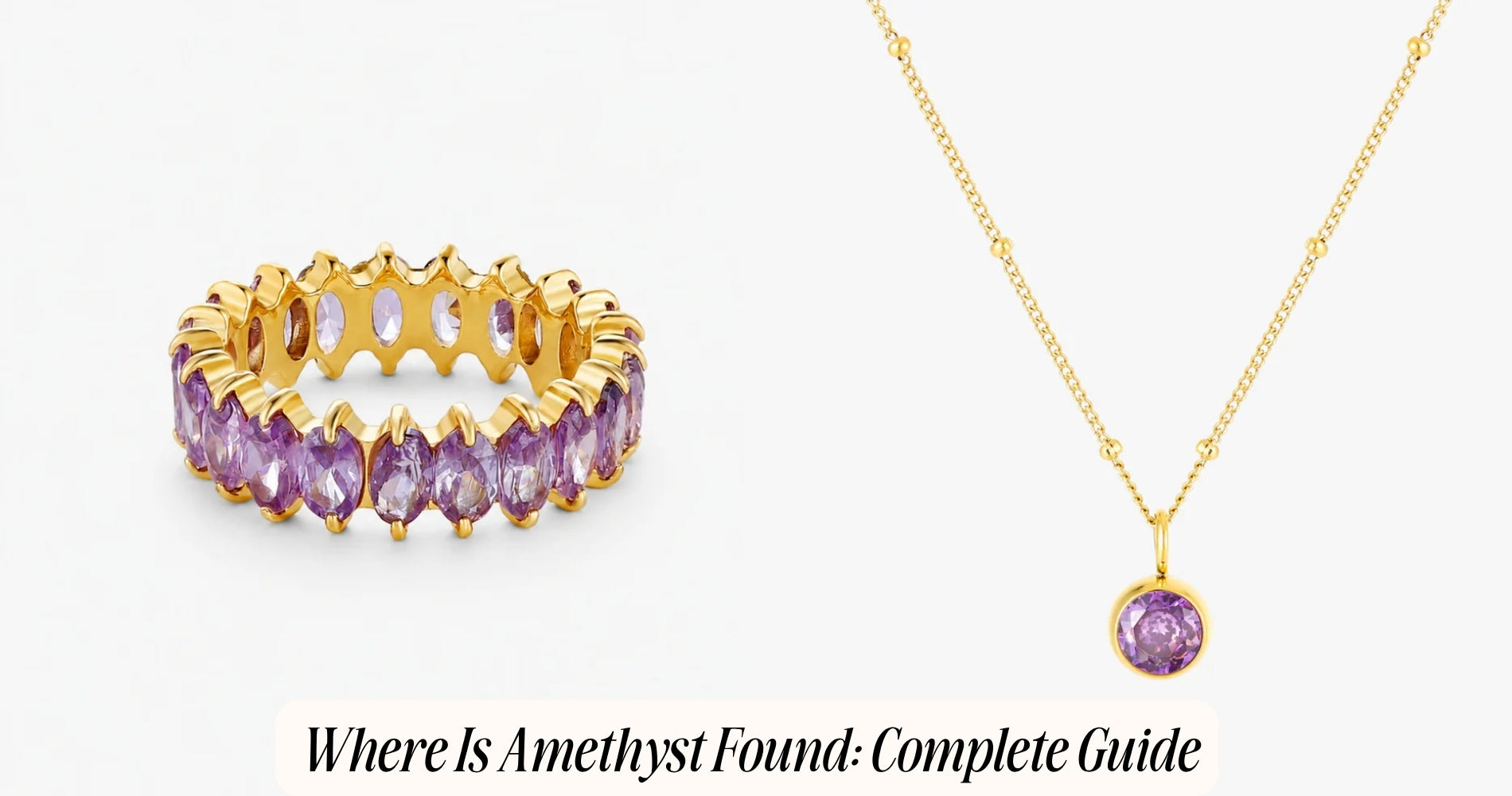
Where Is Amethyst Found: Complete Guide
Amethyst is one of the most recognizable and beloved gemstones in the world, prized for its rich violet color and long history as February's official birthstone. But where is amethyst found, and why does its color and quality vary so much depending on its origin? The answer takes us to mineral-rich regions across several continents, each producing amethyst with its own distinct character. If you love the depth and elegance of this purple gemstone, our Stone Collection features a variety of amethyst pieces sourced for their natural beauty and quality.
In this guide, we will explore the major amethyst mining regions around the world, how geography influences color and clarity, and what to look for when choosing a piece.
How Amethyst Forms
Before exploring where amethyst is found, it helps to understand how it forms in the first place. Amethyst is a variety of quartz that develops its signature purple color from trace amounts of iron within its crystal structure, combined with natural irradiation that occurs during formation deep within the earth.
This process typically takes place inside volcanic rock cavities, where mineral-rich fluids slowly deposit silica over long periods of time, eventually forming crystal clusters. Because this formation process depends on very specific geological conditions, amethyst deposits tend to occur in concentrated regions rather than being evenly distributed across the globe.

Brazil
Brazil is one of the largest and most significant sources of amethyst in the world today. The country's rich volcanic geology has created ideal conditions for amethyst formation, particularly in the states of Rio Grande do Sul and Bahia, where some of the world's largest amethyst geodes have been discovered.
Brazilian amethyst tends to range from a lighter, more delicate lavender to a medium purple tone, and the country is especially known for producing massive amethyst geodes, some large enough to stand several feet tall, which are often displayed as decorative pieces in addition to being cut for jewelry.
Because of its abundant deposits, Brazil remains one of the most reliable and widely accessible sources of amethyst for the global jewelry market.
Uruguay
Neighboring Brazil, Uruguay is another major amethyst producing country, known specifically for producing some of the deepest, most saturated purple amethyst available. Uruguayan amethyst often displays a rich, almost royal purple tone with striking clarity, making it highly sought after among collectors and jewelers alike.
The geological conditions in Uruguay, similar to those found in southern Brazil, have created ideal environments for high quality amethyst formation. Stones from this region are frequently considered some of the most valuable and desirable on the market due to their deep, consistent coloring.

Zambia
Zambia has become an increasingly important source of amethyst in recent decades, known for producing stones with a distinctive deep purple color, often with red or blue flashes visible under certain lighting. This coloring is sometimes referred to as Zambian amethyst and is considered among the most prized varieties available today.
Zambian amethyst deposits are found primarily in the Kariba area, where mining operations have grown significantly due to the high quality and rich color of the stones produced. Many jewelers consider Zambian amethyst to rival or even surpass the quality of stones sourced from South America.
Russia
Historically, Russia was one of the most significant sources of amethyst, particularly the deep, reddish purple stones known as Siberian amethyst. This variety is still considered one of the most prized color grades in the gemstone world, even though the original Russian deposits that gave this variety its name have been largely depleted.
Interestingly, the term Siberian amethyst is still used today to describe a specific color grade, deep purple with red and blue flashes, regardless of where the stone was actually mined. This means that modern stones labeled Siberian amethyst may actually originate from other regions, like Zambia or Brazil, that produce similarly colored material.
United States
Amethyst can also be found in several regions across the United States, though production is generally smaller in scale compared to South American or African sources. Notable deposits exist in Arizona, particularly in the Four Peaks area, which produces amethyst with a distinctive reddish purple hue. North Carolina and other parts of the Appalachian region also contain smaller amethyst deposits, often collected by hobbyist miners and rockhounds rather than large scale commercial operations.
While American amethyst is not as commercially dominant as stones from Brazil or Zambia, it remains popular among collectors interested in domestically sourced gemstones.

South Korea
South Korea is another notable source of amethyst, historically known for producing high quality stones with rich, consistent color. While mining activity in the region has decreased over the years compared to its earlier prominence, South Korean amethyst remains valued among collectors for its historical significance and quality.
Other Notable Amethyst Sources
Beyond these primary regions, smaller amethyst deposits can be found in countries including India, Madagascar, Namibia, and Canada. While these sources contribute less to the overall global market, they occasionally produce unique stones with distinct characteristics tied to their specific geological conditions.
This global distribution of amethyst deposits is part of why the gemstone displays such a wide range of colors and clarity levels, since each region's unique mineral composition and formation conditions leave a distinct signature on the stones produced there.
How Origin Affects Amethyst Color and Quality
While all amethyst shares the same basic mineral composition, its exact color and clarity can vary significantly based on where it was formed. Stones from Uruguay and Zambia tend to display the deepest, most saturated purple tones, often considered the most valuable on the market. Brazilian amethyst frequently offers a lighter to medium purple range, contributing to its widespread popularity and accessibility. Stones bearing the historic Siberian designation, regardless of true origin, are prized for their deep color with visible red and blue flashes.
Understanding these regional differences can help buyers make more informed decisions when shopping for amethyst jewelry, particularly if a specific color intensity or origin holds personal significance.

What to Look for When Buying Amethyst
When shopping for amethyst jewelry, color remains one of the most important factors to evaluate, with deeper, more saturated purple tones generally considered more valuable. Clarity also matters, since high quality amethyst should appear clean to the eye without significant visible inclusions, though minor natural characteristics are common and do not necessarily detract from the stone's beauty.
If origin is important to you, asking a jeweler about the specific source of a stone can help ensure you are purchasing a piece that aligns with your preferences, whether that means seeking out deeply colored Zambian material or more classic, accessible Brazilian amethyst.
Final Thoughts
So, where is amethyst found? This beloved purple gemstone is mined across several regions worldwide, with Brazil, Uruguay, and Zambia currently standing as some of the most significant sources. Each region contributes its own distinct color range and quality characteristics, giving buyers a wide variety of options depending on their preferences for color depth, clarity, and origin.
Whether you are drawn to the softer lavender tones of Brazilian amethyst or the deep, saturated purple of Zambian stones, understanding where your amethyst comes from adds an extra layer of appreciation to this timeless gemstone.
Frequently Asked Questions
1. Where is amethyst found most commonly?
Brazil is the largest and most significant source of amethyst today, with Uruguay and Zambia also serving as major producers of high quality stones.
2. What is Siberian amethyst, and does it still come from Russia?
Siberian amethyst originally referred to stones mined in Russia, but today the term describes a specific deep purple color grade, regardless of the stone's actual country of origin.
3. Does amethyst from different countries look different?
Yes, color intensity and clarity can vary significantly by region, with Uruguayan and Zambian amethyst generally displaying deeper, more saturated purple tones than Brazilian stones.
4. Is amethyst found in the United States?
Yes, smaller amethyst deposits exist in states like Arizona and North Carolina, though production is much smaller in scale compared to South American or African sources.
5. Does the origin of amethyst affect its value?
Yes, stones from regions known for deep, saturated color, like Zambia and Uruguay, are often considered more valuable than lighter toned amethyst from other sources.











Leave a comment
This site is protected by hCaptcha and the hCaptcha Privacy Policy and Terms of Service apply.