

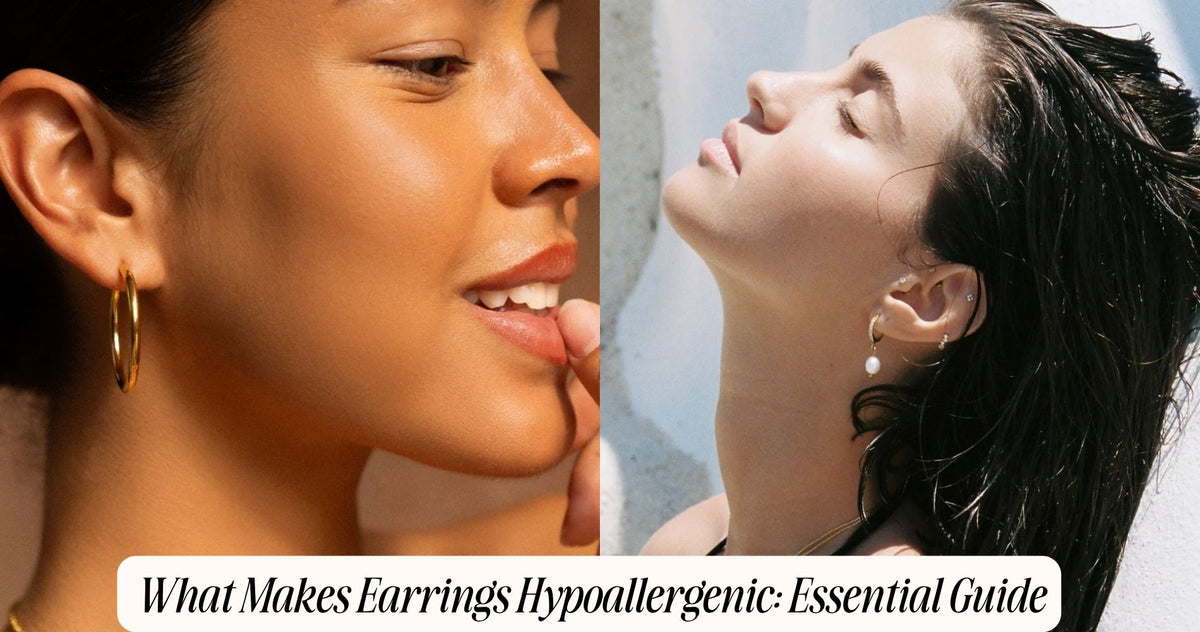
What Makes Earrings Hypoallergenic: Essential Guide
The word hypoallergenic appears on thousands of earring listings, yet no universal standard governs when a seller may use it. What makes earrings hypoallergenic is therefore less about the label and more about a short list of measurable factors: how much nickel the earring releases, what the post is made from, whether the surface stays intact, and how the piece is built. Hypoallergenic Jewelry is designed around those factors rather than the label alone. This guide covers what the term means, the criteria that determine whether an earring is genuinely low-risk, why the post matters most, and how to check a claim before you buy.
What Hypoallergenic Actually Means
Hypoallergenic means less likely to cause an allergic reaction, not incapable of causing one. The term describes probability, and in jewelry it has no single legal definition in most markets, so a seller can apply it to almost any product.
For earrings, the practical meaning is narrow. It refers to how likely the earring is to trigger contact dermatitis, the skin reaction behind redness, itching, swelling, and weeping at the piercing. Nickel causes the large majority of these reactions, followed by cobalt and, less often, other alloy components.
Because the label is unregulated, the useful question is not whether an earring says hypoallergenic but whether it meets the conditions that make a reaction unlikely. Those conditions are covered below.

Criterion 1: Low Nickel Release, Not Just Low Nickel Content
The most important concept in this topic is nickel release. An alloy can contain nickel and still release very little of it if the metal is stable and the nickel is chemically bound inside it. Surgical-grade stainless steel is the standard example. Other alloys release nickel ions readily when they touch sweat and skin moisture.
Regulation reflects this. The European REACH regulation sets a limit for posts inserted into pierced ears of 0.2 micrograms of nickel per square centimeter per week, and a higher limit of 0.5 micrograms for items worn against skin. The limit applies to release, not to the percentage of nickel in the metal.
This explains why marketing phrases such as nickel safe or low nickel say little by themselves. A named, stable base metal combined with a stated nickel-free or compliant surface says considerably more.
Criterion 2: The Post Material
The post passes through living tissue, so it determines most of the risk. A beautiful front on a reactive post still causes a reaction, while a plain front on a stable post usually does not.
Materials with a strong record for piercing contact include implant-grade titanium, niobium, solid gold at 14K and above in yellow tones, and surgical-grade 316L stainless steel. Materials to treat with caution include brass, unspecified alloys, low-karat white gold that may use nickel as a whitener, and any base metal under thin plating.
A useful check is whether the listing names the post material separately from the face. Descriptions that cover only the finish leave the most important part unspecified.

Criterion 3: Surface Integrity and Coating Quality
Even a stable base can lose its protection if the surface fails. Coated earrings are hypoallergenic only as long as the coating stays intact between the base metal and the skin.
Standard electroplating is thin and wears through at friction points, especially on posts and backs, which exposes whatever sits underneath. Once that happens, the piece behaves like its base metal rather than its finish.
PVD coating bonds a finish to stainless steel at the molecular level and forms a layer many times thicker than standard plating. It holds through sweat, water, and friction, so the barrier between the base and your skin stays in place. For coated earrings, coating method and coverage on the post matter as much as the base metal.
Criterion 4: Construction Details
Several design choices influence how much irritation an earring is likely to cause, even with safe materials.
Uniform materials throughout the piece prevent weak links. A titanium post paired with a brass back defeats the purpose, because the back still touches the lobe.
Smooth, well-finished surfaces reduce trapped residue and micro-irritation. Rough or porous finishes hold sweat and product, which keeps moisture against the skin.
Closure style affects exposure. Flat backs sit flush and trap less moisture than butterfly backs, which lowers the chance of irritation unrelated to the metal.
Correct post gauge limits friction. A post that fits the piercing channel does not rub the tissue, so it avoids irritation that can be mistaken for an allergy.

How the Criteria Compare in Practice
| Factor | Lower-Risk Choice | Higher-Risk Choice |
|---|---|---|
| Post material | Titanium, niobium, 316L steel, 14K yellow gold | Brass, unspecified alloy, plated base metal |
| Surface | Bonded PVD finish or solid metal | Thin electroplating over reactive base |
| Consistency | Same material on post, back, and face | Mixed materials with an unspecified back |
| Closure | Flat back or secure hinged hoop | Loose butterfly back trapping moisture |
| Description | Names base metal and coating method | Uses only hypoallergenic or gold tone |
How to Verify a Hypoallergenic Claim
A few steps turn the label into something you can evaluate.
Read the product description for a named post and base material. If the listing does not give one, ask the seller directly, since a reputable brand answers specifically.
Look for the coating method on coated pieces and confirm it covers the post. Terms such as PVD indicate a bonded finish, while vague wording suggests standard plating.
Check for compliance statements or testing references where available, such as stated nickel-release compliance for piercing posts.
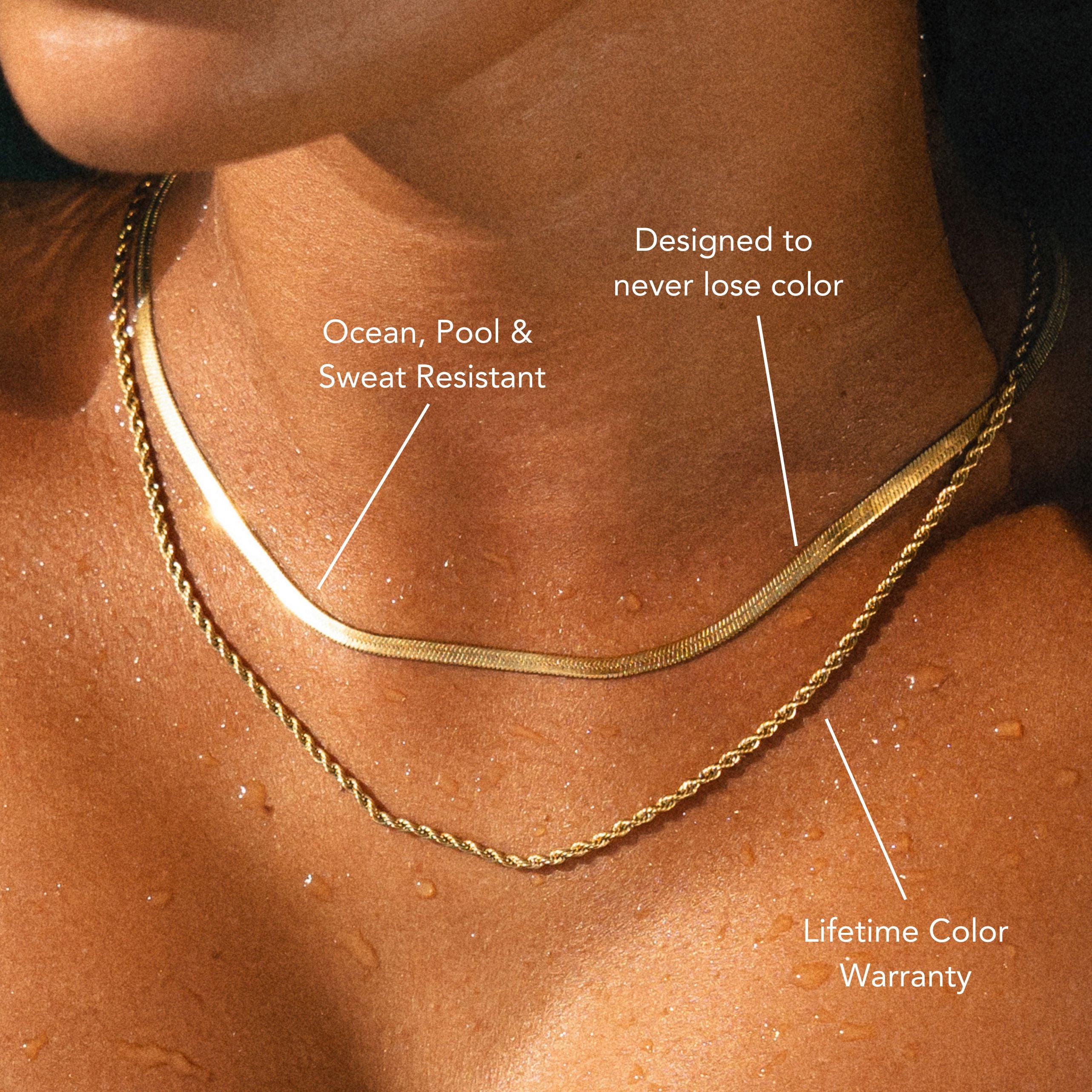
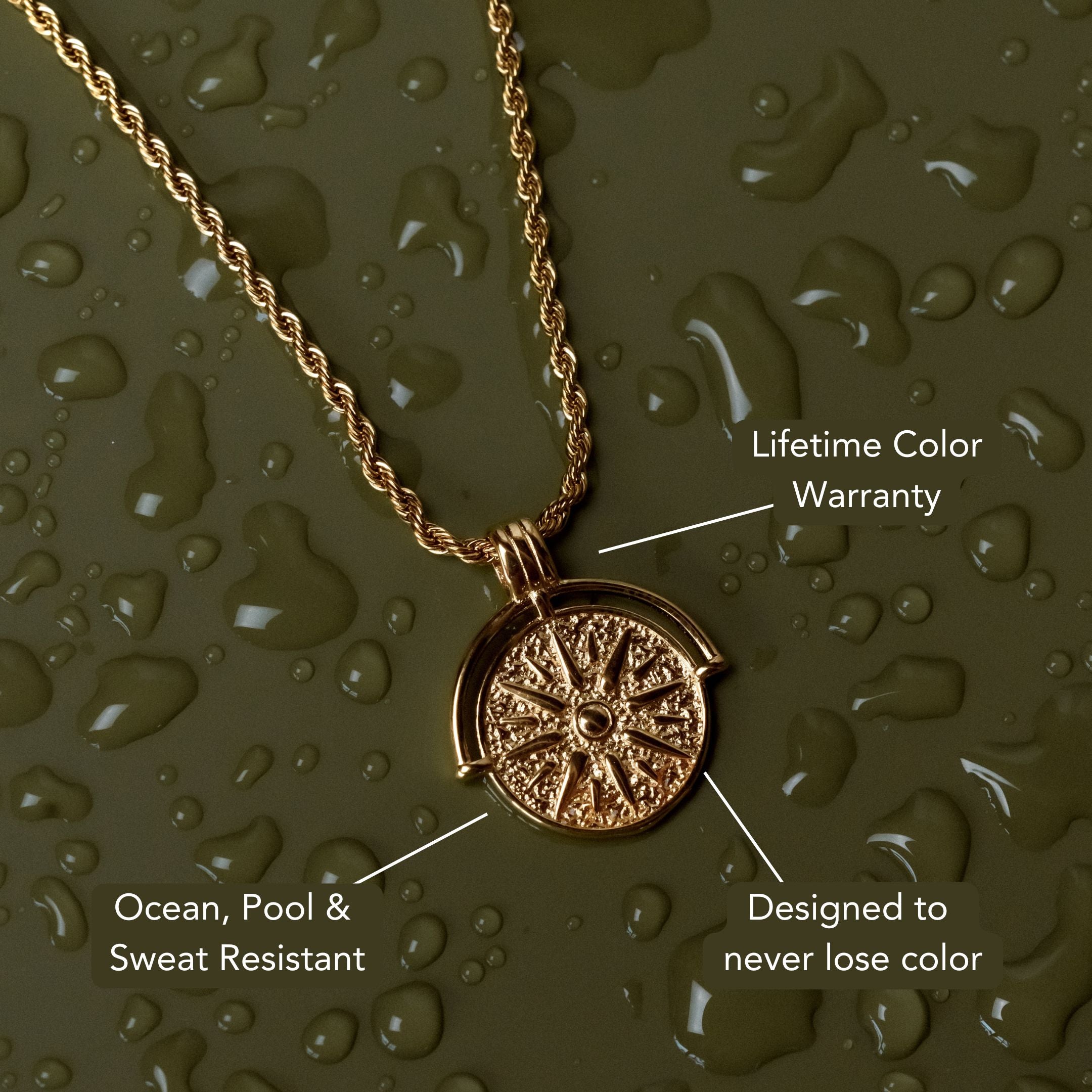
Review the warranty. A lifetime color warranty only makes financial sense if the finish holds, so it signals confidence in the construction. ATOLEA builds its earrings on PVD-coated 316L stainless steel with a nickel-free surface at the point of skin contact, with a lifetime color warranty on every pair.
Everyday Use: Why the Right Build Still Needs Basic Care
A hypoallergenic earring still collects sebum, sweat, and product residue like any other piece. Residue can irritate the piercing and be mistaken for a metal reaction. Cleaning earrings weekly with mild soap and warm water, and rinsing after gym sessions, beach days, and swimming, keeps the skin contact surface clean. A stable material tolerates this routine without wearing down.

Frequently Asked Questions
Does hypoallergenic mean nickel-free?
Not necessarily. Hypoallergenic is an unregulated marketing term, and some products using it still contain nickel. Nickel-free is a more specific claim, and even then the meaningful measure is nickel release from the surface that touches skin.
Is surgical stainless steel hypoallergenic?
For most people, yes. Surgical-grade 316L stainless steel contains nickel but binds it tightly, so release is very low. People with severe nickel allergy may still react and are better served by implant-grade titanium or niobium.
Can earrings stop being hypoallergenic over time?
Yes, when a coating wears through. If thin plating over a reactive base wears away at the post, the earring begins releasing metal ions and can trigger a reaction it did not cause before. Bonded coatings such as PVD resist this far better.
What earring posts are safest for sensitive ears?
Implant-grade titanium and niobium are the lowest-risk options. Solid yellow gold at 14K and above, and 316L stainless steel with a nickel-free finish, work well for most sensitive ears.
How can I tell if my earrings are causing an allergy or just irritation?
Redness, itching, and weeping localized to the piercing that appear within a day or two of wearing a specific pair and improve when you remove it point to an allergy. Soreness that follows heavy wear, tight backs, or poor cleaning points to irritation from fit or residue.
Reading Past the Label
What makes earrings hypoallergenic is a combination of low nickel release, a stable post material, an intact surface, and sensible construction, rather than a word on a product page. Check the post material by name, confirm that any coating is bonded and covers the post, and look for uniform materials throughout the piece. With those four checks, you can judge any earring on its actual properties instead of its marketing.









Leave a comment
This site is protected by hCaptcha and the hCaptcha Privacy Policy and Terms of Service apply.