

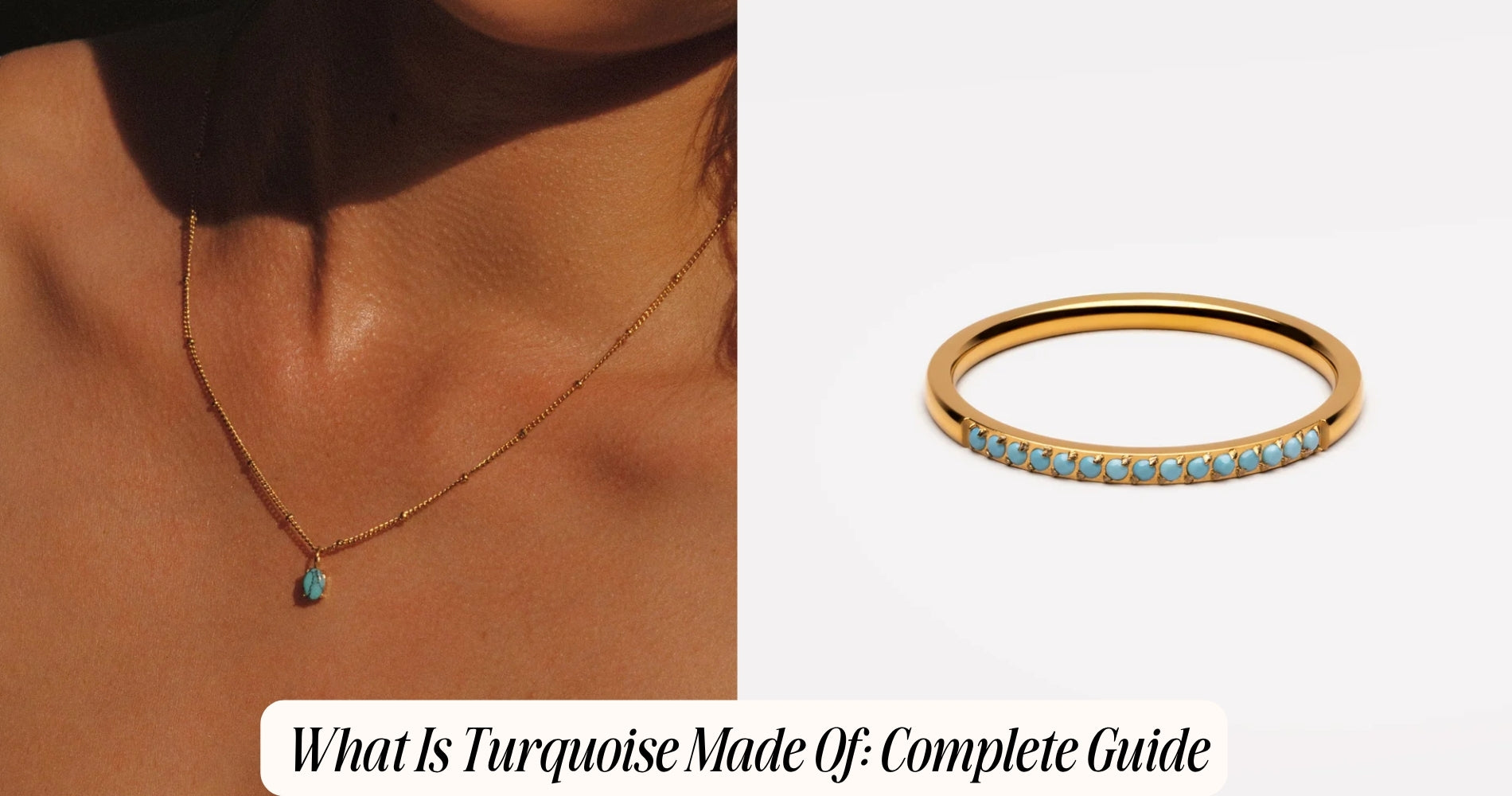
What Is Turquoise Made Of: Complete Guide
Turquoise has captivated jewelry lovers for thousands of years with its striking blue and green tones, but many people are surprised to learn what is turquoise made of on a mineral level. This beloved gemstone is far more complex than its simple, earthy appearance suggests. If you love the look of turquoise and want to explore pieces made with genuine, high quality stones, our Stone Collection features a range of turquoise jewelry crafted for both beauty and durability.
In this guide, we will break down the mineral composition of turquoise, how it forms, what affects its color and quality, and how to tell genuine turquoise from imitations.
The Mineral Composition of Turquoise
Turquoise is a hydrated phosphate mineral made up of copper and aluminum. Its chemical formula includes these two elements combined with phosphate and water molecules trapped within its crystal structure. Copper is largely responsible for turquoise's signature blue color, while iron impurities can shift the tone toward green, and aluminum contributes to the stone's overall structure and durability.
Because turquoise forms through a combination of specific minerals and environmental conditions, no two deposits produce stones that look exactly alike. This is part of why turquoise is prized for its natural variation, with color and pattern differing from mine to mine and even stone to stone.

How Turquoise Forms in Nature
Turquoise typically forms in arid, mineral rich regions where water containing copper and aluminum slowly seeps through cracks in rock formations. Over long periods of time, this mineral rich water deposits trace elements into the surrounding rock, gradually forming turquoise within the cracks and cavities of host stone.
This process explains why turquoise is often found alongside a web like pattern of darker veining, known as matrix, which is actually remnants of the host rock left behind during formation. This matrix is not a flaw. In fact, many collectors specifically seek out turquoise with attractive matrix patterns, since it adds character and helps confirm the stone's natural origin.
Because turquoise requires very specific environmental conditions to form, it is typically found in dry, desert like regions, including parts of the southwestern United States, Iran, Mexico, and China, each producing turquoise with slightly different colors and matrix patterns.

What Gives Turquoise Its Color
The color of turquoise ranges from a soft powder blue to a deep greenish teal, and this variation comes down to its exact mineral makeup. Higher copper content tends to produce a more vivid blue, while the presence of iron shifts the stone toward green tones. Zinc can also influence color in some deposits, sometimes producing a yellow green hue.
Because color is directly tied to trace mineral content, no treatment is needed to achieve turquoise's natural coloring, though some lower quality stones are treated or dyed to enhance or standardize their appearance, which we will cover in more detail below.
Understanding Turquoise Quality and Grades
Not all turquoise is created equal, and understanding what affects its quality can help you make a more informed purchase.
Hardness and durability: Turquoise ranks between five and six on the Mohs hardness scale, making it softer than many other popular gemstones. Higher grade turquoise tends to be denser and more resistant to scratching, while lower grade stones can be more porous and prone to absorbing oils or moisture over time.
Color consistency: Even, saturated color is generally considered more desirable, though matrix patterns are often valued for adding natural character rather than being seen as a flaw.
Origin: Certain mining regions are historically associated with especially prized turquoise, and stones from well known deposits are often more sought after due to their color and rarity.
Treatment level: Natural, untreated turquoise is the most valuable, while stabilized, dyed, or reconstituted turquoise is more affordable but does not carry the same rarity or long term value.

Natural vs Treated vs Imitation Turquoise
Because natural, high quality turquoise is relatively rare, the market includes several types of turquoise products, and understanding the differences is essential before buying.
Natural turquoise: Mined and cut with no additional treatment, this is the most valuable and rare form of turquoise, prized for its untouched color and matrix.
Stabilized turquoise: Lower grade, more porous turquoise that has been treated with a clear resin to increase durability and prevent color changes over time. This is a common and widely accepted treatment in the jewelry industry.
Dyed turquoise: Lower quality stones that have been artificially colored to mimic the appearance of higher grade turquoise. This is generally considered less desirable and less valuable than natural or stabilized stones.
Reconstituted turquoise: Made from crushed turquoise fragments and powder combined with resin, this material contains genuine turquoise but is not a solid natural stone.
Imitation turquoise: Materials like howlite or magnesite dyed to resemble turquoise, or synthetic materials that contain no actual turquoise mineral content at all.
Knowing these categories helps you understand exactly what you are paying for, since natural turquoise commands a much higher price than treated or imitation versions.

How to Tell If Turquoise Is Genuine
A few simple checks can help you evaluate whether a piece of turquoise jewelry is likely genuine. Natural turquoise often has slight color variation and visible matrix, while dyed imitations tend to have unnaturally uniform color throughout. Genuine turquoise also feels cool to the touch initially, similar to other natural stones, whereas plastic imitations tend to warm quickly.
If you are making a significant purchase, buying from a reputable jeweler who can confirm the stone's origin and treatment level is the most reliable way to ensure you are getting authentic turquoise.
Caring for Turquoise Jewelry
Because turquoise is relatively soft and porous compared to many other gemstones, a few care habits help preserve its color and structure over time. Avoid exposing turquoise to perfumes, lotions, and household chemicals, since these can be absorbed into the stone and cause discoloration. Remove turquoise jewelry before swimming, showering, or exercising, since prolonged moisture exposure can affect more porous stones over time. Store turquoise separately from harder gemstones to prevent scratching, and clean it gently with a soft, dry cloth rather than soaking it in water or using ultrasonic cleaners.
With proper care, turquoise jewelry can maintain its color and beauty for many years, even though the stone is softer than options like quartz or sapphire.

Final Thoughts
So, what is turquoise made of? At its core, turquoise is a hydrated phosphate mineral formed from copper and aluminum, with trace elements like iron and zinc contributing to its signature blue and green tones. Its natural formation process, combined with the presence of matrix, makes every piece of genuine turquoise unique.
Understanding the difference between natural, stabilized, and imitation turquoise ensures you know exactly what you are buying, whether you are drawn to its history, its earthy color palette, or its long standing significance in jewelry from cultures around the world.
Frequently Asked Questions
1. What is turquoise made of chemically? Turquoise is a hydrated phosphate mineral composed primarily of copper and aluminum, with trace elements like iron and zinc influencing its color.
2. Why does turquoise have dark veining? The dark veining, known as matrix, is made up of remnants of the host rock left behind during the stone's formation and is considered a natural, often desirable feature.
3. Is all turquoise treated? No, natural untreated turquoise exists and is considered the most valuable, though much of the turquoise on the market today is stabilized to improve durability.
4. How can I tell if turquoise is real? Genuine turquoise typically shows slight color variation and visible matrix, while imitations often have overly uniform color and a warmer, plastic like feel.
5. Is turquoise a durable everyday gemstone? Turquoise is softer than many gemstones, ranking five to six on the Mohs scale, so it benefits from gentle care and should be protected from moisture and chemicals.









Leave a comment
This site is protected by hCaptcha and the hCaptcha Privacy Policy and Terms of Service apply.