


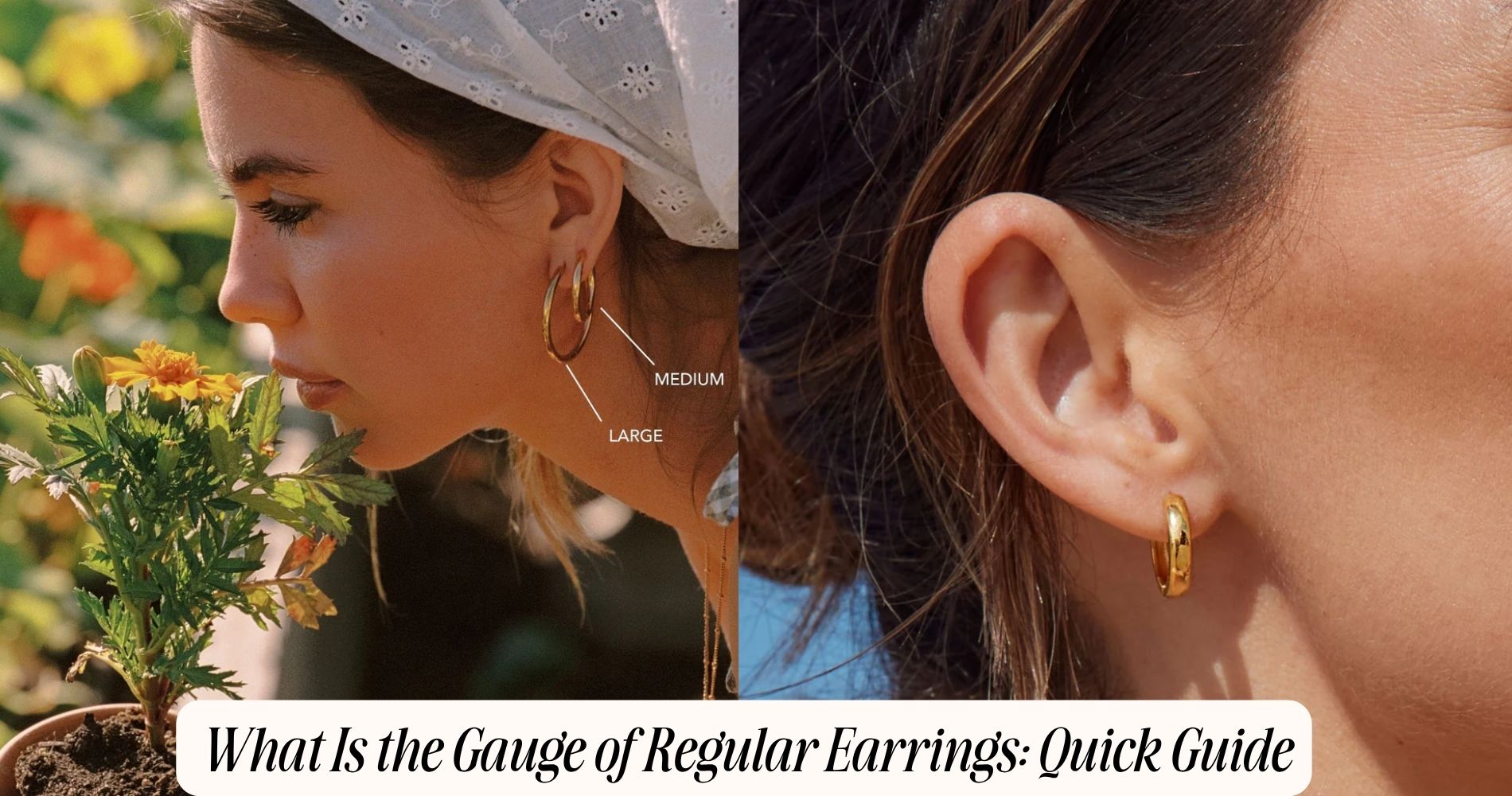
What Is the Gauge of Regular Earrings: Quick Guide
Earring gauge affects whether a post fits your piercing comfortably, whether it stays secure, and whether insertion causes irritation or damage. Most people wear earrings for years without knowing their piercing gauge, until they purchase a new pair that fits differently from expected. Understanding what is the gauge of regular earrings prevents that frustration and helps you make accurate purchasing decisions for posts, hoops, and flat back styles that require gauge compatibility. Waterproof Earrings in standard gauge sizing fit the vast majority of standard lobe piercings without issue. This guide covers standard gauges, how to identify your piercing gauge, what happens when gauge and piercing do not match, and what gauge matters for different earring styles.
What Earring Gauge Means
Gauge is a measurement of the thickness of an earring post or wire, expressed as a number in the American Wire Gauge (AWG) system. In this system, the gauge number and the physical size have an inverse relationship: a higher gauge number means a thinner post, and a lower gauge number means a thicker post. This counterintuitive relationship is one of the main sources of confusion when people first encounter gauge measurements.
To put this in concrete terms: a 20 gauge post is thinner than an 18 gauge post, which is thinner than a 16 gauge post. Each step down in gauge number represents a measurable increase in post diameter.
Gauge is also expressed in millimeters directly for clarity. The millimeter measurement is the actual diameter of the post and is always unambiguous, unlike the gauge number which requires knowing the AWG system to interpret correctly. Many quality jewelry descriptions list both, for example 20G (0.8mm), which gives you the gauge designation and the direct measurement together.

What Is the Gauge of Regular Earrings
The standard gauge for regular consumer earrings and the piercings they are designed to fit is 20 gauge, which corresponds to a post diameter of 0.8mm.
Most standard ear lobe piercings performed at jewelry stores, mall piercing studios, and general body piercing shops are done at 20 gauge. The needle used creates a channel sized for a 20 gauge post, and the starter earrings provided are 20 gauge. The majority of fashion and everyday earrings sold at retail are also manufactured at 20 gauge, which is why they fit standard piercings without special consideration.
However, 20 gauge is not the only standard in common use. 18 gauge (1.0mm) is widely used in higher-quality jewelry, body jewelry, and piercings done at professional piercing studios. Understanding both gauges and how they relate to your specific piercing is the practical knowledge that prevents fit problems.
Standard Gauge Reference
| Gauge | Diameter (mm) | Common Use |
|---|---|---|
| 20G | 0.8mm | Standard consumer earrings, mall piercings, fashion jewelry |
| 18G | 1.0mm | Higher-quality jewelry, professional piercing standard |
| 16G | 1.2mm | Cartilage piercings, tragus, helix, some lobe piercings |
| 14G | 1.6mm | Industrial piercings, navel piercings, some cartilage |
| 12G | 2.0mm | Stretched lobes, gauge jewelry, tunnels and plugs |
| 10G | 2.4mm | Moderately stretched lobes |
| 8G | 3.2mm | Significantly stretched lobes |
For standard lobe piercings, the relevant range is 20G to 16G. Anything below 16G in lobe jewelry is typically for stretched piercings rather than standard ones.

20 Gauge vs 18 Gauge: The Practical Difference
The 0.2mm difference between 20 gauge and 18 gauge seems small but has practical implications for both fit and piercing health.
20 gauge in a 20 gauge piercing: A precise fit. The post fills the channel correctly and the earring stays where it is placed without moving excessively. Most standard earrings and most standard piercings are at this size.
18 gauge in a 20 gauge piercing: The thicker post requires slightly more pressure to insert through a piercing sized for a thinner post. In a fully healed piercing, this is manageable and the piercing can accommodate 18 gauge jewelry without permanent stretching. However, forcing an 18 gauge post through repeatedly can gradually enlarge a 20 gauge piercing over time, which is not necessarily a problem but is worth knowing.
20 gauge in an 18 gauge piercing: A thinner post in a larger channel produces a loose fit. The post moves around inside the channel, which causes the earring to shift position, increases the risk of the earring rotating, and can allow the front face of a stud to tilt rather than sitting flush. In a hoop, a thinner wire than the channel diameter creates a sliding, unstable fit. This is the more problematic direction: too thin in a larger hole is generally more uncomfortable than too thick in a smaller hole.
18 gauge in an 18 gauge piercing: The professional piercing standard for a reason. The slightly larger post provides a more stable fit and is less likely to cause the cheese-wire irritation that very thin posts can produce in healed piercings worn continuously.
How to Find Out Your Piercing Gauge
If you do not know your piercing gauge, three methods give you a reliable answer.
Check the earrings that fit best. The earrings that fit most comfortably in your piercing with no resistance on insertion and no looseness once in are likely the correct gauge. Check the product listing for any earrings you know fit well and look for the gauge designation. If the listing says 20G or 20 gauge, your piercing is likely 20 gauge.
Ask the piercer who did it. If your piercing was done professionally and you remember where, the studio should have a record of the gauge used. Professional piercers typically use 16G or 18G for most lobe piercings rather than the 20G common at mall kiosks.
Use a gauge measuring tool. Jewelry gauge tools are small, inexpensive tools with calibrated holes of known sizes. Passing the post of a well-fitting earring through the holes identifies the gauge directly. These are available at body jewelry suppliers and some jewelry stores.
Estimate from post diameter. If you have a set of digital calipers, measuring the post diameter of a well-fitting earring gives you the millimeter measurement directly. Match that measurement to the gauge table above to identify the gauge.

Gauge Considerations for Different Earring Styles
Gauge matters differently for different earring constructions.
Stud earrings: Post gauge determines whether the earring fits the piercing at all. The post needs to be small enough to pass through the channel comfortably without force. For flat back labret studs specifically, the post gauge must match the piercing: the flat back prevents the post from passing through completely if it is too thick, and the threaded or threadless fitting requires a specific post diameter to seat correctly.
Hoop earrings: Wire gauge for hoops refers to the thickness of the wire that passes through the piercing, which follows the same considerations as stud posts. A thicker wire gauge hoop creates more presence visually because the outer diameter is larger, but it requires a piercing that accommodates the wire thickness. Most standard hoops use 20G to 18G wire for lobe piercing styles.
Huggie hoops: Huggie hoop wire gauge affects how snugly the hoop sits against the lobe. A thicker gauge huggie has more visual presence and sits with more weight against the lobe. The post that locks the huggie closed is the gauge-critical dimension, as it passes through the piercing during wear.

Threader earrings: The chain that passes through the piercing in a threader is typically very fine, often 24G to 22G or equivalent, which is thinner than standard post jewelry. Threaders work in standard 20G piercings because the chain is narrower than the channel rather than filling it. Some people find threaders too thin in larger piercings because the chain moves freely and sits loosely.
Cartilage earrings: Helix, tragus, and other cartilage piercings are typically pierced at 16G by professional piercers because cartilage tissue benefits from a slightly larger post that reduces the likelihood of the earring cutting through the tissue under pressure. Standard 20G earrings are often too thin for cartilage piercings and can migrate or cause irritation in a 16G cartilage channel.
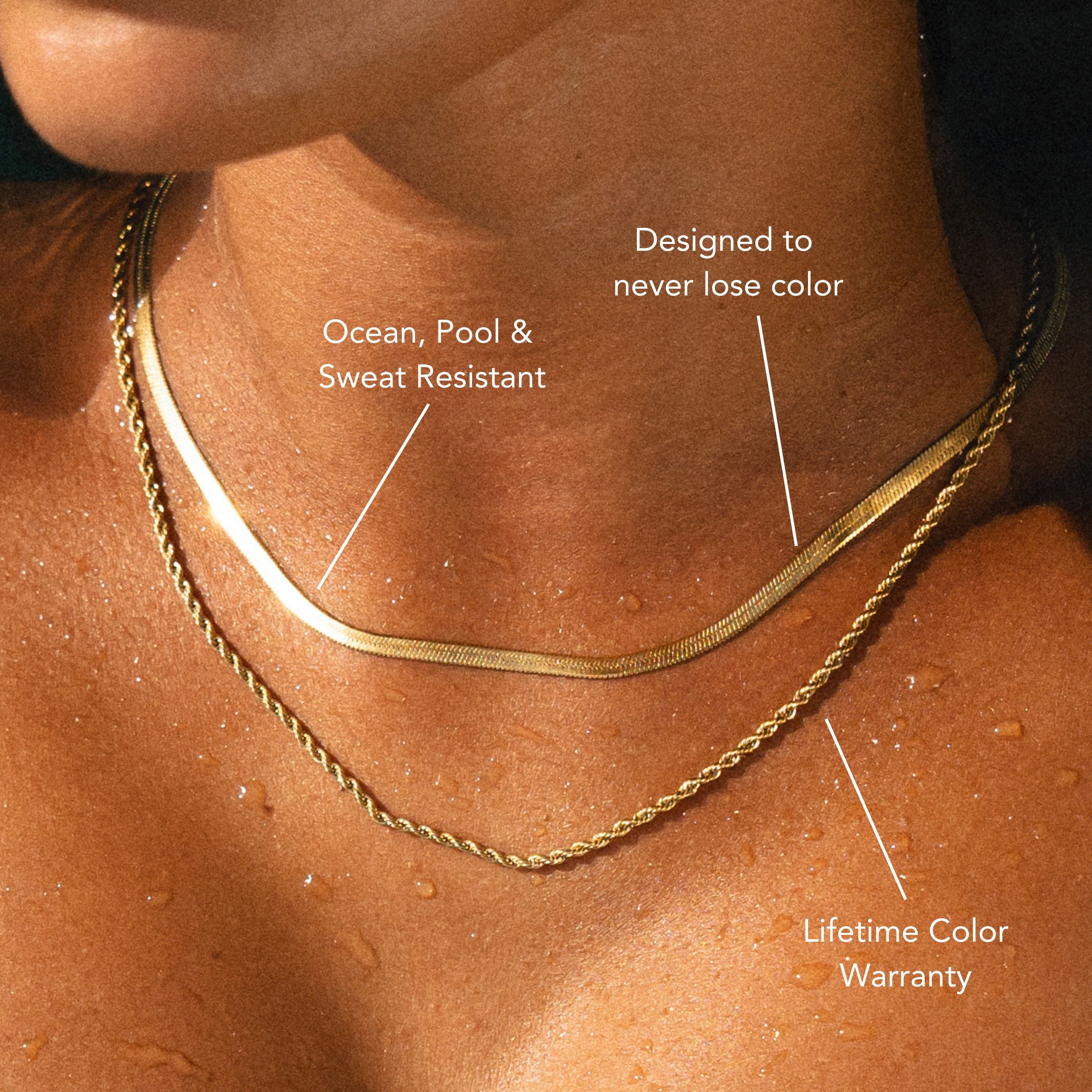
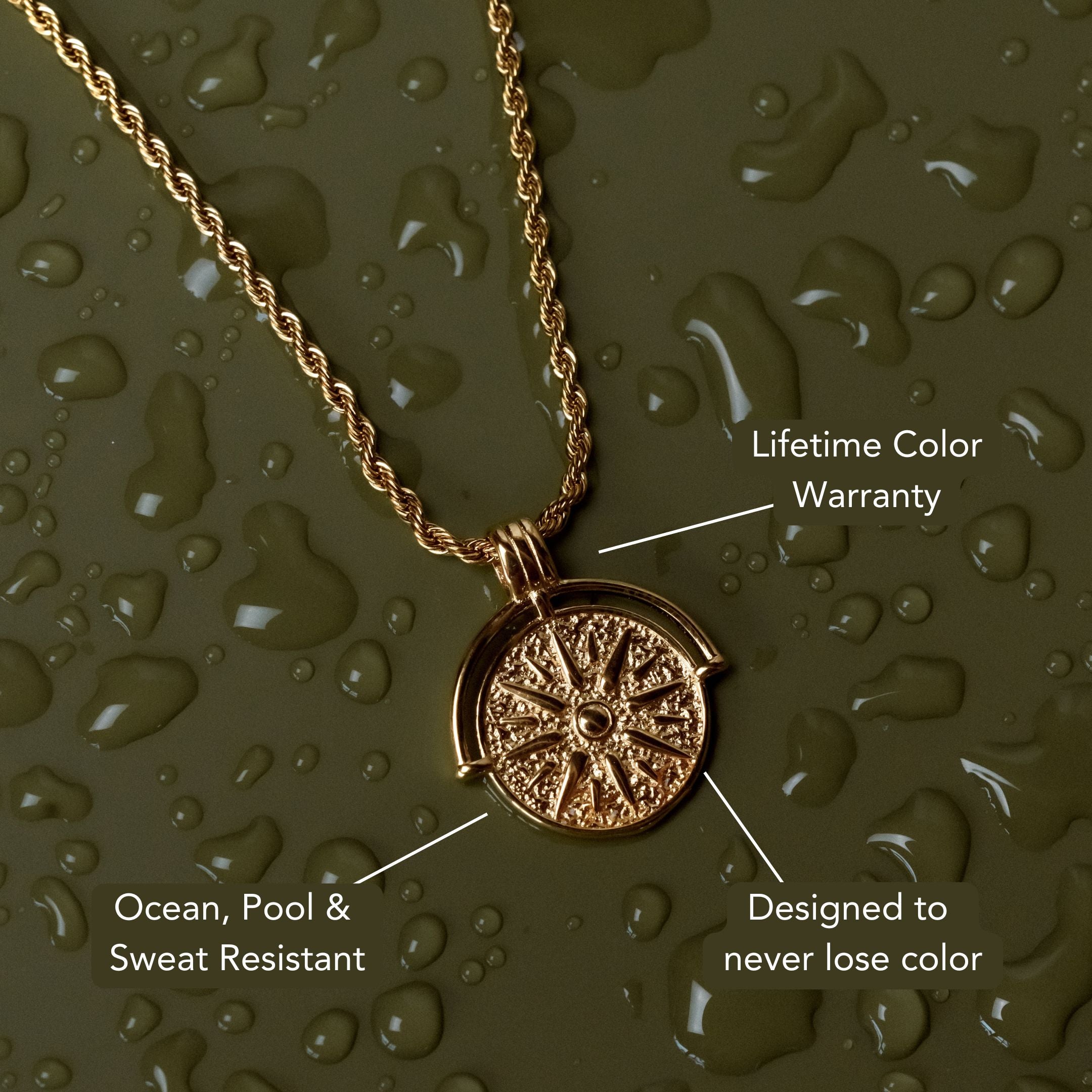
For earrings worn continuously through daily showers, gym sessions, beach days, and ocean swims, material matters as much as gauge for long-term comfort and piercing health. PVD-coated 316L stainless steel posts in standard 20G sizing maintain their smooth, non-reactive surface through sustained water and sweat exposure without the corrosion that rough surfaces from degraded base metals produce inside a piercing channel. ATOLEA's waterproof earring range is built at standard gauge sizing in that construction, with a lifetime color warranty on every piece.
Frequently Asked Questions
What gauge are standard earrings?
Standard consumer earrings are most commonly 20 gauge (0.8mm), which matches the gauge of most standard lobe piercings performed at retail jewelry stores and mall piercing kiosks. Higher-quality jewelry and earrings intended for professional body piercing studios are often 18 gauge (1.0mm), which is the professional piercing standard for lobe piercings.
Is 20G or 18G better for earrings?
Neither is universally better. The correct gauge depends on your piercing. If your piercing was done at 20G, standard 20G earrings fit precisely. If your piercing was done professionally at 18G, 18G earrings provide a more stable fit. Wearing 18G earrings in a 20G piercing is manageable in a healed piercing but can gradually enlarge the channel over time. Wearing 20G earrings in an 18G piercing produces a looser, less stable fit.
What gauge are cartilage earrings?
Cartilage piercings are typically done at 16 gauge (1.2mm) by professional piercers because the slightly larger post reduces migration and cheese-wiring through cartilage tissue. Standard 20G lobe earrings fit too loosely in a 16G cartilage piercing and can cause irritation through the loose movement of a thin post in a larger channel.
Does earring gauge affect how long a piercing takes to heal?
Gauge affects initial healing comfort rather than healing timeline significantly. Very thin posts (22G and above) in lobe piercings can cause cheese-wiring through healing tissue if pressure is applied, which is why standard healing jewelry starts at 20G rather than thinner. Standard 20G and 18G posts cause minimal tissue displacement during healing under normal conditions.
What happens if you put a smaller gauge earring in a larger gauge piercing?
A smaller gauge post in a larger piercing produces a loose fit. The post moves around in the channel rather than sitting stably, which causes the earring to shift position, tilt forward, and create friction on the channel walls from movement rather than from resistance. Over long-term wear this can cause mild irritation and is generally less comfortable than a correctly sized post.
Conclusion
What is the gauge of regular earrings has a clear answer: 20 gauge (0.8mm) is the standard for most consumer earrings and the piercings they are made for, with 18 gauge (1.0mm) as the professional piercing standard used in higher-quality jewelry. The inverse relationship between gauge number and post thickness is the main source of confusion, and the gauge table in this guide resolves that reference point directly. Knowing your piercing gauge and matching it to the post gauge in any new earring purchase produces a comfortable, stable fit across every earring style from studs to hoops to flat backs.









Leave a comment
This site is protected by hCaptcha and the hCaptcha Privacy Policy and Terms of Service apply.