

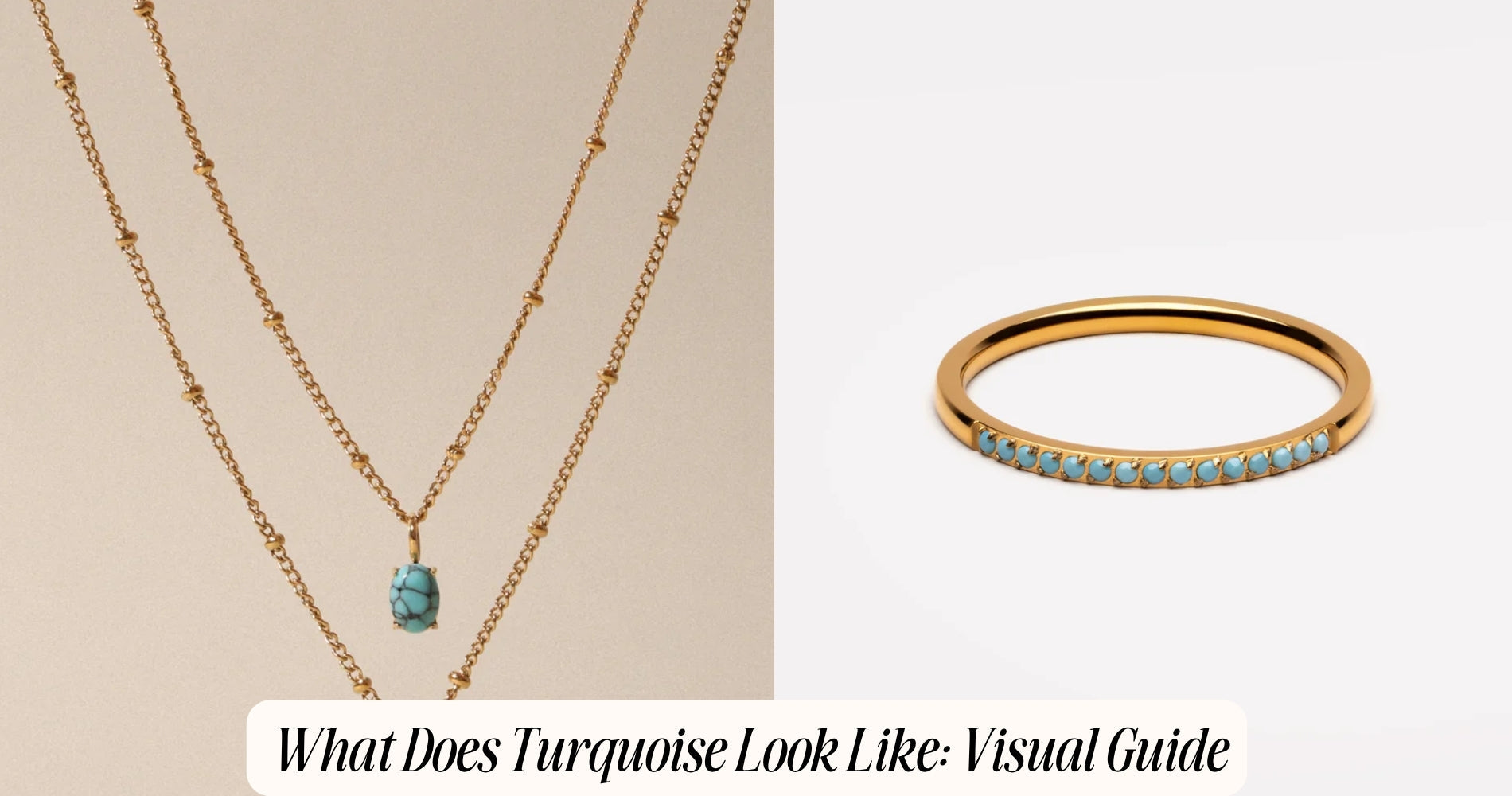
What Does Turquoise Look Like: Visual Guide
Turquoise is one of the most recognizable gemstones in the world, but its appearance is far more varied than most people realize. While many picture a single, uniform shade of blue, genuine turquoise actually ranges across a wide spectrum of colors, textures, and patterns depending on where it was mined and how it formed. If you have ever asked yourself what does turquoise look like, the honest answer is that it depends on the stone.
In this guide, we will break down the visual characteristics that define turquoise, from its signature colors to the natural patterns found within each stone. We will also cover how to tell genuine turquoise apart from imitations, and if you want to see how these variations come to life in finished pieces, our Stone Collection showcases turquoise and other natural gemstones set into wearable jewelry.
The Signature Color of Turquoise
When people think of turquoise, they usually picture a bright, sky blue color, and for good reason. This shade is so closely associated with the stone that the color itself is named after it. However, genuine turquoise can range far beyond this single tone.
Depending on its mineral composition, turquoise can appear in shades including:
- Sky blue or robin's egg blue
- Blue green
- Green with blue undertones
- Deep teal
- Pale, almost powdery blue
The presence of iron within the stone tends to push the color toward green, while a higher concentration of copper produces a more vivid blue. This is why two pieces of turquoise from different mines can look noticeably different from one another, even though both are entirely genuine.

Matrix Patterns Explained
One of the most distinctive visual features of turquoise is something called matrix, the web like veining that runs through many stones. Matrix forms from the host rock surrounding the turquoise deposit, and it can appear in black, brown, golden, or even reddish tones depending on the surrounding minerals.
Some turquoise stones have almost no visible matrix at all, giving them a smooth, solid appearance. This clean look is often associated with higher quality stones, particularly types like Sleeping Beauty or Persian turquoise. Other stones display heavy matrix patterns that resemble intricate spiderwebs, which many jewelry lovers find just as beautiful, if not more so, because no two patterns are ever exactly alike.
There is no right or wrong when it comes to matrix. Some people prefer the pure, uninterrupted color of matrix free turquoise, while others are drawn to the character and individuality that matrix adds to each piece.
Texture and Surface Appearance
Genuine turquoise typically has a slightly waxy to matte surface texture, especially before it is polished. Once cut and polished for jewelry, turquoise can take on a smooth, glossy shine, though it will rarely look as reflective or glass like as synthetic imitations.
Natural turquoise often shows subtle variations across its surface, small inclusions, faint color shifts, or tiny pits, since it is a naturally formed mineral rather than a manufactured material. These small imperfections are actually a good sign, as they typically indicate the stone is authentic rather than artificially produced.

How Turquoise Looks Different by Type
Because turquoise is mined in many different locations around the world, its appearance can vary significantly depending on origin. A few well known examples include:
Sleeping Beauty turquoise, from Arizona, is known for its clean, uniform sky blue color with little to no matrix.
Kingman turquoise, also from Arizona, tends to show a blue to blue green color with a noticeable dark matrix pattern.
Persian turquoise, historically sourced from Iran, is prized for its rich, pure blue tone, often considered the classic reference point for turquoise color.
Royston turquoise, from Nevada, frequently displays a striking mix of blue and green tones within a single stone, along with dramatic brown or black matrix.
Understanding these differences can help explain why turquoise jewelry you see in stores or online may look so different from one piece to the next, even when every stone is genuinely turquoise.
Natural vs Stabilized Turquoise Appearance
The way turquoise looks can also depend on whether it has been treated. Natural turquoise, used exactly as it is mined, tends to have a slightly softer, more matte appearance and can show more variation in color and texture across the surface of the stone.
Stabilized turquoise has been treated with a clear resin to strengthen the material and enhance its color. This process often results in a more uniform, slightly glossier appearance. Stabilization does not make turquoise fake, it simply alters the surface finish and helps the stone hold up better over time, since raw turquoise is naturally soft and porous.

What Fake Turquoise Looks Like
Because turquoise is so popular, imitation versions are common in the jewelry market. Knowing what to look for can help you avoid purchasing a fake stone unknowingly.
Imitation turquoise is often made from dyed howlite or magnesite, materials that naturally have a similar veining pattern to turquoise but require dye to achieve the color. These imitations tend to have:
- An unnaturally uniform, almost plastic looking color
- Matrix patterns that look too perfect or repetitive
- A color that may fade or rub off slightly over time
- A lighter weight compared to genuine turquoise
Reconstituted turquoise, made from crushed turquoise fragments mixed with resin, can also be difficult to distinguish from natural stone, though it often has a more uniform, less organic appearance under close inspection.
If you are ever unsure whether a piece of turquoise is genuine, examining it closely under good lighting, or having it evaluated by a professional, is the most reliable way to confirm authenticity.
How Turquoise Looks When Set in Jewelry
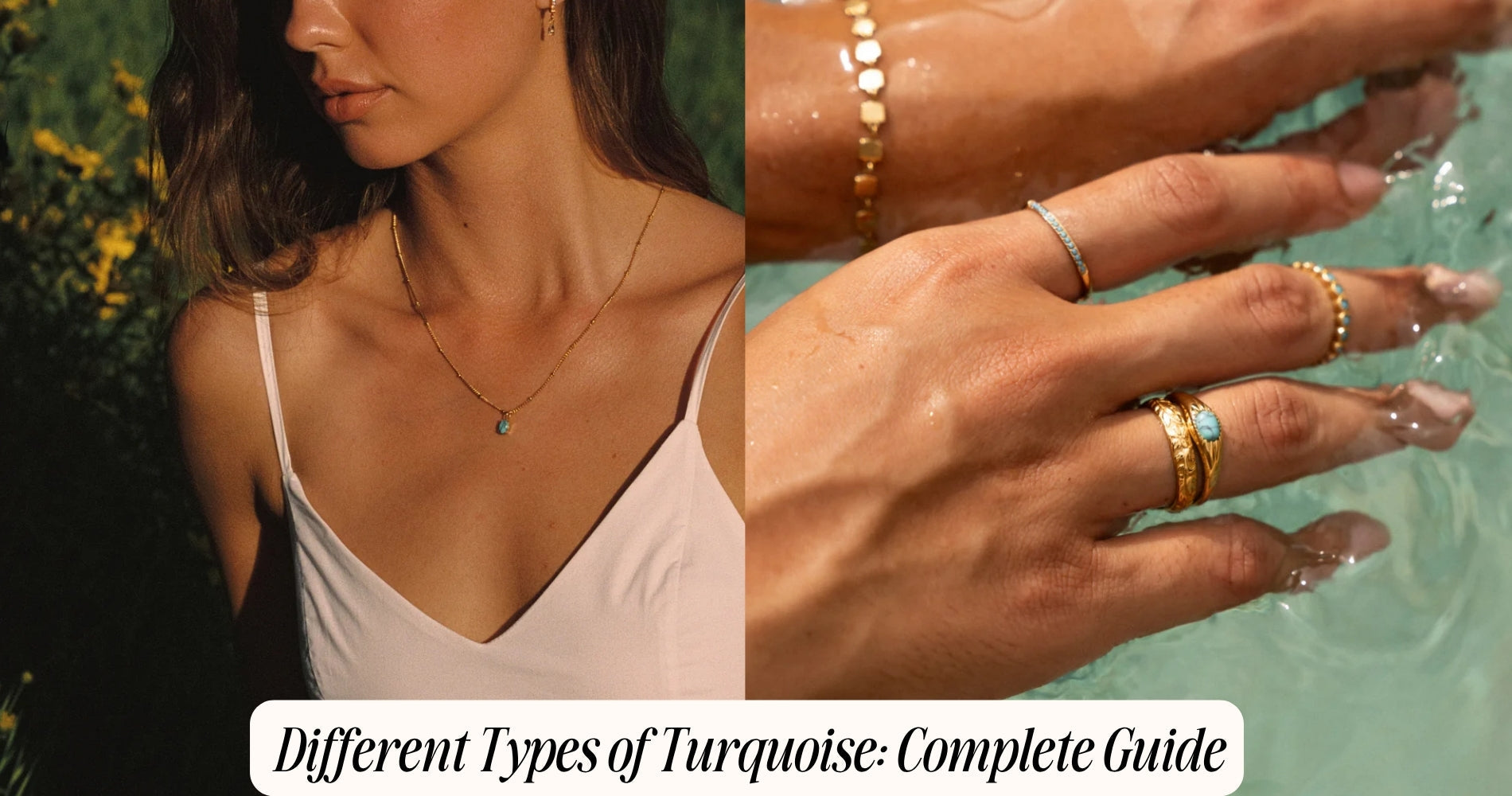
Turquoise pairs beautifully with a wide range of metals, and the setting can significantly influence how the stone appears. Sterling silver is a traditional and popular choice, as the cool tone of the metal complements turquoise's blue and green hues without competing with them.
Gold settings, on the other hand, create a warmer contrast that can make the blue tones in turquoise appear even more vivid. Many modern jewelry designs also combine turquoise with other natural stones, creating layered, earthy color palettes that highlight the range of tones found within turquoise itself.
Whether set as a simple pendant, a statement ring, or paired with other gemstones in a layered design, turquoise tends to stand out as a focal point due to its distinctive color and natural pattern variation.

Why Turquoise's Appearance Makes It So Popular
Part of what makes turquoise such a beloved gemstone is that no two stones look exactly alike. Even within the same type or mine, natural variation in color, matrix, and texture means every piece has its own individual character. This uniqueness is a big part of the appeal for people who want jewelry that feels personal rather than mass produced.
At the same time, turquoise's recognizable blue green color makes it instantly identifiable, connecting the wearer to a stone with a long history across cultures and centuries. This blend of familiarity and individuality is a rare combination in the world of gemstones.
Final Thoughts
So, what does turquoise look like? The honest answer is that it varies widely, ranging from clean sky blue stones with no visible pattern to richly veined pieces filled with dramatic matrix. Understanding these visual differences not only helps you appreciate turquoise more fully, it also makes you a more informed buyer when shopping for jewelry.
Whether you are drawn to the pure, classic blue of Persian style turquoise or the bold, unique patterns found in stones like Royston, there is a type of turquoise to match nearly every taste and style preference.
Frequently Asked Questions
1. What color is real turquoise?
Real turquoise ranges from sky blue to blue green to deep teal, depending on its mineral content and where it was mined.
2. Does all turquoise have matrix?
No, some turquoise, like high-grade Sleeping Beauty or Persian stones, has little to no matrix, while other types display heavy veining patterns.
3. How can I tell if turquoise is fake?
Fake turquoise often has an unnaturally uniform color, a lighter weight, and matrix patterns that look too perfect or repetitive compared to natural stone.
4. Does turquoise change color over time?
Yes, natural turquoise can shift slightly in color over time due to exposure to oils, lotions, and sunlight, which is a normal part of owning this porous gemstone.









Leave a comment
This site is protected by hCaptcha and the hCaptcha Privacy Policy and Terms of Service apply.