

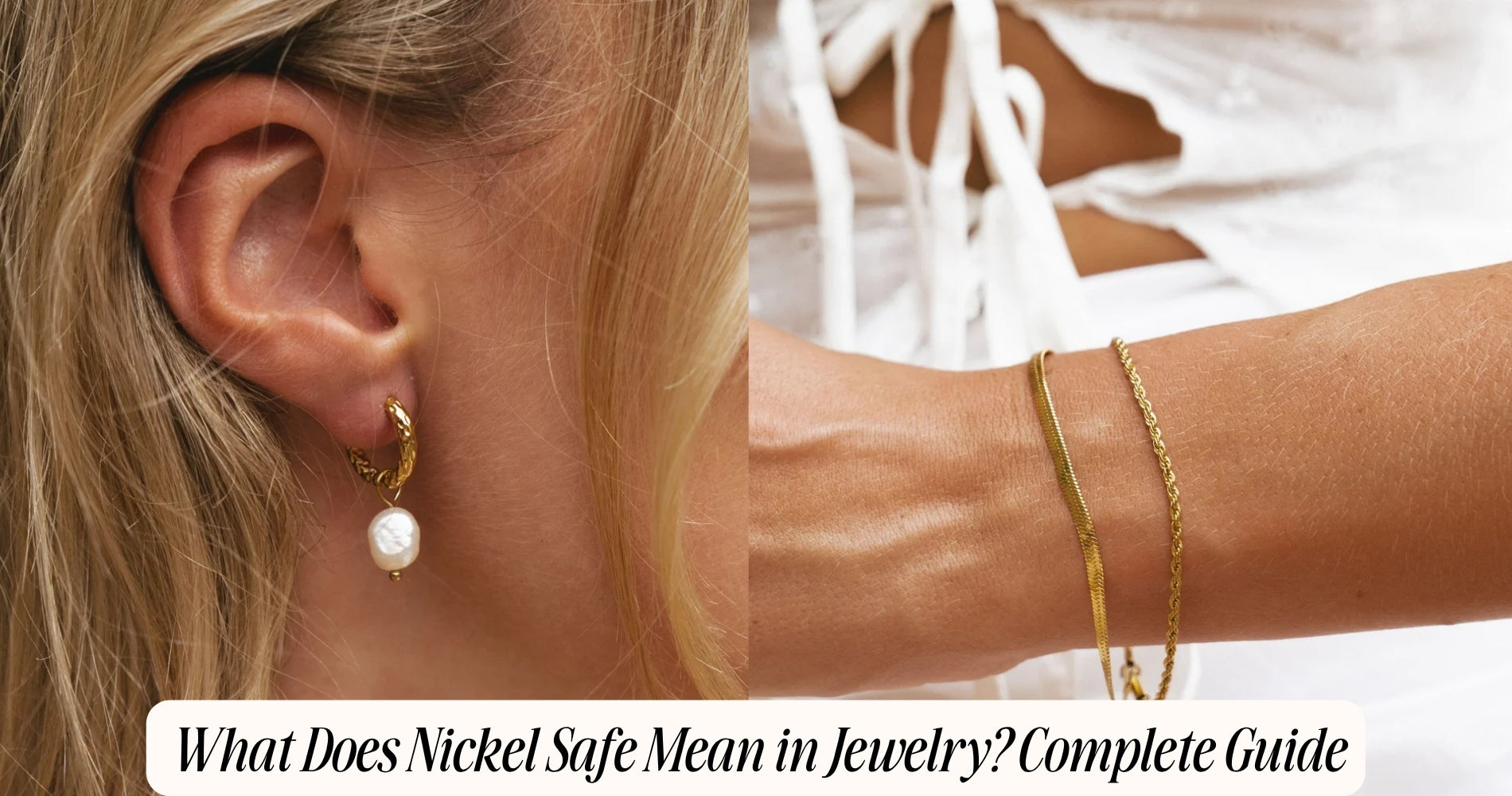
What Does Nickel Safe Mean in Jewelry? Complete Guide
If you have spent any time shopping for jewelry while managing a metal sensitivity, you have likely come across the term nickel safe stamped on product descriptions or packaging. But what does nickel safe mean in jewelry exactly, and does it actually guarantee the same thing as a nickel free label? Understanding the specific meaning behind this terminology can help you avoid unwanted irritation and shop with far more confidence.
In this guide, we will break down exactly what nickel safe means, how it differs from other similar sounding claims, and what to look for to ensure a piece genuinely fits your specific sensitivity needs. If you want jewelry built around this exact concern from the ground up, our Hypoallergenic Jewelry collection is designed with sensitive skin in mind.
What Does Nickel Safe Mean in Jewelry
Nickel safe is a labeling term generally used to indicate that a piece of jewelry either contains no nickel or, more specifically, releases nickel at a level low enough to fall below the threshold most commonly associated with triggering an allergic reaction. Importantly, nickel safe does not always mean a piece is entirely nickel free, since some jewelry labeled this way may still contain trace amounts of nickel, provided that amount stays under a specific release threshold considered generally safe for most people.
This distinction is subtle but important, since it means nickel safe and nickel free are not always interchangeable terms, despite frequently being used in similar marketing contexts.

Nickel Safe Versus Nickel Free: What Is the Difference
Understanding the difference between these two related but distinct terms can help you make more informed decisions, particularly if you have a confirmed, more severe nickel allergy.
Nickel Free
Nickel free indicates that a piece of jewelry contains no nickel whatsoever in its material composition. Metals like titanium, niobium, and platinum are naturally nickel free, meaning this label reflects an inherent property of the base material itself rather than simply meeting a specific release threshold.
Nickel Safe
Nickel safe, by contrast, often refers to jewelry that may contain some nickel within its alloy composition but is formulated or treated in a way intended to minimize the amount of nickel that actually contacts and potentially reacts with the skin. This term is sometimes used for materials like certain grades of stainless steel, where trace nickel is present but bound tightly enough within the metal's structure that it is not expected to cause a reaction in most people.
Where the Nickel Safe Standard Comes From
The concept of a specific nickel release threshold originates largely from European Union regulations, specifically what is commonly referred to as the Nickel Directive. This regulation establishes a maximum allowable nickel release rate for items intended for prolonged skin contact, including jewelry, setting a specific limit measured in micrograms of nickel released per square centimeter of surface area per week.
Jewelry meeting this specific EU threshold is often marketed as nickel safe, even if it is not entirely nickel free, since the regulation is specifically designed around minimizing the likelihood of triggering a reaction in the general population, rather than requiring complete elimination of nickel from the material altogether.
It is worth noting that the United States does not currently enforce an equivalent federal nickel release standard, meaning the specific meaning and reliability of a nickel safe label can vary more significantly depending on where a piece of jewelry was manufactured and which regulatory standards, if any, the manufacturer specifically followed.

Is Nickel Safe Jewelry Actually Safe for Everyone
While nickel safe jewelry is formulated to minimize reactions for most people, this label does not guarantee zero risk for every individual, particularly those with more significant, established nickel allergies. Because nickel safe jewelry may still contain some trace nickel content, individuals with severe sensitivity may still experience some level of reaction, even when a piece meets the general nickel safe threshold designed to protect the broader population.
For those with confirmed, significant nickel allergies, choosing genuinely nickel free materials, such as titanium or niobium, typically offers a more reliable guarantee compared to relying solely on a nickel safe label, which is calibrated toward general population safety rather than accommodating more severe individual sensitivities.
Common Materials Labeled Nickel Safe
A few common jewelry materials are frequently marketed using the nickel safe terminology, generally reflecting their specific alloy formulation and nickel release properties.
316L surgical stainless steel is one of the most commonly labeled nickel safe materials, since its specific alloy composition binds nickel tightly enough within the metal structure that release rates typically fall below common regulatory thresholds, even though trace nickel remains technically present.
Certain gold alloys, particularly higher karat options, may also be marketed as nickel safe, reflecting their reduced nickel content compared to lower karat gold, even if trace amounts remain present within the specific alloy mixture used.
Rhodium plated jewelry is sometimes labeled nickel safe as well, since the rhodium plating creates a barrier layer over the base metal underneath, though this label depends significantly on the plating remaining intact, since nickel exposure risk can increase once the protective plating begins to wear away over time.

Why Some Manufacturers Use Nickel Safe Instead of Nickel Free
Manufacturers sometimes choose the nickel safe label specifically because achieving complete nickel free status can be more difficult or costly for certain alloy formulations, particularly those relying on materials like stainless steel or specific gold alloys that inherently include trace nickel as part of their standard composition. Rather than reformulating these materials entirely, meeting an established nickel release threshold allows manufacturers to offer a reasonably reliable, more accessible option for the broader population without the added cost or complexity sometimes associated with fully nickel free alternatives.
How to Verify Nickel Safe Claims
If nickel safe labeling matters significantly to your specific purchasing decisions, a few steps can help you verify these claims with greater confidence.
Look for specific certification or compliance information, such as explicit reference to EU Nickel Directive compliance, rather than relying solely on general nickel safe marketing language without further specification. Ask retailers directly about the specific testing standards or certifications used to support their nickel safe claims, particularly for higher value purchases. Consider nickel spot testing kits, available for at home use, which can provide an additional layer of personal verification for pieces you are uncertain about.
What to Choose If You Have a Confirmed Nickel Allergy
If you have already confirmed a nickel allergy, particularly through professional dermatological patch testing, it is generally advisable to prioritize genuinely nickel free materials over pieces labeled simply nickel safe. Titanium, niobium, platinum, and palladium all offer complete nickel free guarantees, since these metals do not include nickel within their base composition at all, removing any uncertainty associated with threshold based nickel safe claims.
For those with milder or unconfirmed sensitivity, nickel safe options like 316L surgical steel may work perfectly well, offering a reasonable balance of affordability and reduced reaction risk without necessarily requiring a fully nickel free material.
Reading Jewelry Labels Carefully
Given the nuanced difference between nickel safe and nickel free, taking a moment to read jewelry labels and product descriptions carefully can help you make more informed choices specific to your individual sensitivity level. When in doubt, reaching out directly to a retailer for clarification on their specific terminology and testing standards offers the most reliable path to understanding exactly what a particular nickel related claim actually guarantees.
Final Thoughts
So, what does nickel safe mean in jewelry? It generally indicates that a piece either contains no nickel or releases nickel at a level below an established regulatory threshold, most commonly associated with European Union nickel release standards, rather than guaranteeing complete nickel free composition. Understanding this distinction can help you choose jewelry that genuinely aligns with your specific sensitivity needs, whether that means opting for a nickel safe option or seeking out fully nickel free materials for more significant allergy concerns.
Whatever your specific sensitivity level, taking the time to understand these labeling nuances empowers you to shop with greater confidence and avoid unnecessary irritation.
Frequently Asked Questions
1. Is nickel safe jewelry completely free of nickel?
Not necessarily, since nickel safe typically means nickel release falls below a specific regulatory threshold, rather than guaranteeing the complete absence of nickel.
2. Which is better for severe nickel allergies, nickel safe or nickel free?
Nickel free materials like titanium or niobium generally offer more reliable protection for those with severe, confirmed nickel allergies.
3. Does the United States regulate nickel safe claims the same way as Europe?
No, the United States does not currently enforce an equivalent federal nickel release standard, meaning nickel safe claims can vary more significantly depending on the specific manufacturer.
4. Can I test jewelry myself to verify nickel safe claims?
Yes, at home nickel spot testing kits are available and can provide an additional layer of personal verification for pieces you are uncertain about.









Leave a comment
This site is protected by hCaptcha and the hCaptcha Privacy Policy and Terms of Service apply.