

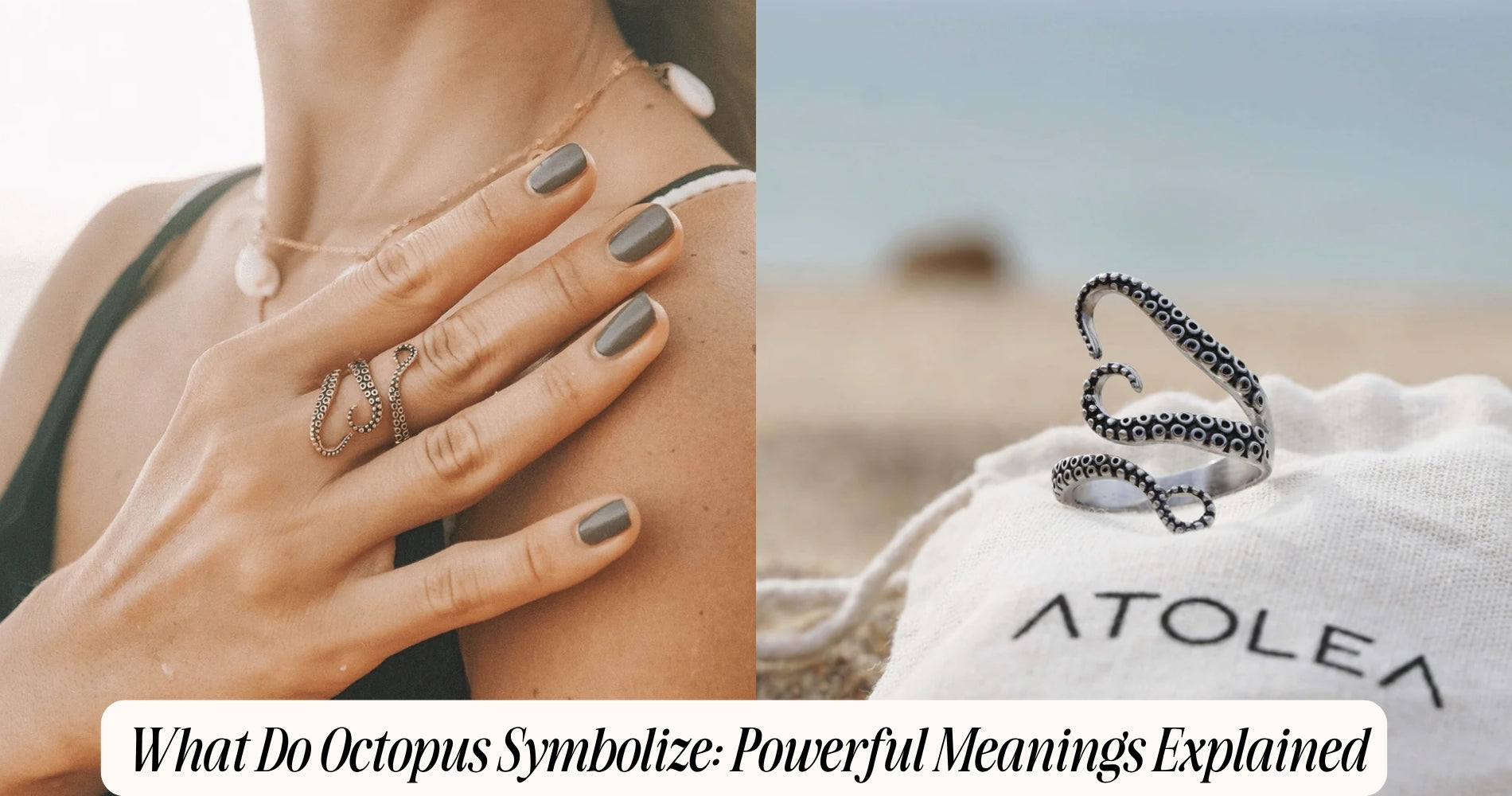
What Do Octopus Symbolize: Powerful Meanings Explained
Few creatures in the ocean carry as much symbolic weight as the octopus, and the richness of that symbolism connects directly to what the octopus actually is: one of the most intelligent, adaptable, and mysterious animals on Earth. Understanding what do octopus symbolize across different traditions reveals a constellation of meanings that feel earned by the animal's genuine qualities rather than imposed through convention. Beach Jewelry draws on the full range of ocean symbolism, with the octopus among its most distinctive and layered motifs. This guide covers the biological qualities that generate octopus symbolism, the core meanings across cultural and spiritual traditions, and how octopus imagery translates into personal meaning for those drawn to it.
The Octopus as a Symbol: Starting With the Animal
Every significant meaning associated with the octopus derives from something the animal genuinely does or is. This biological grounding is what distinguishes octopus symbolism from purely conventional symbol assignment.
Intelligence. The octopus possesses the most sophisticated nervous system of any invertebrate and demonstrates problem-solving capabilities that continue to surprise researchers. Octopuses open childproof containers, navigate mazes, use tools, recognize individual human faces, and exhibit what appears to be play behavior in controlled studies. Their intelligence is distributed: two-thirds of their neurons are located in their arms rather than their central brain, giving each arm a degree of autonomous problem-solving capacity. This distributed intelligence is genuinely unlike anything else in the animal kingdom.
Adaptability. The octopus can change its skin color and texture in less than a second through specialized skin cells called chromatophores, papillae, and iridophores. This ability is not simply camouflage. It is a form of real-time environmental responsiveness that allows the octopus to match virtually any surface it encounters, from coral to sand to rock to complex patterned backgrounds. No other animal adapts to its environment with the speed and precision the octopus achieves.
Mystery and depth. Octopuses live in complex deep-sea environments, are largely solitary, and display behaviors that remain poorly understood despite decades of research. They are highly private creatures whose intelligence and inner life are difficult to access or interpret. This genuine mystery, the sense that the octopus contains more than is visible or comprehensible from the outside, is the biological root of its mystery symbolism.
Regeneration. Like the starfish, octopuses can regenerate lost limbs. An arm lost to a predator grows back over time. This capacity for physical renewal connects the octopus to the wider ocean symbolism of regeneration and recovery.
Eight arms. The number eight in many traditions carries specific symbolic meaning, from infinity (the sideways eight of the infinity symbol) to abundance to completeness. The octopus's eight arms connect it to these numerical associations, with the arms representing the ability to reach in multiple directions simultaneously.
What Do Octopus Symbolize: Core Meanings
Intelligence and Creative Problem-Solving
The octopus is the most compelling natural symbol of intelligence available in the ocean world, and its intelligence is of a specific character: resourceful, adaptive, and practical rather than abstract. The octopus does not plan for future scenarios in the way humans do, but it solves immediate problems with creativity and efficiency that would be remarkable in any animal.
In symbolic use, the octopus represents the kind of intelligence that finds a way through rather than a way around. Its problem-solving is direct and hands-on, its creativity applied to immediate challenges rather than theoretical constructs. People who identify with the octopus symbol often describe their own intelligence as practical, creative, and multi-directional: able to work on several problems simultaneously and find solutions that are not immediately obvious.
The distributed intelligence of the octopus, with autonomous problem-solving in each arm, also symbolizes the capacity to manage multiple responsibilities or creative projects simultaneously without losing effectiveness in any of them.
Adaptability and Flexibility
The octopus's color and texture-changing ability is the most visually dramatic example of adaptive capability in the natural world, and it generates the octopus's strongest and most widely recognized symbolic meaning: the ability to adapt to any environment without losing one's essential nature.
This is an important nuance in the adaptability symbolism. The octopus does not become the rock it mimics. It uses the rock's appearance while remaining entirely itself beneath the surface display. This is the quality most people drawn to octopus symbolism identify with: the ability to navigate different social, professional, and personal environments by reading and responding to each one, while maintaining an authentic core that does not change with the surface presentation.
In personal symbolism, this meaning resonates with people who are highly context-sensitive, who navigate different social and professional worlds fluidly, and who are sometimes misread as inconsistent because their presentation varies. The octopus symbol affirms that adaptation is a sophisticated capability, not a lack of identity.
Mystery and Hidden Depth
The octopus's private, complex inner life, its resistance to easy interpretation, and its home in the ocean's less-visible depths generate a powerful mystery symbolism. The octopus represents the parts of a person or situation that are real and significant but not immediately visible from the surface.
In creative and artistic traditions, the octopus has been used to symbolize the subconscious mind, the imagination, and the creative depths from which art and ideas emerge. The Japanese tradition of octopus imagery, including Hokusai's famous print "The Dream of the Fisherman's Wife," places the octopus in a context of boundary crossing between the rational surface world and the dream world beneath.
In personal symbolism, the mystery meaning resonates with people who experience themselves as having more depth than is visible to others, who maintain significant interior lives that do not fully express in social contexts, and who value the quality of depth in relationships and creative work.
Regeneration and Resilience
The octopus's arm regeneration capacity connects it to the broader ocean symbolism of recovery and renewal. An arm lost to a predator does not represent permanent diminishment. The octopus continues to function with seven arms and eventually grows the eighth back.
This specific regeneration meaning differs slightly from the starfish's version. The octopus continues functioning effectively while regenerating, rather than the starfish's more complete reconstruction from remnant material. The octopus symbolism here is about resilience in the practical sense: continuing to operate and remain effective through loss while the recovery process proceeds in the background.
People drawn to this meaning in octopus symbolism often identify with the capacity to continue functioning through difficult circumstances rather than requiring full recovery before re-engaging with life.
Complexity and Multi-Directional Reach
The eight arms of the octopus generate a symbolism of complexity and simultaneous multi-directional engagement. An octopus can use different arms for different tasks at the same time, with each arm contributing its autonomous processing capacity to the overall organism's goals.
This connects to the symbolic meaning of abundance, the ability to reach into multiple areas of life simultaneously, and creative fertility in the sense of producing multiple things at once. People with multiple creative projects, who maintain several significant relationships, or who operate across different domains of knowledge often find the octopus symbol resonant for this reason.
The number eight's connection to the infinity symbol also gives octopus symbolism a connection to ongoing cycles, to the quality of continuation and return rather than linear progress and completion.
Cultural Traditions of Octopus Symbolism
Ancient Mediterranean cultures encountered the octopus regularly in fishing and maritime contexts and incorporated it into decorative art from at least the Minoan period (approximately 2000 BCE). Minoan pottery features elaborate octopus designs that use the animal's form as a primary decorative element, which suggests the octopus held significance beyond purely decorative use in Minoan visual culture.
Japanese culture has the deepest and most developed tradition of octopus symbolism among major cultures. The Japanese word for octopus (tako) appears in proverbs, folklore, and visual art across centuries. The octopus represents persistence, resourcefulness, and the successful achievement of complex goals through multiple simultaneous efforts. Japanese fishing communities developed a relationship with octopus as both food source and symbolic creature that produced a rich iconographic tradition.

Norse and Northern European seafaring tradition connected the octopus or kraken (a legendary sea creature based in part on giant squid and octopus encounters) to the unknowable depths of the ocean and to the power of nature that exists beyond human comprehension or control. The kraken as a symbolic figure represents both terror and awe at the scale and mystery of the natural world.
Indigenous Pacific cultures incorporated octopus imagery into traditional designs, tattoo traditions, and storytelling in ways that connected the animal to genealogy, navigation, and the ancestral connection to the ocean. In Hawaiian tradition, the octopus (he'e) appears in creation narratives as one of the remnants of a previous world that survived into the current one, which gives it a specific connection to continuity across transformation.
Contemporary culture has embraced the octopus symbol broadly in tattoo art, jewelry design, and popular culture, where it most commonly carries the intelligence, adaptability, and mystery meanings described above. The octopus has become one of the most popular ocean creature symbols in contemporary body art and jewelry precisely because its meanings are layered, personal, and connected to qualities many people aspire to or identify with.
Wearing Octopus Jewelry With Intention
Octopus jewelry carries its meanings most effectively when chosen with awareness of which specific quality the wearer connects with. Someone drawn to the intelligence and problem-solving meaning wears a different intention than someone drawn to the adaptability meaning or the mystery meaning, even in the same physical piece.
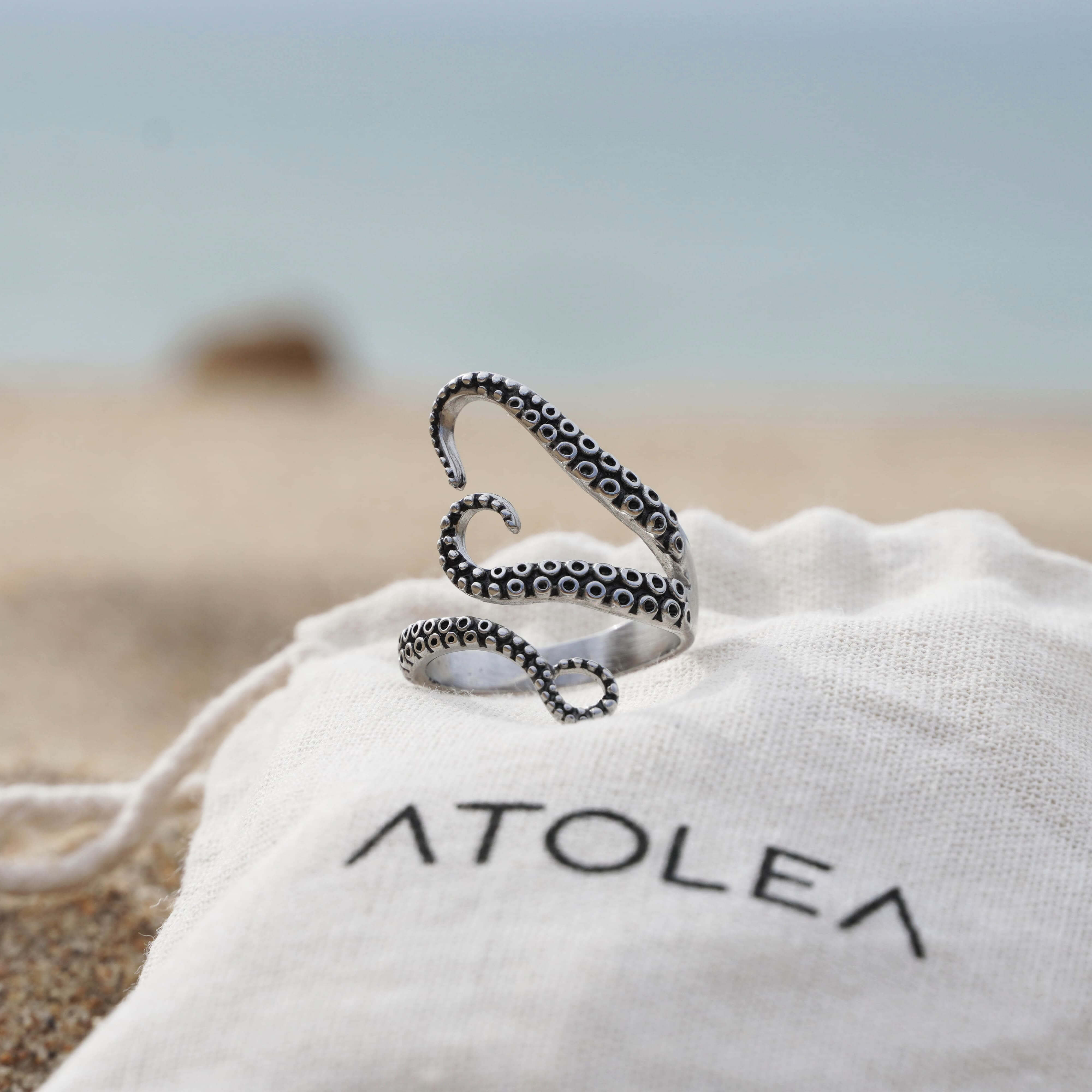
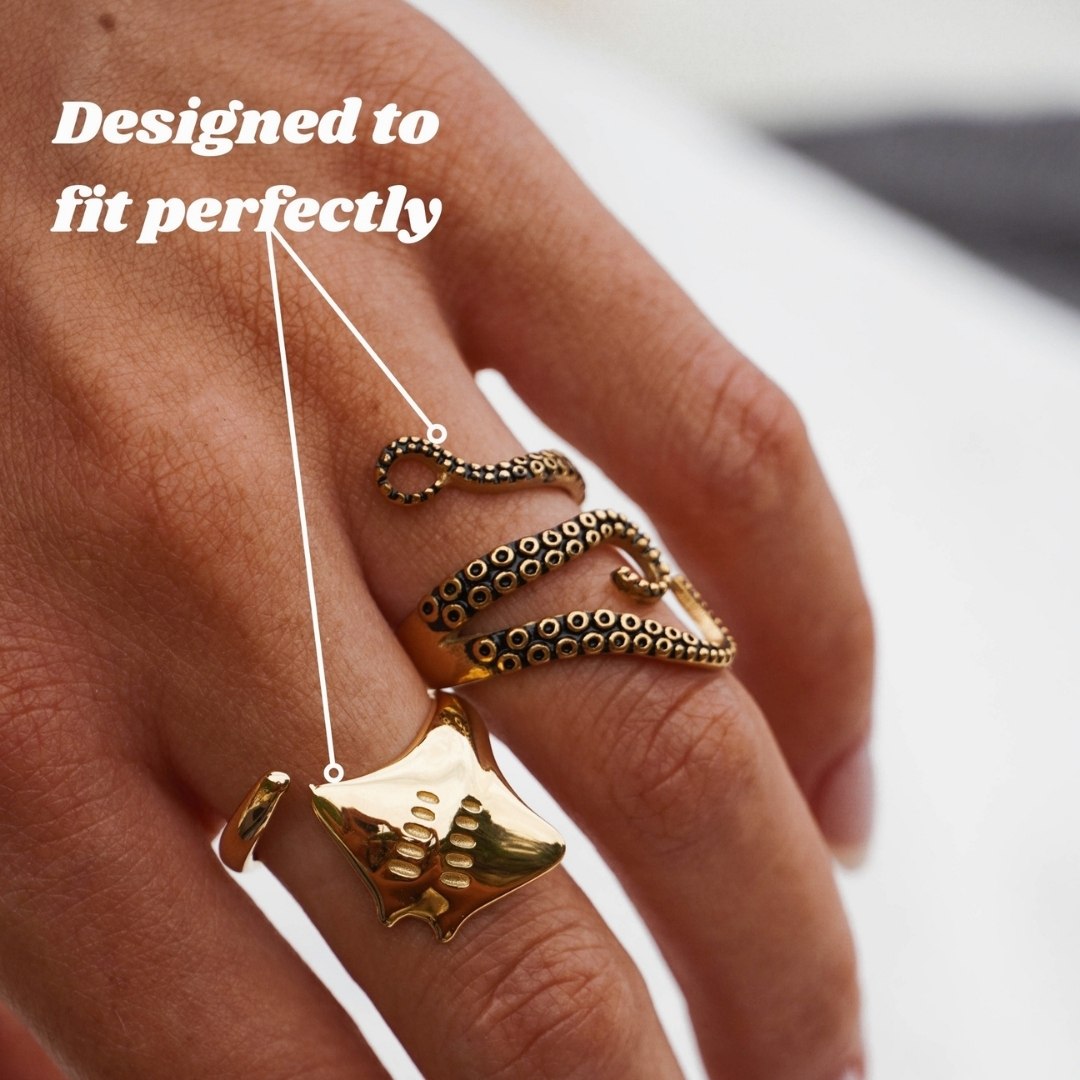
The octopus form translates naturally into jewelry because its eight arms create organic, flowing lines that work well at multiple scales, from small pendant motifs to more elaborate sculptural pieces. In coastal and ocean lifestyle contexts, octopus jewelry connects the wearer to the ocean's depths in a way that surface-dwelling ocean symbols like anchors and waves do not. The octopus is a creature of the interior ocean rather than its edge.
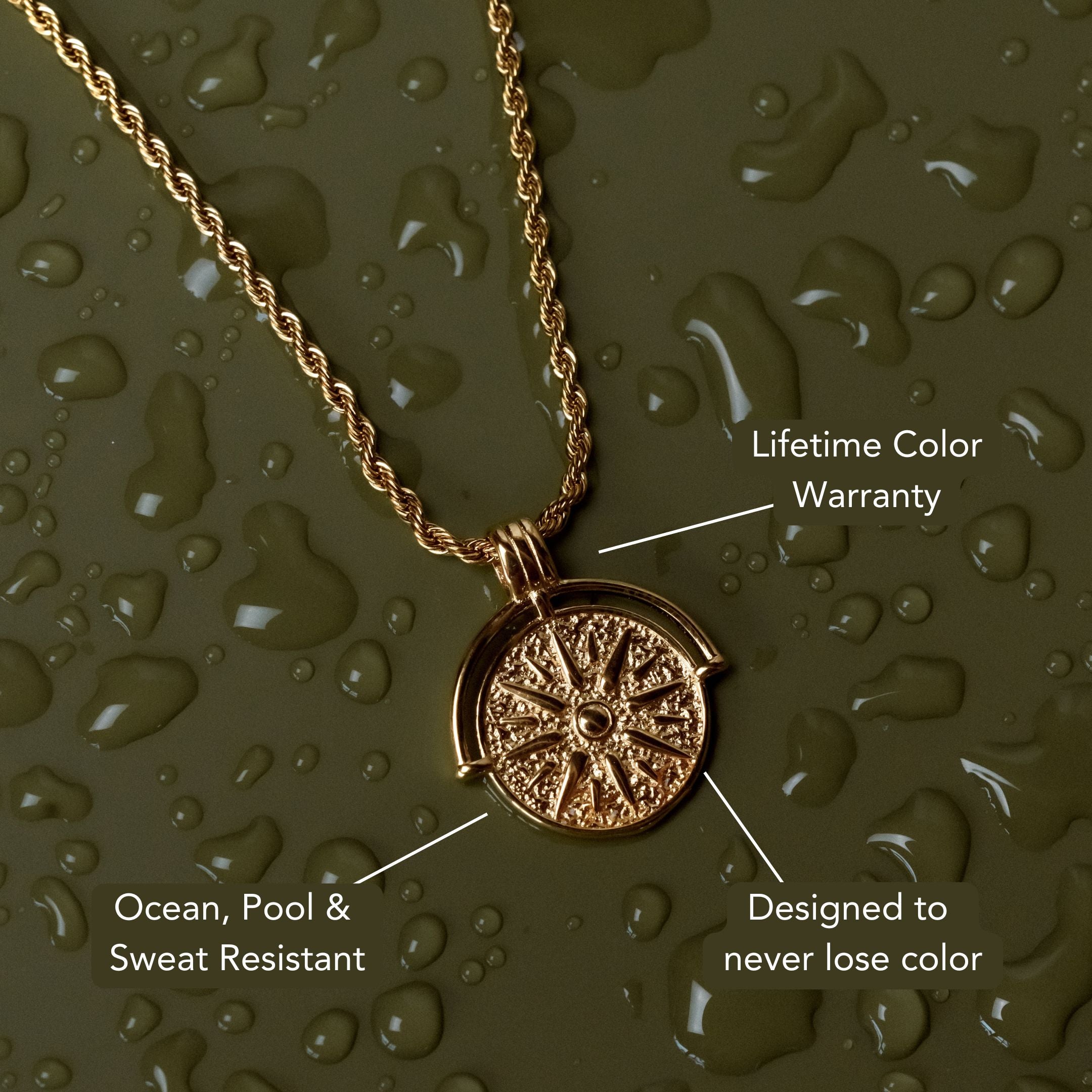
For pieces worn through active coastal life including beach days, ocean swimming, and surf sessions, PVD-coated stainless steel maintains the detailed surface of an octopus motif through salt water and sand exposure without the tarnishing that affects silver or the finish degradation that affects standard gold-plated pieces. ATOLEA's beach jewelry range includes ocean-inspired motif pieces in waterproof construction with a lifetime color warranty, which means the symbol retains both its visual detail and its personal meaning through sustained wear in the ocean environment.

Frequently Asked Questions
What does an octopus symbolize spiritually?
Spiritually, the octopus most commonly symbolizes intelligence operating from a place of depth rather than surface display, adaptability that preserves core identity beneath changing presentations, and access to the mysteries of the subconscious and creative interior. In traditions that connect the octopus to the ocean's depths, it represents the spiritual quality of going beneath the surface to find what is true and significant rather than accepting surface appearances as the complete picture.
What does an octopus tattoo mean?
Octopus tattoos most commonly carry meanings of intelligence, adaptability, mystery, resilience, and the capacity to manage complexity. The specific meaning depends on the context and intention of the wearer. Many people choose octopus tattoos to represent their own multi-faceted nature, their adaptability across different environments, or their connection to the ocean's depth and mystery. The flowing arms also make the octopus one of the most aesthetically flexible tattoo subjects across styles from traditional to illustrative to fine line.
What does it mean to be drawn to the octopus symbol?
Being drawn to the octopus symbol often reflects an identification with one or more of its core qualities: the distributed, practical intelligence that finds creative solutions; the adaptability that navigates different contexts without losing an authentic core; the depth and interiority that is real but not immediately visible from the outside; or the resilience that continues functioning effectively through loss while recovery proceeds. The octopus symbol tends to resonate most strongly with people who value nuance and complexity over simplicity and surface legibility.
Why is the octopus considered a symbol of intelligence?
The octopus has the most sophisticated nervous system of any invertebrate, with two-thirds of its neurons located in its arms rather than its central brain. It demonstrates problem-solving, tool use, individual recognition of humans, and apparent play behavior in research settings. Its intelligence is genuinely unlike other animal intelligence, operating through a distributed system that gives each arm autonomous processing capacity. These biological realities make the octopus not just a culturally assigned symbol of intelligence but an empirically grounded one.
What cultures revere the octopus as a symbol?
Minoan culture (ancient Crete, approximately 2000 BCE) featured octopus imagery prominently in decorative arts. Japanese maritime and fishing culture developed one of the deepest symbolic traditions around the octopus. Norse seafaring culture incorporated giant octopus-like creatures into mythology as symbols of oceanic power and mystery. Indigenous Pacific cultures, including Hawaiian, incorporated octopus into creation narratives and genealogical traditions. Contemporary Western culture has broadly adopted the octopus as a symbol of intelligence and adaptability in tattoo art and jewelry.
The Octopus Symbol in Full
What do octopus symbolize spans intelligence, adaptability, mystery, regeneration, and complexity, with each meaning grounded directly in the animal's genuine biological qualities. The octopus does not carry these meanings by convention or accident. It earns them through what it actually is: a distributed intelligence capable of rapid environmental adaptation, living in genuine mystery in the ocean's depths, continuing through loss while regenerating what it has lost, and reaching simultaneously in eight directions at once. These qualities together form one of the most layered and personally resonant symbols available in the ocean world, which explains why the octopus has appeared in human art, decoration, and storytelling across dozens of cultures for at least four thousand years.














Leave a comment
This site is protected by hCaptcha and the hCaptcha Privacy Policy and Terms of Service apply.