


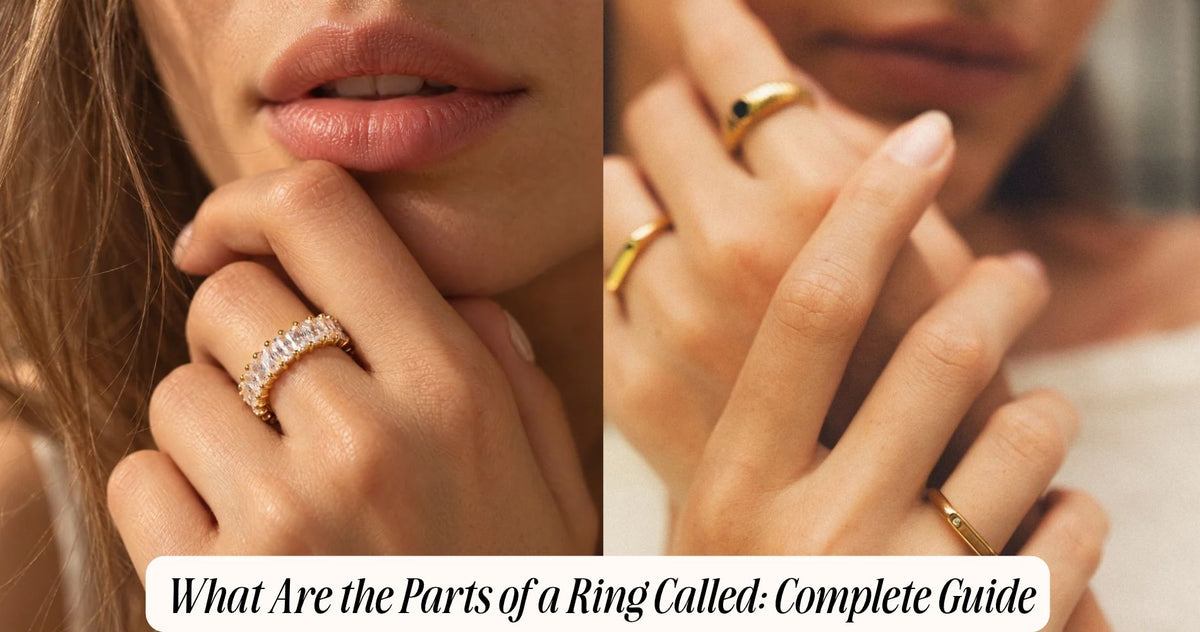
What Are the Parts of a Ring Called: Complete Guide
If you have ever asked what are the parts of a ring called, you will be glad to know the answer is simpler than it looks. Every ring, from a plain band to an elaborate engagement ring, is built from a handful of named components. Learning them helps you read product descriptions, talk to a jeweler and design a piece that suits you. You can also browse our Ring for Everyday Wear to see these parts in real designs. Let us take a close look at the anatomy of a ring, from the band to the stone.
The Two Main Sections of a Ring
Most rings divide into two broad sections. The first is the shank, which is the band that circles your finger. The second is the head, which is the structure on top that holds a gemstone or decorative feature. Everything else, from the prongs to the gallery, belongs to one of these two sections or sits where they meet.
A plain wedding band is almost entirely shank, while a solitaire engagement ring combines a simple shank with a prominent head. Keeping this basic split in mind makes every other term easier to remember.

Parts of the Band
The lower half of the ring does the work of fitting, supporting and balancing the design.
- Shank. The main band that wraps around the finger. It may be thin, wide, flat, rounded or sculpted, and it determines much of the ring's comfort.
- Shoulders. The sides of the band that rise toward the head. They can be plain, set with small stones or shaped into curves, arches or twists.
- Inner band. The inside surface of the ring, which touches your skin. Comfort fit rings have a slightly domed inner surface for easier wear.
- Bottom of the shank. The thinnest and most worn area of the ring, found at the point opposite the head. This section takes the most daily wear, so it deserves attention during inspections.
- Hallmark. A tiny stamp, usually on the inside, that shows the metal type and purity, such as 14K, 18K, 925 or PT950. It may also include a maker's mark.
Parts of the Head
The head is the showpiece. Its main job is to display the stone beautifully while keeping it safe.
- Prongs. Small metal claws that grip the gemstone. Four and six prong designs are the most popular, and the tips are often shaped as rounded, pointed or flat.
- Bezel. A thin metal rim that surrounds the stone instead of using claws. It offers a smooth, protective finish.
- Basket. The metal framework beneath the stone that supports the prongs. It holds the gem in place and lets light enter from below.
- Gallery. The area under the stone, visible from the side. Jewelers often add details here, such as open work, filigree or small stones, to give the ring a signature look.
- Bridge. The point where the head meets the shank. A strong bridge keeps the head stable and helps the ring last longer.
Parts of a Gemstone
When a ring has a center stone, the stone has its own set of named parts. These are especially useful when you read a grading report or compare diamonds and colored gems.
- Table. The large, flat facet on top of the stone. It is what you see when you look straight down at the gem.
- Crown. The upper section of the stone, above the widest edge. It affects how the stone shows brilliance and fire.
- Girdle. The narrow band around the widest part of the stone. The prongs or bezel hold the stone at this point.
- Pavilion. The lower section of the stone, below the girdle. Its angles control how light reflects back to the eye.
- Culet. The small point or facet at the very bottom of the stone. On many modern stones, it is so tiny that it cannot be seen without magnification.

Common Types of Ring Settings
The setting describes how the stone is attached to the head. Each type changes the look and the security of the ring.
Prong Setting
This is the classic choice. It lets the most light reach the stone and shows off the shape of the gem, although the prongs can snag on fabric if the ring has a high profile.
Bezel Setting
The stone is wrapped in a metal rim. It is very secure and low profile, which makes it a favorite for active wearers.
Halo Setting
A circle of small stones surrounds the center gem. It adds sparkle and makes the main stone appear larger.
Pave Setting
Tiny stones are set closely together along the band or head, creating a surface of sparkle.
Channel Setting
Stones sit in a groove between two metal walls. The look is sleek and smooth, and the stones are well protected.
Tension Setting
The stone appears to float between two ends of the band, held in place by pressure. It looks modern, but it requires expert craftsmanship.
How the Parts Work Together
Each part of a ring has a purpose, and good design balances all of them. A tall head looks dramatic but may catch on clothing. A thin shank is delicate and light but wears down faster. A rich gallery adds personality but may collect dirt more easily.
For example, a cathedral style ring uses arched shoulders to lift the stone and add strength. A low profile bezel ring keeps the stone close to the finger for protection. When you understand how the parts interact, you can choose a design that matches both your taste and your daily routine.

Tips for Choosing a Ring with the Right Parts
Start with how you plan to wear the ring. If it will be on your hand all day, a low profile head and a sturdy shank are practical choices. Bezel, channel and flush settings are very durable, while delicate prongs and high settings are better for occasional wear.
Next, look closely at the details. Check that the prongs are even, the settings are smooth and the inner band is comfortable. Ask about the metal and request a hallmark that confirms its purity. Finally, consider how easy the ring is to resize, since pave bands and eternity styles can be difficult to adjust.
Caring for Each Part of Your Ring
Clean your ring regularly with warm water, mild soap and a soft brush, paying attention to the area beneath the stone where dirt collects. Rinse well and dry with a lint free cloth. Take the ring off before swimming, cleaning or heavy lifting.
Once a year, have a jeweler check the prongs, the bridge and the thin part of the shank. Worn prongs can let a stone loosen, and a thin shank may need reinforcement. Catching these problems early is much cheaper than replacing a lost stone.

Conclusion
So, what are the parts of a ring called? The main ones are the shank, shoulders, head, prongs, basket, gallery and bridge, and a gemstone adds its own parts such as the table, crown, girdle, pavilion and culet. Once you know these terms, you can compare designs with confidence and describe exactly what you want to a jeweler. Visit Atolea to explore ring styles and find one that fits your taste and your daily life.
FAQs
1. What are the parts of a ring called?
The main parts are the shank, shoulders, head, prongs, basket, gallery and bridge. If the ring holds a gemstone, the stone also has a table, crown, girdle, pavilion and culet.
2. What is the band of a ring called?
The band is called the shank. It is the circular section that goes around your finger and supports the head.
3. What is the part that holds the stone called?
It is called the head or setting. Depending on the design, it may use prongs, a bezel, a channel or another method to hold the gem.
4. What is the area under the stone called?
It is called the gallery. The framework that supports the prongs beneath the stone is called the basket.
5. What are the sides of a ring called?
The sides of the band that rise toward the stone are called the shoulders. They may be plain, curved or decorated with small stones.
6. Which part of a ring wears out first?
The prongs and the bottom of the shank usually wear first, because they take the most contact. Regular inspections help catch wear before a stone comes loose.









Leave a comment
This site is protected by hCaptcha and the hCaptcha Privacy Policy and Terms of Service apply.