


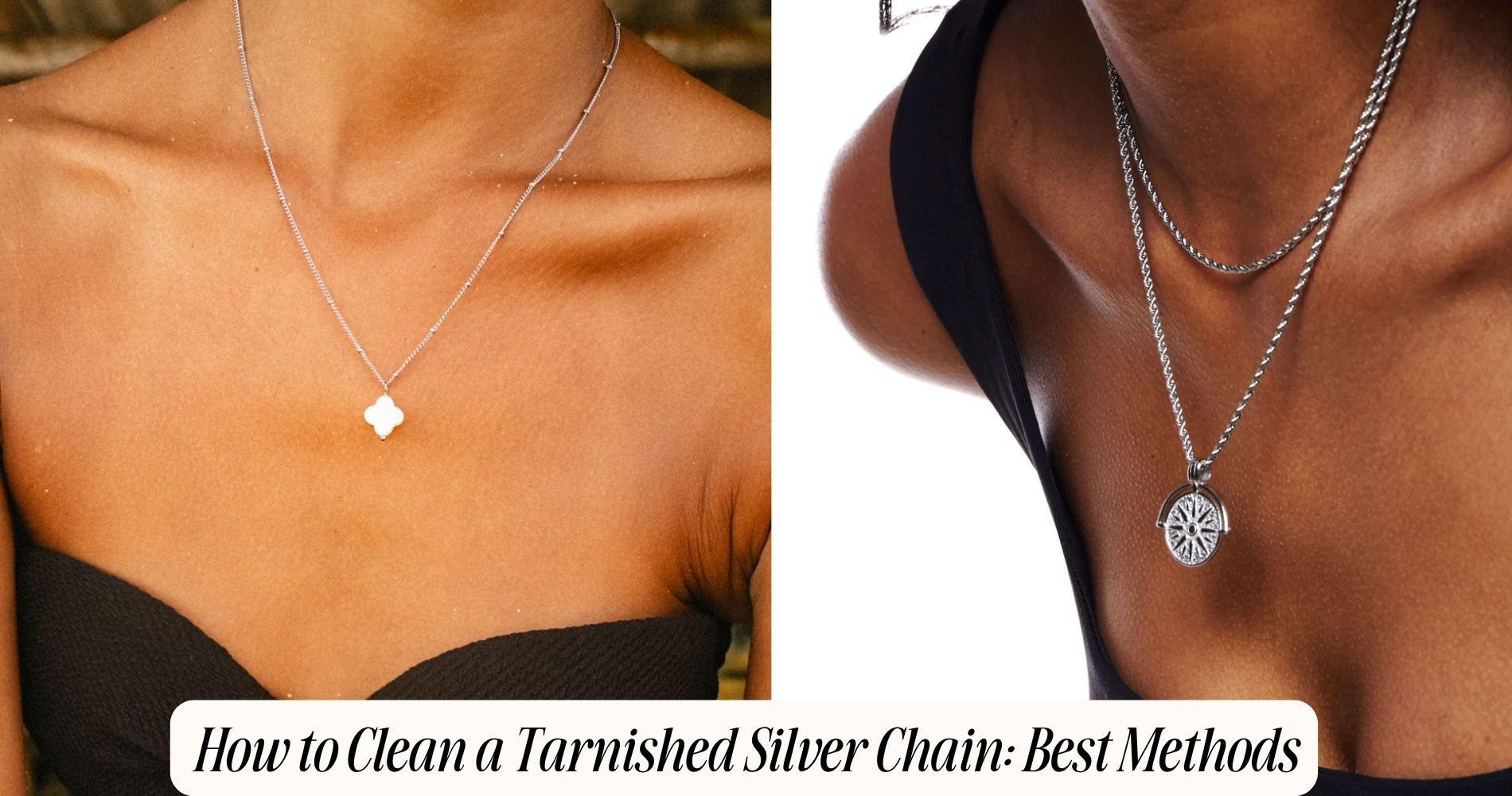
How to Clean a Tarnished Silver Chain: Best Methods
A silver chain that looked bright when you bought it can turn dull, gray, or almost black within weeks of regular wear. That change is tarnish, and it is a predictable chemical reaction rather than a sign that the chain is low quality. Knowing how to clean a tarnished silver chain at home saves money, extends the life of the piece, and takes less time than most people expect. Silver Waterproof Jewelry built with protective coatings sidesteps much of this cycle, but for chains you already own, these methods work. This guide covers the most effective cleaning approaches ranked by tarnish severity, what to avoid, and how to slow the process after cleaning.
Why Silver Chains Tarnish
Tarnish is silver sulfide, a compound that forms when silver reacts with hydrogen sulfide in the air. It is not dirt and it does not mean the metal is degrading in any structural sense. It is a surface reaction, which is why it can be reversed with the right cleaning method.
Sterling silver, the standard for most silver jewelry, contains 92.5% silver and 7.5% copper. That copper content accelerates tarnishing because copper reacts with both oxygen and moisture on a second reaction pathway alongside the sulfur reaction. Humidity, sweat, skincare products, and perfume all contribute reactive compounds that speed up the process.
Chains tarnish faster than simpler pieces because their link construction creates more surface area for air and moisture to interact with. The inner faces of each link, which press against each other during movement, also trap moisture and skin oils that accelerate the reaction in areas that are difficult to reach during cleaning.
Understanding this makes the cleaning process more logical. You are dissolving or lifting silver sulfide from the surface, not scrubbing away damage. The right method removes the tarnish layer without abrading the silver beneath it.

How to Clean a Tarnished Silver Chain: Four Methods by Severity
Different levels of tarnish respond best to different approaches. Starting with the gentlest method appropriate for the level of discoloration protects the chain's surface while still removing the tarnish effectively.
Method 1: Dish soap and warm water (light tarnish)
For chains with light surface dullness or early-stage tarnishing, a simple soap soak is often enough.
Mix a small amount of mild dish soap into warm water in a bowl. Place the chain in the solution and let it soak for five to ten minutes. Use a very soft toothbrush to work gently through the links, paying attention to the inner faces where tarnish accumulates. Rinse thoroughly under clean running water and dry immediately with a soft lint-free cloth.
The key steps are the rinse and the immediate drying. Soap residue left in the links continues to react with the metal, and water left on the surface after washing introduces new tarnishing conditions through mineral deposits from tap water evaporation.
Method 2: Baking soda paste (moderate tarnish)
For chains with visible gray discoloration across most of the surface, a baking soda paste provides mild abrasive action that lifts tarnish without scratching solid sterling silver.
Mix baking soda with a small amount of water to form a thick paste. Apply it to the chain with a soft cloth or your fingertips and work it gently through the links using straight strokes rather than circular motions. Circular scrubbing drives tarnish particles into the surface rather than lifting them off. Rinse completely and dry immediately.
Use this method only on solid sterling silver. Baking soda's mild abrasive quality can remove protective coatings on plated pieces and should not be used on silver-plated chains or chains with stones set in the links.

Method 3: Baking soda and aluminum foil (heavy tarnish)
For chains with significant blackening, the aluminum foil method uses an electrochemical reaction to transfer tarnish from the silver to the aluminum without any physical scrubbing.
Line a bowl with aluminum foil, shiny side up. Place the chain on the foil and pour boiling water over it to cover the piece. Add one tablespoon of baking soda and one tablespoon of salt and stir briefly. The solution will produce a mild sulfur smell as the reaction occurs. Leave the chain in the solution for three to five minutes, then remove it with tongs, rinse thoroughly, and dry immediately.
This method works through ion transfer: the aluminum attracts the sulfide ions away from the silver surface, reversing the tarnishing reaction chemically rather than physically. It is highly effective on heavily tarnished pieces and produces results that would take significant polishing time to achieve manually.
Method 4: Commercial silver polish (persistent or uneven tarnish)
For tarnish that has not responded fully to the above methods, or for chains with uneven discoloration from partial wear patterns, a commercial silver polishing cloth or liquid polish provides targeted removal.
Silver polishing cloths are impregnated with a gentle chemical agent that dissolves silver sulfide on contact. They are particularly useful for working through individual links because the cloth can be folded to reach into the chain's construction. Use straight strokes along the length of each link rather than rubbing in circles.
Liquid silver polish applied with a cotton ball and rinsed thoroughly afterward works for more severe cases. Follow the manufacturer's instructions for contact time and ensure the chain is rinsed completely before drying, as residual polish left in the links can cause discoloration over time.
What Not to Do When Cleaning a Silver Chain
Several common cleaning approaches cause more damage than the tarnish they are meant to remove.
|
Method to Avoid |
Why It Causes Damage |
|
Toothpaste |
Too abrasive; scratches silver surface permanently |
|
Bleach or ammonia |
Reacts aggressively with silver alloys; causes pitting |
|
Ultrasonic cleaners |
Vibrations can loosen link joins on fine chains |
|
Rubber bands for storage |
Rubber is high in sulfur; accelerates tarnishing rapidly |
|
Paper towels for drying |
Micro-abrasive surface leaves fine scratches over time |
|
Circular scrubbing motion |
Drives tarnish particles into surface rather than lifting |
Toothpaste is the most frequently recommended home remedy that actually causes harm. Its abrasive particles are designed to remove surface material from enamel, which is far harder than silver. Used on a silver chain, it creates microscopic scratches that dull the surface finish permanently and create more texture for future tarnish to adhere to.

Frequently Asked Questions
Can toothpaste clean a tarnished silver chain?
Toothpaste is too abrasive for silver and causes permanent surface scratching that dulls the finish over time. The scratches also create more surface texture for future tarnish to adhere to, which means the chain tarnishes faster after each toothpaste cleaning. Use baking soda paste or a commercial silver polishing cloth instead.
How often should you clean a silver chain?
It depends on how often you wear it and your storage conditions. A chain worn daily in contact with skin may need cleaning every two to four weeks. One worn occasionally and stored in an airtight container can go several months between cleanings. The trigger is visible dullness or discoloration rather than a fixed schedule.
Why does my silver chain tarnish so quickly after cleaning?
Fast re-tarnishing usually points to storage or contact conditions. Storing the chain in a humid bathroom, leaving skin oils and perfume residue on the surface between wears, or storing it near rubber materials (which are high in sulfur) all accelerate the process. Switching to airtight storage with an anti-tarnish strip and wiping the chain down before storing it after each wear slows re-tarnishing significantly.
Conclusion
How to clean a tarnished silver chain is a skill worth having because tarnishing is a predictable part of owning uncoated silver jewelry. The dish soap method handles light dullness, baking soda paste works for moderate tarnish, and the aluminum foil technique reverses heavy blackening without abrasive scrubbing. After cleaning, airtight storage, avoiding bathroom humidity, and wiping the chain down after wear are the habits that slow the cycle. For a silver-toned chain that stays consistent through daily showers, gym sessions, and travel without this maintenance, a PVD-coated alternative removes the upkeep entirely.










Leave a comment
This site is protected by hCaptcha and the hCaptcha Privacy Policy and Terms of Service apply.