

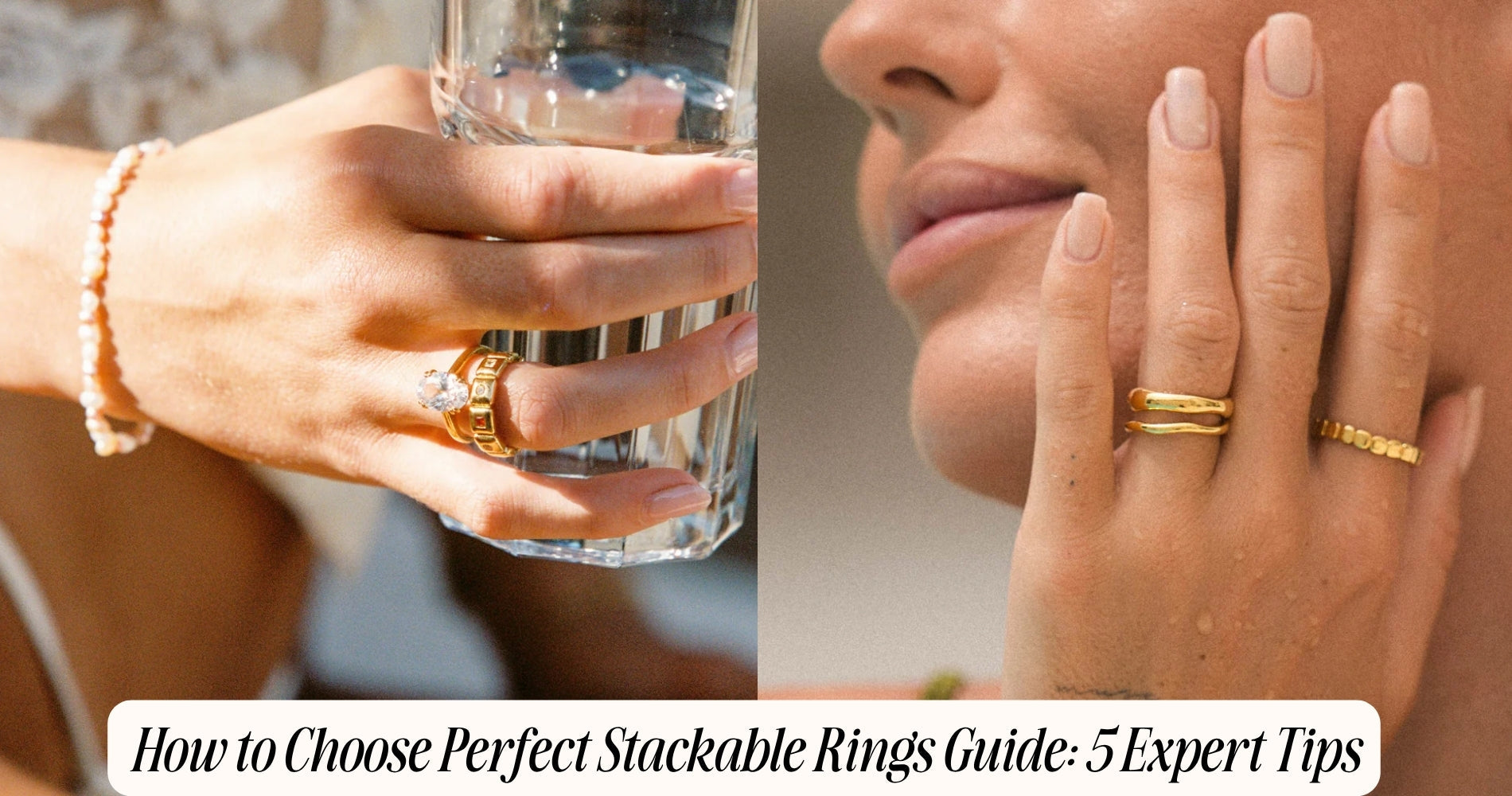
How to Choose Perfect Stackable Rings Guide: 5 Expert Tips
Buying stackable rings for the first time comes with more decisions than a single ring purchase, since every choice needs to work both on its own and alongside the pieces you add later. A genuinely useful how to choose perfect stackable rings guide covers the purchasing decisions that determine whether a stack fits comfortably and looks intentional from the first piece onward, not just the styling choices that come after you already own them. Minimalist Gold Rings in dainty, stackable widths are built around exactly these considerations. This guide covers five specific areas to get right when buying stackable rings: sizing strategy, metal quality, width selection, how many to start with, and durability for daily wear.
Tip 1: Get Sizing Strategy Right Before You Buy Anything
Sizing for a stack works differently than sizing for a single ring, and getting this wrong at the start creates problems that are difficult to fix later.
Size each ring to fit your finger individually, not tighter to compensate for the eventual stack. A common mistake is sizing down slightly on the assumption that additional rings will fill out the space, but this produces a stack where every ring is individually too tight, creating pressure marks and discomfort during extended wear rather than the comfortable fit you were aiming for.
Pay particular attention to the bottom ring in your eventual stack, the one that will sit closest to your hand with others layered above it. This ring experiences the most downward pressure from the pieces above it and is also the one most prone to rotating out of position during the day. Size it to fit snugly rather than loosely, since a properly fitted bottom ring anchors the entire stack and keeps it oriented correctly through normal hand movement.
If you plan to buy pieces gradually over time rather than all at once, measure your ring size accurately at the start and keep that measurement on hand for future purchases, since finger size can shift slightly with temperature, time of day, and overall hydration, and having a consistent reference prevents small sizing inconsistencies from creeping into your stack as you add to it.

Tip 2: Prioritize Metal Quality Over Style for Your First Pieces
It is tempting to buy stackable rings based purely on how they look in a photo, but metal quality determines how the stack actually performs on your hand over months of daily wear, which matters more for pieces you plan to wear continuously than for occasional jewelry.
Look specifically for pieces where the base metal is named directly in the product description, 316L stainless steel, solid 14K gold, titanium, rather than vague terms like gold tone without further detail. Rings experience more concentrated daily contact than almost any other jewelry type, through handwashing, cooking, and constant hand use, which means the base metal matters more here than for a necklace or a pair of earrings that see less direct friction.
For rings specifically, check whether a protective finish, if the piece uses one, covers the inner shank as well as the outer face. This is the detail that separates stacking rings that hold their appearance from those that develop a mismatched, patchy look where the visible top still looks fine while the hidden inner band has already worn through to a different color. A finish applied consistently across the entire ring, inside and out, is worth prioritizing over a slightly lower price on a ring where that detail is unclear.

Tip 3: Choose Widths That Create Contrast, Not Competition
Width is the single most important visual variable in a stack, and choosing rings without considering how their widths relate to each other is one of the most common reasons a stack looks accidental rather than intentional.
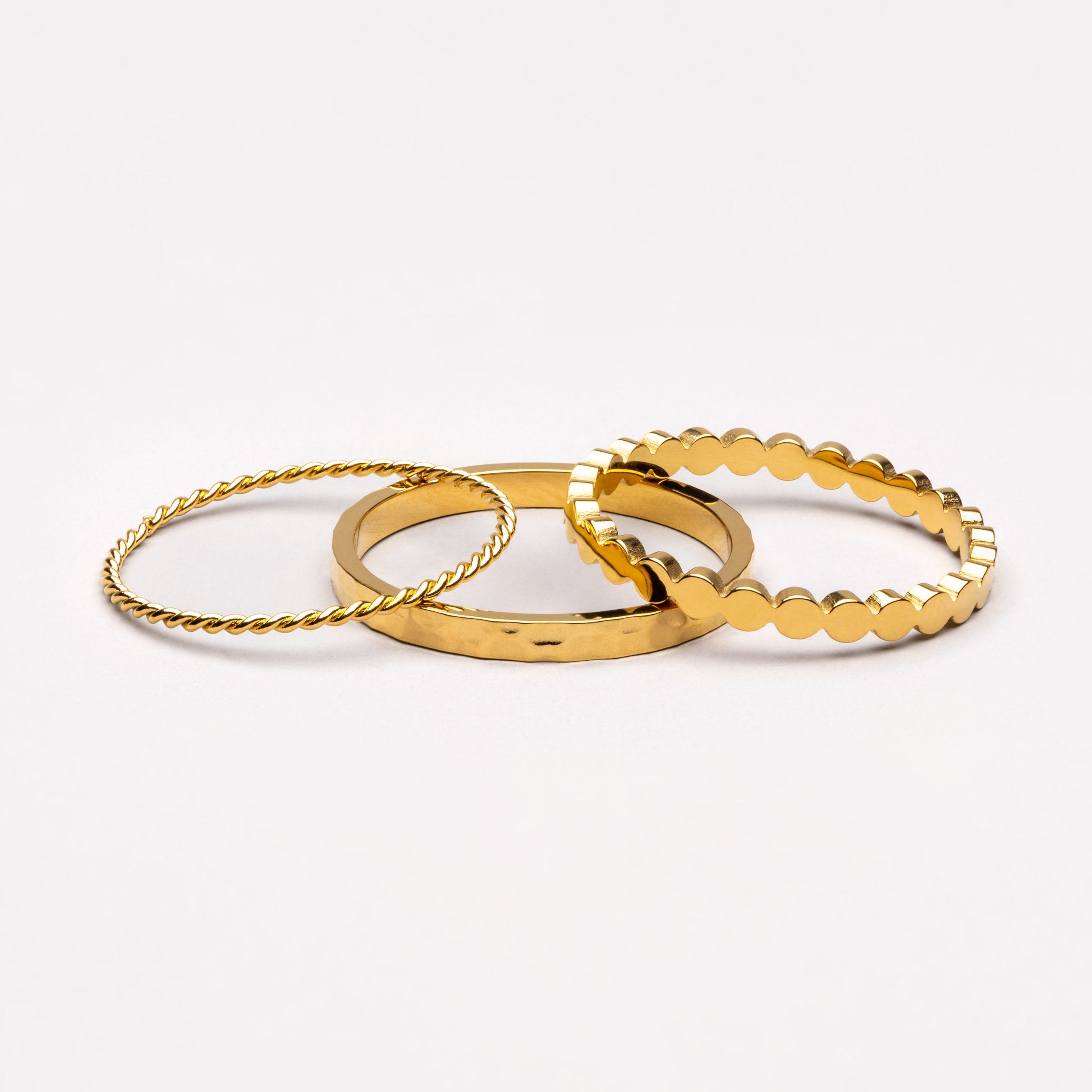
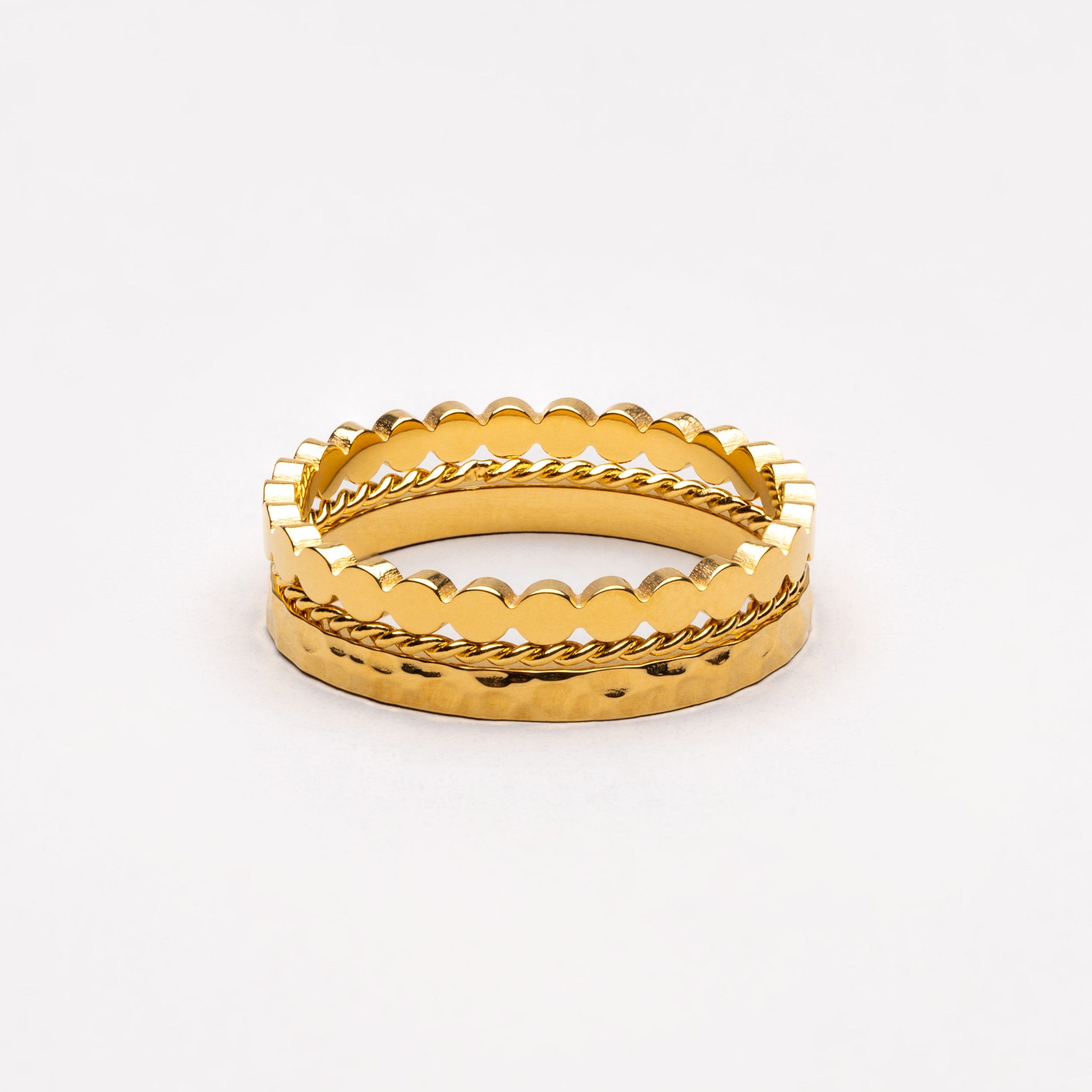
Buy at least one ring meaningfully wider than the others to serve as an anchor piece. A width around 3mm to 4mm reads as a clear focal point when paired with thinner 1mm to 2mm bands on either side. Buying three or four rings that are all nearly the same width produces a stack that reads as a single thick, undifferentiated band rather than a composed arrangement of distinct pieces.
When shopping for your first few pieces, deliberately select across at least two width categories rather than picking whatever looks appealing in isolation. A thin band, a slightly wider band, and one true anchor piece at a noticeably greater width gives you a stack with built-in visual hierarchy from the very first purchase, rather than requiring a fourth or fifth ring before the stack starts to read as intentional.
Tip 4: Start With Three to Four Rings, Not a Full Collection
Buying an entire stack's worth of rings in a single purchase is tempting, but starting smaller produces a better long-term result and a more comfortable first experience wearing a stack.
Three to four rings gives you enough pieces to create the visual rhythm that makes stacking read as intentional, without the cost, complexity, or fit risk of committing to a large collection before you know how a stack actually feels on your specific hand. Wearing a smaller stack for a few weeks reveals practical details a photo cannot: whether the rings catch on each other during normal hand movement, whether the combined weight feels comfortable through a full day, and whether your initial width and metal tone choices actually work together as well in person as they did in your head.
Building a stack gradually also gives you room to adjust course based on what you learn from wearing the first few pieces, rather than being locked into a full set of choices made before you had any real information about how stacking rings actually feels for you day to day.

Tip 5: Choose Durability That Matches How You Actually Live
The right stackable rings for someone who removes jewelry before every activity are different from the right choice for someone who wears rings continuously through workouts, swimming, and daily active life, and being honest about which category you fall into changes what you should prioritize when buying.
For rings worn continuously, prioritize materials that hold up to water, sweat, and frequent handwashing without degrading, since these rings do not get the recovery time that jewelry removed daily receives. PVD-coated stainless steel and solid gold both handle this kind of continuous wear well. Standard gold-plated rings, by contrast, show wear at the inner shank within weeks under this level of use, which is specifically problematic for a stack, since a single degrading ring affects how the entire arrangement looks even if the other pieces are holding up fine.
For rings worn more occasionally and removed for showering, exercise, and sleep, the durability requirements are less demanding, and a wider range of materials, including more delicate gold-filled or plated pieces, can work well within a reasonable lifespan.
| Buying Factor | Get It Right By | Common Mistake |
|---|---|---|
| Sizing | Size each ring individually, not tighter for the stack | Sizing down to "compensate" for future rings |
| Metal quality | Confirm base metal is named specifically | Trusting vague terms like "gold tone" |
| Width | Include at least one clear anchor width | Buying rings all similar in width |
| Quantity | Start with 3 to 4 pieces | Buying a full collection before wearing any |
| Durability | Match material to actual wear habits | Choosing based on looks alone, ignoring lifestyle |
Putting the Guide Into Practice
For anyone starting a stackable ring collection with the intention of wearing it daily, including through gym sessions, beach days, and regular handwashing, these five factors compound. Correct individual sizing keeps every piece comfortable. Verified metal quality keeps the stack looking consistent rather than developing an uneven, patchy appearance over time. Deliberate width variation gives the stack visual structure from the start. A modest initial quantity lets you learn what actually works on your hand before committing further. And durability matched honestly to your lifestyle prevents the specific disappointment of a stack that looked perfect on day one and patchy by month three. ATOLEA's minimalist gold ring range is built in PVD-coated 316L stainless steel across thin, medium, and anchor widths specifically to support this kind of considered stack building, with a lifetime color warranty on every piece.

Frequently Asked Questions
How many stackable rings should I buy to start?
Three to four rings is the practical starting point. This is enough to create genuine visual rhythm and hierarchy in a stack without the cost or fit risk of committing to a full collection before you know how stacking actually feels and looks on your specific hand.
Should stackable rings be sized tighter than a single ring?
No. Each ring should be sized to fit comfortably on its own, not sized down on the assumption that the eventual stack will fill out the space. Sizing down produces a stack where every individual ring is too tight, causing discomfort and pressure marks rather than a better fit.
What width stackable rings work best together?
A mix of widths creates the clearest, most intentional-looking stack. Include at least one wider anchor piece around 3mm to 4mm alongside thinner 1mm to 2mm bands. Buying several rings that are all nearly the same width tends to blur together into a single thick band rather than reading as a composed arrangement.
What metal is best for stackable rings worn every day?
For rings worn continuously through daily activity, showering, and exercise, PVD-coated stainless steel and solid gold hold up best, since neither reacts to water or sweat the way standard gold plating does. Standard gold-plated rings tend to wear through at the inner shank within weeks of that level of continuous contact.
Can I add to my stackable ring collection over time?
Yes, and building gradually is generally the better approach. Keep an accurate record of your ring size so future purchases stay consistent, and pay attention to the width and metal tone of pieces you already own so new additions complement rather than compete with your existing stack.
Building a Stack You Will Actually Wear
This how to choose perfect stackable rings guide comes down to five compounding decisions: size each ring individually rather than tighter for the stack, confirm metal quality is specified rather than vague, choose widths that create deliberate contrast, start with three to four pieces rather than a full collection at once, and match material durability honestly to how you actually wear jewelry day to day. Getting these five factors right before your first purchase means the stack you build works as well in month six as it did the day you bought it.









Leave a comment
This site is protected by hCaptcha and the hCaptcha Privacy Policy and Terms of Service apply.