


How Long Should My Necklace Be? 5 Easy Length Guide
How long should my necklace be? You’ll choose the right necklace length faster when you treat it like a design spec—start with the five key sizes: 14–16" choker, 18" princess, 20–24" matinée, 28–36" opera, and longer rope styles. Match chain length to your height, neck length, and neckline depth, and adjust with extenders or sliders when your pendant drop feels off—versatile pieces like those in Atolea’s Summer Necklaces collection make experimenting with lengths easy. Dial in metal gauge, drape, and layering intervals next to refine your everyday length strategy further.
Necklace Length Chart: The 5 Key Sizes
Five foundational necklace lengths define how a piece sits on the body and interacts with your neckline, proportions, and materials.
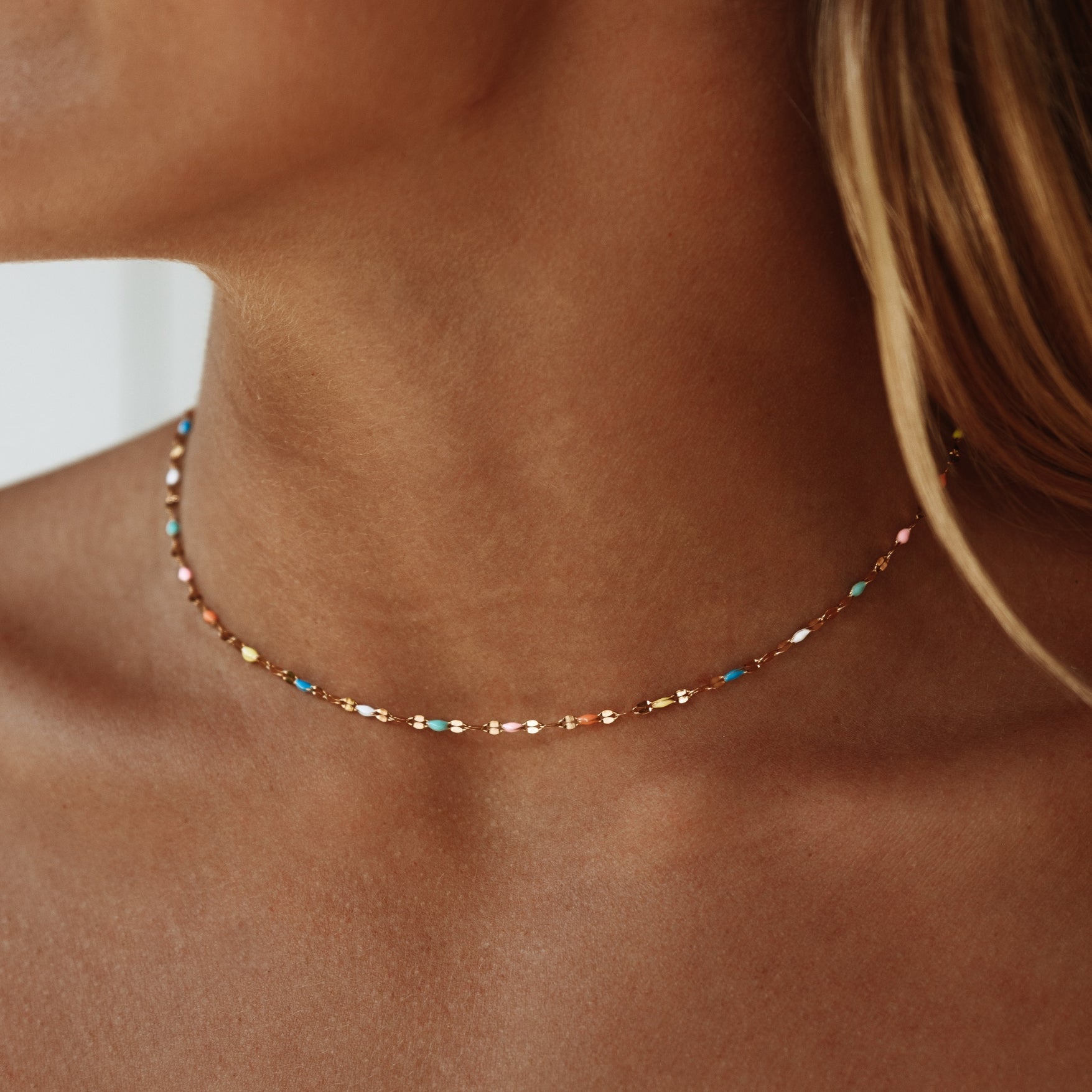
At 14–16 inches, choker styles frame the clavicle, working best with fine-gauge chains or structured collars.
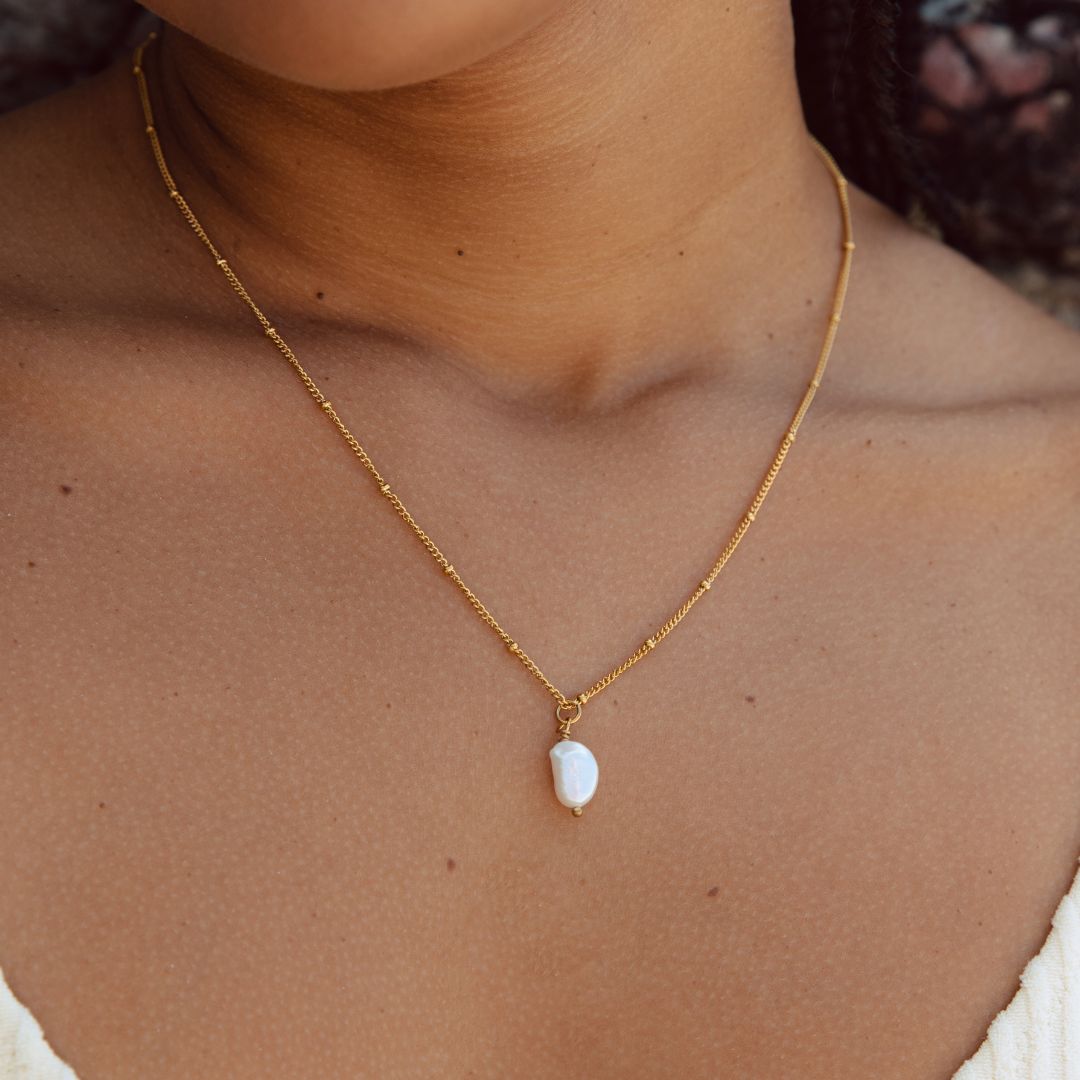
Princess length, around 18 inches, aligns with most necklines and optimizes visual balance for small to medium pendant lengths.
Matinée, at 20–24 inches, clears the bust apex, ideal for fluid chains or bead strings that need drape.
Opera length, 28–36 inches, creates vertical elongation, especially effective in lightweight metals to avoid torque and distortion.
Rope length, 36 inches and beyond, functions as a modular system—you can double, knot, or layer it, adjusting visual weight through chain thickness and component scale.

Quick Necklace Length Fixes and Adjustments
Three simple interventions let you fine‑tune necklace length without permanent alteration: modular components, temporary extenders, and strategic clasp repositioning.
You can insert short chain segments or jump‑ring modules to add millimeters of length while preserving the necklace’s structural integrity and metal consistency. Clip‑on extenders work well with cable, rolo, or box chains, but use lightweight options for delicate bezels or fine gemstones to prevent strain.
Adjustable clasps—such as slider beads with silicone cores or multi‑link lobster systems—let you recalibrate drop length on the body in seconds.
For styling, apply layering techniques: stagger chokers, princess, and matinee strands by adding or removing a single extender per piece so metal finishes, chain gauges, and pendant proportions stay visually balanced.
Best Necklace Lengths for Your Height and Shape
Although necklace length is often treated as a simple measurement, it behaves more like a design variable that interacts with your height, neck length, shoulder width, and torso proportion. To optimize visual balance, you need to map specific necklace styles to your body proportions.
If you’re petite (under ~5'3"), shorter chains (14–18") in fine-gauge metals prevent visual truncation. Average heights (~5'4"–5'7") can handle 16–20" ranges and moderate pendant drop without disrupting vertical lines.
Taller frames (5'8"+) usually stabilize longer lengths (20–30") and bolder profiles, including multi-strand or mixed-material constructions. A shorter neck benefits from slightly longer chains and low-profile settings; a long neck can showcase chokers and structured collars.
Broad shoulders suit substantial links; narrower frames favor lighter, more flexible chains.

Match Necklace Lengths to Your Neckline and Outfit
One of the most reliable ways to make a necklace look intentional is to align its resting point with your neckline architecture and fabric density. You’re fundamentally engineering visual continuity between chain length, pendant drop, and garment cut.
With lower neckline styles—V-neck, deep scoop—aim for a pendant that terminates 1–2 cm above the lowest point, so the trace line mirrors the opening.
For crew or bateau necklines, a collar or princess length (14–18 in) sits cleanly on the fabric and prevents awkward gaps.
On structured, high-density fabrics (blazers, tweed, denim), choose more substantial chains; on fluid silks or jerseys, lighter gauges prevent drag.
For different outfit occasions, adjust scale: restrained lengths for office tailoring, more elongated lines for evening or formalwear.

Layer Necklace Lengths Without Tangles or Clashing
Layering functions best when you treat each necklace as a tier in a deliberate vertical stack, with distinct length intervals and complementary visual weight. Aim for 2–4 inch gaps between chains: for example, 14", 16", 18", 20". This spacing creates visual hierarchy and supports effective tangle prevention.
Prioritize contrasting gauges and materials. Pair a fine cable or box chain choker with a medium-weight rolo, then a longer pendant on a sturdier curb or snake chain. These layering techniques reduce friction points and keep silhouettes distinct.
Vary pendant scale and negative space. Use a collarbone-grazing focal pendant, then a longer minimalist bar or lariat.
For maximum stability, choose chains with different stiffness (snake vs bead) and finish with a clasp connector designed to keep strands parallel.
Frequently Asked Questions
How Do I Choose Necklace Length for Gifting When I Don’T Know Their Size?
You default to a 16–18 inch chain; it fits most anatomies and complements diverse necklace styles. Prioritize adjustable extenders for variability, neutral metals, and hypoallergenic alloys to accommodate unknown neck circumference and personal preferences without compromising ergonomic wearability or aesthetic proportion.
What Necklace Lengths Are Best for Different Ages, Like Teens Versus Seniors?
You’ll usually pick 16–18" chokers or short chains for teens’ dynamic teen preferences; prioritize 18–20" lightweight, hypoallergenic metals for seniors’ ergonomic senior styles, ensuring low profile clasps, smooth links, and balanced pendant-to-chain weight distribution.
How Does Chain Thickness Affect How Long a Necklace Appears When Worn?
Chain thickness alters perceived length: thicker chain styles visually shorten the drop, while finer gauges appear longer. You’ll assess visual impact by considering cross-sectional diameter, metal density, and drape behavior against your neckline, pendant scale, and garment texture.
Are There Ideal Necklace Lengths for Men Compared to Women?
Yes, typical “ideal” lengths differ: you’ll usually wear 18–22" while women often choose 16–18". You’ll still prioritize personal style, body proportions, fashion trends, neckline geometry, and pendant scale relative to chain gauge and material.
How Should Necklace Length Change When Wearing High Heels or Platform Shoes?
You should lower necklace length slightly as heel height increases so proportions stay balanced. For structured necklace styles, add 1–2 inches; for lightweight chains, adjust less, considering neckline elevation, torso elongation, and metal–fabric interaction.
Conclusion
You’ve now got a precise framework for choosing necklace lengths that actually work: standard size ranges, quick adjustment tricks, and proportion rules for your height and frame. Use chain gauges, clasp types, and extender segments to fine‑tune drop length to your neckline architecture—crew, V‑neck, or off‑shoulder. When layering, vary chain thickness, pendant scale, and metal finishes so each piece reads clearly, avoids friction wear, and maintains a clean, intentional visual hierarchy.











Leave a comment
This site is protected by hCaptcha and the hCaptcha Privacy Policy and Terms of Service apply.