

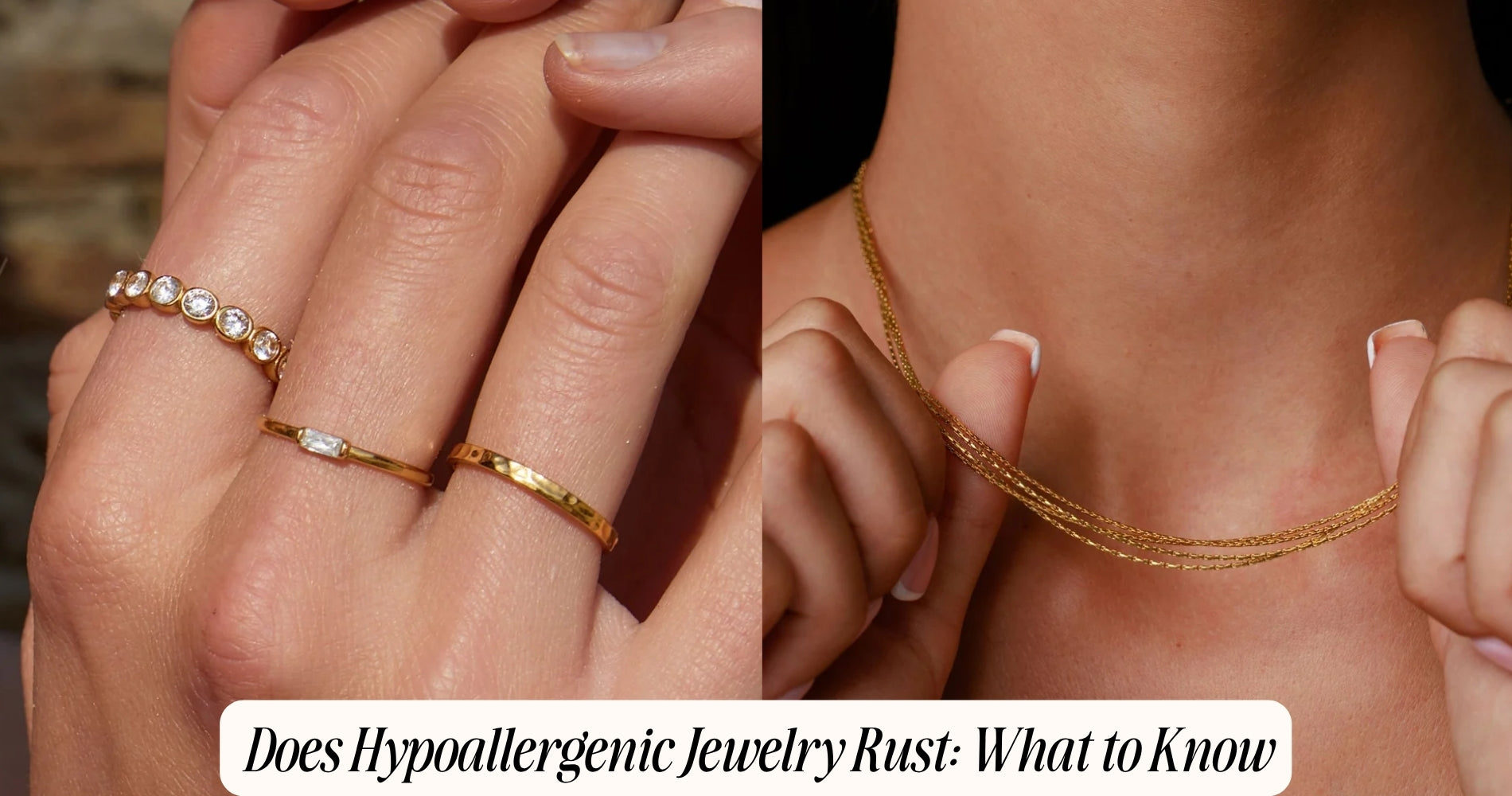
Does Hypoallergenic Jewelry Rust: What to Know
If you have chosen hypoallergenic jewelry to protect your sensitive skin, you may also be wondering whether these materials come with any downsides when it comes to rust. Does hypoallergenic jewelry rust the same way certain metals do when exposed to moisture over time? The answer depends heavily on the specific material involved, and understanding the difference between rust and other forms of metal discoloration can help set accurate expectations for your jewelry collection.
In this guide, we will explain what rust actually is, why most hypoallergenic jewelry materials are not genuinely susceptible to it, and what to watch for instead. If you want long lasting pieces designed with sensitive skin in mind, our Hypoallergenic Jewelry collection is built to hold up well over time.
What Rust Actually Is
Before addressing whether hypoallergenic jewelry rusts, it helps to understand what rust technically refers to. Rust is a specific form of corrosion that occurs when iron reacts with oxygen and moisture, producing iron oxide, the reddish brown, flaky substance most people recognize as rust. This particular chemical reaction is specific to iron and iron based alloys that lack sufficient protective elements within their composition.
Because rust is specifically tied to iron oxidation, metals that either contain no significant iron content, or that include protective elements preventing this specific reaction, do not rust in the traditional sense, even if they can experience other, different forms of discoloration or wear over time.
Does Hypoallergenic Jewelry Rust: Material by Material
Since hypoallergenic jewelry spans several different metal types, the answer to whether it rusts varies depending on the specific material in question.
Titanium: Does Not Rust
Titanium does not rust, since it contains no significant iron content and naturally forms a protective oxide layer when exposed to air. This protective layer effectively prevents the type of oxidation reaction responsible for rust, making titanium an excellent choice for those seeking jewelry resistant to this specific form of corrosion.
Niobium: Does Not Rust
Similar to titanium, niobium does not rust, thanks to its own naturally protective oxide layer and lack of significant iron content. This makes niobium another reliable hypoallergenic option for those specifically concerned about rust related deterioration.
Surgical Stainless Steel: Highly Rust Resistant
Surgical grade stainless steel, specifically 316L, does contain iron as part of its base composition, but the chromium content within this particular alloy formulation creates a protective oxide layer that effectively prevents the typical rusting process. This is precisely what distinguishes stainless steel from ordinary steel, which lacks this same chromium content and therefore rusts much more readily when exposed to moisture.
While surgical stainless steel is highly rust resistant under normal circumstances, it is worth noting that this resistance can potentially be compromised if the protective chromium oxide layer is damaged, such as through deep scratching or exposure to particularly harsh chemicals over extended periods, though this remains uncommon with normal jewelry use.

Solid Gold: Does Not Rust
Solid gold, particularly higher karat options, does not rust, since gold itself does not contain iron and does not undergo the oxidation process responsible for rust formation. Gold can experience other, unrelated changes over time, such as minor dulling from everyday buildup, but this is an entirely different phenomenon from rust specifically.
Platinum and Palladium: Do Not Rust
Both platinum and palladium are naturally resistant to rust and corrosion more broadly, given their inherent chemical stability and lack of significant iron content within their composition.
Why the Confusion Between Rust and Tarnish Exists
Many people use the terms rust and tarnish somewhat interchangeably in everyday conversation, though they actually refer to distinct chemical processes affecting different types of metals. Rust specifically involves iron oxidation, while tarnish typically refers to a different reaction, most commonly associated with silver reacting to sulfur compounds in the air, resulting in a darker, though chemically distinct, form of surface discoloration.
Because hypoallergenic jewelry materials like titanium, niobium, and surgical steel are specifically chosen for their resistance to various forms of corrosion and reaction, they generally resist both rust and tarnish quite effectively, though understanding this distinction helps clarify exactly what protective properties a specific material actually offers.

What Hypoallergenic Jewelry Can Experience Instead of Rust
While genuinely hypoallergenic materials do not rust, they are not entirely immune to every possible form of wear or change in appearance over time. Understanding what these materials can experience helps set more accurate long term expectations.
Surface Scratching
Even highly durable materials like titanium and surgical steel can develop surface scratches with regular wear, particularly from contact with harder materials or surfaces during everyday activities. While not related to rust or corrosion, these scratches can affect the overall appearance of a piece over time.

Minor Dulling From Product Buildup
Natural skin oils, lotion, and other personal care products can gradually accumulate on jewelry surfaces, creating a dulling effect that, while unrelated to rust, can make a piece appear less bright and polished without regular cleaning.
Coating Wear on Plated Pieces
For hypoallergenic jewelry that relies on a plating or coating process over a different base metal, such as certain PVD coated pieces, the coating itself can gradually wear thin over extended periods of regular use, potentially exposing the base material underneath, though this remains a separate process from rust specifically.
How to Keep Hypoallergenic Jewelry Looking Its Best
Even though genuinely hypoallergenic materials resist rust effectively, a few simple care habits can help maintain their overall appearance over the long term.
Clean jewelry periodically using mild soap and warm water, along with a soft cloth or brush, to remove any accumulated dirt, oils, or product residue. Store pieces separately from harder materials or gemstones to help prevent surface scratching, even though these metals already offer strong resistance to corrosion specifically. Avoid exposing jewelry to unnecessarily harsh chemicals, even though most hypoallergenic materials handle regular water exposure quite well.
Choosing Hypoallergenic Jewelry With Long Term Durability in Mind
If avoiding rust and general corrosion is a priority alongside your hypoallergenic requirements, materials like titanium, niobium, platinum, and higher karat solid gold offer the most reliable combination of both properties, since these materials inherently avoid the iron based composition responsible for traditional rust formation.
For those specifically considering surgical stainless steel, verifying the specific grade, ideally 316L or an equivalent formulation, helps ensure you are getting a genuinely rust resistant version of this material rather than a lower quality steel alloy that may not offer the same level of protective chromium content.

When Rust Like Discoloration Might Indicate a Different Material
If you notice what appears to be rust developing on jewelry marketed as hypoallergenic, this could suggest the piece is not actually made from the specific material claimed, or that it involves a lower quality base metal beneath a thin coating that has since worn away. In these situations, it is worth revisiting the specific product labeling and considering whether the piece genuinely matches its advertised material composition.
Final Thoughts
So, does hypoallergenic jewelry rust? Generally, no. Materials like titanium, niobium, surgical stainless steel, solid gold, platinum, and palladium all resist the specific iron oxidation process responsible for rust, thanks to either their lack of significant iron content or their naturally protective surface properties. While these materials remain vulnerable to other forms of wear, such as scratching or minor dulling from everyday buildup, genuine rust is generally not a concern with authentic, well made hypoallergenic jewelry.
Understanding this distinction helps you shop and care for your jewelry collection with realistic, well informed expectations, ensuring your favorite pieces continue looking their best for years to come.
Frequently Asked Questions
1. What is the difference between rust and tarnish?
Rust specifically involves iron oxidation, while tarnish typically refers to a different reaction, most commonly associated with silver reacting to sulfur compounds in the air.
2. Can surgical steel jewelry ever rust?
Genuine surgical grade stainless steel, specifically 316L, is highly rust resistant thanks to its chromium content, though this protection could theoretically be compromised by significant surface damage.
3. Does titanium jewelry ever need special care to prevent rust?
No, titanium naturally resists rust thanks to its lack of significant iron content and protective oxide layer, requiring no special rust prevention measures.
4. If my hypoallergenic jewelry shows rust like discoloration, what does that mean? This could indicate the piece is not genuinely made from the material claimed, or that a lower quality base metal has become exposed beneath a worn coating.









Leave a comment
This site is protected by hCaptcha and the hCaptcha Privacy Policy and Terms of Service apply.