

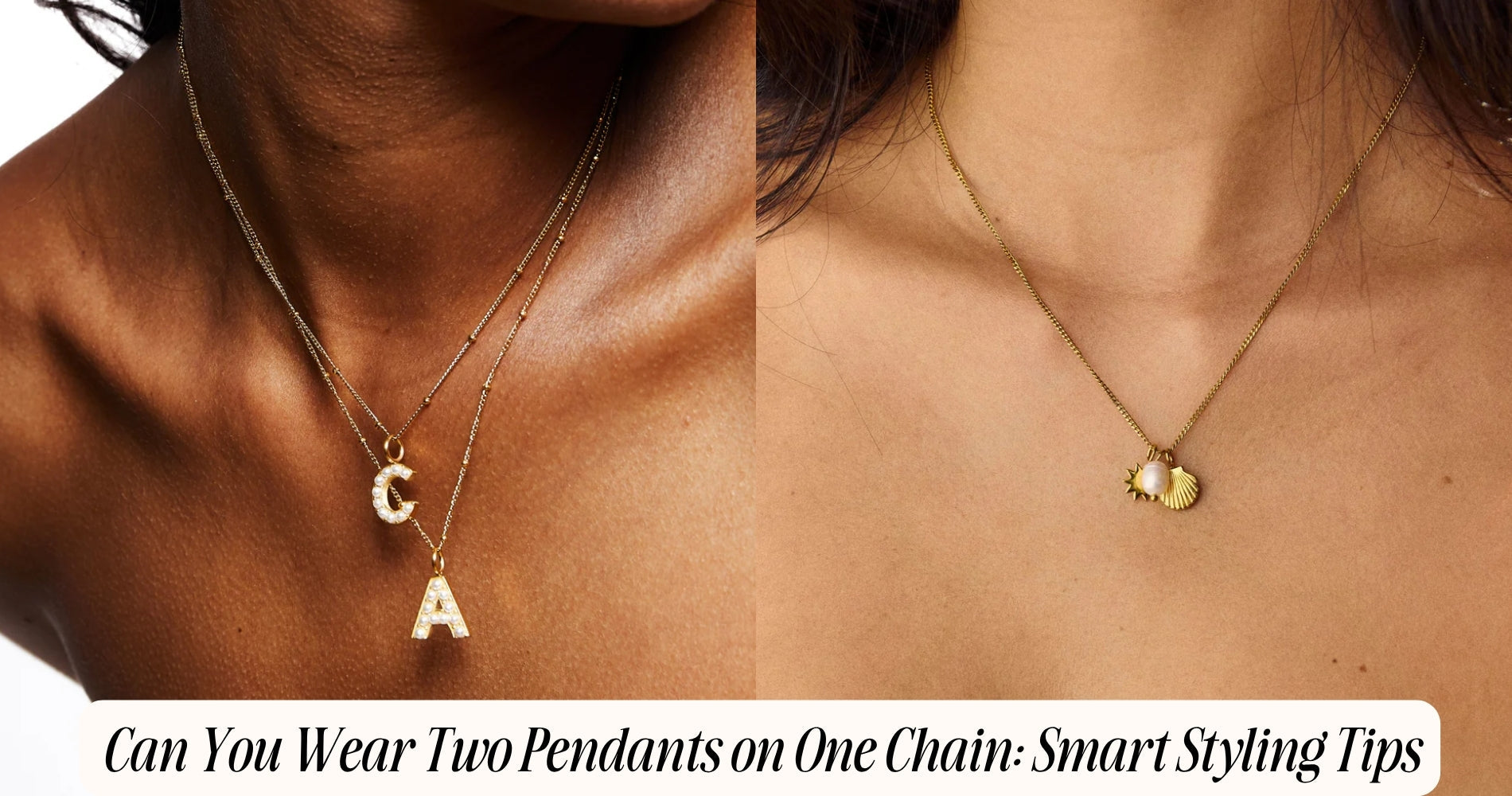
Can You Wear Two Pendants on One Chain: Smart Styling Tips
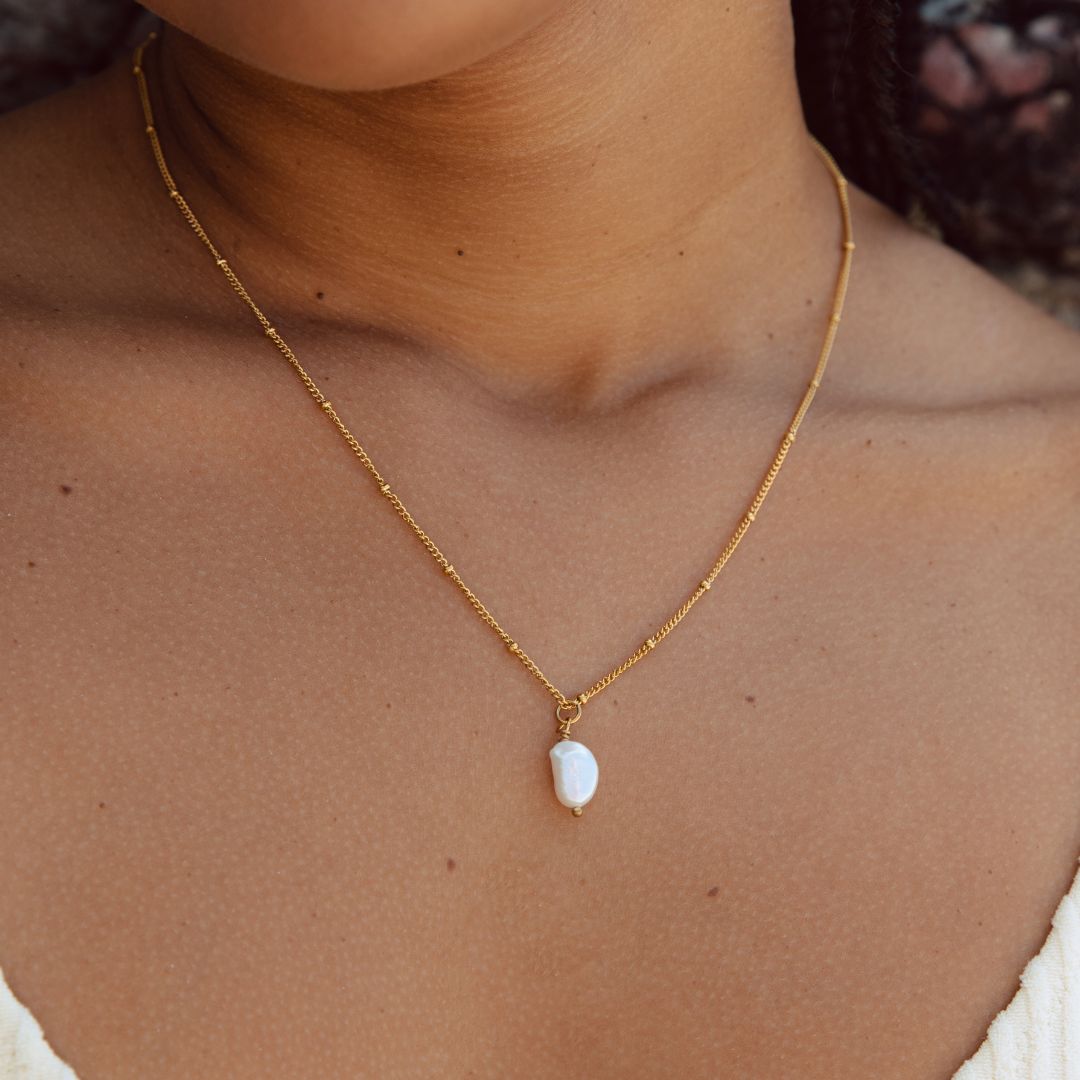
Two pendants combined with meaning are some of the most personal jewelry pieces people own: an initial alongside a birthstone, a meaningful symbol alongside a loved one's pendant, or two charms collected over time that belong together. Can you wear two pendants on one chain? Yes, and it works well when the sizing, spacing, and pairing follow a few specific principles. Waterproof Necklaces in fine chain styles provide the right foundation for this kind of pairing. This guide covers how to size two pendants relative to each other, how to position them on the chain, which pendant combinations work best, and how to keep two pendants from tangling or shifting during daily wear.
Why Two Pendants on One Chain Works
The instinct that two pendants might look cluttered is understandable, but it misunderstands what actually creates visual clutter in jewelry. Clutter comes from competing visual weight and unclear hierarchy, not from quantity alone. Two pendants on one chain, sized and placed correctly, read as a deliberate pairing rather than an accumulation.
In fact, two pendants on a single chain often look more intentional than two separate necklaces layered at different lengths, because the single chain creates an obvious visual relationship between the pieces. The viewer immediately understands the two pendants belong together because they share the same chain, the same metal, and the same general position on the chest. This built-in cohesion is an advantage that layered separate necklaces do not automatically have.
The principle that makes this work is the same one that governs every successful jewelry pairing: one element leads and the other supports. With two pendants, this means establishing a clear size or visual hierarchy between them rather than treating them as equal partners competing for the same attention.

Sizing Two Pendants Correctly
Size is the single most important variable in making two pendants on one chain work visually.
The two-thirds rule. The most reliable approach is making one pendant clearly larger than the other, roughly in a 2:1 or 3:1 size ratio. A larger pendant at 12mm to 15mm paired with a smaller pendant at 5mm to 8mm creates an obvious primary-secondary relationship that the eye reads immediately. Two pendants of similar size, by contrast, compete for attention and create the visual confusion that people associate with "too much" jewelry.
Matching sizes for specific intentional pairings. The exception to the size hierarchy rule is when two pendants are meant to read as a true pair: matching initial pendants for two children, two identical small symbols, or a his-and-hers style pairing meant to be seen as equals. In these specific cases, matched sizing is the point, and the pairing works because the symmetry itself is the intended visual statement.
Avoiding the middle ground. The combination that reads least successfully is two pendants of moderately similar but not identical size, close enough to seem like they should match but different enough to look like a mismatch rather than an intentional size choice. If your two pendants are within 20% of each other in size and not meant to be an identical pair, consider replacing one or adjusting placement to create more visual distinction.
Placement: Stacked Versus Spaced
How the two pendants sit relative to each other on the chest is the second major decision in pairing them.
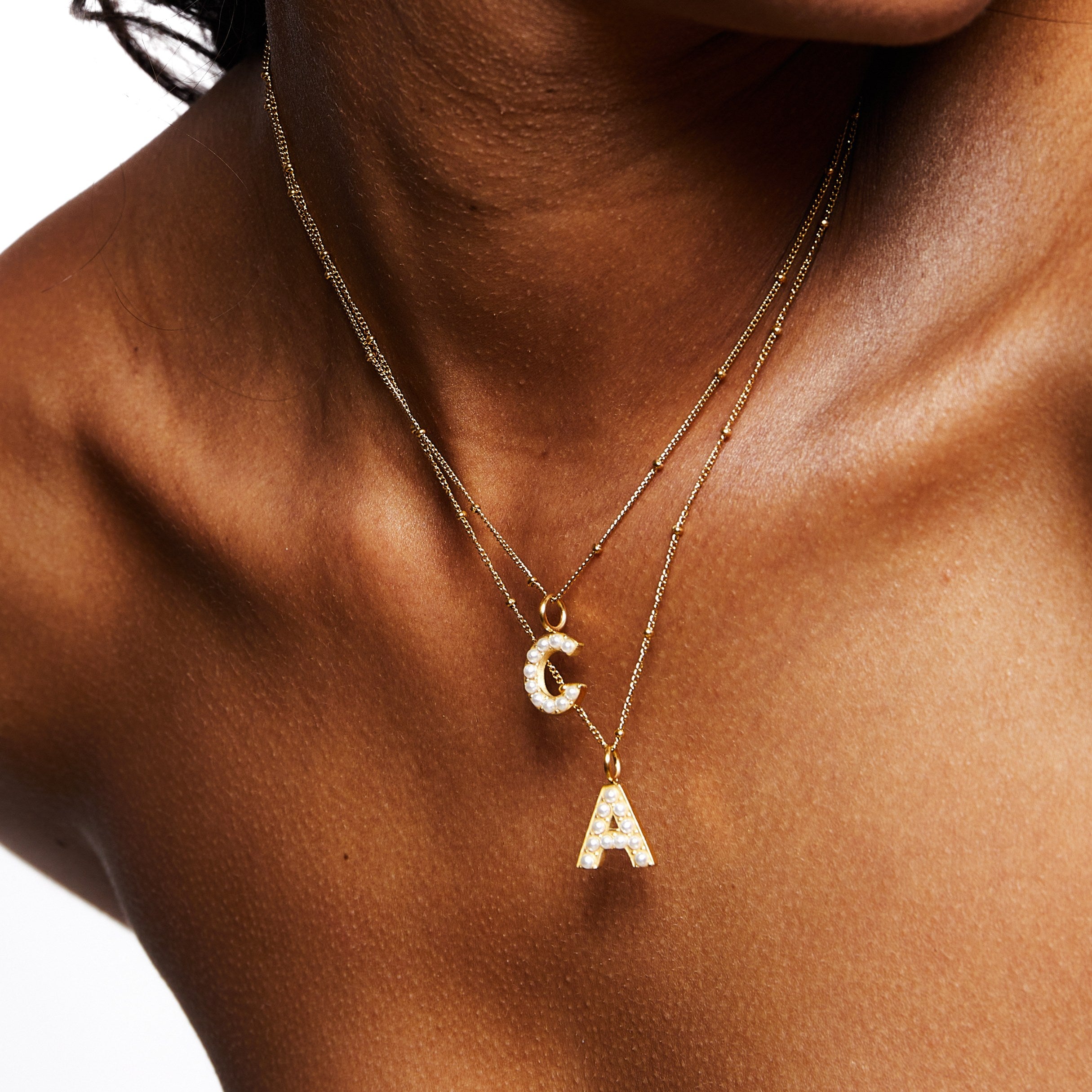
Stacked placement (one chain, two pendants close together): Both pendants slide freely on the same chain and naturally settle near each other at the chain's lowest point. This creates a layered, collected look where the pendants interact directly, sometimes slightly overlapping. This placement suits pendants that are meant to be seen as a connected pair, such as a personal symbol alongside a name or initial that belongs to the same meaning.
Spaced placement (pendants separated along the chain). Some chain designs include a small loop or station partway along the chain that holds one pendant in a fixed position above where the second pendant hangs freely at the bottom. This creates visible separation between the two pieces, which works well when the pendants represent two distinct meanings that you want to read as separate rather than merged. A birthstone pendant fixed higher on the chain with a meaningful symbol hanging at the standard pendant position is a common application of this placement.
Two different chain lengths with a single attachment point. Some double-pendant designs use two separate small chains or bails attached to the same main chain or clasp, allowing the two pendants to hang at slightly different lengths even though they share the same necklace. This creates a cascading effect that adds visual depth without requiring a second full necklace.

Which Pendant Combinations Work Best
Some pendant pairings naturally suit each other in shape, theme, or material, while others require more careful sizing and placement to avoid visual conflict.
Complementary shapes: A round pendant paired with a vertical bar or elongated drop creates contrast that reads as deliberate. Two pendants of the same shape (both round, both square) require more size differentiation to avoid looking like a mismatched attempt at a matched set.
Thematic pairings: Pendants that share a clear conceptual connection, a birthstone alongside an initial, a meaningful symbol alongside a date or coordinate charm, a religious or spiritual symbol alongside a personal touchstone, read as intentional because the viewer understands the relationship even without explanation. This is one of the strongest justifications for wearing two pendants together: the meaning itself creates the visual cohesion.
Material consistency: Two pendants in the same metal tone (both gold, both silver) on the same chain read more cohesively than two pendants in different metal tones on a single chain. Mixed metal pendants on the same chain can work but require the same dominant-tone principle that governs mixed metal jewelry generally: one tone should clearly lead.
Avoiding overload: Two heavily detailed or busy pendants together create more visual competition than two simple ones. If both pendants carry significant design detail, gemstones, or texture, the combination reads as crowded regardless of size differentiation. Pairing one detailed pendant with one simple, minimal pendant produces a more successful combination than two equally elaborate pieces.
| Pairing Type | Works Well When | Avoid When |
|---|---|---|
| Different sizes (2:1 or 3:1 ratio) | One pendant clearly leads | Both pendants are similarly sized but not matched |
| Matched identical pendants | Intentional symmetry is the point | Pendants are nearly but not exactly identical |
| Different shapes | Shapes complement (round and linear) | Shapes compete (two similar geometric forms) |
| Same metal tone | Cohesive, easy pairing | Mixed tones without a dominant direction |
| Thematic connection | Meaning ties pieces together | Pendants share no visual or conceptual link |

Practical Considerations for Wearing Two Pendants
Beyond the visual styling decisions, a few practical factors affect how comfortably and securely two pendants wear on a single chain.
Weight distribution. Two pendants add combined weight at the lowest point of the chain, which can cause the chain to sit slightly differently than with a single pendant, particularly with fine chains. For chains under 1.5mm gauge, keep the combined pendant weight modest to avoid excessive chain stretch or an uncomfortable pull at the back of the neck.
Pendant movement and tangling. Two pendants sliding freely on the same chain can shift position throughout the day, sometimes ending up stacked directly on top of each other rather than positioned as intended. A bail with a slightly narrower opening on one pendant restricts its movement relative to the chain and helps maintain intended positioning. Pendants with larger bail openings move more freely and require more frequent repositioning throughout the day.
Chain durability. A chain carrying two pendants experiences more stress at its lowest point than a single-pendant chain, particularly at the clasp and at the point where the chain bears the combined weight. A slightly thicker gauge chain, 1.2mm to 1.5mm rather than the most delicate 0.8mm to 1mm options, provides better long-term durability for a double-pendant configuration worn daily.
Frequently Asked Questions
Is it tacky to wear two pendants on one chain?
No, when sized and placed thoughtfully. Two pendants read as intentional rather than cluttered when one is clearly larger than the other, when they share a thematic or material connection, and when their combined visual weight is proportionate to the chain carrying them. The perception of "too much" comes from unclear hierarchy and competing visual weight, not from the simple fact of having two pendants.
How do you keep two pendants from tangling on one chain?
Choose pendants with bail openings that fit snugly on the chain rather than very loosely, which restricts unwanted sliding and rotation. Positioning one pendant slightly higher using a small station or loop, rather than letting both slide freely to the same point, also reduces tangling and keeps each pendant in a more consistent visual position throughout the day.
Can you put two different sized pendants on the same chain?
Yes, and different sizes generally work better than similar ones. A clear size hierarchy, roughly a 2:1 or 3:1 ratio between the larger and smaller pendant, creates an obvious visual relationship that reads as intentional. Two pendants of nearly the same size without being a deliberately matched pair tend to compete rather than complement each other.
What is the best chain gauge for two pendants?
A chain gauge of 1.2mm to 1.5mm provides better durability and weight support for two pendants than the most delicate 0.8mm to 1mm chains, which are better suited to a single lightweight pendant. The combined weight of two pendants concentrates stress at the chain's lowest point and at the clasp, so a moderately substantial gauge extends the chain's working life under that additional load.
Should two pendants match in metal tone?
Matching metal tones between two pendants on the same chain produces the most cohesive and easiest-to-style result. If the pendants are in different metal tones, the combination can still work using the same dominant-tone principle that governs mixed-metal jewelry: one tone should clearly lead, with the other appearing as a secondary accent rather than competing equally.
Pairing Pendants With Confidence
Can you wear two pendants on one chain has a clear yes, with the outcome depending on a few specific decisions: a clear size hierarchy between the two pieces, deliberate placement that either stacks them together or spaces them apart with intention, and a pairing that shares either a thematic connection, a complementary shape relationship, or consistent material and metal tone. Avoiding two pendants of nearly identical but not matched size, and choosing a chain gauge that supports the combined weight comfortably, are the practical adjustments that make the difference between a pairing that reads as considered and one that reads as accidental.









Leave a comment
This site is protected by hCaptcha and the hCaptcha Privacy Policy and Terms of Service apply.