

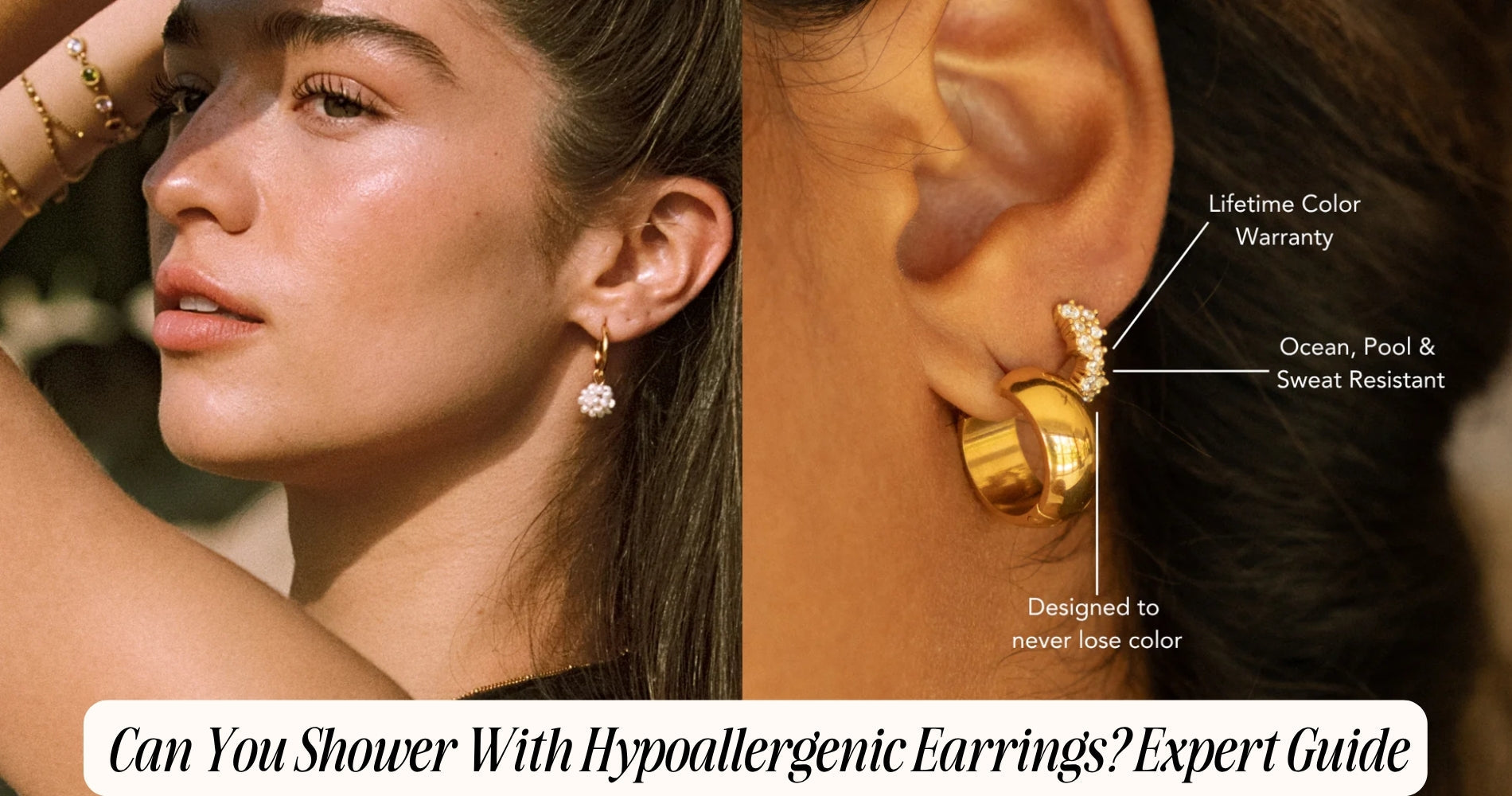
Can You Shower With Hypoallergenic Earrings? Expert Guide
Hypoallergenic earrings have become a go to choice for anyone with sensitive ears, offering a way to enjoy jewelry without the redness, itching, or irritation that lower quality metals can cause. But many people still wonder about the practical side of everyday wear, particularly when it comes to activities like showering. If you have ever left your earrings in without a second thought before stepping into the shower, you may be asking yourself can you shower with hypoallergenic earrings safely?
The good news is that, in many cases, the answer is yes, though it depends significantly on the specific material your earrings are made from. In this guide, we will explain how different hypoallergenic materials hold up to water exposure, what precautions are worth taking, and how to keep your favorite pieces looking their best. If hoops are part of your daily rotation, our Hypoallergenic Hoop Earrings collection is designed specifically with sensitive skin and everyday wear in mind.
What Makes Earrings Hypoallergenic
Before addressing water exposure specifically, it helps to understand what actually makes an earring hypoallergenic in the first place. Hypoallergenic earrings are typically made from materials that are naturally resistant to triggering allergic reactions, most commonly because they are free from nickel, one of the most common metals responsible for skin irritation and contact dermatitis.
Common hypoallergenic materials include titanium, surgical steel, niobium, and higher karat solid gold, all of which are significantly less likely to cause a reaction compared to lower quality alloys or nickel containing metals frequently found in costume jewelry.

Can You Shower With Hypoallergenic Earrings
Whether you can safely shower with hypoallergenic earrings largely depends on the specific material used, since not all hypoallergenic metals respond to water exposure in the same way.
Titanium
Titanium is widely considered one of the most water resistant hypoallergenic materials available. It is highly resistant to corrosion and does not react negatively to regular water exposure, making titanium earrings a generally safe choice for showering without significant concern about damage or degraded quality over time.
Surgical Steel
Surgical steel, also known as 316L stainless steel, is another hypoallergenic material that holds up reasonably well to water exposure. While not entirely immune to the effects of prolonged moisture, surgical steel is fairly resistant to corrosion, making it a practical option for those who prefer not to remove their earrings before showering.
Niobium
Niobium, similar to titanium, is highly resistant to corrosion and water related damage, making it another solid option for those wanting to shower without removing their earrings.
Solid Gold
Higher karat solid gold, such as 14K or 18K, is generally safe for occasional water exposure, including showering, since gold itself does not tarnish or corrode in the same way as many other metals. However, repeated exposure to soap, shampoo, and other bathing products can leave a residue over time that dulls the metal's natural shine, meaning regular cleaning may still be necessary even though the metal itself is not at significant risk of damage.
Hypoallergenic Plated Jewelry
It is worth noting that some jewelry labeled as hypoallergenic may actually consist of a base metal coated with a thin hypoallergenic plating, rather than being made entirely from a solid hypoallergenic material throughout. In these cases, regular water exposure can gradually wear away the protective coating, eventually exposing the less hypoallergenic base metal underneath, which could potentially lead to irritation despite the earring's original labeling.

Why Water Exposure Still Matters
While many hypoallergenic materials hold up reasonably well to water, that does not necessarily mean showering with earrings in is entirely without any consideration. A few practical factors are worth keeping in mind.
Soap and shampoo residue can build up around earring posts and backings over time, even with water resistant materials, potentially leading to irritation not caused by the metal itself, but by leftover product residue trapped against the skin.
Prolonged moisture in and around a piercing, particularly a newer one still in the healing process, can create an environment more prone to irritation or minor infection, regardless of how hypoallergenic the earring material itself may be.
Hard water mineral buildup, depending on your local water supply, can sometimes leave a slight film on jewelry over time, dulling its appearance even if the metal itself remains structurally unaffected.
Should You Remove Earrings Before Showering
While many hypoallergenic materials are technically safe for regular water exposure, there are still a few situations where removing your earrings before showering is generally recommended.
New or healing piercings benefit from being kept as dry as possible during the initial healing period, typically several weeks depending on the piercing location, regardless of how hypoallergenic the earring material is, since excess moisture can potentially slow healing or increase irritation risk.
Earrings with mixed materials, such as those featuring gemstones, pearls, or decorative elements beyond the hypoallergenic metal itself, may benefit from being removed before showering, since these additional materials may not share the same water resistant properties as the metal post itself.
Earrings you are not fully certain about in terms of their exact material composition are generally safer to remove before showering, particularly if you are unsure whether they are solid hypoallergenic metal or simply plated.

How to Care for Hypoallergenic Earrings After Water Exposure
If you do shower with your hypoallergenic earrings in, a few simple care habits can help maintain their appearance and continued comfort over time.
Gently rinse earrings with clean water after showering if they have come into contact with soap or shampoo, helping to remove any residue that may have accumulated. Dry earrings, along with the surrounding skin, thoroughly after showering, using a clean, soft cloth or towel to prevent trapped moisture, particularly around clasps or posts. Periodically clean your earrings with a soft, dry cloth, even between showers, to remove any gradual buildup of oils, product residue, or minerals that could otherwise contribute to dullness or irritation over time.
Signs Your Earrings May Not Be Handling Water Well
Even with genuinely hypoallergenic materials, it is worth paying attention to how your ears and earrings respond to regular water exposure, particularly if you shower with them consistently.
If you notice new redness, itching, or irritation developing around your piercing despite previously tolerating the same earrings well, this could indicate a buildup of residue or a reaction to something other than the metal itself, such as soap or shampoo trapped against the skin. If your earrings begin to look dull, develop a strange odor, or show any visible discoloration despite being labeled hypoallergenic, this may indicate the piece is actually plated rather than solid hypoallergenic metal, warranting a closer look at the specific material composition.

Choosing Water Friendly Hypoallergenic Earrings
If showering without removing your earrings is a priority for your daily routine, choosing solid titanium, surgical steel, or niobium earrings, rather than plated versions, offers the most reliable option for consistent water exposure without significant concern about material breakdown over time.
When shopping, look for clear labeling indicating solid material construction rather than vague terms like hypoallergenic coating, which may suggest a thinner, plated layer rather than a fully solid hypoallergenic metal throughout the entire piece.
Final Thoughts
So, can you shower with hypoallergenic earrings? In most cases, yes, particularly if your earrings are made from solid titanium, surgical steel, or niobium, all of which hold up well to regular water exposure. However, factors like healing piercings, mixed material designs, or uncertainty about exact material composition may still warrant removing earrings before showering as a precaution.
By choosing quality, solid hypoallergenic materials and maintaining a few simple care habits, you can enjoy the convenience of keeping your earrings in throughout your daily routine, including showering, without significant concern about irritation or material damage over time.
Frequently Asked Questions
-
Is titanium safe to wear in the shower every day? Yes, titanium is highly resistant to corrosion and water damage, making it one of the safest hypoallergenic materials for daily shower wear.
-
Can soap residue cause irritation even with hypoallergenic earrings? Yes, leftover soap or shampoo residue can sometimes cause irritation, even when the earring material itself is genuinely hypoallergenic.
-
Should I remove earrings before showering with a new piercing? Yes, it is generally recommended to keep new piercings as dry as possible during the healing period, regardless of the earring material.
-
How can I tell if my hypoallergenic earrings are plated rather than solid? Check the product labeling for specific terms like solid titanium or solid surgical steel, since vague terms like hypoallergenic coating often indicate a thinner, plated material.










Leave a comment
This site is protected by hCaptcha and the hCaptcha Privacy Policy and Terms of Service apply.