

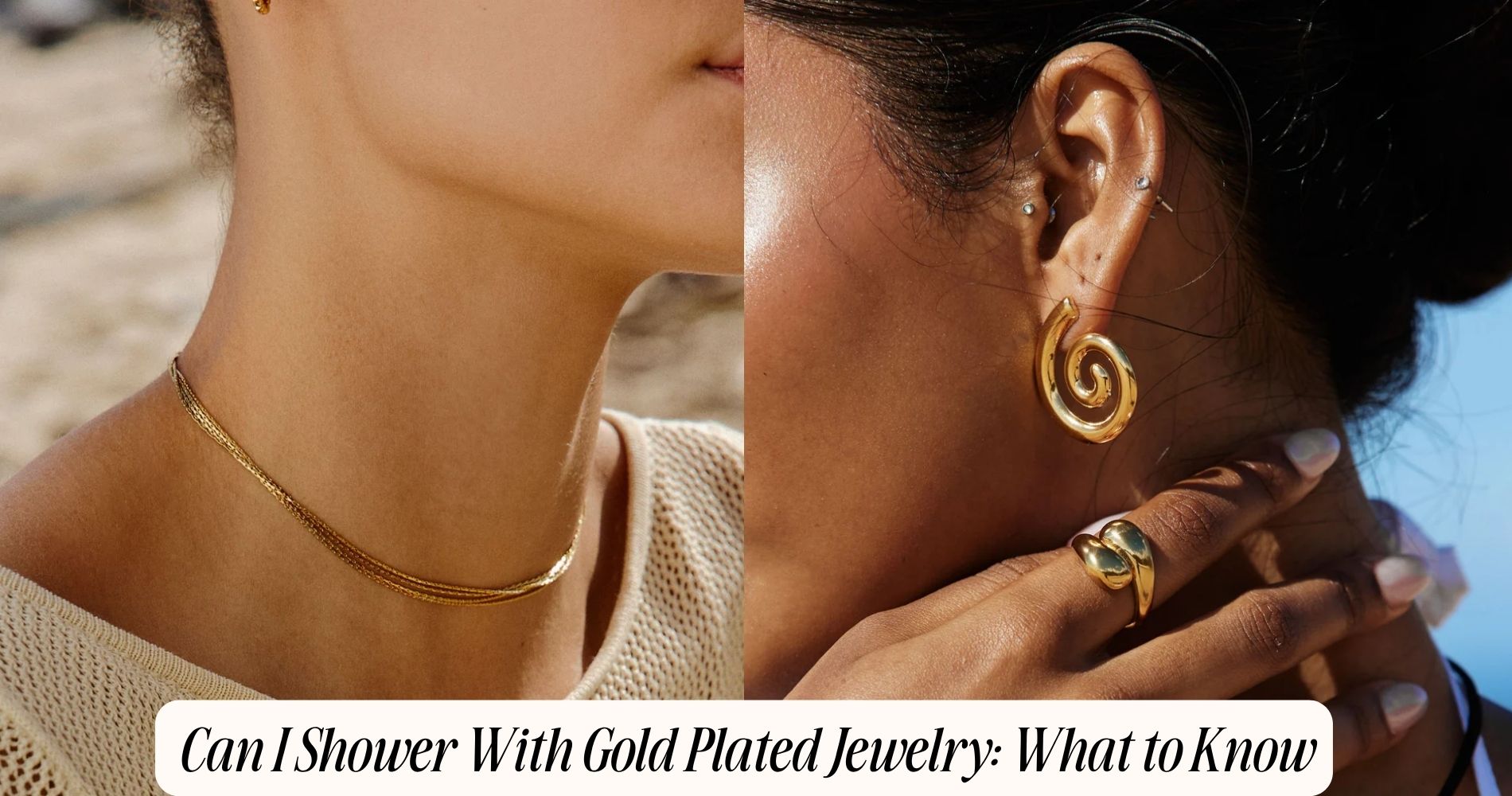
Can I Shower With Gold Plated Jewelry: What to Know
The short answer is no, not if you want the piece to last. The longer answer explains exactly what happens to gold plated jewelry in the shower, why the damage is cumulative rather than immediate, and what the practical consequences are over weeks and months of daily shower exposure. Can I shower with gold plated jewelry and have it still look good six months from now? No. Can you shower with it once and ruin it instantly? Also no. The reality is more gradual and more specific than either extreme. Everyday Gold Jewelry built on PVD coating rather than standard plating changes this calculation entirely. This guide covers what shower exposure specifically does to gold plating, where damage starts, how long it typically takes, and what alternatives hold up through daily shower wear without the degradation cycle.
What Happens to Gold Plating in the Shower
Gold plated jewelry fails in the shower through a combination of three distinct mechanisms that work together rather than independently.
Thermal cycling weakens the plating bond. Standard gold plating is applied through electroplating: a gold layer is deposited onto a base metal surface through an electrochemical process that creates a physical surface adhesion between the two layers. This adhesion is not a molecular or atomic bond. It is a mechanical grip between the deposited gold and the base metal surface at the microscopic level.
When a gold plated piece enters a hot shower and then exits into cooler air, the two metals (gold and the base metal, typically brass) expand and contract at slightly different rates because they have different coefficients of thermal expansion. Over hundreds of daily shower cycles, this repeated differential expansion and contraction stresses the interface between the gold layer and the base metal, gradually loosening the adhesion. The process is not visible in the early stages: the plating appears intact while the adhesion beneath it is progressively weakening.

Soap and shampoo compounds chemically attack the plating interface. Shampoo, conditioner, and body wash contain surfactants designed to penetrate and remove oils from surfaces. At the microscopic gaps that develop between the gold layer and the base metal as the adhesion weakens, these surfactants penetrate and accelerate the separation. They also leave residue that concentrates at those interface gaps during air drying, maintaining chemical contact between washes.
Steam drives moisture under the plating. The sustained steam environment of a hot shower creates moisture penetration at a level that running water contact alone does not. Steam particles are small enough to enter microscopic gaps in the plating surface, particularly at the edges of pieces, at clasp mechanisms, and at any point where the plating is thinnest. Once moisture is under the plating in contact with the reactive base metal, oxidation of the base metal begins, producing the brown or greenish discoloration that appears at plating edges before more widespread failure.
These three mechanisms work together with every shower, which is why gold plated jewelry shows progressive, cumulative damage through shower wear rather than sudden catastrophic failure after a specific number of exposures.
Where Damage Appears First
Gold plating does not fail uniformly across a piece. The damage initiates at specific points that share the characteristics of thinnest plating, most friction, and most moisture retention.
Clasp mechanisms are the first area of any necklace or bracelet to show plating failure. The clasp has moving parts that create friction with every use, which mechanically removes plating material at a rate that static surfaces do not experience. The clasp also creates enclosed spaces where moisture and soap concentrate during showering. On most gold plated necklaces, the clasp shows visible darkening or tarnishing weeks before the visible chain shows any change.
Ring shanks fail faster than ring faces. The inner band surface contacts the finger continuously through all hand movements, creating concentrated friction that removes plating material at the highest rate of any jewelry surface. The warmth and moisture of the finger skin combined with daily handwashing and shower exposure makes the inner shank the highest-intensity contact environment on any ring. The visible top of a ring can look intact while the inner shank has fully failed and the brass base is in direct contact with the skin.
Chain link joins on necklaces and bracelets trap soap and moisture inside the join mechanism. These enclosed spaces retain product residue longer than open surfaces and concentrate the chemical attack at a specific structural point. Links that rub against each other during movement also create mechanical wear at their join points that removes plating progressively.
Earring posts experience the combined effects of sweat and product exposure from showering in a particularly concentrated form because the post sits inside a piercing where moisture does not evaporate freely. Once plating at the post fails, the reactive base metal contacts piercing tissue directly.

How Long Does Gold Plated Jewelry Last in Daily Showers
Realistic timelines for gold plated jewelry worn through daily shower exposure vary by plating thickness, base metal, and piece type, but the ranges are consistent across products at similar quality levels.
| Piece Type | Standard Plating (0.5 micron) | Thick Plating (2 microns) |
|---|---|---|
| Ring (inner shank) | 2 to 6 weeks | 1 to 3 months |
| Bracelet (clasp) | 4 to 8 weeks | 2 to 4 months |
| Necklace (clasp) | 6 to 10 weeks | 3 to 5 months |
| Earring (post) | 3 to 8 weeks | 2 to 4 months |
| Pendant (low friction) | 3 to 6 months | 6 to 12 months |
These timelines represent when visible plating failure becomes apparent at the highest-failure points. The visible face of a necklace pendant may still look gold months after the clasp has failed and the metal beneath it has begun to corrode, which is why people sometimes underestimate how much of a piece has already degraded when they first notice a problem.
Plating on a brass base fails faster than plating on a stainless steel base because brass corrodes immediately when exposed through plating failure, producing visible discoloration. A piece with gold plating over stainless steel fails its plating on the same timeline but shows less dramatic visible consequences when the base metal is exposed, since stainless steel does not corrode or cause green skin discoloration.

What You Can Do to Slow the Damage
If you currently own gold plated jewelry and want to extend its life, the most effective habits target the three damage mechanisms directly.
Remove the piece before showering. This is the most impactful single habit. It eliminates all three mechanisms simultaneously: no thermal cycling, no soap and surfactant contact, no steam penetration. Storing the piece in a dry spot outside the bathroom, where bathroom humidity does not continuously expose it to moisture, extends the benefit further.
Apply skincare and hair products before putting on the jewelry. Products applied while wearing plated jewelry concentrate at the skin-jewelry contact point and penetrate under the plating at the thinnest areas. Letting products absorb fully before putting on jewelry reduces this exposure.
Dry thoroughly immediately after any accidental water contact. If a gold plated piece does get wet, patting it dry immediately with a soft cloth before it air-dries removes the water film before it can penetrate gaps and before mineral deposits from evaporation concentrate on the surface.
Clean the clasp mechanism weekly. A soft toothbrush with a drop of mild dish soap used on the clasp once a week removes accumulated product residue from the mechanism before it dries and hardens in the gaps.
These practices extend the life of gold plated jewelry meaningfully, but they do not change the fundamental material limitation. A piece with a reactive base metal beneath thin gold plating will degrade through shower exposure over time regardless of how carefully it is maintained.
What Actually Holds Up in the Shower
For people who want gold tone jewelry that genuinely handles daily shower wear without a maintenance routine or a replacement cycle, the material specification is the determining factor.
PVD-coated stainless steel is the most practical alternative to standard gold plating for shower-safe everyday jewelry. PVD (Physical Vapor Deposition) deposits the gold-tone finish in a vacuum environment at the atomic level, creating a bond that is categorically different from electroplating's surface adhesion. The coating is approximately 2 to 5 microns thick, four to ten times thicker than standard electroplating. Its atomic-level bond does not have the adhesion vulnerabilities that thermal cycling weakens in electroplated pieces.
The stainless steel base beneath the PVD finish does not corrode when the coating experiences wear at friction points, unlike the brass base in most gold plated jewelry that corrodes immediately on exposure. The combination produces a piece that holds its gold appearance through daily shower contact, soap exposure, and thermal cycling without the progressive degradation that makes standard plating a temporary solution.
Solid gold at 14k and above handles shower exposure without any material concern. The gold is the piece throughout its construction, so there is no plating layer to degrade and no reactive base to expose. The practical limitation is price.
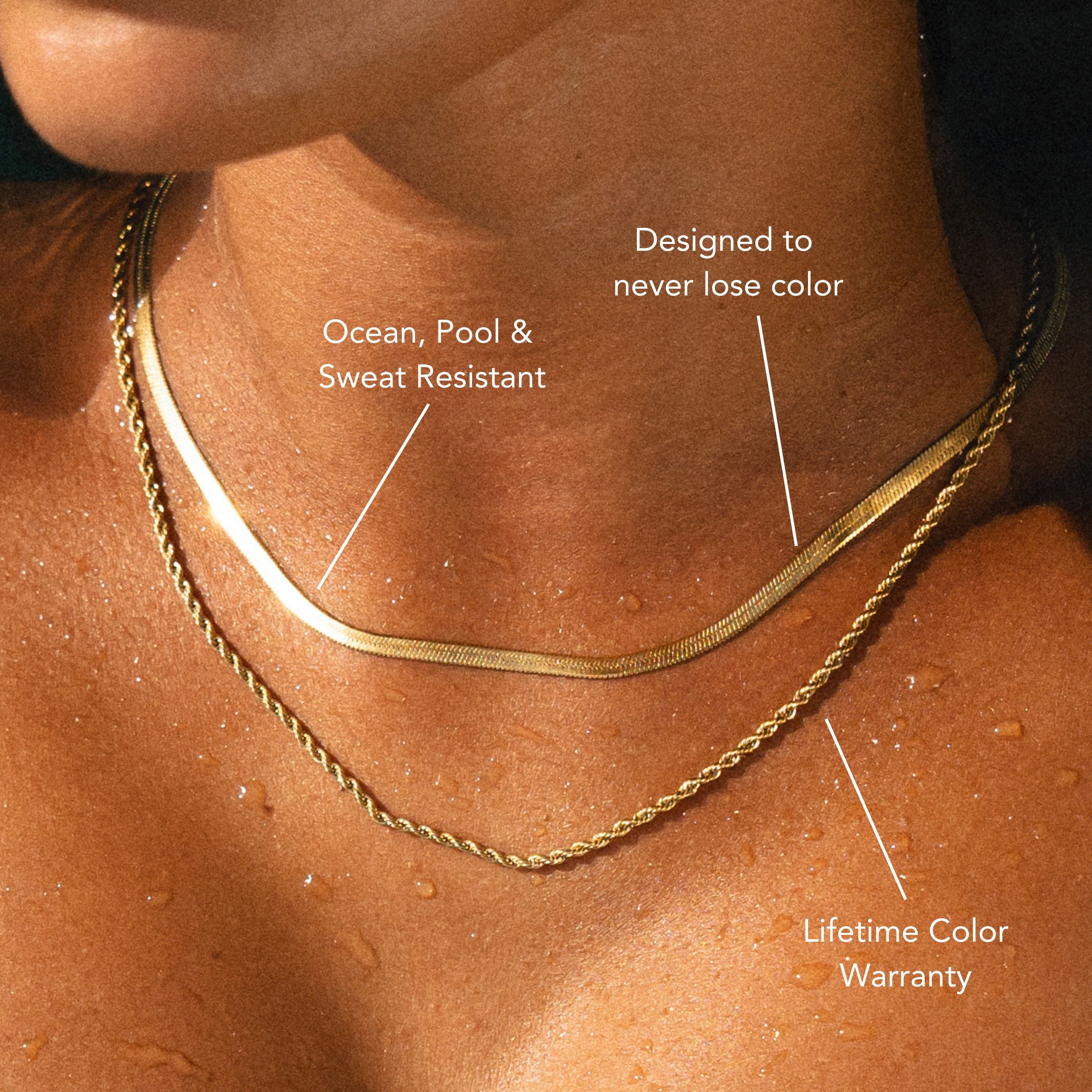
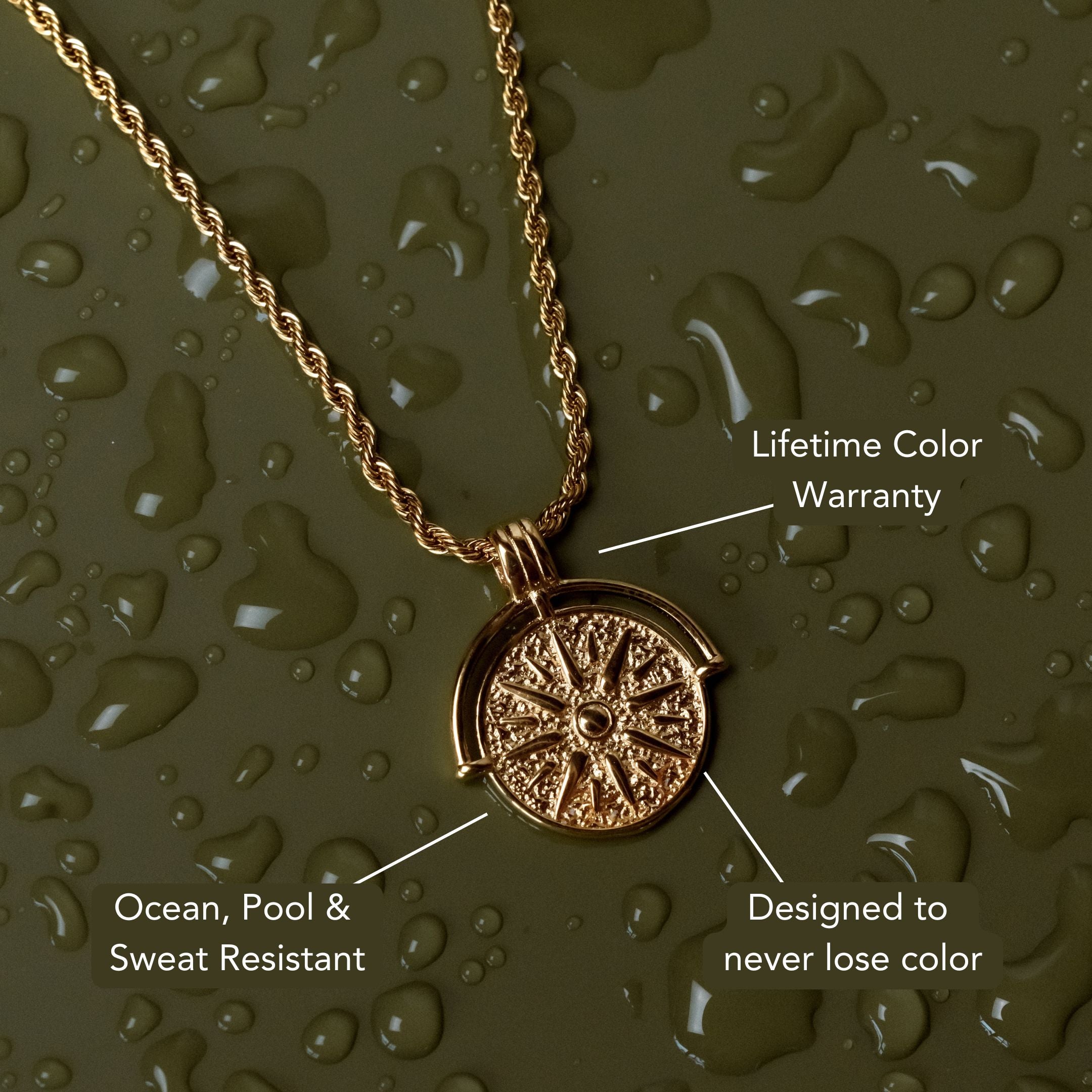
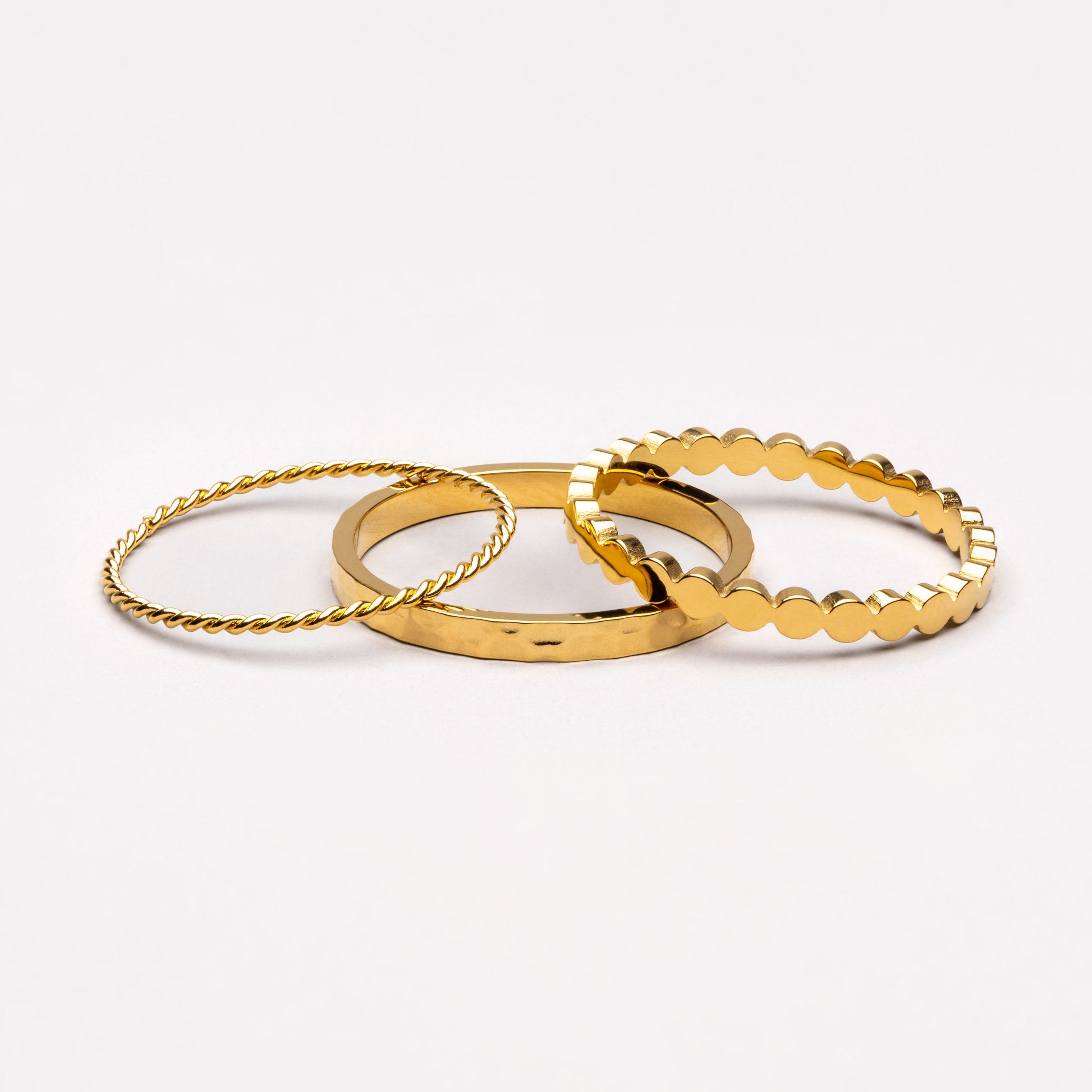
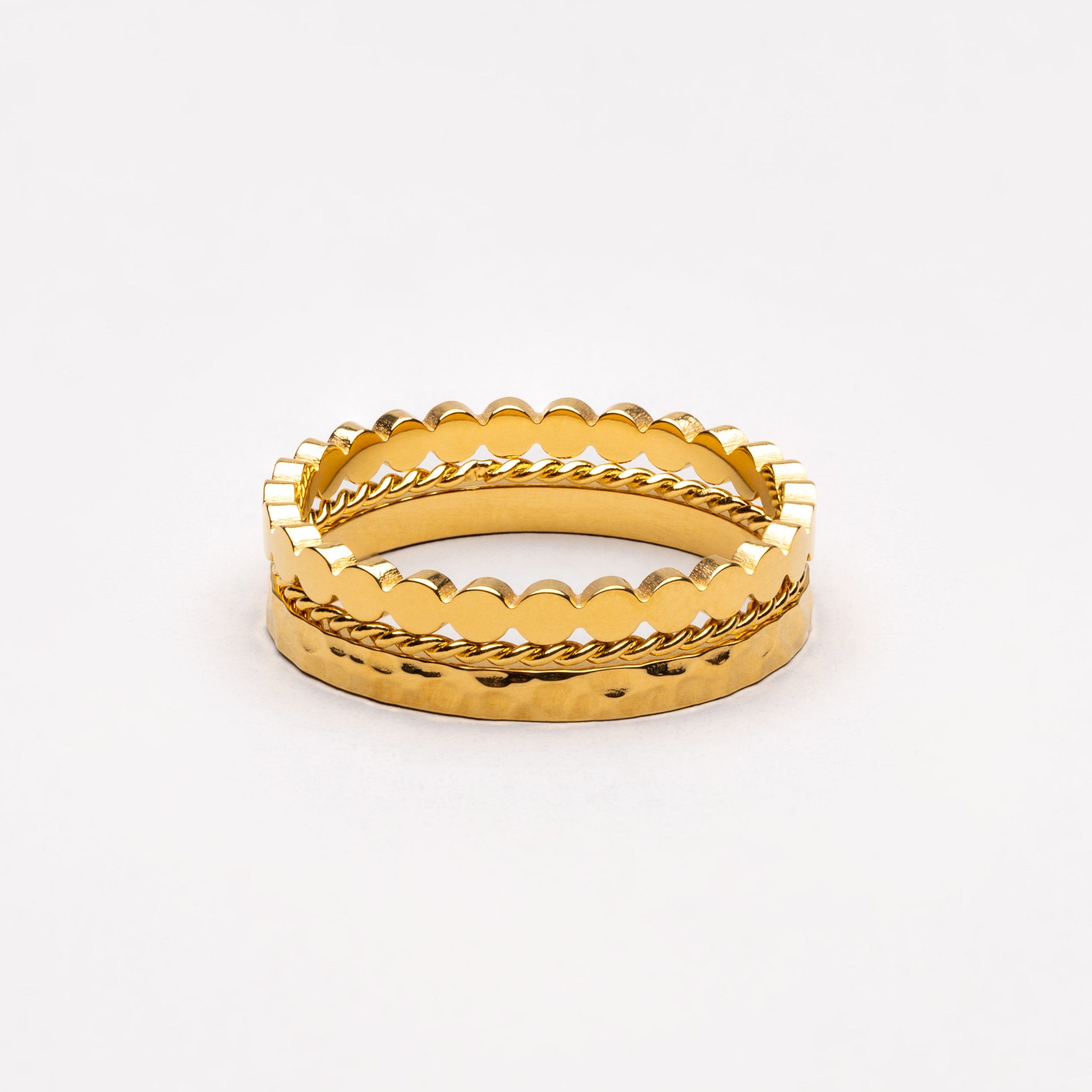
ATOLEA's everyday gold jewelry range is built on PVD-coated 316L stainless steel construction specifically to deliver gold appearance through the conditions that standard gold plating cannot sustain. Every piece carries a lifetime color warranty, which is only a sustainable commitment because the material genuinely performs differently from electroplated gold through daily shower wear.

Frequently Asked Questions
What happens if I shower with gold plated jewelry?
Showering with gold plated jewelry accelerates the three mechanisms that degrade the plating: thermal cycling from hot water to cool air weakens the bond between the gold layer and the base metal, surfactants in soap and shampoo penetrate developing gaps in the plating, and steam drives moisture under the plating at its thinnest points. The damage is cumulative rather than immediate. The clasp, ring shank, and post areas show failure first because they combine thin plating with high friction and moisture retention.
How long before gold plating wears off in the shower?
At the highest-failure points, standard 0.5 micron gold plating shows visible failure within two to eight weeks of daily shower exposure depending on the piece type. Thicker plating at 2 microns extends this to one to four months. The visible pendant or chain face typically holds longer than the clasp or inner ring shank because those surfaces experience less friction and moisture concentration. By the time the face shows visible change, the clasp has usually been failing for weeks.
Can I shower with gold vermeil jewelry?
Gold vermeil has a thicker gold layer than standard plating, minimum 2.5 microns over a sterling silver base. This extends its shower tolerance slightly compared to thin gold plating over brass, but the sterling silver base tarnishes in shower conditions when the plating eventually wears through. Steam, soap, and thermal cycling affect the vermeil plating bond through the same mechanisms as standard plating, just more slowly. Regular shower wear is not recommended for gold vermeil.
Is there gold jewelry that is actually shower safe?
Solid gold at 14k and above is shower safe throughout its construction because the gold itself does not react with shower water, soap, or steam. PVD-coated stainless steel with a gold tone is also shower safe because both the PVD coating and the stainless steel base are unaffected by the shower environment. Standard gold-plated jewelry with a brass or copper base is not shower safe for regular daily use.
What is the difference between gold plated and PVD gold?
Gold plated jewelry applies a thin gold layer through electroplating, creating a surface adhesion that thermal cycling and moisture gradually weaken. The gold content is real gold but present in very small amounts. PVD gold applies a gold-tone finish through atomic-level vacuum deposition, creating a bond that does not have the adhesion vulnerabilities of electroplating. PVD finishes are four to ten times thicker than standard electroplating and do not lift or separate through shower exposure. The base metal is also different: plated jewelry typically uses reactive brass while PVD pieces use non-reactive stainless steel.
The Honest Answer on Showering With Gold Plated Jewelry
Can I shower with gold plated jewelry and expect it to hold its appearance long-term? No. The shower environment combines thermal cycling, surfactant contact, and steam penetration in a way that progressively weakens the plating bond from the first shower onward. The damage is cumulative and starts at the clasp and inner shank before becoming visible on the outer face. For genuinely shower-safe gold appearance, PVD-coated stainless steel changes the material equation: the atomic-level bond and the non-reactive base produce a piece that holds through daily shower wear without the degradation timeline that defines standard gold plating.









Leave a comment
This site is protected by hCaptcha and the hCaptcha Privacy Policy and Terms of Service apply.