


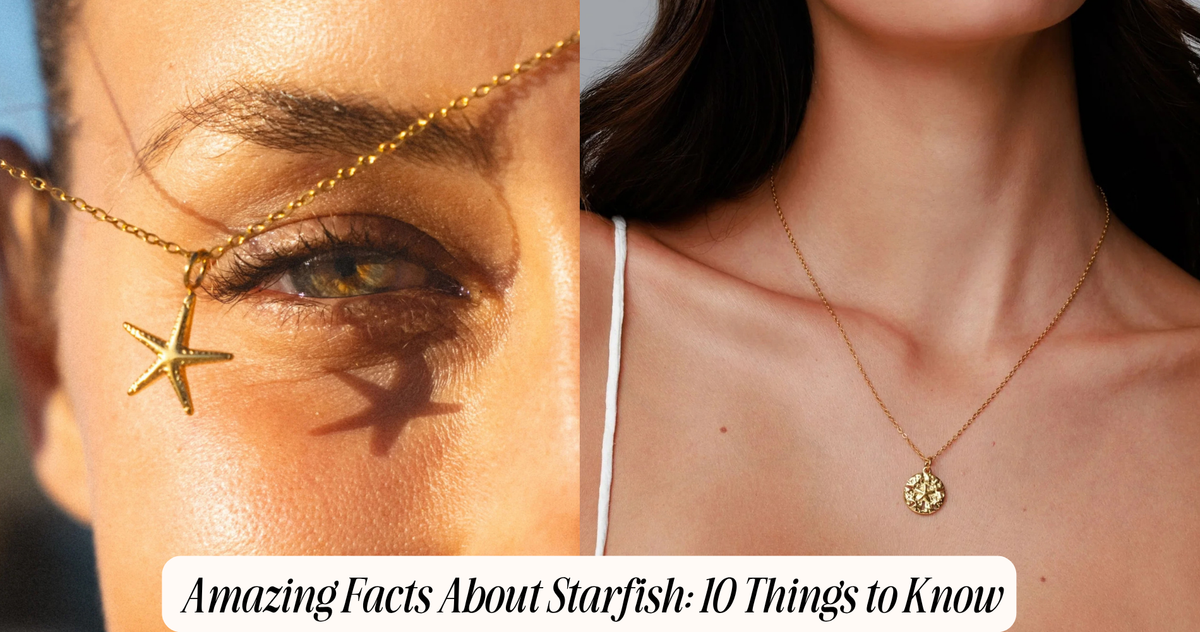
Amazing Facts About Starfish: 10 Things to Know
The most amazing facts about starfish are that they are not fish, have no brain or blood, walk on hundreds of tube feet and can regrow lost arms. Some even digest meals outside their own bodies.
Scientists prefer the name sea star, and these animals live in every ocean. If a tide-pool afternoon leaves you wanting a keepsake, our beach necklaces bring that ocean feeling into everyday wear. In this guide, we will explain how starfish are built, how they move and eat, and why ecologists care about them.
Quick answer: Starfish, or sea stars, are spiny-skinned invertebrates, not fish. They have no brain and no blood, move on hydraulic tube feet, can regrow lost arms, sense light through eyespots, and push their stomachs out to digest prey. Nearly 2,000 species live in oceans worldwide.
Are starfish actually fish?
No. Starfish have no gills, fins or scales, and they crawl instead of swimming. They are invertebrates called echinoderms, which is why scientists prefer the name sea star. Their cousins include sea urchins and sand dollars, not tuna or trout.
Fact 1: Not a fish. Sea stars belong to the class Asteroidea and, like sea urchins and sand dollars, have no backbone.
Fact 2: Spiny-skinned family. Echinoderm comes from the Greek for spiny skin. The group also includes sea cucumbers, and its members arrange their bodies around a central axis instead of having a head and tail.
How do starfish live without a brain or blood?
Sea stars use a nerve ring and nerve cords in place of a brain, and a water vascular system in place of blood. Seawater flows through internal canals that power the tube feet and move oxygen and nutrients.
Fact 3: No brain. A nerve ring around the mouth coordinates the arms, passing along signals from light, touch and chemical sensors. Our guide explains more about whether starfish have a brain.
Fact 4: No blood. Water enters through a sieve plate on top of the body, called the madreporite, then circulates through canals instead of blood vessels.

Fact 5: Hundreds of tube feet. Suction-tipped tube feet line the underside of each arm and work by water pressure. According to NOAA, an adult sunflower sea star moves about one meter per minute on 15,000 of them.
What are the most amazing facts about starfish arms and eyes?
Many starfish can regrow lost arms, some species have 10, 20 or even 40 arms, and each arm tip carries a simple eyespot. Most species have five arms, but the count varies.
Fact 6: Regeneration. A sea star can regenerate a lost arm, though slowly. In some species, a single arm attached to part of the central disc can even grow into a whole new animal.
Fact 7: Extra arms. Five arms is typical, but NOAA confirms that species with 10, 20 and even 40 arms exist.
Fact 8: Eyes at the tips. Each arm ends in a red eyespot that senses light and dark, which is enough to tell bright open water from a shaded crevice.
How do starfish eat?
Many sea stars are predators of clams, mussels and snails. Their mouth sits on the underside, and some species push their stomach out of the body and into the prey, digest it there, then pull the stomach back in.
Fact 9: Outside digestion. Tube feet grip a shell and pull it open slightly, which gives the stomach room to work. This trick lets a sea star eat prey larger than its mouth.
Why do starfish matter to the ocean?
Many sea stars are predators that keep prey numbers in check. In the 1960s, ecologist Robert Paine removed ochre sea stars from a rocky shore, and mussels took over and crowded out other species. That work gave us the term keystone species.
Fact 10: Keystone predators. Paine's experiment, described by Scientific American, showed that one species can reshape a whole community. Later work found the effect varies from site to site, as Hakai Magazine reports. Sea star wasting syndrome has also hit populations along the Pacific coast since about 2013. Curious about their lifespan? Read how long starfish live.
The 10 starfish facts at a glance
| # | Fact | What it means |
|---|---|---|
| 1 | Not a fish | An invertebrate in the class Asteroidea |
| 2 | Spiny-skinned family | Related to sea urchins and sand dollars |
| 3 | No brain | A nerve ring coordinates the arms |
| 4 | No blood | A water vascular system moves seawater inside |
| 5 | Tube feet | Hydraulic suction feet for walking and gripping |
| 6 | Regeneration | Lost arms regrow, slowly |
| 7 | Extra arms | Some species have 10, 20 or 40 |
| 8 | Eyespots | Light-and-dark sensors on each arm tip |
| 9 | Outside digestion | The stomach is pushed into the prey |
| 10 | Keystone role | Predation shapes tide-pool communities |
Which beach necklaces suit starfish lovers?
Start with the Starfish Necklace, then add other sea-life pieces from our ocean-inspired necklaces. Pairing pendants of different lengths creates a simple layered look that still reads as one idea.
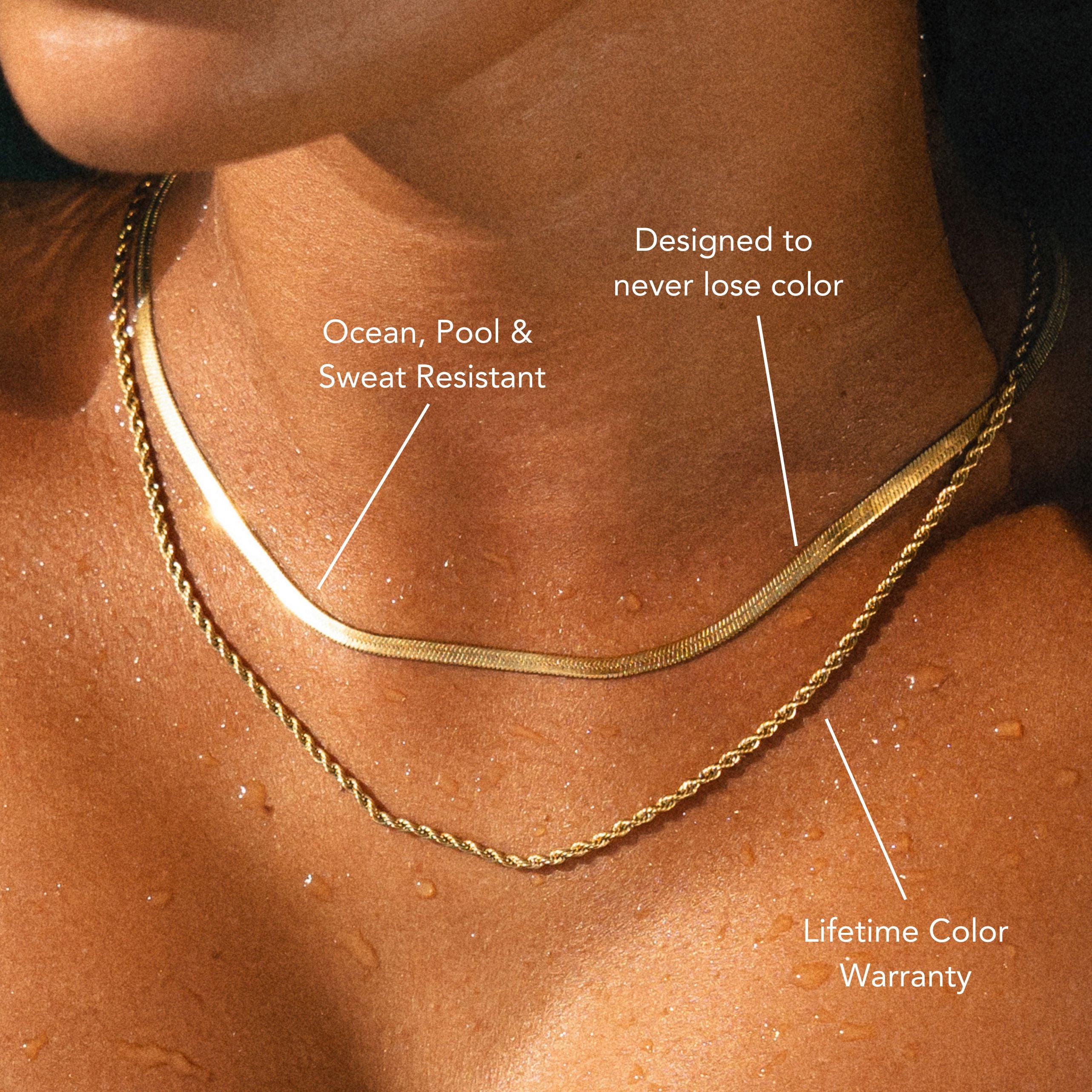
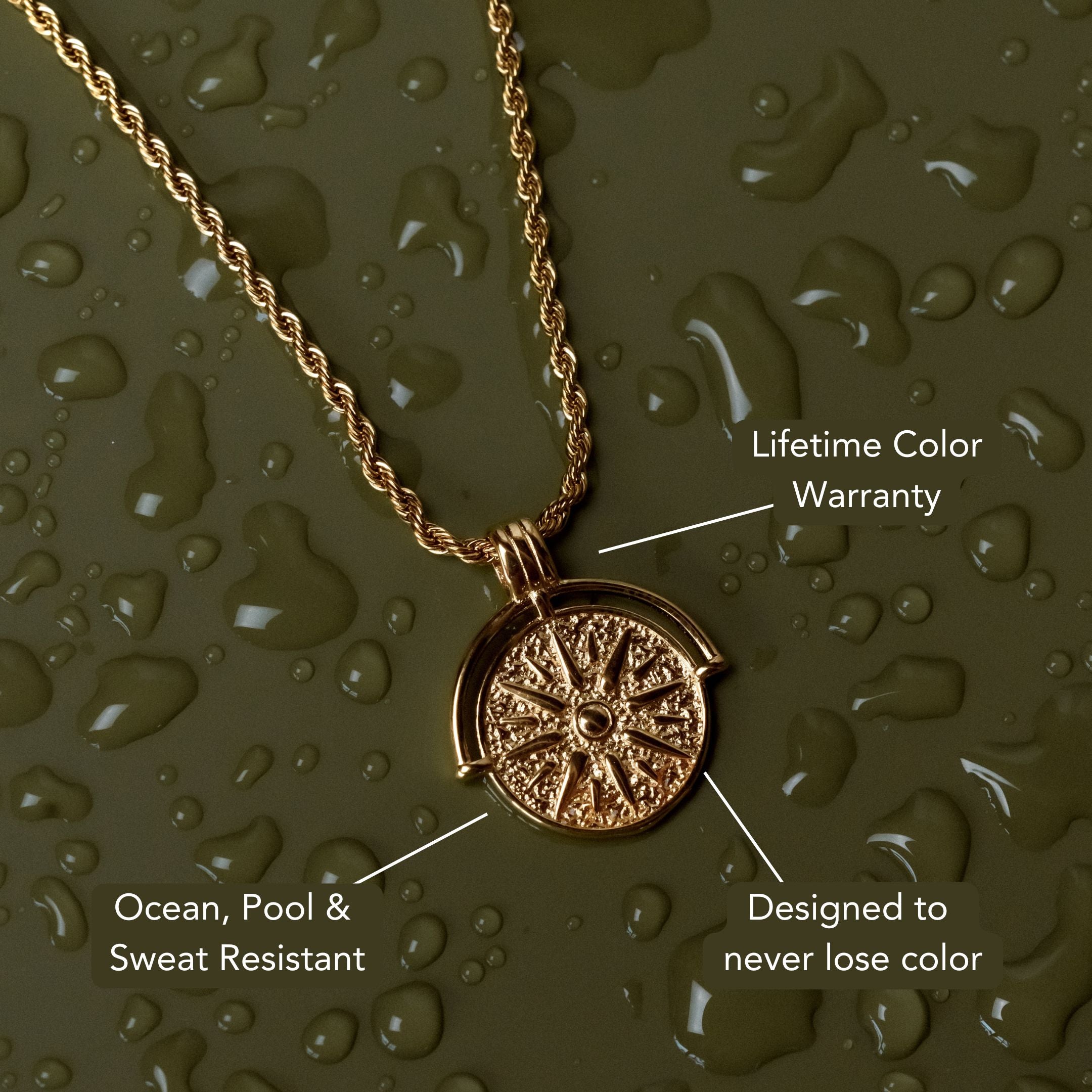
Our necklaces are made of high-quality stainless steel with an 18k gold PVD finish, which we describe as about 10x thicker than standard gold plating, and they are made for the shower, pool, ocean, gym and sweat.

Worked example: Picture a gift for a friend who lives in tide pools. Pair the Starfish Necklace (45 cm + 5 cm extender) with the Sand Dollar Necklace (40 cm + 5 cm extender). At standard lengths, the sand dollar sits 5 cm higher, so the pendants stack cleanly. The pairing also has a science wink, since sand dollars are echinoderms too.
For a third ocean animal, the Opal Turtle Necklace features a simulated opal stone. If symbolism matters to you, read our guide to starfish necklace meaning.
Final Thoughts
These amazing facts about starfish show how much a creature without a brain, blood or fins can do. Admire live ones from the shoreline and leave them in the water. When you want a reminder of the ocean on dry land, browse the full Beach Necklaces collection.
Frequently Asked Questions
Are starfish fish?
No. Starfish, better called sea stars, are invertebrates in the class Asteroidea. They have no gills, scales or fins, and they move on tube feet instead of swimming. Their relatives are sea urchins, sand dollars and sea cucumbers.

Do starfish have brains or blood?
Neither. A ring of nerves around the mouth and cords down each arm coordinate movement. A water vascular system moves filtered seawater through the body in place of blood, helping with movement, oxygen and nutrients.
Can starfish really regrow lost arms?
Yes, many species can regenerate an arm lost to a predator or injury, though it is slow. A few can even grow a new body from one arm that keeps part of the central disc.
Is it safe to pick up a starfish?
It is best not to. Sea stars take in oxygen through their tube feet and small skin sacs called papulae, so time out of water stresses them. Look, take a photo, and leave them where they are.
Can you wear a starfish necklace in the ocean?
Yes. Atolea's necklaces, including the Starfish Necklace, are made for the shower, pool, ocean, gym and sweat, and are considered safe for most people with sensitive skin. Live starfish, however, should stay in the water.













Leave a comment
This site is protected by hCaptcha and the hCaptcha Privacy Policy and Terms of Service apply.