


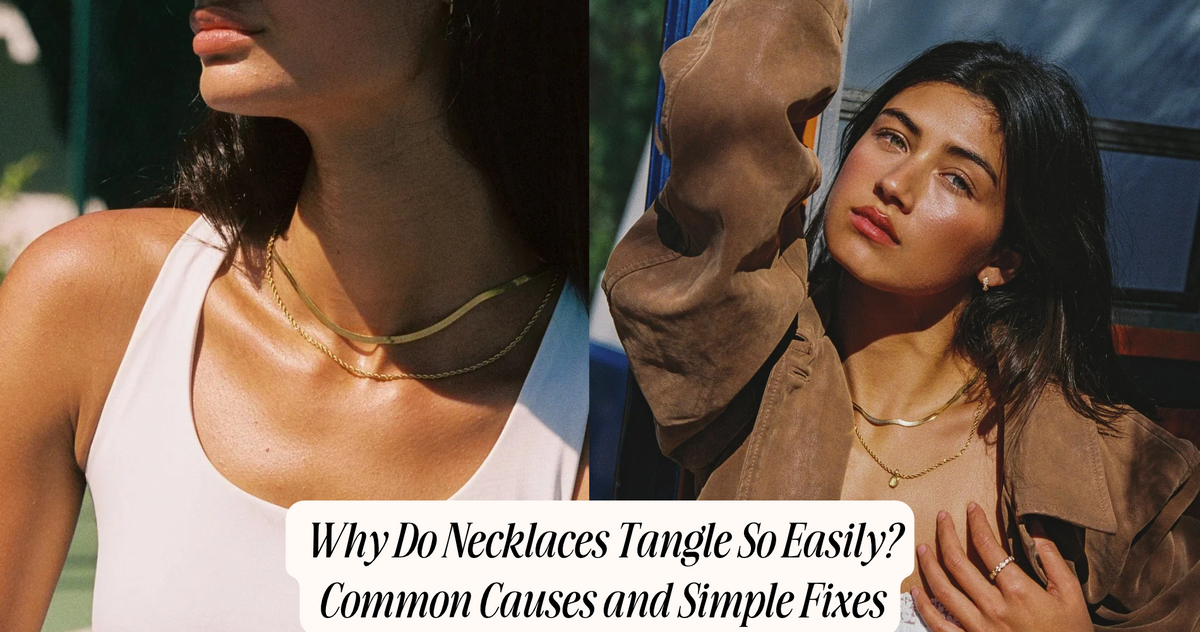
Why Do Necklaces Tangle So Easily? Common Causes and Simple Fixes
Necklaces tangle because thin, flexible chains have many small links that loop around each other whenever they move, rub against clothing or lie close together. Fine styles, layering, workouts and loose storage raise the odds, but most knots come from a few predictable causes with simple fixes.
If you keep asking why do necklaces tangle so easily, the answer is more about chain design and daily habits than bad luck. Choosing sturdier styles, like the pieces in our everyday gold necklaces, makes the whole routine easier. In this guide, we will explain what causes tangles, which chain types knot most, and how to wear, store and untangle your necklaces.
Quick answer: Necklaces tangle because thin chains bend freely, their small links catch on each other, and daily movement keeps them shifting. Layering, workouts, sleeping in a chain and loose storage make it worse. Space your lengths, clasp layers together, choose firmer chain styles and store each necklace separately.
Why Do Necklaces Tangle So Easily? The Simple Mechanics
A chain tangles when one loop of links slips through another and then tightens. Thin, lightweight chains bend freely, so any slack, motion or contact can start that first loop, and every small tug afterward pulls the knot tighter.
Three ingredients show up again and again:
- Flexibility: the more a chain bends, the more loops it can form.
- Slack and motion: swinging, shaking and being tossed in a bag give links the chance to wander.
- Contact: two chains side by side, or a chain against a scarf or hair, rub together and snag.
Which Chain Types Tangle the Most?
Fine, flexible chains with small links tangle the most, while flatter, firmer or shorter styles hold their shape and resist looping. Length matters too, because a longer chain carries more slack.
| Chain style | Tangle risk | Why |
|---|---|---|
| Very fine, hairline chain | High | Small, light links bend easily and catch on each other |
| Layered chains of similar length | High | They move together and rub all day |
| Rope chain | Medium | Twisted links hold shape better than a hairline chain, but long lengths still loop |
| Herringbone chain | Lower | Flat, tightly set links stay close to the skin |
| Short choker | Lower | Less chain means less slack to loop |
Does Wearing Multiple Necklaces Make Tangling Worse?
Yes, layering is one of the biggest causes of tangling, because each chain moves on its own and rubs against its neighbors all day. Spacing the lengths apart, mixing chain styles and joining layers at the clasp keeps them organized.
- Space the lengths: leave about 2 inches (5 cm) between layers so each chain has room to hang on its own.
- Mix styles: pair a firm chain with a finer one instead of two identical strands.
- Join at the clasp: hooking two chains together lets them move as one unit.
How Do Daily Habits and Storage Create Tangles?
Most overnight tangles come from movement and storage. Workouts, sleeping in a chain, pulling tops over your head and dropping necklaces into a drawer all give loose links time and freedom to loop. A few small routines remove most of the risk.
| Situation | What goes wrong | Simple fix |
|---|---|---|
| Workouts | A swinging chain loops around itself | Wear a shorter chain or tuck it under your top |
| Sleeping | The chain twists against pillows and hair | Wear one short, firm chain instead of a stack |
| Getting dressed | Knits, scarves and hair snag the links | Lift the chain clear of your collar before pulling on tops |
| Drawers and bags | Loose chains pile together | Fasten each clasp and store necklaces separately |
Fastening the clasp before storing matters more than it seems, because an open chain has two free ends that can slip through any loop.
How Do You Untangle a Necklace Without Damaging It?
Lay the necklace flat under good light, loosen the knot with two fine pins, and work from the outside in without pulling. Patience matters more than force, because tugging tightens the knot and can bend delicate links.
- Find the start: spread the chain on a hard surface and see where the knot begins.
- Add slip: put one tiny drop of baby oil on the knot, then wipe the chain clean afterward.
- Open the loops: slide a pin into each side of the knot, wiggle gently and pull the loops apart one at a time.
What Does a Low-Tangle Everyday Setup Look Like?
A low-tangle setup uses a few firm chains, keeps each length clearly apart and avoids stacking identical fine strands. Pre-joined layers are an easy example, because the chains are fixed in relation to each other from the start.
- Two chains, one unit: the “Ios” Layered Necklace ties a herringbone choker (39 cm or 15 in) to a rope chain (42 cm or 16.5 in), so the pair cannot twist around each other.

- Room for a third layer: the “Saona” Layered Necklace has three chains at 36, 42 and 47 cm (14, 16.5 and 18.5 in), which leaves about 2 inches (5 to 6 cm) between layers.

Which Gold Necklaces Are Easier to Keep Tangle-Free?
Choose firm single chains or pre-joined layers, and keep every length clearly different. Our everyday gold necklaces collection includes flat herringbone chokers, slim rope chains and joined layers, so you can build a stack that stays organized.
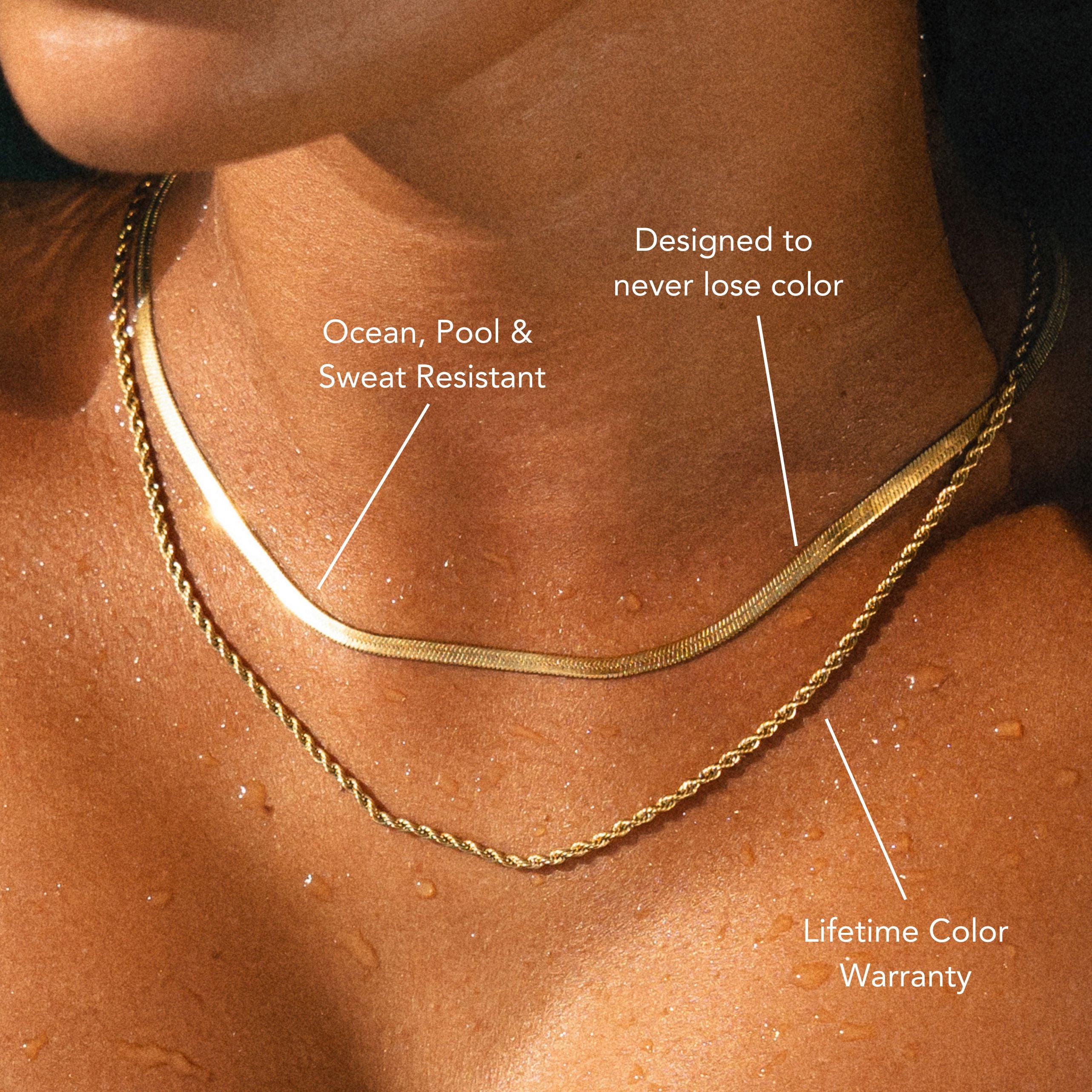
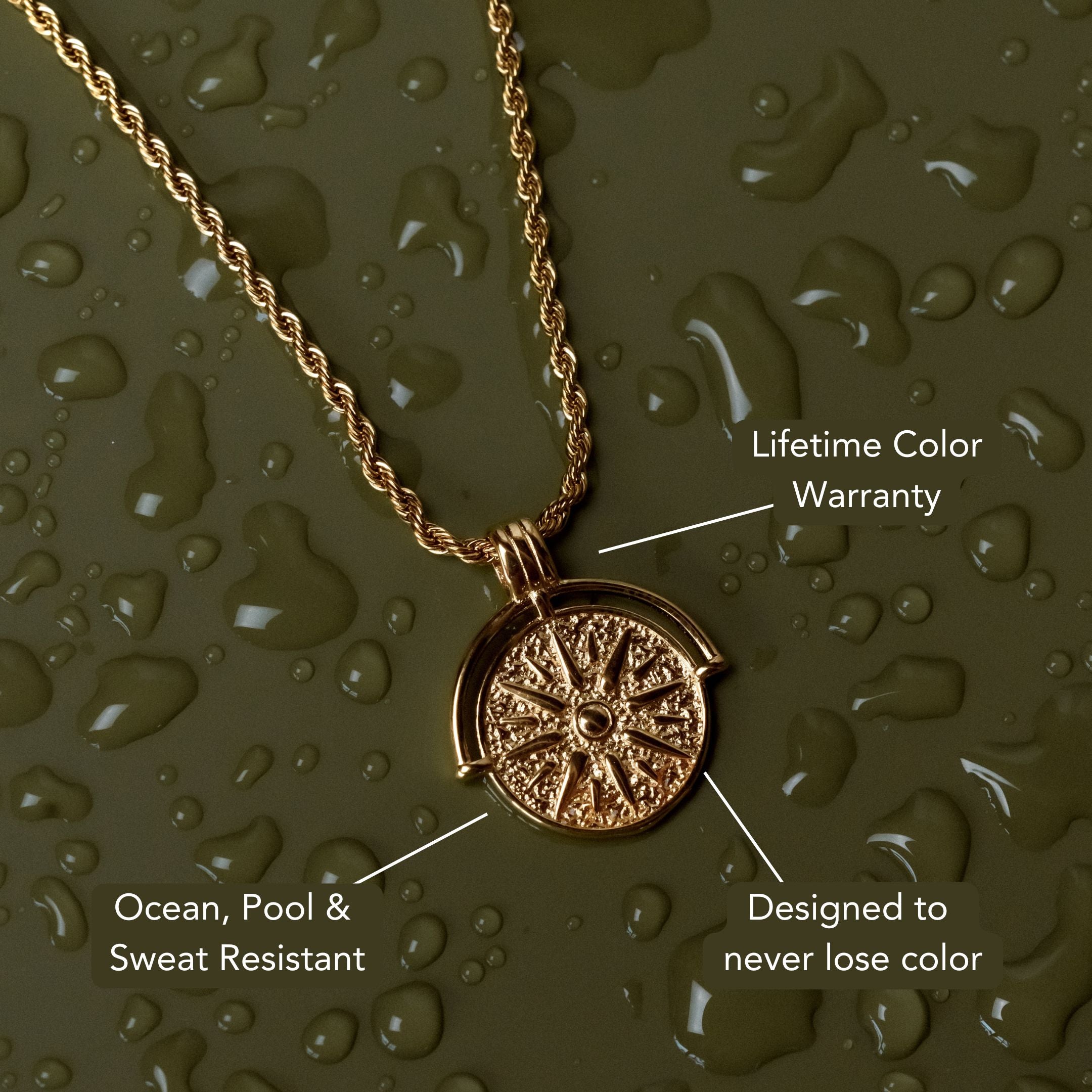
Atolea necklaces are made from high-quality stainless steel with an 18k gold PVD finish that Atolea says is about 10x thicker than standard gold plating, and they are made for the shower, pool, ocean, gym and sweat, so one low-tangle setup can stay on all day.

For a simple pair, wear the “Kauai” Herringbone Choker at 39 cm and the “Calvi” Rope Chain Necklace on its 5 cm extender (44 cm). The 4 mm choker and 2 mm rope chain differ in width, and the 5 cm gap matches the spacing suggested earlier.

Final Thoughts
So, why do necklaces tangle so easily? Thin chains, slack, movement and loose storage all invite loops, and the fixes are simple: space your layers, choose firmer styles and fasten every clasp before storing.
Frequently Asked Questions
Why do necklaces tangle in a jewelry box?
Loose chains slide against each other every time the box moves, and open clasps leave free ends that slip through other loops. Fasten each clasp and give every necklace its own slot, hook or pouch so the chains cannot touch.
Do thicker chains tangle less?
Usually, yes. Thicker and flatter chains resist bending into tight loops, so they knot less often than very fine chains. Length still matters, because a long chain of any thickness has more slack than a short one.
How do I stop my necklace tangling while I sleep?
Choose one short, firm chain instead of a layered stack, and make sure it sits flat and untwisted before you lie down. Less chain length and fewer strands mean fewer loops can form against your hair and pillow.
Does pulling on a knot make it worse?
Yes. Pulling tightens the loops and can stretch or bend delicate links. Loosen the knot first with two fine pins, work from the outside in, and add a tiny drop of baby oil if the links will not slide.









Leave a comment
This site is protected by hCaptcha and the hCaptcha Privacy Policy and Terms of Service apply.