


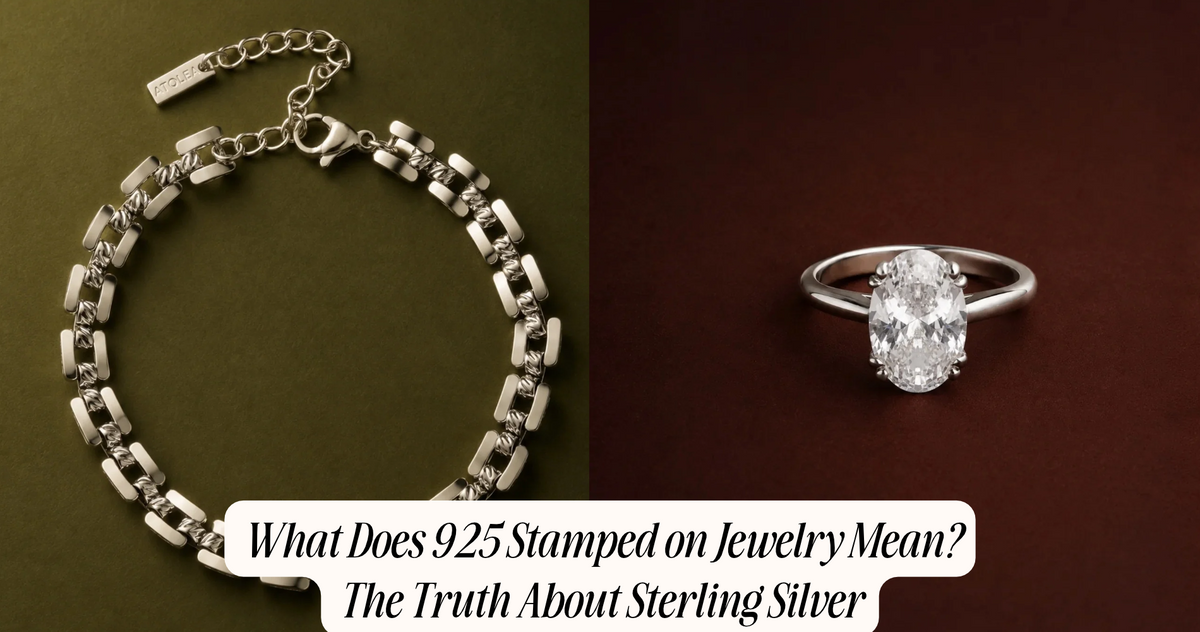
What Does 925 Stamped on Jewelry Mean? The Truth About Sterling Silver
If you have ever squinted at a tiny mark inside a ring and wondered what does 925 stamped on jewelry mean, the short answer is that the metal is sterling silver: at least 92.5% pure silver, with the rest usually copper.
A 925 stamp says nothing about plating, tarnish, or whether a piece can handle water. It also turns up on gold-colored jewelry. And if you want pieces that go in the shower and the ocean with you, our waterproof jewelry collection takes a different route altogether. In this guide, we will explain what the stamp proves, what it does not, how to check a piece, and how to care for sterling silver.
Quick answer: A 925 stamp means the piece is sterling silver: 925 parts per 1,000 pure silver (92.5%), mixed with other metals, usually copper, for strength. It confirms the metal grade, not the finish, the maker, or how well the piece resists tarnish.
What does 925 stamped on jewelry mean?
A 925 stamp marks sterling silver. It means 925 out of every 1,000 parts, by weight, are pure silver, or 92.5%. The other 7.5% is a mix of metals, most often copper, added because pure silver is too soft to hold its shape in rings, chains, and earrings.

The FTC says the words silver, sterling, and sterling silver describe products with 92.5% pure silver, and that a 925 mark means 925 parts per thousand are pure. You may also see the same grade written as .925, Sterling, or Ster.
Is 925 silver real silver, and how is it different from 999?
Yes, 925 is real silver, just not pure silver. Fine silver, stamped 999, is nearly pure but very soft, so it is rarely used for everyday pieces. Sterling trades a little purity for strength, which is why it became the standard for silver jewelry.
| Mark or word | What it usually means | Worth knowing |
|---|---|---|
| 925, .925, Sterling, Ster. | Sterling silver, at least 92.5% pure | The standard grade for silver jewelry |
| 999 | Fine silver, about 99.9% pure | Soft, so less common for daily wear |
| Plated or a plating abbreviation | A thin coating over another metal | Not solid silver or gold |
| Vermeil | A gold layer over a sterling silver base | Often carries a 925 stamp |
Why would gold-colored jewelry be stamped 925?
Because the stamp describes the base metal, not the color on top. A gold-colored ring stamped 925 is usually sterling silver with a thin gold layer over it, often sold as gold vermeil or gold-plated sterling. The gold can wear through over time, while the silver underneath stays.
If a listing says only gold, ask what the gold layer is and how thick it is.
Does a 925 stamp prove a piece is genuine?
No. A stamp is a clue, not proof, because a mark can be applied to metal that does not meet the standard. Marking a piece sterling when it falls short is considered deceptive under US rules, but that does not keep every fake off the market.
The revised FTC Jewelry Guides keep the 925 threshold for the terms sterling and sterling silver. To check a piece yourself:
- Read the whole mark: Check the band, clasp, or tag. The trade group MJSA says US makers who stamp a fineness must add a registered trademark, so a bare 925 with no maker's mark deserves a closer look, though older and imported pieces vary.
- Try a magnet: Silver and copper are not magnetic, so a piece that clings to a strong magnet is not sterling. Passing proves nothing on its own.
- Check worn edges: Plated pieces can show a different metal where the coating has rubbed through.
- Ask a jeweler: An acid test or an electronic tester gives a firmer answer than any home check.

Can you wear 925 jewelry in water?
Briefly, yes. Sterling silver will not dissolve in the shower, but moisture speeds up tarnish, the dark film that forms when silver reacts with sulfur compounds. Chlorine and salt water are tougher on it, so it is wise to remove sterling before the pool or the sea.
Tarnish is a surface reaction that a soft polishing cloth removes. Here is a quick care guide:
| Situation | What to do |
|---|---|
| Shower | Fine briefly; dry it right afterward |
| Pool or ocean | Take it off first; rinse and dry if exposed |
| Gym | Remove it, since sweat can speed tarnish |
| Storage | Keep it dry, ideally in an airtight bag |
| Cleaning | Use a soft polishing cloth; avoid bleach and ammonia |
What if your jewelry has no 925 stamp?
A missing stamp does not automatically mean a piece is fake. Very small items often have no room for a mark, so a tag, box, or receipt may be the only record. Treat vague phrases like silver-tone as a sign the piece is not sterling.
Stainless steel and brass carry no silver stamp because they are not silver. What matters is that the seller names the metal plainly.

When is waterproof jewelry a better fit than sterling?
If you want to wear one piece through showers, swims, and workouts without a care routine, a metal built for water is the practical choice. Sterling is a lovely material, but it asks for dry storage, polishing, and regular removal near water.
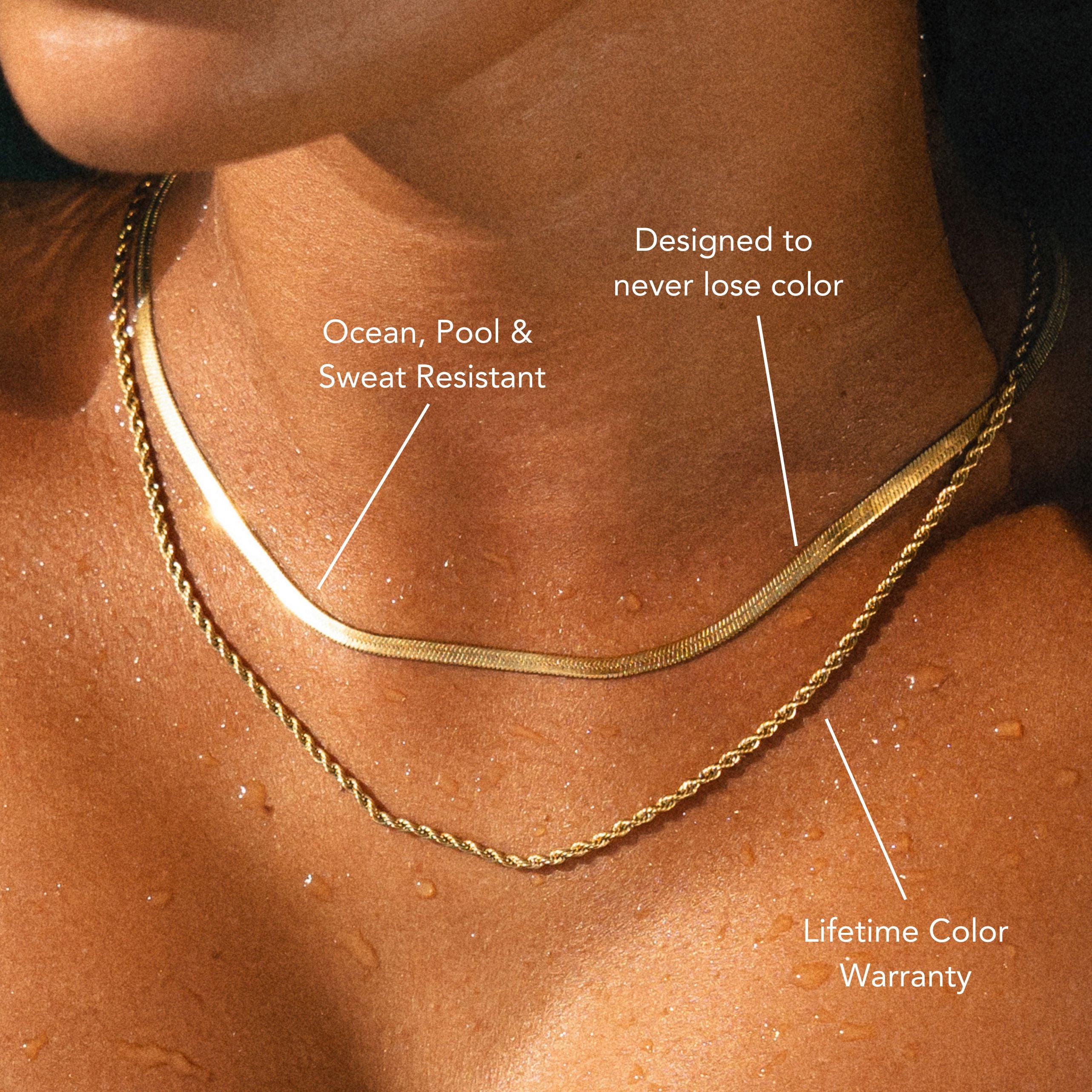
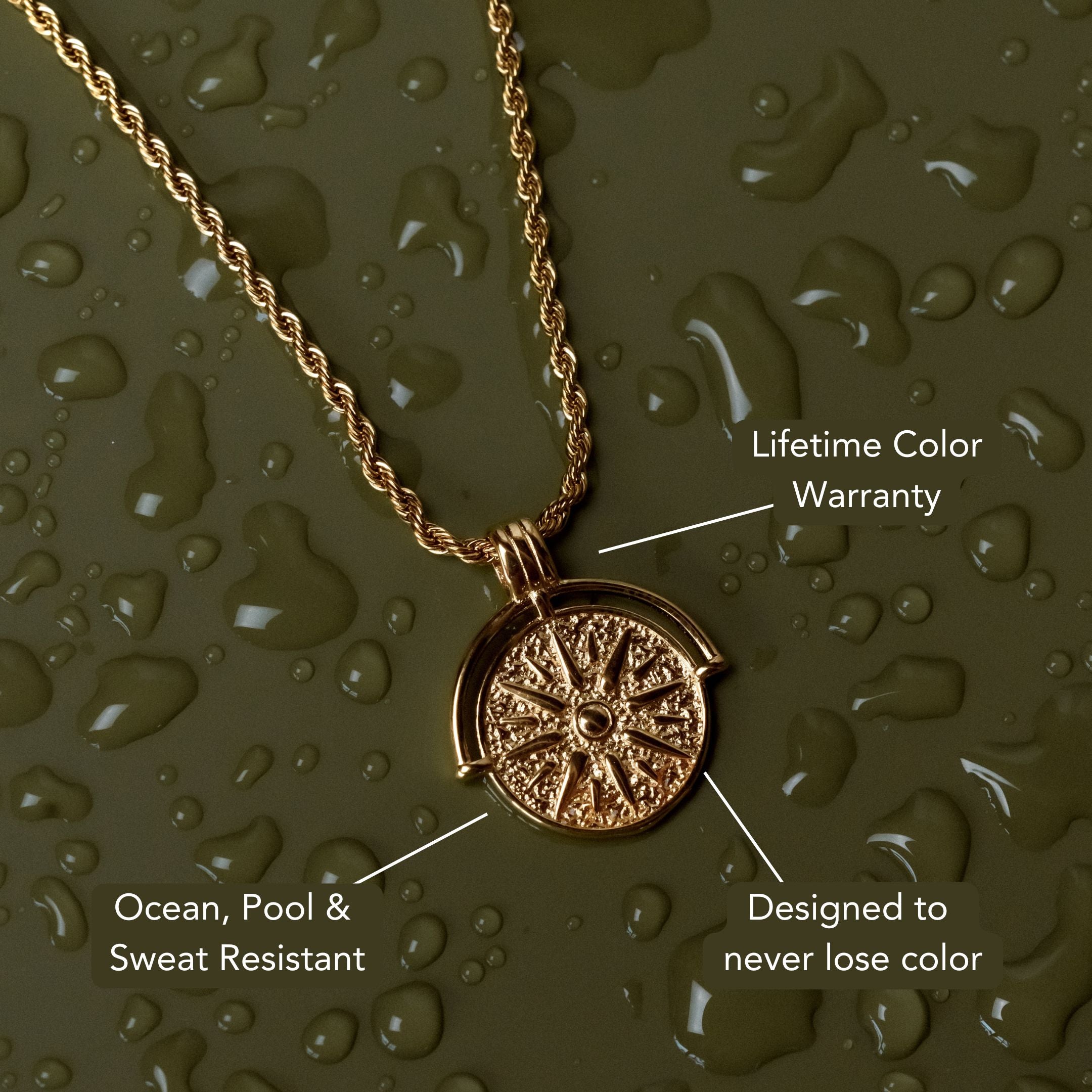
That is the gap Atolea's waterproof jewelry is built to fill. Atolea pieces use high-quality stainless steel with an 18k gold PVD finish that Atolea says is about 10x thicker than standard gold plating, and they are made for the shower, pool, ocean, gym and sweat. They are not sterling silver, so a 925 stamp does not describe them.
Final Thoughts
So, what does 925 stamped on jewelry mean? It means sterling silver at 92.5% purity, a reliable starting point but not a guarantee of finish, authenticity, or water resistance. Read the stamp, the maker's mark, and the seller's description together, and keep sterling dry with a polishing cloth close by.
Frequently Asked Questions
Is 925 the same as sterling silver?
Yes. The number 925 is simply the numeric way of marking sterling silver. A piece stamped 925 and a piece marked sterling or Ster. are the same grade: at least 92.5% pure silver, with the remainder made up of other metals, usually copper.
Is 925 sterling silver worth money?
It has real value, but the stamp alone does not set the price. Melt value follows the silver market, while the selling price depends on design, craftsmanship, brand, and condition. Most 925 pieces are worth more as finished jewelry than as scrap metal.
How can I test if my 925 piece is real?
Start with the stamp and any maker's mark, then try a strong magnet, since sterling is not magnetic. For a firmer answer, ask a jeweler to run an acid test or use an electronic tester. No single home check is conclusive on its own.










Leave a comment
This site is protected by hCaptcha and the hCaptcha Privacy Policy and Terms of Service apply.