

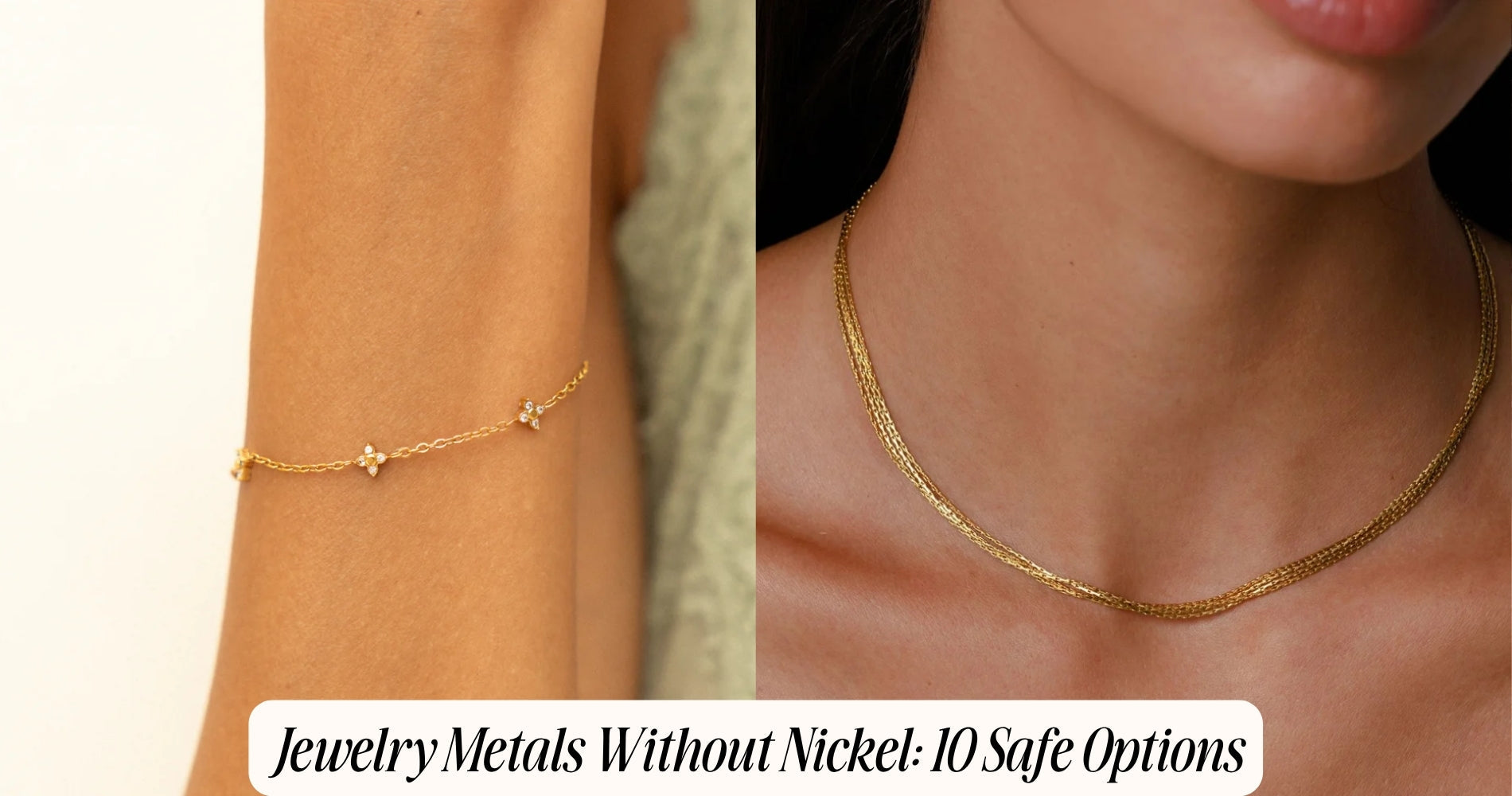
Jewelry Metals Without Nickel: 10 Safe Options
Nickel is one of the most common triggers for jewelry related skin reactions, responsible for the majority of contact dermatitis cases linked to metal jewelry. If you have ever dealt with redness, itching, or a rash after wearing a particular piece, there is a good chance nickel was the culprit. Understanding which jewelry metals without nickel are available, and how to confirm a piece is genuinely nickel free, can save you from repeated irritation and wasted money on jewelry you cannot comfortably wear.
In this guide, we will walk through ten reliable nickel free metal options, along with practical tips for verifying nickel content before you buy. If you want jewelry built specifically around this concern, our Hypoallergenic Jewelry collection is crafted from materials that avoid nickel from the start.
Why Nickel Specifically Causes So Many Problems
Nickel allergy is the most common metal allergy worldwide, and it is estimated that a significant percentage of the population, particularly women, will react to nickel exposure at some point in their lives. This is largely due to nickel's widespread use across costume jewelry, fashion accessories, and even everyday items like belt buckles and eyeglass frames, meaning many people are exposed to the metal repeatedly over years before ever developing a noticeable reaction.
Once sensitized, the immune system continues to react to nickel exposure going forward, which is why someone might wear a particular necklace for years without issue, only to suddenly develop irritation after continued, repeated contact gradually builds sensitivity over time.

1. Titanium
Titanium contains no nickel whatsoever and is widely regarded as one of the most reliable metals for those with nickel allergies. Beyond simply being nickel free, titanium is also lightweight and highly resistant to corrosion, making it a practical, long lasting choice for rings, earrings, and other frequently worn pieces.
2. Niobium
Niobium is another completely nickel free metal, closely comparable to titanium in terms of biocompatibility and resistance to causing reactions. Its lightweight nature and natural hypoallergenic properties have made it increasingly popular, particularly within body jewelry and earring designs.
3. Solid 18K or Higher Gold
While lower karat gold often contains nickel as part of its alloy mixture, higher purity gold, specifically 18 karat or above, contains a much smaller percentage of alloyed metals overall, significantly reducing the likelihood of nickel exposure. For those with confirmed nickel sensitivity who still want to wear gold jewelry, opting for higher karat pieces specifically can make a meaningful difference.
4. Platinum
Platinum is naturally nickel free and represents one of the safest possible choices for those with even severe nickel allergies. Its durability and hypoallergenic properties make platinum a reliable option, though its higher price point places it in a more premium category compared to some other nickel free alternatives.
5. Palladium
Palladium, part of the same metal family as platinum, is another naturally nickel free option that has grown in popularity as a more affordable alternative to platinum while still offering similar hypoallergenic benefits and durability.
6. Surgical Grade Stainless Steel (316L)
While surgical steel does technically contain trace amounts of nickel, the specific 316L grade formulation binds the nickel so tightly within the metal structure that it rarely leaches out enough to cause a reaction in most people. For those with mild to moderate sensitivity, 316L surgical steel often works well, though those with more severe allergies may still prefer a completely nickel free option like titanium instead.
7. Tungsten Carbide
Tungsten carbide is naturally nickel free and exceptionally hard and durable, making it a popular choice for rings specifically, since it resists scratching and damage significantly better than many softer metal options.
8. Sterling Silver (Verified Nickel Free)
Sterling silver itself does not inherently require nickel, since the alloy typically pairs pure silver with copper rather than nickel. However, not every manufacturer follows this exact formulation, so those with confirmed nickel allergies should specifically seek out sterling silver labeled or verified as nickel free, rather than assuming all sterling silver is automatically safe.

9. Copper
Pure copper jewelry, while less common for fine jewelry compared to other metals on this list, is naturally nickel free and has even been associated with some believed therapeutic benefits in certain traditions, though these claims are not scientifically established. Copper does require more maintenance, since it tarnishes relatively quickly, but it remains a genuinely nickel free option for those seeking alternatives.
10. Silicone and Non Metal Materials
For those with the most severe nickel sensitivities, silicone, glass, wood, and other completely non metal materials offer an entirely different category of nickel free options. While not suitable for every jewelry style, these materials can be particularly helpful for rings or bracelets when metal contact needs to be avoided entirely.
How Nickel Ends Up in Jewelry
Nickel is commonly used in jewelry manufacturing because it is inexpensive, durable, and helps strengthen softer precious metals when used in alloy form. It is particularly prevalent in costume jewelry and lower cost fashion accessories, where manufacturers often prioritize affordability over hypoallergenic properties.
Even jewelry marketed as gold or silver can sometimes contain nickel as part of the specific alloy mixture used, particularly in lower karat gold or silver alloys that do not follow more careful, nickel free formulation practices.
Regulations Around Nickel in Jewelry
Some regions have implemented specific regulations limiting the amount of nickel allowed in items with prolonged skin contact, including jewelry. The European Union, for example, enforces strict nickel release limits through what is commonly referred to as the Nickel Directive, requiring jewelry sold within the EU to meet specific nickel release thresholds designed to protect consumers from developing sensitization.
The United States, by contrast, does not currently have equivalent federal regulations specifically limiting nickel content in jewelry, meaning consumers in the US need to rely more heavily on manufacturer labeling and personal research when specifically seeking nickel free options.

How to Test Jewelry for Nickel
If you want to verify whether a specific piece of jewelry contains nickel, a few methods can help provide additional confirmation beyond simply trusting product labeling.
Nickel spot testing kits, available for purchase online or at some pharmacies, use a chemical solution that changes color when it comes into contact with nickel, offering a relatively simple, at home testing method for checking suspicious pieces.
Professional testing through a jeweler or dedicated testing service offers a more reliable, thorough evaluation, particularly for higher value pieces where accuracy matters significantly.
Patch testing through a dermatologist can help confirm whether you specifically have a nickel allergy in the first place, which is particularly useful if you are unsure whether nickel is truly the source of your jewelry related irritation.
Reading Labels Carefully
When shopping specifically for jewelry metals without nickel, careful label reading becomes particularly important. Look for explicit nickel free labeling rather than assuming general terms like hypoallergenic automatically guarantee zero nickel content, since this broader term can sometimes be used more loosely across different manufacturers and retailers.
Terms like solid titanium, solid surgical steel, or verified nickel free sterling silver offer more specific, reliable assurance compared to vaguer marketing language that does not clearly specify the exact metal composition involved.
What to Do If You Suspect a Nickel Allergy
If you consistently experience irritation from jewelry and suspect nickel may be the cause, start by switching exclusively to one of the genuinely nickel free materials outlined in this guide, such as titanium or niobium, for a period of time to see whether your symptoms improve. If irritation persists even after switching materials, consulting a dermatologist for formal patch testing can help confirm the specific cause and rule out other potential triggers.

Final Thoughts
Finding reliable jewelry metals without nickel does not have to be complicated once you know which specific materials to look for and trust. Titanium, niobium, platinum, palladium, and higher purity gold all offer genuinely nickel free options, while verified nickel free sterling silver and properly formulated surgical steel provide additional reliable alternatives for those with milder sensitivity.
By understanding these options and learning how to verify nickel content before purchasing, you can build a jewelry collection that lets you enjoy beautiful pieces without the frustration of ongoing skin irritation.
Frequently Asked Questions
1. What is the most reliable nickel free metal for severe allergies?
Titanium and niobium are generally considered the most reliable options, since both are completely nickel free and highly biocompatible.
2. Does all sterling silver contain nickel?
Not necessarily, since traditional sterling silver alloys typically use copper rather than nickel, though it is best to verify nickel free labeling specifically to be certain.
3. Are nickel regulations the same everywhere?
No, the European Union enforces strict nickel release limits for jewelry, while the United States does not currently have equivalent federal regulations.
4. Can I test jewelry for nickel myself at home?
Yes, nickel spot testing kits are available for at home use, though professional testing offers a more thorough and reliable evaluation for higher value pieces.









Leave a comment
This site is protected by hCaptcha and the hCaptcha Privacy Policy and Terms of Service apply.