


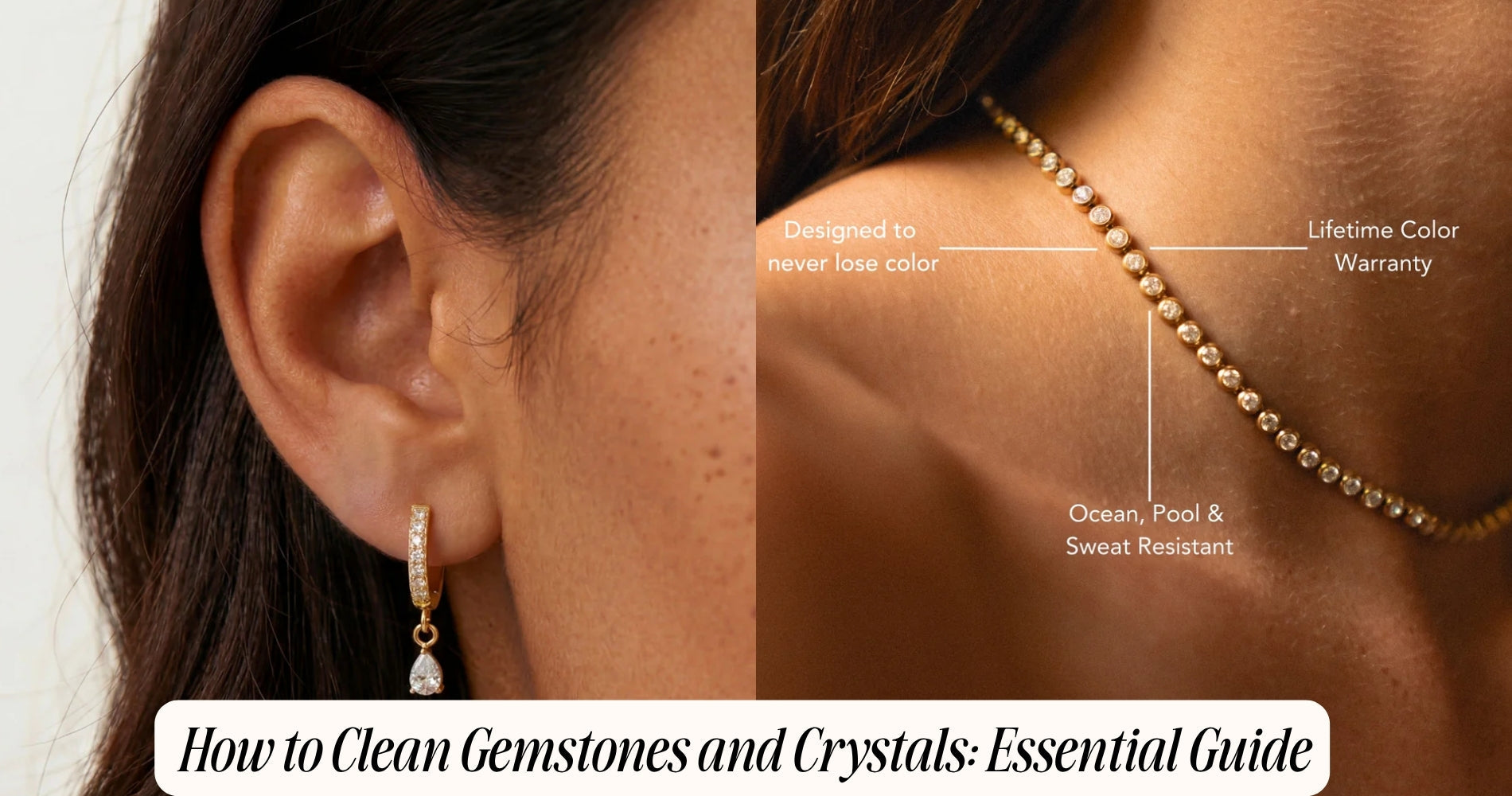
How to Clean Gemstones and Crystals: Essential Guide
Gemstones and crystals bring a unique kind of beauty to any jewelry collection, but not all stones can be cleaned using the same method. Because different gemstones vary significantly in hardness, porosity, and sensitivity to chemicals, learning how to clean gemstones and crystals properly requires understanding these differences rather than relying on a single, universal cleaning approach.
In this guide, we will walk through safe cleaning methods organized by stone type, from durable, everyday gemstones to more delicate, sensitive varieties. If you love the natural beauty of gemstone jewelry, our Stone Collection features a wide range of pieces worth exploring, each crafted to highlight the stone's individual character.
Why Gemstone Cleaning Methods Vary So Much
Unlike metal jewelry, which generally responds well to fairly consistent cleaning methods, gemstones and crystals differ enormously in their physical properties. Hardness, measured using the Mohs scale, ranges from very soft stones like pearl and opal to extremely hard stones like sapphire and diamond. Porosity also varies significantly, with some stones being far more absorbent and therefore more vulnerable to staining or damage from liquids and chemicals.
Because of this wide variation, using a single cleaning method across your entire gemstone collection risks damaging more delicate stones, while being overly cautious with more durable stones may simply mean missing out on a more thorough, effective clean when one is not actually necessary.

Understanding Gemstone Hardness
Before cleaning any gemstone, it helps to have a general understanding of where it falls on the Mohs hardness scale, since this significantly influences which cleaning methods are safe to use.
- Harder stones, ranking 7 or above, include diamond, sapphire, ruby, topaz, and quartz varieties like amethyst and citrine. These stones generally tolerate more thorough cleaning methods, including gentle scrubbing, without significant risk of scratching.
- Medium hardness stones, ranking between 5 and 7, include stones like emerald, garnet, and moonstone. These require a slightly more careful approach, avoiding overly abrasive scrubbing or harsh chemicals.
- Softer stones, ranking below 5, include pearl, opal, turquoise, and coral. These delicate materials require the gentlest cleaning methods, typically avoiding soaking or any significant moisture exposure altogether.
Cleaning Harder Gemstones
For durable stones like diamond, sapphire, ruby, and most quartz varieties including amethyst, citrine, and clear quartz, a straightforward soap and water method is generally safe and effective.
Fill a small bowl with warm water and add a few drops of mild dish soap, stirring gently to combine. Place the gemstone jewelry into the soapy water and allow it to soak for about 10 to 15 minutes to loosen any surface buildup. Using a soft bristled brush, gently scrub around the stone and setting, paying attention to any areas where dirt tends to accumulate, such as underneath the stone where it meets the metal prongs. Rinse thoroughly under warm running water, then dry immediately with a soft, lint free cloth.
Because these stones are relatively durable, this method can typically be used on a regular basis without significant risk of damage, making it a reliable go to approach for most everyday gemstone jewelry.

Cleaning Medium Hardness Gemstones
Stones like emerald, garnet, peridot, and moonstone fall into a medium hardness category that requires a slightly gentler approach compared to harder stones, particularly due to natural inclusions or structural characteristics that can make them more vulnerable to certain cleaning methods.
For these stones, the same basic soap and water method works well, but avoid extended soaking periods and skip more vigorous scrubbing in favor of gentler, more careful cleaning motions. Emerald in particular benefits from extra caution, since this stone commonly contains natural inclusions and is often treated with oil to enhance clarity, meaning harsh cleaning methods can potentially affect both the stone's appearance and any clarity enhancing treatments.
Avoid ultrasonic cleaners for emerald specifically, since the vibrations can potentially worsen existing inclusions or fractures within the stone.
Cleaning Delicate Gemstones and Organic Materials
Softer, more porous stones, along with organic materials like pearl and coral, require the most careful cleaning approach of all, avoiding soaking, harsh chemicals, and any significant moisture exposure whenever possible.
Pearls
Never soak pearls in water, since prolonged moisture exposure can weaken the silk thread commonly used for stringing and potentially affect the pearl's natural luster over time. Instead, gently wipe pearls with a soft, slightly damp cloth after each wear to remove surface oils and residue.
Opals
Opals contain water within their internal structure, making them particularly sensitive to both soaking and sudden temperature changes. Clean opals using only a soft, slightly damp cloth, avoiding any soaking, harsh chemicals, or ultrasonic cleaning methods entirely.

Turquoise
Turquoise is a porous stone that can absorb liquids and chemicals, potentially leading to discoloration or damage over time. Avoid soaking turquoise jewelry, and instead use a soft, dry or barely damp cloth for gentle cleaning, taking care to avoid any prolonged moisture exposure.
Coral
Similar to pearls, coral is an organic material that requires gentle handling, avoiding soaking and harsh chemicals in favor of a simple, soft cloth wipe down for regular maintenance.
Cleaning Raw Crystals and Specimens
Beyond finished jewelry, many people also collect raw crystals and mineral specimens, which require their own specific cleaning considerations depending on the particular stone's hardness and structure.
For durable raw crystals like quartz, amethyst, or citrine, a gentle rinse under lukewarm water, followed by careful drying with a soft cloth, is generally sufficient for regular cleaning. Avoid hot water, which can potentially cause thermal shock in certain crystal structures, leading to cracking or fracturing.
For more delicate or water sensitive raw specimens, such as selenite, which can actually dissolve with water exposure, or malachite, which contains copper compounds that can react with certain cleaning agents, a dry, soft brush or cloth is generally the safest cleaning approach, avoiding water entirely.
Always research the specific care requirements for any raw crystal or mineral specimen before cleaning, since the wide variety of mineral compositions found in raw crystal collecting means general gemstone cleaning guidelines do not always apply uniformly.
What to Avoid When Cleaning Gemstones and Crystals
Regardless of the specific stone type, a few general precautions apply broadly across most gemstone and crystal cleaning situations.
Avoid using toothpaste, despite it being a commonly suggested home remedy, since it is often too abrasive and can scratch even moderately hard gemstone surfaces. Avoid harsh chemical cleaners, bleach, or ammonia based products, which can damage or discolor many gemstone types, particularly softer or more porous stones. Avoid ultrasonic cleaners for stones with known inclusions or fractures, such as emerald, or for particularly delicate materials like opal and pearl, since the vibrations can potentially worsen existing structural weaknesses. Avoid sudden temperature changes during cleaning, since certain stones can be sensitive to thermal shock, potentially leading to cracking.

How Often Should You Clean Gemstone Jewelry
The ideal cleaning frequency depends on both the specific stone type and how often a particular piece is worn. Durable stones worn daily benefit from a light cleaning every few weeks, using the standard soap and water method appropriate for their hardness level. More delicate stones, particularly those requiring gentler wipe down methods rather than soaking, benefit from a quick wipe after each wear to prevent buildup from accumulating over time, since these more sensitive stones cannot tolerate the same periodic deep cleaning approach used for harder gemstones.
When to Seek Professional Cleaning
While the methods outlined above handle most routine gemstone cleaning needs, certain situations call for professional attention. If a gemstone appears cloudy, discolored, or shows any signs of cracking or damage despite proper at home care, consulting a professional jeweler experienced in gemstone care is the safest path forward, rather than attempting more aggressive at home cleaning methods that could potentially worsen the issue.
Professional jewelers can also offer guidance specific to unusual or rare gemstone types not commonly covered in general care guidelines, ensuring you approach cleaning in the safest way possible for your particular collection.
Final Thoughts
Learning how to clean gemstones and crystals properly comes down to understanding that different stones require genuinely different approaches based on their specific hardness, porosity, and overall sensitivity. By tailoring your cleaning method to the particular stone type, whether a durable everyday gemstone or a delicate, organic material like pearl or opal, you can keep your entire collection looking beautiful while protecting each stone's unique natural characteristics.
With just a little extra attention to these differences, your gemstone and crystal collection can continue to shine and captivate for many years to come.
Frequently Asked Questions
1. Can I clean all my gemstones with the same method?
No, different stones vary significantly in hardness and sensitivity, so it is important to tailor your cleaning approach to each specific gemstone type.
2. Is it safe to soak amethyst or citrine in soapy water?
Yes, these harder quartz varieties generally tolerate soaking and gentle scrubbing well, unlike more delicate stones such as opal or pearl.
3. Why can't I clean opals the same way as diamonds?
Opals contain water within their structure and are much softer than diamonds, making them far more sensitive to soaking, chemicals, and temperature changes.
4. What should I do if my gemstone looks cloudy after cleaning?
If cloudiness persists despite proper cleaning, it is best to consult a professional jeweler, since this could indicate an issue requiring more specialized attention.













Leave a comment
This site is protected by hCaptcha and the hCaptcha Privacy Policy and Terms of Service apply.