


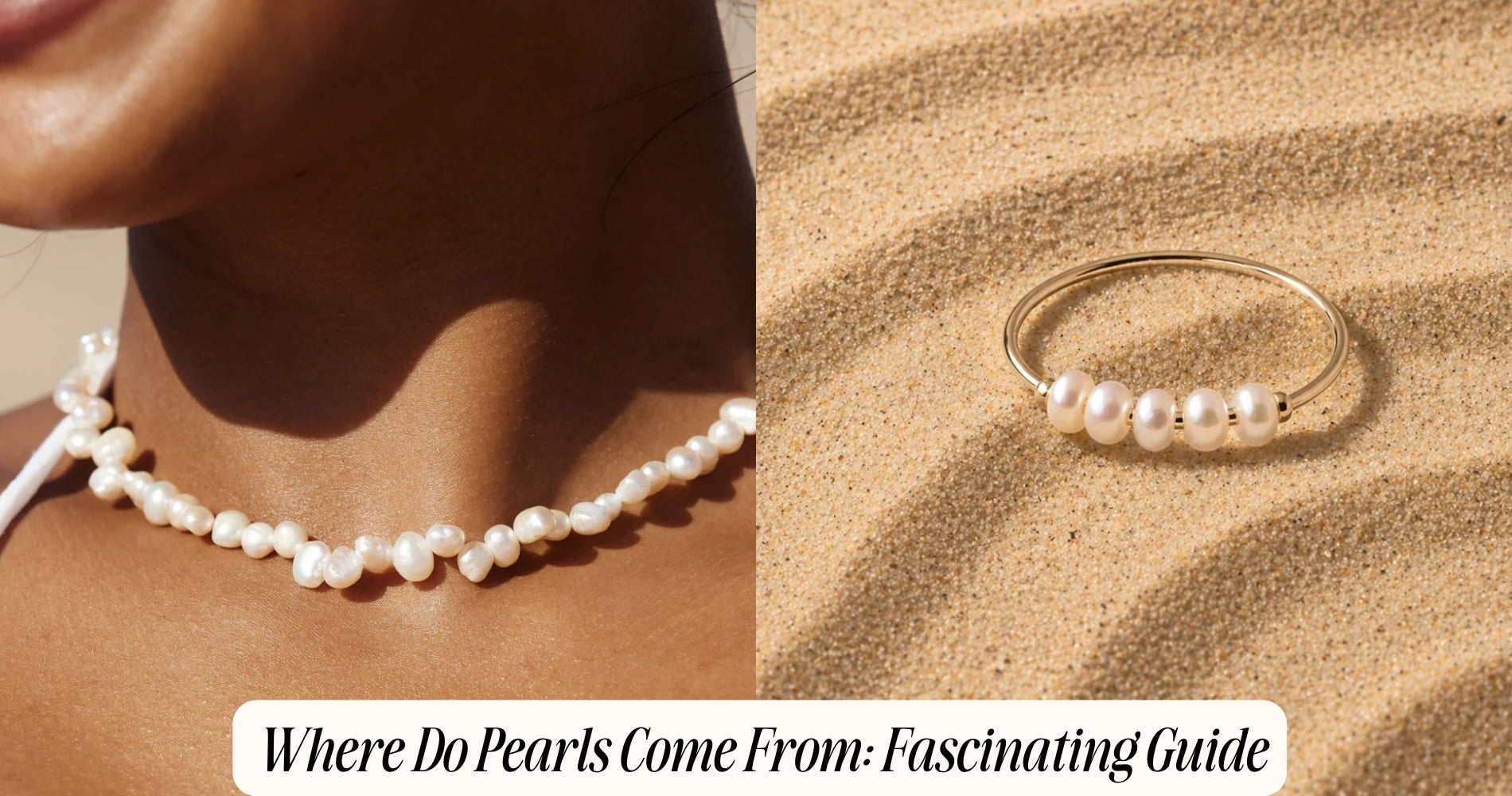
Where Do Pearls Come From: Fascinating Guide
A pearl looks like nothing else in the natural world, and the process that creates it is just as unusual as the finished object. Where do pearls come from is a question with a genuinely interesting answer rooted in marine biology: pearls form inside living mollusks as a defensive response to irritation, built up in layers over months or years until a smooth, lustrous sphere emerges from what began as a foreign object the animal could not expel. Freshwater Pearls Jewelry showcases this process in its most accessible form. This guide covers exactly how pearls form, which animals produce them, how natural and cultured pearls differ in origin, and where in the world pearls are farmed today.
The Biological Process: How a Pearl Actually Forms
A pearl begins with an irritant entering a mollusk, most commonly an oyster or a mussel. This irritant can be a parasite, a piece of shell, a grain of sand, or any small foreign object that becomes lodged within the mollusk's soft tissue. The mollusk cannot expel the irritant the way many animals would dislodge a foreign object, so its body responds the only way it can: by isolating it.
The mollusk's mantle tissue, the organ responsible for secreting the material that forms its shell, begins depositing layers of nacre around the irritant. Nacre is a composite material made of microscopic platelets of aragonite, a crystalline form of calcium carbonate, bound together by a protein called conchiolin. This is the same substance that lines the interior of the shell itself, which is why the inner surface of an oyster or mussel shell has that recognizable iridescent quality known as mother of pearl.

Layer after layer of nacre accumulates around the irritant over an extended period, typically ranging from six months to several years depending on the species and the conditions. Each layer is microscopically thin, only a fraction of a micron, and it is the cumulative effect of hundreds or thousands of these layers that produces the smooth, rounded form and the lustrous optical quality that defines a pearl. Light entering the pearl reflects and refracts between these layers, creating the characteristic depth and glow that no synthetic material has fully replicated.
The shape of the resulting pearl depends largely on where within the mollusk the nacre deposition occurs. A pearl forming freely within the soft mantle tissue, away from the shell itself, tends toward a rounder shape because the nacre can deposit relatively evenly in all directions. A pearl forming attached to the interior of the shell produces a flatter, blister-like shape, since one side is constrained by the shell surface.
Which Creatures Produce Pearls
Pearls can technically form in any shelled mollusk, but only a specific subset of species produce pearls of gem quality with the nacre composition and luster that the jewelry industry values.
Saltwater oysters of the genus Pinctada are responsible for the most commercially significant saltwater pearls. Pinctada fucata produces Akoya pearls, primarily in Japan and China. Pinctada margaritifera, the black-lipped oyster, produces Tahitian pearls in French Polynesia. Pinctada maxima, the largest pearl oyster, produces South Sea pearls in Australia, Indonesia, and the Philippines.
Freshwater mussels, primarily species in the family Unionidae, produce the freshwater pearls that account for the majority of global pearl production by volume. These mussels live in rivers, lakes, and ponds rather than ocean environments, and China dominates global freshwater pearl farming.
Abalone, a marine snail rather than a bivalve mollusk, occasionally produces pearls, though far less consistently than oysters and mussels. Abalone pearls are prized for their vivid, multicolored iridescence but are rare enough that they remain a specialty rather than a mainstream commercial product.
Conch, found in warm shallow waters of the Caribbean and Gulf of Mexico, occasionally produces pearls with a distinctive pink to salmon coloration. Conch pearls lack the nacre layering of oyster and mussel pearls, which gives them a porcelain-like rather than iridescent surface, and they are also rare enough to be considered a specialty gem.
Not every individual within these species produces a usable pearl, and natural pearl formation in the wild is genuinely uncommon, which is the central reason cultured pearl farming developed in the first place.

Natural Pearls Versus Cultured Pearls: Where the Difference Lies
The biological process of nacre deposition is identical whether a pearl is natural or cultured. The difference lies entirely in how the irritant that triggers the process gets there in the first place.
Natural pearls form when an irritant enters a mollusk entirely without human involvement, typically a parasite or a grain of sand that becomes lodged in the mantle tissue by chance. Because this is a random occurrence, natural pearls are extremely uncommon. Historical estimates suggest that finding a single natural pearl required opening hundreds, sometimes thousands, of wild oysters, which is why natural pearls commanded extraordinary prices for most of recorded history and why pearl diving was once a major and dangerous global industry.
Cultured pearls form through the same nacre deposition process, but the irritant is deliberately introduced by a pearl farmer. For bead-nucleated cultured pearls, typically used for Akoya, Tahitian, and South Sea pearls, a technician surgically implants a small spherical bead, usually cut from another mollusk's shell, along with a small piece of mantle tissue from a donor mollusk, into the host oyster. For freshwater pearls, the process generally uses only a small piece of donor mantle tissue without a bead nucleus, which is why freshwater pearls tend to be solid nacre throughout rather than nacre coating a larger bead core.

This distinction is the source of one of the most persistent misconceptions about pearls: that cultured pearls are somehow artificial or fake. They are not. A cultured pearl is composed of the same genuine nacre as a natural pearl, produced through the identical biological mechanism. The only difference is that a person initiated the process rather than it happening by chance. Every major gemological authority classifies cultured pearls as genuine pearls requiring disclosure of their cultured status, not as imitations.
The technique of pearl culturing was perfected in the early twentieth century, most famously by Kokichi Mikimoto in Japan, whose successful cultivation of round Akoya pearls beginning in the 1890s and refined through the following decades transformed pearls from an extraordinarily rare luxury accessible only to the wealthiest buyers into a widely available gemstone.
Where Pearls Are Farmed Today
Pearl farming today is concentrated in specific regions whose water conditions, mollusk species, and established infrastructure support large-scale cultivation.
China dominates global freshwater pearl production, accounting for roughly 95 percent of the world's freshwater pearl supply. Major farming regions include Zhejiang, Jiangsu, Anhui, and Guangdong provinces, where favorable freshwater conditions and decades of cultivation expertise support an enormous production volume.
Japan remains closely associated with Akoya pearl culturing, the technique Mikimoto pioneered, though China has also become a significant Akoya producer in recent decades. Japanese Akoya farms are concentrated around Ago Bay and other protected coastal waters suited to Pinctada fucata cultivation.

French Polynesia is the exclusive commercial source of genuine Tahitian pearls, farmed in the lagoons surrounding islands including Tahiti and the Tuamotu archipelago, where Pinctada margaritifera thrives in the specific water conditions of these atolls.
Australia produces the majority of the world's South Sea pearls, primarily off the northwestern coast, where Pinctada maxima grows to the large size that produces the substantial pearls South Sea production is known for. Indonesia and the Philippines are also significant South Sea pearl producers.
The Persian Gulf, historically the center of the natural pearl diving industry before oil exploration and cultured pearls reshaped the regional economy, no longer produces commercially significant quantities of pearls, though it remains historically and culturally significant to pearl history.
Why Pearl Origin Matters for Buyers
Understanding where pearls come from, both biologically and geographically, helps you evaluate what you are buying with more confidence. A genuine pearl, whether natural or cultured, freshwater or saltwater, carries real biological and material value because it represents a sustained organic process rather than a manufactured imitation.
For everyday jewelry, freshwater pearls offer the most accessible entry into genuine pearl ownership. Modern freshwater farming techniques have closed much of the quality gap that once separated freshwater from saltwater pearls, producing pearls with strong luster and increasingly consistent round shapes at a fraction of the cost of Akoya, Tahitian, or South Sea alternatives.
For jewelry settings that hold these genuine pearls, the surrounding metal construction matters for how the piece ages alongside the pearl itself. PVD-coated stainless steel settings resist tarnishing around the pearl, keeping the metal as consistent in appearance as the pearl's own luster through years of regular wear. ATOLEA's freshwater pearl collection pairs genuine cultured nacre with that waterproof construction, backed by a lifetime color warranty on the metal elements of every piece.
Frequently Asked Questions
Where do pearls come from naturally?
Pearls form inside mollusks, primarily oysters and mussels, when an irritant such as a parasite or grain of sand becomes lodged in the soft mantle tissue. The mollusk responds by depositing layers of nacre around the irritant over months or years, eventually producing a smooth, lustrous pearl. This natural process occurs without human intervention and is genuinely rare in the wild.
Do all oysters make pearls?
No. Pearl-producing oysters belong to a specific genus, Pinctada, which secretes the nacre that forms gem-quality pearls. Common edible oysters, the kind served at restaurants, are a different species entirely and do not produce nacre-coated pearls of jewelry quality. Even within pearl-producing species, only a small percentage of individual oysters in the wild ever develop a natural pearl.
Are cultured pearls fake?
No. Cultured pearls are composed of genuine nacre produced through the same biological process as natural pearls. The only difference is that a pearl farmer deliberately introduces the irritant, either a bead nucleus with donor tissue or tissue alone, rather than the process occurring by chance. Every major gemological authority classifies cultured pearls as authentic pearls requiring disclosure rather than as imitations.
What is the difference between freshwater and saltwater pearl origin?
Freshwater pearls grow in mussels living in rivers, lakes, and ponds, primarily farmed in China. Saltwater pearls grow in oysters living in ocean environments, including Akoya pearls from Japan, Tahitian pearls from French Polynesia, and South Sea pearls from Australia and Southeast Asia. The biological formation process is the same in both, but freshwater pearls are typically tissue-nucleated and solid nacre throughout, while most saltwater pearls are bead-nucleated.
How long does it take for a pearl to form?
Pearl formation time varies by species and target size, generally ranging from six months to seven years. Freshwater pearls often take two to six years to develop substantial nacre thickness. Akoya pearls typically take one to two years. South Sea pearls, which develop the thickest nacre of any commercial pearl type, can take two to four years or longer.
The Origin of Every Pearl
Where do pearls come from traces back to a single biological mechanism: a mollusk's defensive response to an irritant it cannot expel, resolved through the patient deposition of nacre over an extended period. Whether the irritant arrived by chance in the wild or was introduced deliberately by a pearl farmer, the resulting material is genuine nacre, identical in composition and origin story at the cellular level. From Chinese freshwater farms to Japanese Akoya waters to French Polynesian lagoons to Australian South Sea coastlines, every pearl in the modern market traces back to this same remarkable biological process happening inside a living creature beneath the surface of the water.










Leave a comment
This site is protected by hCaptcha and the hCaptcha Privacy Policy and Terms of Service apply.