

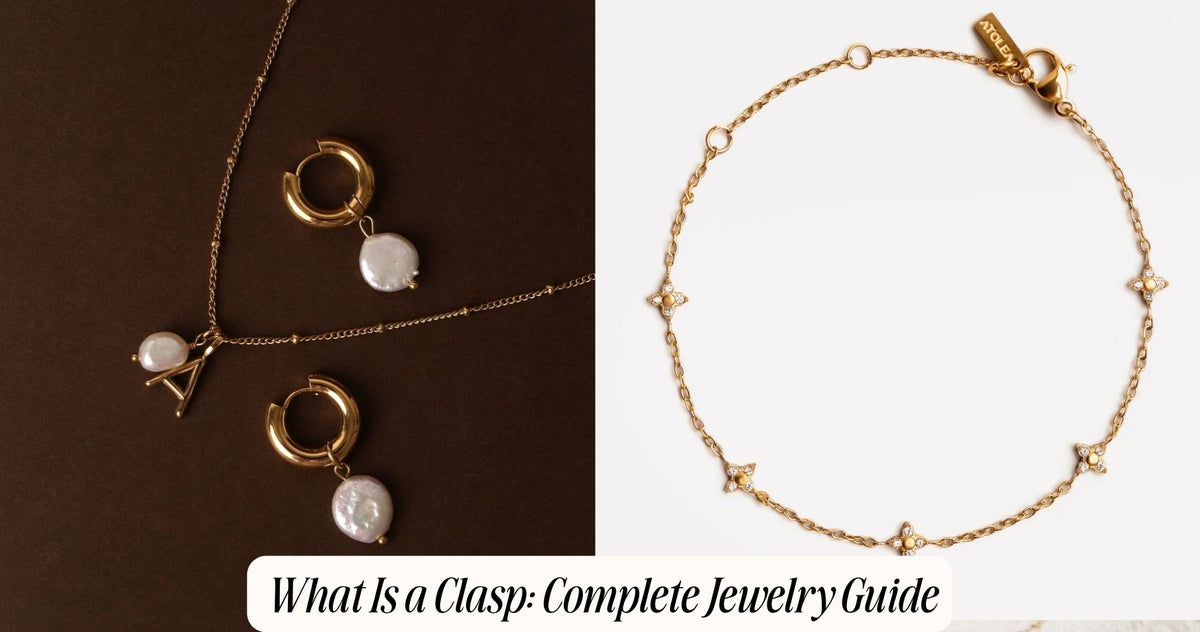
What Is a Clasp: Complete Jewelry Guide
A clasp rarely gets much attention in jewelry design, but it is the single component responsible for keeping a necklace or bracelet securely on your body throughout the day. If you have ever struggled to fasten a fiddly closure, lost a piece because a clasp failed, or simply wondered what is a clasp actually called on a piece you own, understanding the different types available can help you shop more thoughtfully and troubleshoot problems when they arise.
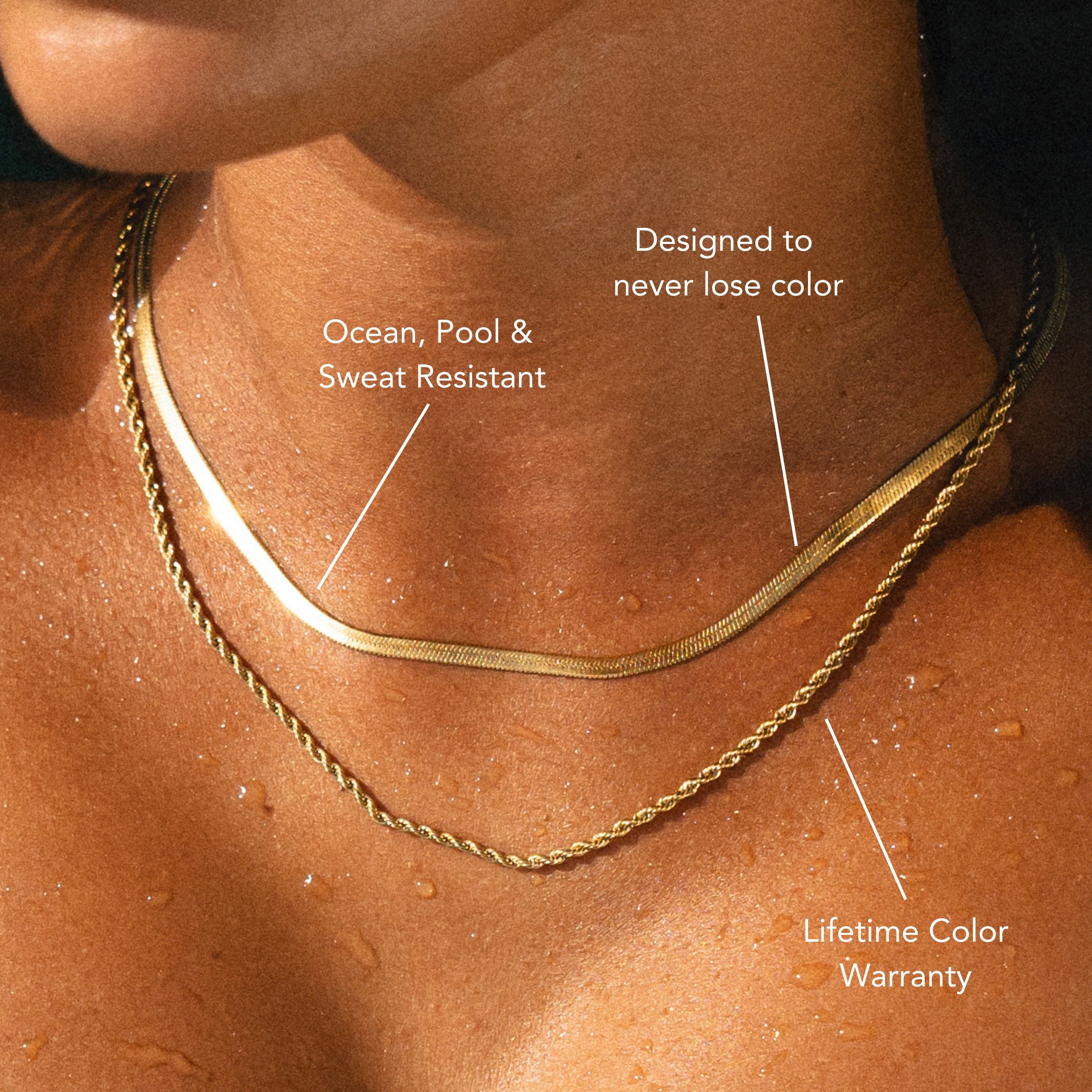
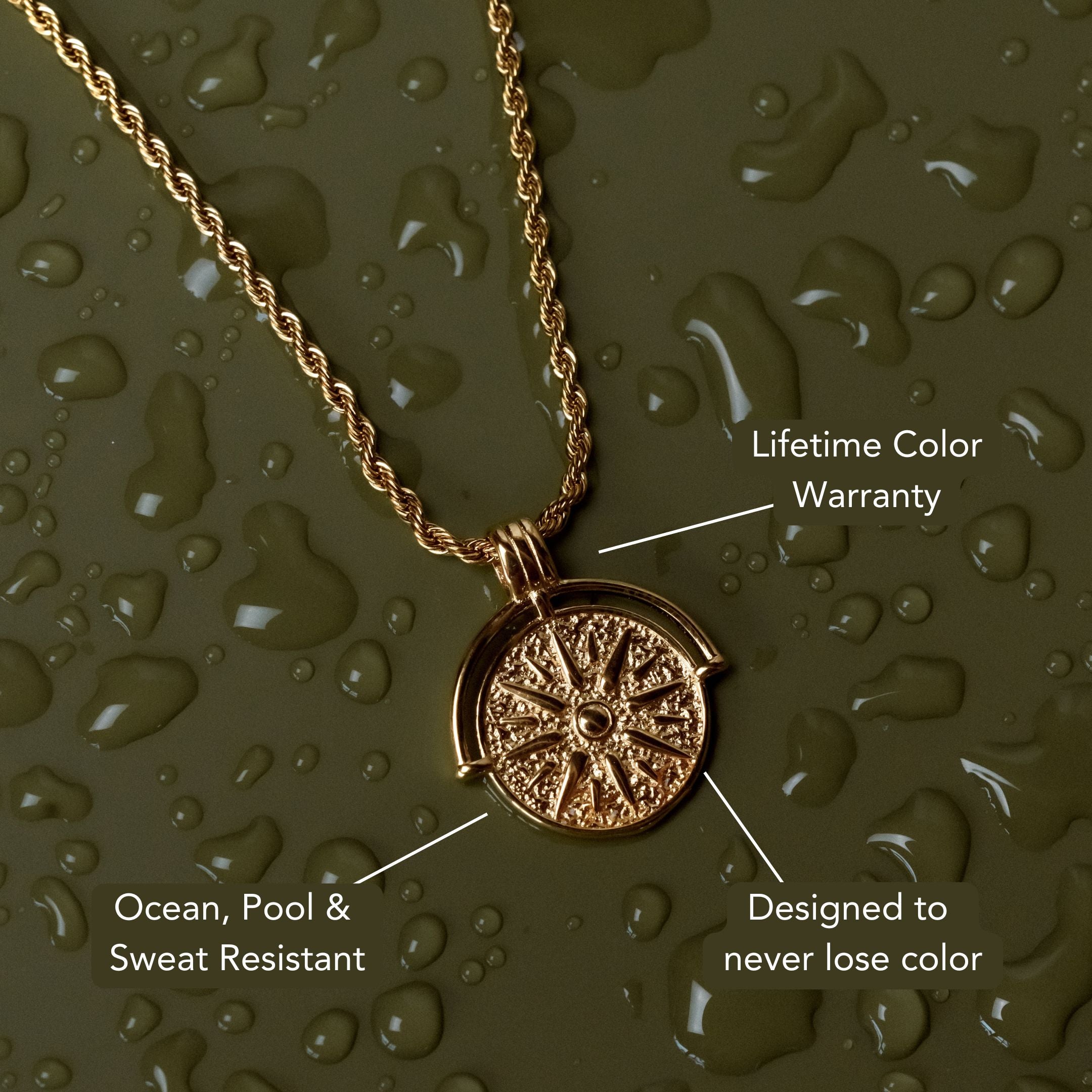
In this guide, we will explain what a clasp is, walk through the most common clasp types used in jewelry today, and help you understand which style suits different needs. If you want jewelry with a clasp built to hold up to daily wear, our Waterproof Necklaces collection pairs durable materials with equally reliable closures.
What Is a Clasp
A clasp is the mechanical fastening component attached to the ends of a necklace, bracelet, or anklet, designed to open for putting the piece on and taking it off, then close securely to keep it in place during wear. While it is often one of the smallest elements of a finished piece, the clasp plays an outsized functional role, since a poorly designed or malfunctioning clasp can result in a lost or damaged piece of jewelry regardless of how well made the rest of the design might be.
Clasps come in a wide variety of mechanical styles, each offering different tradeoffs between security, ease of use, and visual profile.

Spring Ring Clasp
The spring ring clasp is one of the most traditional and widely used closures, consisting of a small hollow circular ring with a tiny lever that, when pressed, opens a gap allowing a jump ring or chain loop to be inserted, then closes securely when released.
This classic mechanism has remained popular for generations due to its reliable, secure closure, though the small lever can be somewhat fiddly to operate one handed, particularly for necklaces being fastened behind the neck without the help of a mirror or second person.
Lobster Clasp
The lobster clasp, named for its resemblance to a lobster's claw, functions similarly to a spring ring but with a slightly different mechanism, a small lever on the side of an elongated, claw shaped housing that opens a hinged gate when pressed. This design generally offers a somewhat larger, easier to grip lever compared to a spring ring, making it a popular choice for those who find spring rings more difficult to operate.
Lobster clasps have become one of the most common closures used in modern jewelry, valued for their combination of security and relative ease of use compared to some other traditional options.

Toggle Clasp
Toggle clasps consist of two separate pieces, a ring or loop on one end and a bar on the other, designed so the bar slides through the ring and then sits horizontally across it, preventing it from sliding back through. This mechanism relies on the bar's length being greater than the ring's diameter to stay securely in place.
Toggle clasps are popular for their visual appeal, since the closure itself often becomes a decorative element of the design rather than something hidden or purely functional, and they are also generally easier to fasten independently compared to smaller spring ring or lobster mechanisms.
Magnetic Clasp
Magnetic clasps use two magnetized pieces that snap together when brought close to one another, creating a secure closure without any small lever or mechanism to manipulate. This style has become particularly popular for those with limited hand dexterity, since fastening simply requires bringing the two pieces close enough for the magnets to connect.
The main tradeoff with magnetic clasps involves security for heavier pieces, since sufficiently strong impact or pulling force can separate the magnets, making this style generally better suited to lighter necklaces and bracelets rather than substantial, heavier designs.
Box Clasp
Box clasps feature a small box shaped housing with a flexible metal tongue that inserts into the box and clicks securely into place, often with a small side button required to release the mechanism and open the clasp again. This design tends to offer a very secure, low profile closure, making it a popular choice for finer, more delicate necklaces and bracelets where a bulkier clasp mechanism would feel visually out of place.
Hook and Eye Clasp
Hook and eye clasps consist of a simple hook on one end that catches onto a small loop or ring on the other end. This straightforward mechanism is easy to operate and often doubles as a decorative element, particularly in more casual or bohemian styled jewelry, though it generally offers less inherent security compared to spring ring or lobster mechanisms, since the hook can potentially slip free under certain conditions.
Barrel Clasp
Barrel clasps feature two cylindrical, threaded halves that screw together to form a secure, tube shaped closure. This twisting mechanism offers excellent security, since accidental opening generally requires the same deliberate twisting motion used to close it, making barrel clasps a popular choice for necklaces intended for active wear or situations where accidental opening would be particularly undesirable.
S Hook Clasp
S hook clasps use a simple S shaped piece of metal that hooks through loops on both ends of the jewelry, requiring no separate mechanism beyond the shape of the hook itself. This minimalist design offers a distinctive, often decorative look, though similar to hook and eye clasps, it generally provides somewhat less security compared to spring ring or box style mechanisms.
Slide Clasp
Slide clasps consist of two flat, interlocking pieces that slide together and lock into place, often used for wider bracelets or necklaces where a bulkier traditional clasp mechanism would feel disproportionate to the piece's overall design. This style tends to distribute closure across a wider surface area compared to a small point mechanism, which some wearers find offers a more comfortable, secure feeling fit.
Extender Chains: A Companion to Any Clasp Type
While not a clasp itself, an extender chain is frequently paired with a clasp mechanism to add adjustable length to a necklace or bracelet. This small additional chain, typically featuring several loops, allows the wearer to attach the clasp at different points along the extender, effectively adjusting the piece's overall length by an inch or two beyond its fixed measurement. Extender chains work with nearly any clasp type and offer helpful flexibility, particularly for pieces intended to fit a range of different wearers or accommodate slight changes in fit preference.

How to Choose a Clasp Type Based on Your Needs
Different clasp types suit different priorities, and understanding your own specific needs can help guide which style makes the most sense for a particular piece.
For Maximum Security
Barrel clasps and box clasps generally offer the most secure closures, since both require a deliberate action to open rather than being susceptible to accidental release from snagging or pulling.
For Ease of Use
Magnetic clasps and toggle clasps tend to be the easiest to fasten independently, particularly useful for those who frequently put on necklaces without assistance or who have limited hand dexterity.
For Delicate, Fine Jewelry
Box clasps and smaller spring ring clasps offer a low profile closure well suited to fine chains and delicate designs, where a bulkier mechanism would feel visually mismatched with the rest of the piece.
For Bold, Statement Jewelry
Toggle clasps and S hook clasps work particularly well for bolder, more substantial jewelry, since their closures can function as an intentional decorative element rather than something meant to be hidden.
Common Clasp Problems and What They Indicate
Understanding common clasp issues can help you identify when a piece needs repair or replacement. A spring ring or lobster clasp that no longer springs back into a fully closed position often indicates a weakened internal spring, which typically requires professional replacement rather than a simple fix. A toggle clasp that feels loose or slides through its ring too easily may indicate the bar has become slightly bent, reducing its effective length relative to the ring's diameter. A magnetic clasp that no longer holds securely often means the magnets have weakened over time, a natural process that eventually affects most magnetic closures with extended use.

Final Thoughts
So, what is a clasp? It is the small but essential mechanical closure that keeps a piece of jewelry securely fastened during wear, available in numerous distinct styles ranging from the classic spring ring to the more decorative toggle or S hook. Understanding these different clasp types, along with their respective strengths around security, ease of use, and visual profile, can help you choose jewelry with a closure genuinely suited to how and when you plan to wear it.
Frequently Asked Questions
1. What is the most secure type of clasp?
Barrel clasps and box clasps are generally considered among the most secure, since both require a deliberate action to open rather than being prone to accidental release.
2. Which clasp type is easiest to fasten without help?
Magnetic clasps and toggle clasps tend to be the easiest to fasten independently, since they do not require the fine motor precision that smaller mechanisms like spring rings often do.
3. Is a lobster clasp better than a spring ring clasp?
Both offer similar security, though lobster clasps generally have a larger, easier to grip lever, making them somewhat more user friendly for many people.
4. What does it mean if my clasp will not stay closed anymore?
This typically indicates a weakened spring or bent mechanism, which usually requires professional repair or replacement rather than a simple at home fix.









Leave a comment
This site is protected by hCaptcha and the hCaptcha Privacy Policy and Terms of Service apply.