

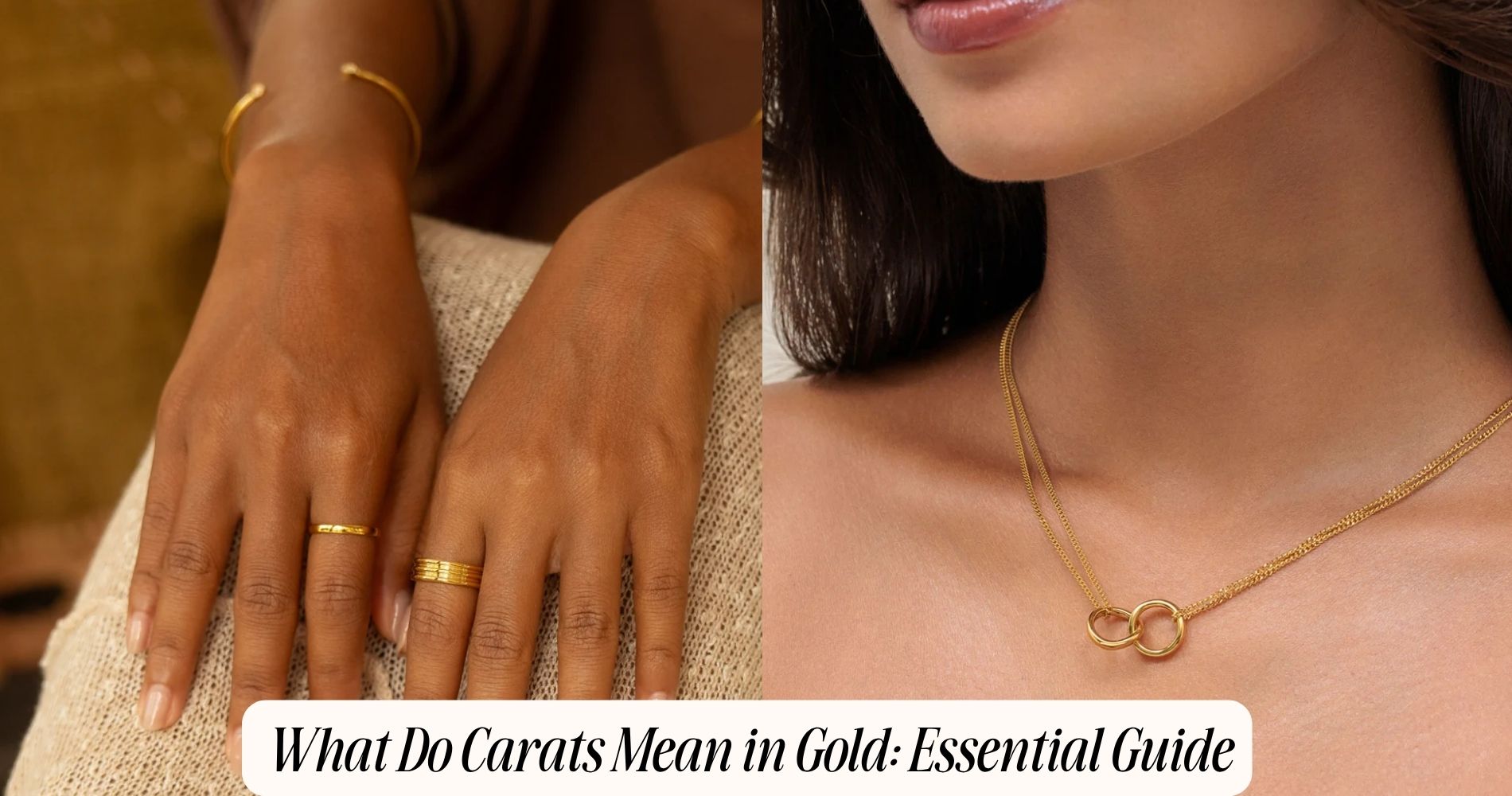
What Do Carats Mean in Gold: Essential Guide
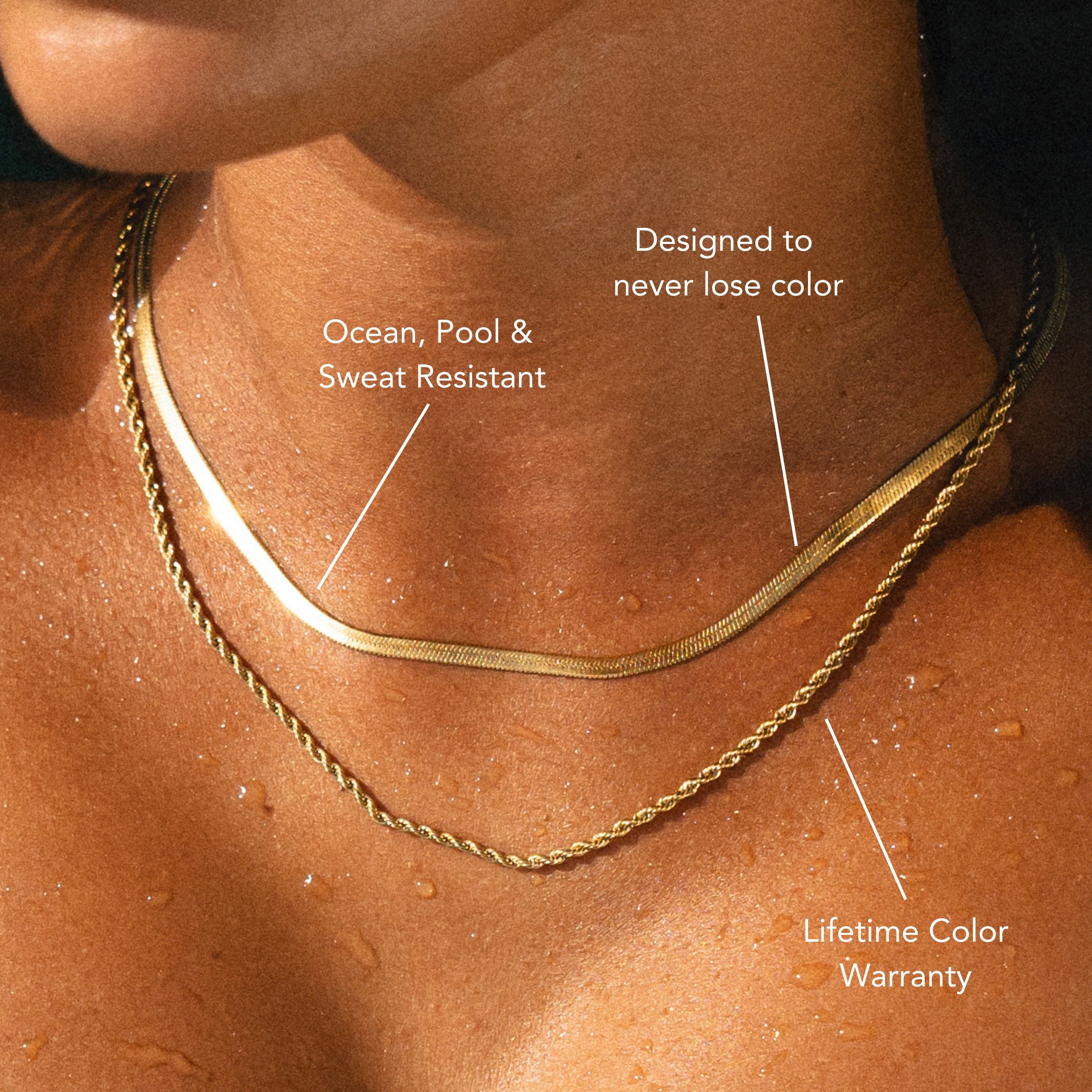
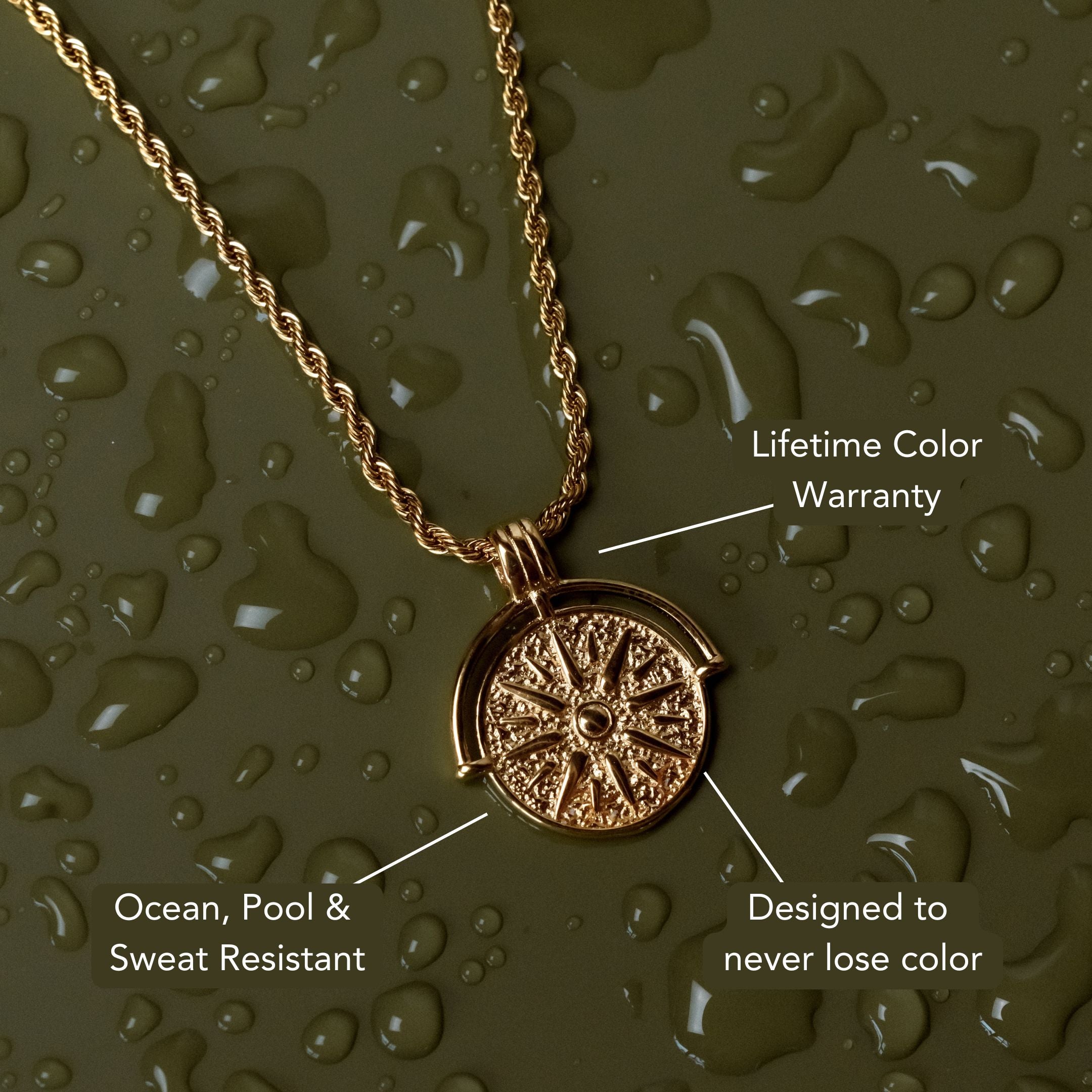
What do carats mean in gold? When you see a karat (K) stamp on gold, it indicates the gold content out of 24—24K is pure gold, 18K is 75%, 14K about 58.3%, and 10K around 41.7%. Higher karat gold has a richer color but is softer, while lower karats are more durable due to added alloys. Karat also affects skin sensitivity and resale value. For everyday wear, durable options like those in the Waterproof Jewelry collection balance style and practicality while maintaining long-term performance.
What “Karat (K)” Means for Gold
Karat (K) measures the purity of a gold alloy by counting how many parts out of 24 are pure gold; when you see 24K, all 24 parts are gold, while 18K means 18 parts gold and 6 parts other metals.
You’ll use the karat definition to quantify alloy composition precisely: karat = (parts gold/24) × 100%. This provides a direct metric of gold purity, useful for calculations of density, melting point adjustments, and expected mechanical properties.
You’ll note that percentages map to predictable changes in hardness and color due to alloying elements.
When evaluating an item, measure or verify hallmark stamps and use analytical methods—XRF, fire assay—to confirm gold purity rather than relying on visual inspection alone.

Common Karats Compared: 24K, 18K, 14K, 10K (Purity, Color, Uses)
Purity grades—24K, 18K, 14K, and 10K—tell you exactly how much pure gold is present in an alloy (100%, 75%, 58.3%, and 41.7% respectively) and directly influence color, hardness, and typical uses; higher karats yield richer yellow tones and greater softness, while lower karats increase strength and introduce paler hues from alloying metals.
You’ll find 24K used where purity and yellow color matter most, such as investment bars and ceremonial jewelry, though its malleability limits everyday wear.
18K balances luxury appearance with moderate durability, common in high-end jewelry.
14K is a practical trade-off for daily-wear pieces, offering improved strength via alloy effects.
10K meets legal minimums for “gold” in some jurisdictions, maximizing durability at the expense of visible gold composition.
How Karat Affects Color, Durability, and Allergies
Because alloys determine both hue and mechanical properties, the karat number directly shapes how a gold piece looks, wears, and reacts against skin.
You’ll observe higher-karat gold (18K–24K) retains a richer yellow due to greater pure gold content; lower-karat items (10K–14K) appear paler or take on white/rose tones from silver, copper, or palladium in the gold alloys.
Durability scales inversely with purity: more alloying metals increase hardness and scratch resistance, so you’ll prefer 14K or 10K for daily wear.
For skin sensitivity, impurities like nickel in certain gold alloys can provoke reactions; choosing nickel-free alloys or higher-purity gold reduces risk.
Assess marks and assay reports to match karat choice with aesthetic, mechanical, and dermatological requirements.

Karat and Resale Value: What Determines Price
How much you get when selling gold depends on more than the karat stamped on the piece. You’ll assess karat value as a pure gold percentage, but resale pricing also incorporates weight, alloy composition, and current spot price per gram.
Buyers test purity, deduct refining or melting costs, and apply a margin; those calculations are standard. You must document provenance and hallmarks to minimize authentication discounts.
Market demand shifts liquidity—popular karat value ranges sell faster and closer to spot, while niche alloys or heavy workmanship can attract lower offers despite high metal content.
Condition matters: damage increases processing costs. To maximize return, you’ll compare multiple buyer quotes and request itemized deductions so you can see how karat value and market demand drive final offers.
Choosing the Right Karat for Your Budget, Lifestyle, and How to Read Hallmarks
When you’re choosing a karat, weigh the trade-offs between gold content, durability, and cost so the piece fits your budget and daily use: assess gold jewelry options by karat percentage—24K is pure but soft; 18K balances purity and strength; 14K and 10K increase durability and lower price.
Match karat choice to lifestyle considerations: active wear favors harder alloys; occasional wear allows higher purity.
Inspect hallmarks to confirm alloy and origin—look for numeric stamps (e.g., 750 for 18K), manufacturer marks, and assay office symbols.
Use a loupe to verify clarity and location of stamps; inconsistent or missing marks indicate caution.
Combine objective karat data with your usage profile to select the best, cost-effective piece.

Frequently Asked Questions
Do Karats Apply to Gold-Filled or Gold-Plated Jewelry?
No — karats don’t technically apply to gold-filled or gold-plated jewelry; you’ll see gold filled benefits described by layer thickness and longevity, while gold plated durability depends on plating thickness and base metal adhesion, affecting wear.
Can Karat Markings Be Faked or Altered?
Yes — karat markings can be faked or altered; you should verify karat authenticity with tests (acid, XRF, hallmark inspection) because altered stamps distort jewelry valuation and mislead buyers and appraisers about true gold content.
How Does Karat Affect Manufacturing Techniques Like Soldering?
Higher karat gold melts lower and’s softer, so you’ll adjust soldering techniques: use matching gold alloys, lower-temperature solders, controlled heat, flux, and fume management; for low-karat alloys you’ll need stronger joints and higher heat to wet base metals.
Do Karats Influence Gemstone Settings or Compatibility?
Yes — you must match karats to gemstone durability and setting styles; you’ll choose harder settings and protective bezel or prong reinforcements for lower-karat, tougher alloys, while higher-karat metals suit delicate settings for softer gems.
Are There International Karat Standards or Regional Differences?
Yes — you’ll find international standards for marking gold purity, but regional variations persist in allowed alloys, naming (karat/kct/carat), and testing methods; regulators set minimums while markets tolerate local practices, affecting trade and certification.
Conclusion
Now that you know karat measures gold purity—24K being pure gold and lower karats mixing alloys—you can match karat to purpose: choose 24K or 22K for investment and warm color, 18K for fine jewelry balance, 14K or 10K for everyday durability and lower cost. Karat influences color, hardness, hypoallergenic risk, and resale. Always read hallmarks and test marks to verify purity. Pick the karat that optimizes appearance, longevity, and value for your needs.









%20stamp%20on%20gold,%20it%20indicates%20the%20gold%20content%20out%20of%2024%E2%80%9424K%20is%20pure%20gold,%2018K%20is%2075%25,%2014K%20about%2058.3%25,%20and%2010K%20around%2041.7%25.%20Higher%20karat%20gold%20h...)
Leave a comment
This site is protected by hCaptcha and the hCaptcha Privacy Policy and Terms of Service apply.